

A household without a system slides backward by Wednesday. The sink fills, the counters stick, and a single skipped day becomes a three-hour catch-up that never happens.
Fifteen minutes of actual movement, not phone-checking pauses, is what separates the two outcomes. The full schedule averages 6–9 hours per week when you spread the month out, but only if the daily list never breaks.
Daily Cleaning Tasks
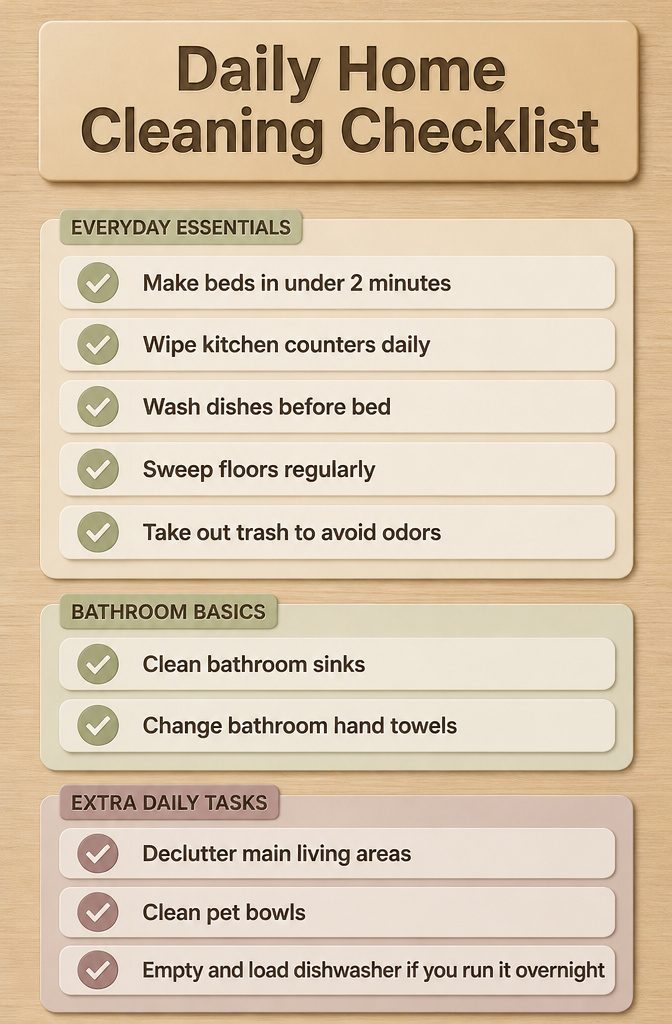
The daily home cleaning checklist is where the whole system lives or dies.
Most sources land on 10 to 15 minutes for the core reset, though one pushes closer to 30. I think 15 is honest if you move without pausing to check your phone, and 30 covers the day when the sink is already full.
Here is what I would put on that list:
- Make beds. Takes under two minutes and changes how the whole bedroom reads.
- Wipe kitchen counters and stovetop while the coffee finishes.
- Wash dishes or load the dishwasher. Never let it sit overnight; that is where the slide starts.
- Sweep kitchen floor and any entry that collects grit.
- Take out trash before it starts to smell, not after.
- Clean bathroom sinks and counters. A quick wipe with the towel you are already changing.
- Change bathroom hand towels. Kitchen towels too if you cook daily.
- Declutter main living areas. Shoes, remotes, mail. Not organizing, just relocating.
- Clean pet bowls. Food and water, not just when they look bad.
- Empty and load dishwasher if you run it overnight.
Some lists add laundry, litter boxes, or disinfecting every handle.
Those are household-specific. For a baseline that keeps the house from sliding backward, the 10 above are the foundation.
Skip one for a day and you notice. Skip three and you are already behind.
Weekly Cleaning Tasks
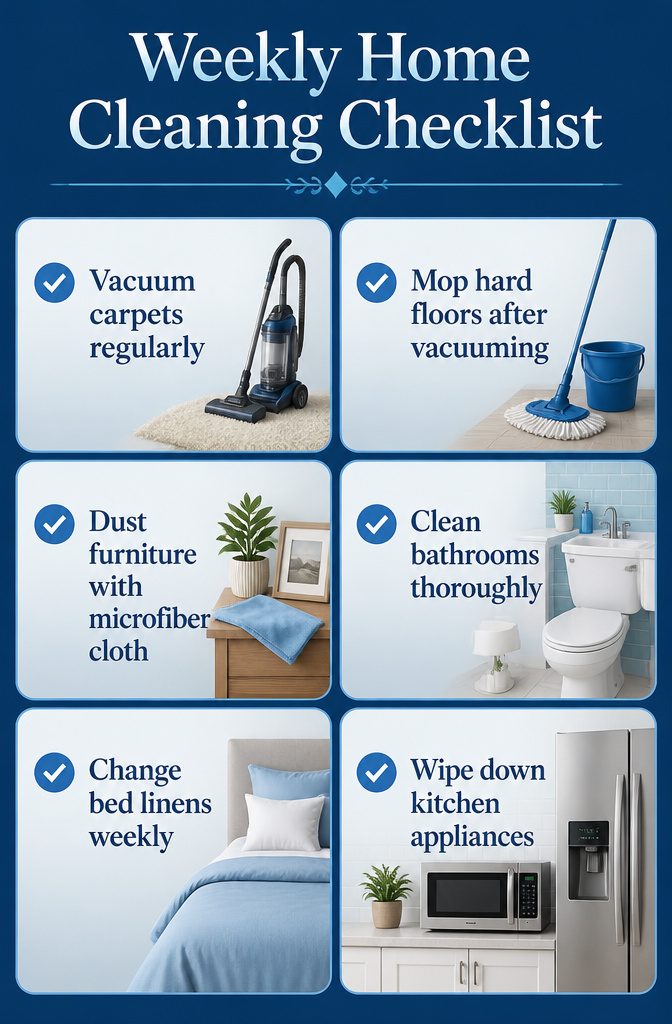
The six weekly jobs that actually move the needle on air quality and surface grime are straightforward, but most people I know lose a Saturday to them because they try to batch everything at once.
Splitting them across evenings, one room per night, keeps the total time the same without eating your weekend.
- Vacuum carpets and rugs to pull out the dust and skin cells that settle after daily traffic. High-pile rugs hold more than you think; hit them twice a week if you have pets or allergies.
- Mop hard floors after vacuuming, not before, so you are not pushing dry debris around with a wet mop.
- Dust furniture and surfaces with a damp microfiber cloth; dry dusting just redistributes it.
- Clean bathrooms: toilet, tub, and sink. The tub is the one people skip when they are tired, and it shows first.
- Change bed linens. Once a week is the standard that keeps oil and sweat buildup in check.
- Wipe down kitchen appliances, especially the microwave interior and the fridge door handles.
The microwave is where I would spend an extra two minutes. A quick steam with a bowl of water loosens splatter before you wipe, and that habit saves you from the baked-on grime that needs chemicals later.
Monthly Deep Cleaning
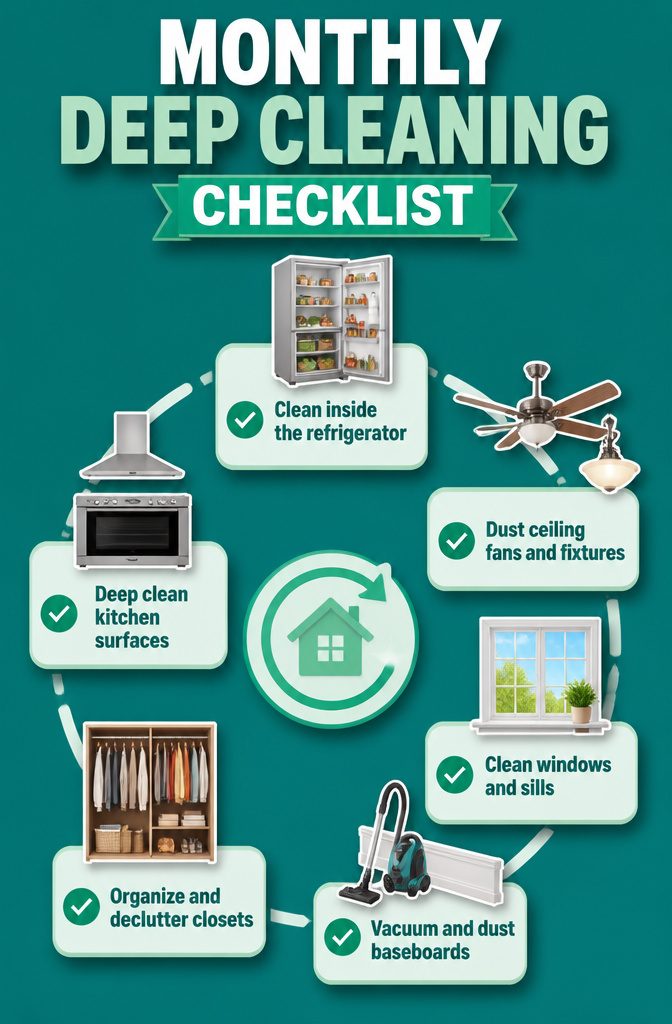
Monthly deep cleaning is where most homes fall behind, and the kitchen alone will eat 45–60 minutes if you do it right. The six jobs that matter:
- Clean inside the refrigerator: pull shelves, wipe every surface, toss what expired
- Dust ceiling fans and light fixtures: a dry microfiber on an extension pole keeps you off the ladder
- Clean windows: tracks, sills, and the glass itself
- Vacuum and dust baseboards: the buildup weekly dusting never catches
- Organize closets and declutter: one in, one out is the only rule that sticks
- Deep clean the kitchen: oven interior, cabinet fronts, range hood filters, and the dishwasher filter
I split this into two sessions, never one Saturday. The oven and refrigerator alone run most of that hour, so I pair them with a smaller job like baseboards.
What I skip in a busy month: the windows wait if pollen season is weeks away, but the refrigerator never does.
Room-by-Room Breakdown
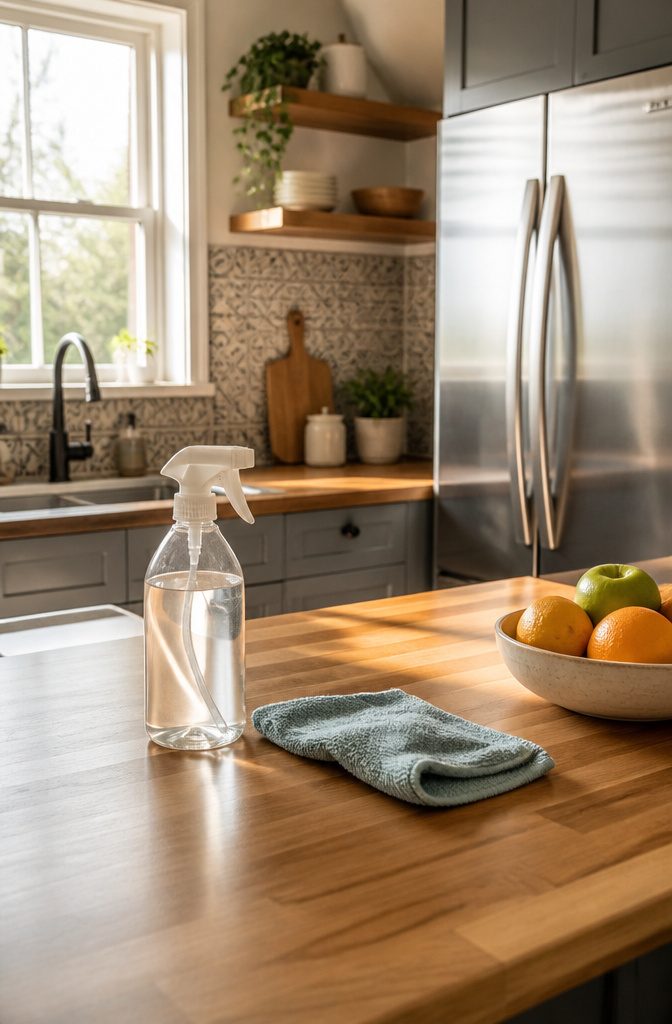
Kitchen counters collect the most visible grime in any house, so I start there. Daily counter wipes save you from a weekend scrub that takes three times as long.
- Kitchen: Daily counter attention, weekly appliance checks inside and out. The microwave and refrigerator interiors are where deferred grime turns into a real job; I hit both once a week, not once they smell.
- Bathroom: Daily sink wipes keep toothpaste splatter and soap film from setting. Weekly toilet, tub, and shower scrubbing, with hard water stain removal where your water runs mineral-heavy.
- Bedroom: Weekly linen changes, monthly closet organizing to sort what stays and what goes. I do this on a Saturday morning with a donation bag already open.
- Living areas: Daily decluttering, weekly dusting of shelving, furniture, and electronics. The straightening is what makes the dusting possible; you cannot wipe what you cannot reach.
- Laundry room: Weekly wipe-down of washer, dryer, and countertops, plus a quick sweep. This is the space that gets ignored until it smells; I keep it at 10–15 minutes so I actually do it.
Seasonal Additions

The monthly list keeps a house from sliding backward, but it does not touch the jobs that explain why a room feels different in March than it did in October.
These are the quarterly and twice-yearly tasks that accumulate silently until they demand attention.
- Clean gutters and downspouts. I would do this in late fall after the leaves drop, and again in early spring if winter storms filled them with debris. Clogged gutters are the fastest path to water damage that a homeowner’s policy may not cover.
- Wash exterior windows. The monthly list usually covers interior glass; the outside panes need a deep clean once or twice a year, first with a brush to remove dirt and dust, then with glass cleaner and a microfiber cloth.
- Deep-clean upholstery and carpets. Rent a carpet cleaner or hire a service to remove tracked-in dirt and stains that weekly vacuuming never reaches. I would skip this only in rooms with no food traffic and no pets.
- Check and replace HVAC filters. The system runs harder and costs more to heat or cool when filters clog. Mark the calendar when you do it, because three months passes faster than it feels.
- Move appliances and clean behind them. Pull the fridge, stove, and laundry machines away from the wall once a year. It takes muscle, but the machines last longer and less dust circulates back into the room.
- Clean basement and attic storage, plus the junk drawer. Monthly organizing only touches the surface. Once a year, sort what has accumulated, purge what has no purpose, and store outdoor furniture, planters, and seasonal gear properly before the weather turns.
- Sort files and documents. Tax papers, manuals, and warranties need an annual review. Shred what is outdated, scan what you must keep, and free the drawer for what actually belongs there.
Time Budget for the Full Schedule
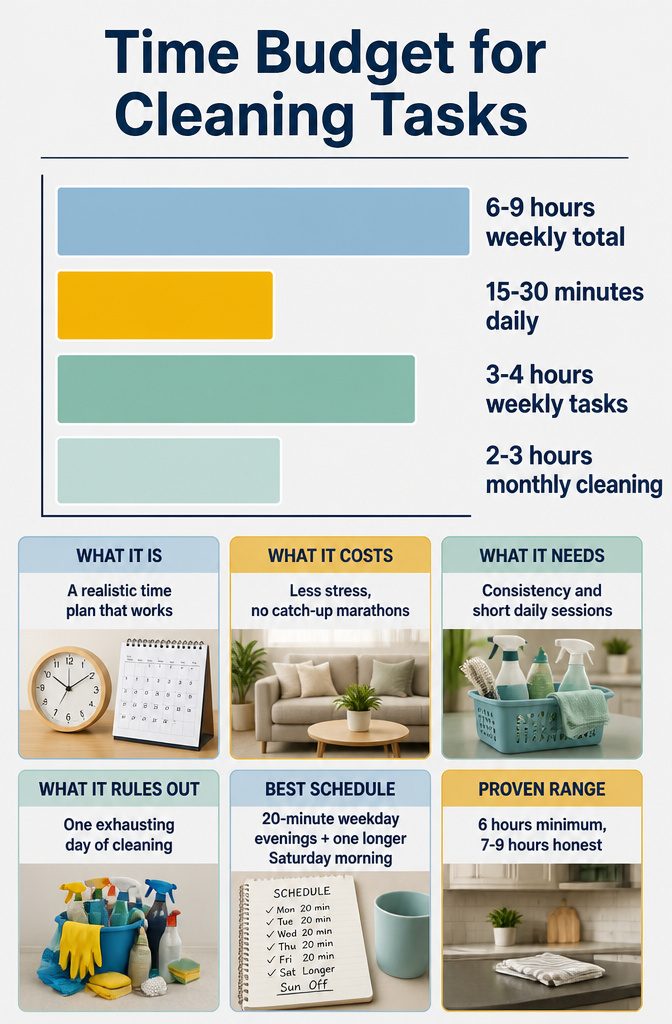
A complete home cleaning checklist lands at 6–9 hours per week when you average the month out. That breaks into roughly 15–30 minutes daily, about 3–4 hours of weekly tasks if you stack them together, and another 2–3 hours for monthly work.
I spread mine across 20-minute weekday evenings and one longer Saturday morning. The alternative is letting it all pile into a single exhausting day, which I have found every reason to skip.
One source I trust budgets 6 hours total per week with Sunday completely off; that is the lower end, and it only works if you never let the daily tasks slide.
The 7–9 hour range is more honest for most households, especially with pets or sand tracked in from outdoors.
I would rather touch the same surface twice a week for ten minutes than face a three-hour catch-up that turns into a reason to hire help.
What I Skip and Why
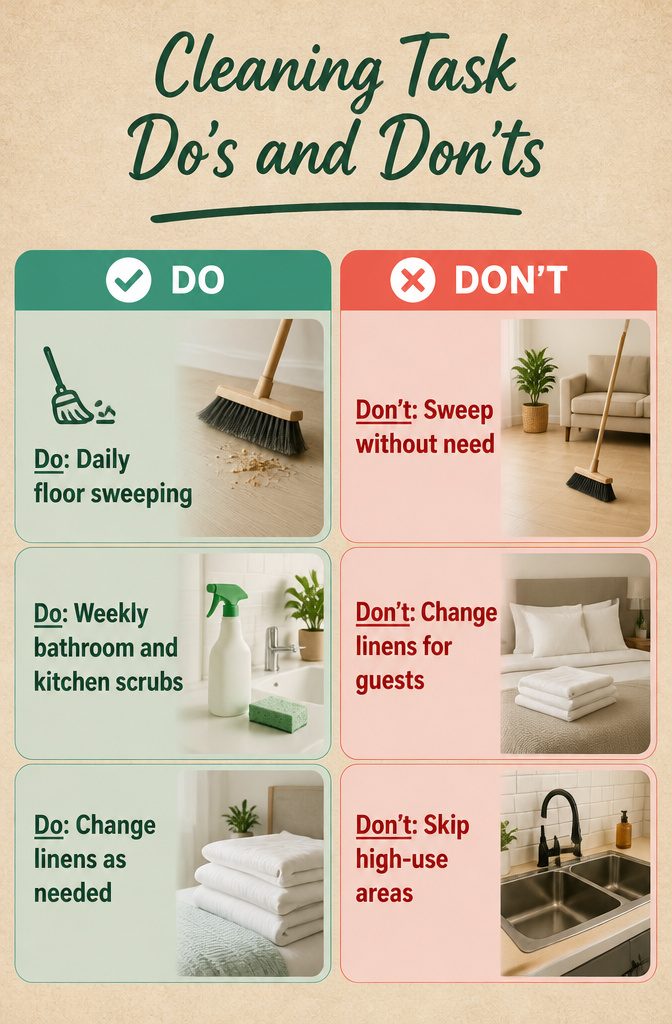
I skip daily floor sweeping in rooms I did not enter, and I do not change guest bed linens on a weekly schedule when no guest has visited.
Those tasks pad the schedule without matching most real households, and the 6–9 hour total you see assumes you do everything listed. Cutting 20% by questioning which tasks match your actual house is how the schedule stays alive past February.
The weekly bathroom scrub and kitchen mop earn their slot because traffic and grease demand it.
Vacuuming a home office you use twice a month does not. I treat guest rooms and formal living areas as monthly zones unless life proves otherwise.
The same logic applies to linens: my own bed gets weekly changes because I sleep in it, but the spare room only sees fresh sheets before someone arrives.
A realistic schedule builds in this slack deliberately. The alternative is a checklist that looks impressive for January and gets abandoned by March.
Frequently Asked Questions
What are the best daily cleaning tasks?
The 10 core daily tasks that keep a house from sliding backward are: make beds, wipe kitchen counters and stovetop, wash or load dishes, sweep kitchen floors and entry areas, take out trash, clean bathroom sinks and counters, change bathroom and kitchen hand towels, declutter main living areas, clean pet bowls, and empty or load the dishwasher.
These take 10–15 minutes if you move without stopping, or closer to 30 on days when the sink is already full.
How often should I clean my house?
Clean daily, weekly, and monthly to maintain a clean home.
The full schedule averages 6–9 hours per week: 15–30 minutes daily, 3–4 hours of weekly tasks, and 2–3 hours for monthly deep cleaning. Splitting work across 20-minute weekday evenings prevents the pile-up that turns cleaning into an exhausting all-day job.
What should be included in a monthly cleaning checklist?
Monthly tasks include cleaning inside the refrigerator, dusting ceiling fans and light fixtures, cleaning windows and tracks, vacuuming and dusting baseboards, organizing closets and decluttering, and deep cleaning the kitchen including the oven interior, cabinet fronts, range hood filters, and dishwasher filter.
Split this into two sessions rather than one Saturday to keep it manageable.
What’s a good house cleaning schedule?
A realistic schedule spreads 6–9 hours per week across 20-minute weekday evenings and one longer Saturday morning.
Daily tasks prevent backward slide, weekly tasks handle surface grime and air quality, and monthly work hits hidden buildup. Build in deliberate slack by skipping daily floor sweeping in unused rooms and weekly linen changes in unoccupied guest beds.
What is quarterly cleaning?
Quarterly and twice-yearly tasks cover jobs that accumulate silently until they demand attention: clean gutters and downspouts in late fall and early spring, wash exterior windows once or twice yearly, deep-clean upholstery and carpets, check and replace HVAC filters every three months, pull appliances and clean behind them annually, and sort basement, attic, and file storage once a year.