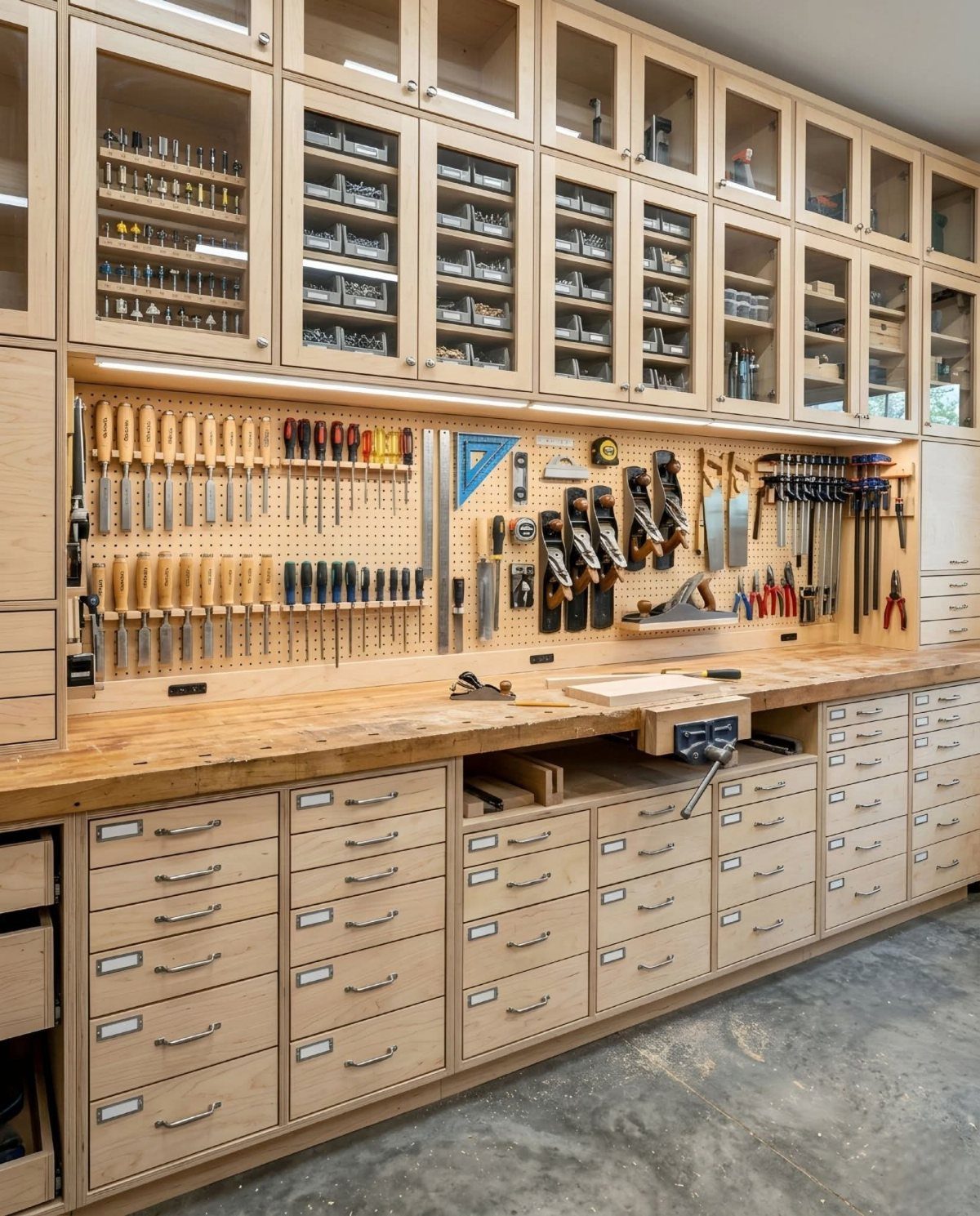
Garage tool storage runs from a wall-mounted organizer you install in an afternoon to a modular cabinet system that needs ceiling clearance checked first.
What decides which one belongs in your space is how often you reach for the tool and whether the storage moves to the job or stays on the wall.
I would verify joist direction before ordering any overhead garage storage rack, because a rack that misses both joists is just hardware waiting to fall.
1. Wall-Mounted Tool Organizer
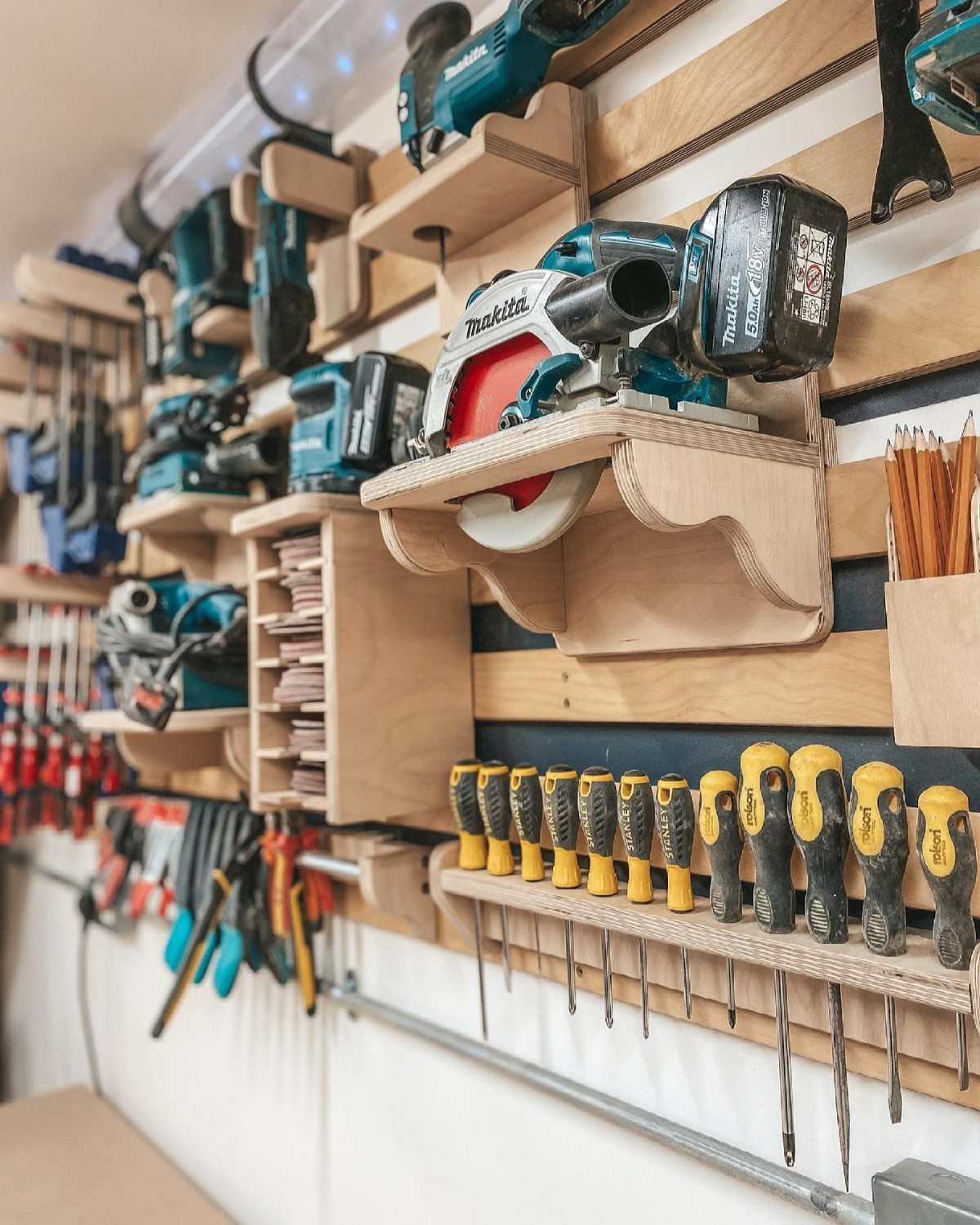
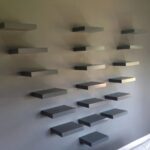
A French cleat system turns any open wall into custom tool storage without the permanence of fixed cabinets.
Each holder is its own piece; you can rearrange as your tool collection changes. Before you start, check that your wall studs line up with where the heavy tools will sit.
A cleat screwed only into drywall will pull loose the first time you lift a saw off it. I would use 3/4-inch plywood for the cleats and holders, not MDF, because the weight adds up faster than you expect.
2. Modular Cabinet Systems
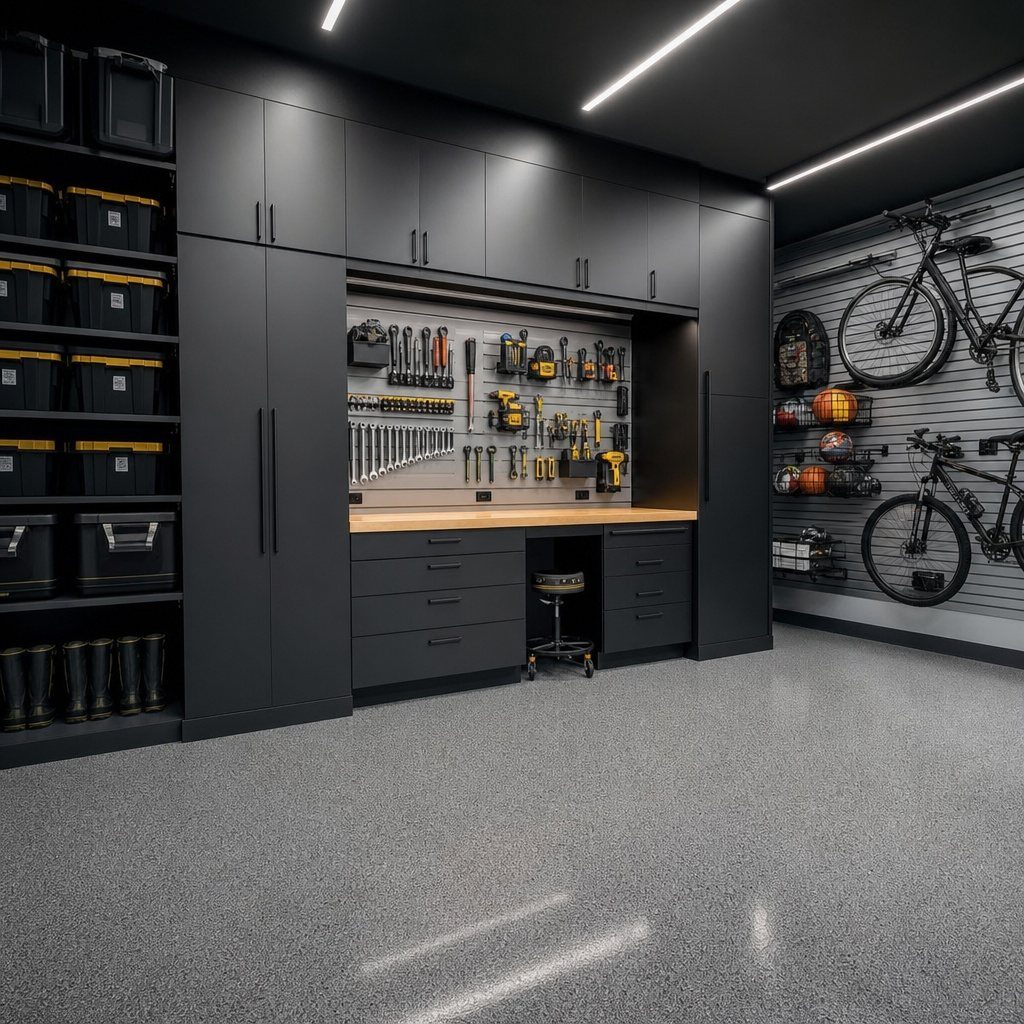
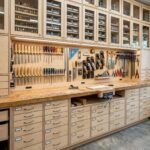
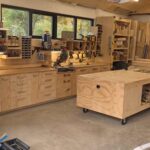
Matte black cabinets read more finished than the raw metal most garage systems use, and the built-in workbench in this setup saves you from buying or building one separately.
The open shelving with bins is where I would put the stuff you grab constantly; drawers are better for things you want to keep clean.
What to check first is ceiling height. These units run tall, and in a standard 8-foot garage you may lose overhead clearance for taller items or vehicle hatches.
If you have enough wall length, the proportions work. Less than that, I would drop to a lower cabinet line or skip the overhead hutch.
3. Overhead Garage Storage Racks
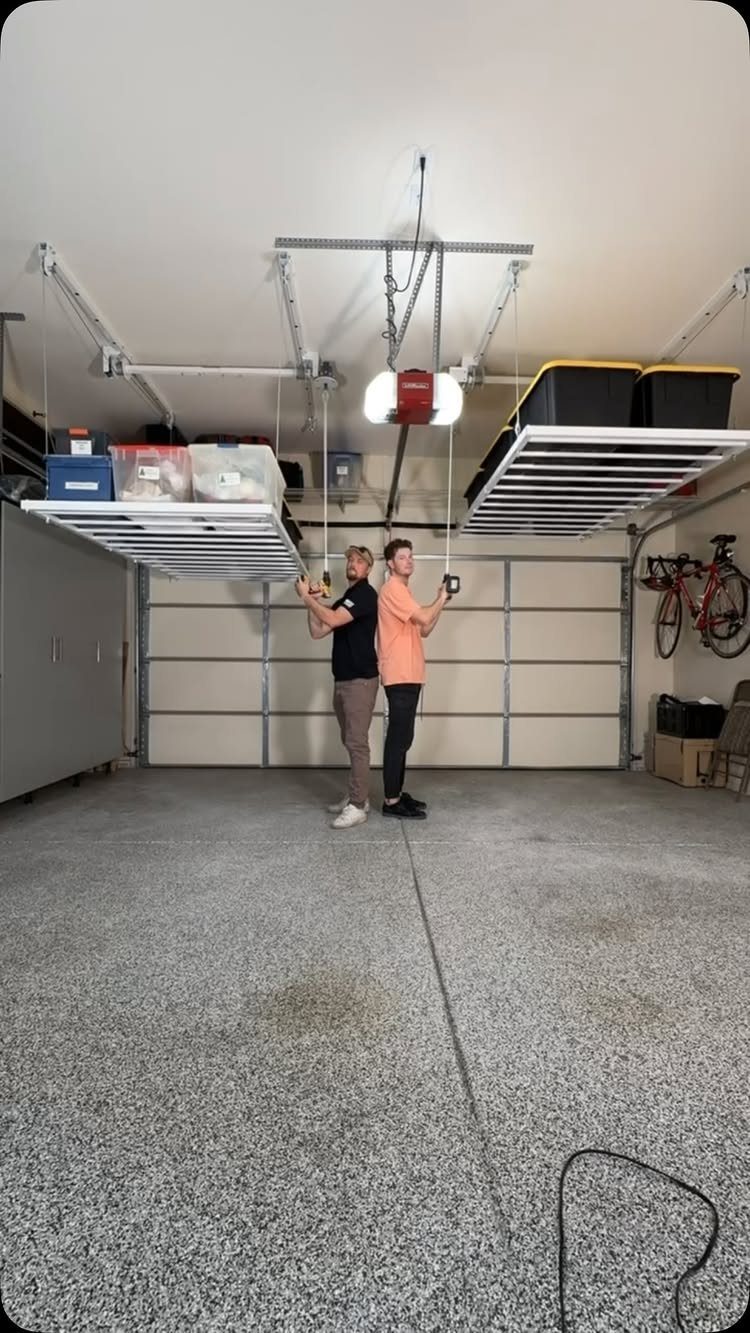
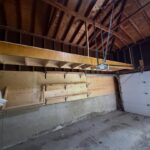
Ceiling racks get the storage tote collection off the floor and out of the way of the car doors.
A motorized lift beats a fixed rack if you are storing anything you need more than twice a year; pulling a rope pulley with heavy weight overhead gets old. What I would verify before ordering is joist direction and spacing.
Most racks need to hit 2 joists, and standard spacing is common in garages but not universal. If your joists run the wrong way for the rack size, you will need a custom mounting bar or a different rack width.
4. Portable Tool Carts and Rolling Cabinets
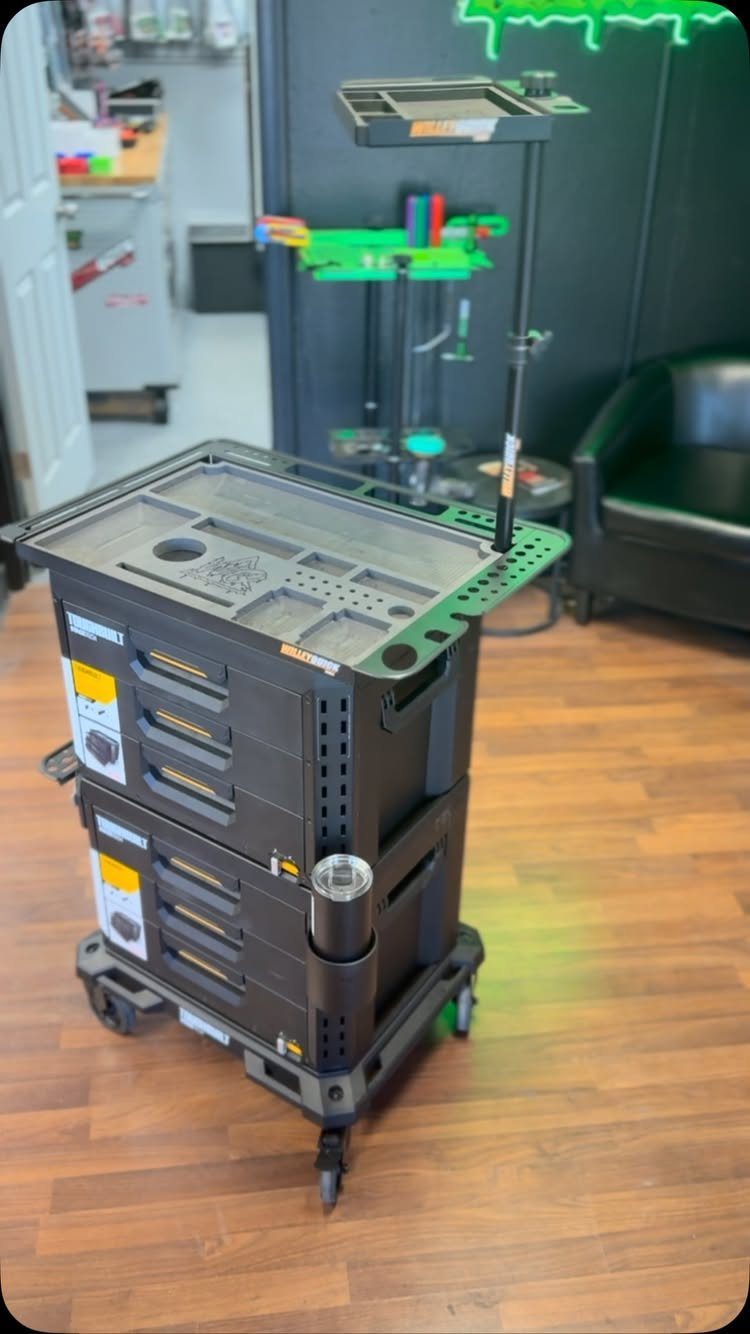
A rolling cart follows the project instead of making you walk back to the wall for every bit and driver.
The branding tells me this is modular stackable storage; the standing tray on top is the detail that makes it usable as a mobile work surface, not just a box on wheels.
What I would check before buying is caster quality.
Cheap casters jam on debris and tip when you lean on the cart. For a concrete garage floor, I want at least 4-inch wheels with ball bearings and a locking brake on two corners minimum.
5. Tool Drawer Organization
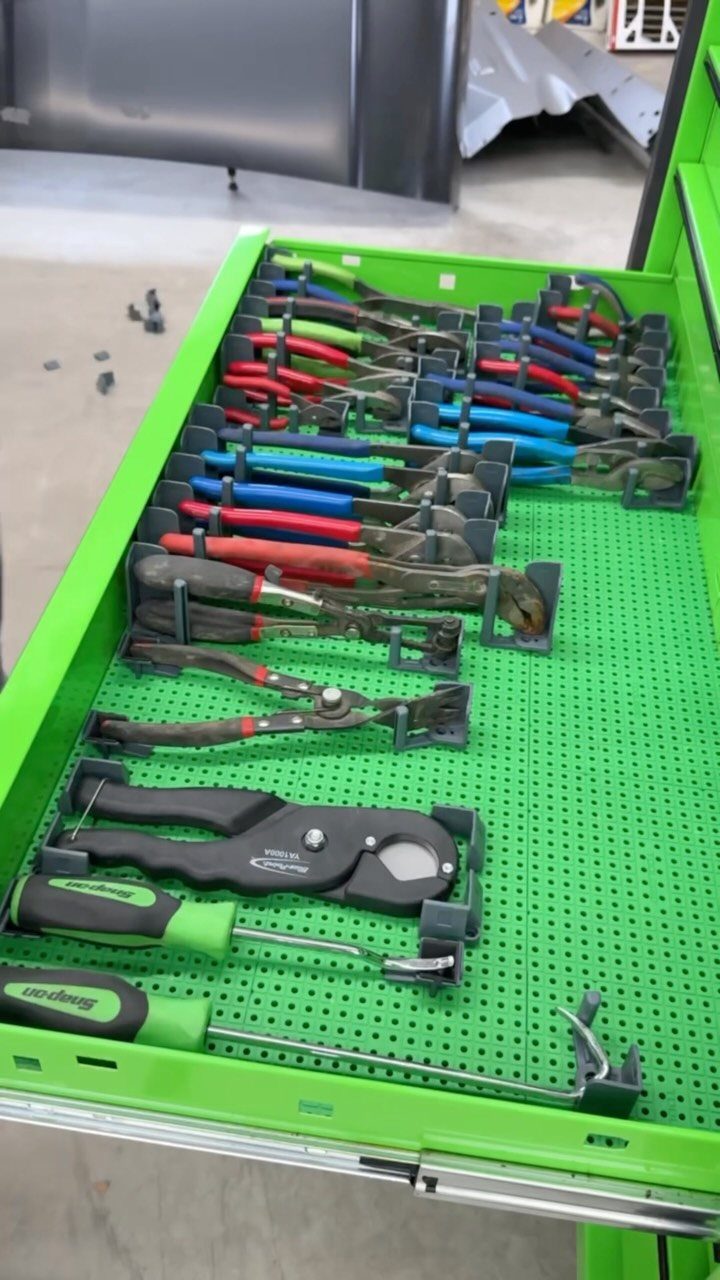
A grid mat with clips beats loose drawer dividers because the layout stays put when you open and close the drawer hard. The green chest is Snap-on, which is pro-grade price, but the organizer style itself is what matters.
I have seen the same mat system in Harbor Freight chests for far less. What to measure before you buy is drawer depth against the tallest tool you plan to stand upright.
A clip grid that fits a shallow drawer will leave pliers handles flopping; one sized for deep drawers wastes headroom on screwdrivers. Match the grid height to the drawer, not the other way around.
6. Slatwall Panels with Adjustable Accessories
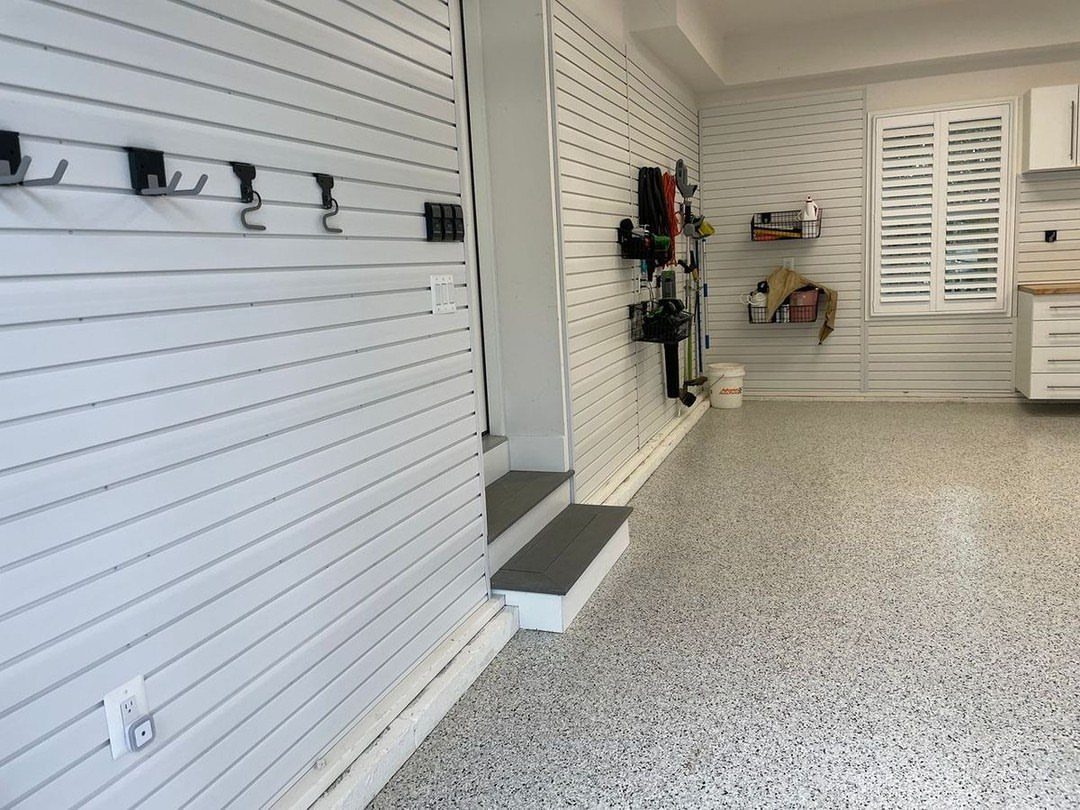
White slatwall in a garage stays cleaner-looking longer than I expected; dust shows, but it wipes off, and the brightness matters in a space with few windows.
The utility hooks and baskets are the standard accessories, and that is the system’s strength. You can swap a hook for a shelf or a bin without tools.
What I would decide before installing is whether to run it floor-to-ceiling or stop at a workbench height. Full height gives more storage but costs more and puts the top rows out of reach without a step stool.
7. Labeled Tool Storage Bins
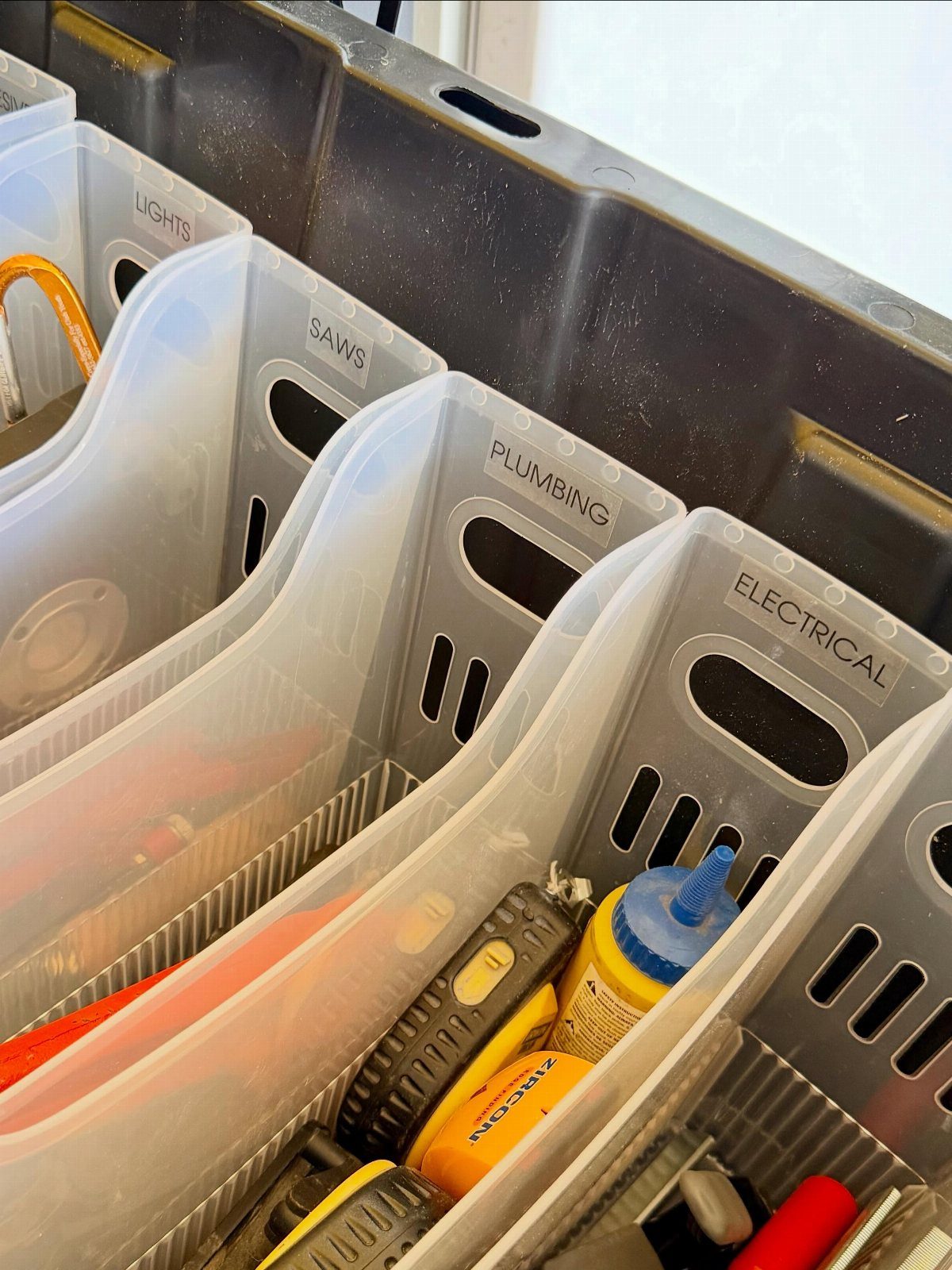
Frosted bins let you see enough to confirm contents without the visual clutter of full transparency.
Labels matter more than the bin style; "LIGHTS" and "SAWS" tell you the category fast, but I would add a date or project name for consumables that expire or migrate.
What to decide before buying is whether these live on a shelf or inside a larger tote.
A black bin on casters is the right move for job-specific kits you grab whole and roll to the car. If the bins stay put, skip the outer tote and save the step.
8. DIY Garage Storage Shelves
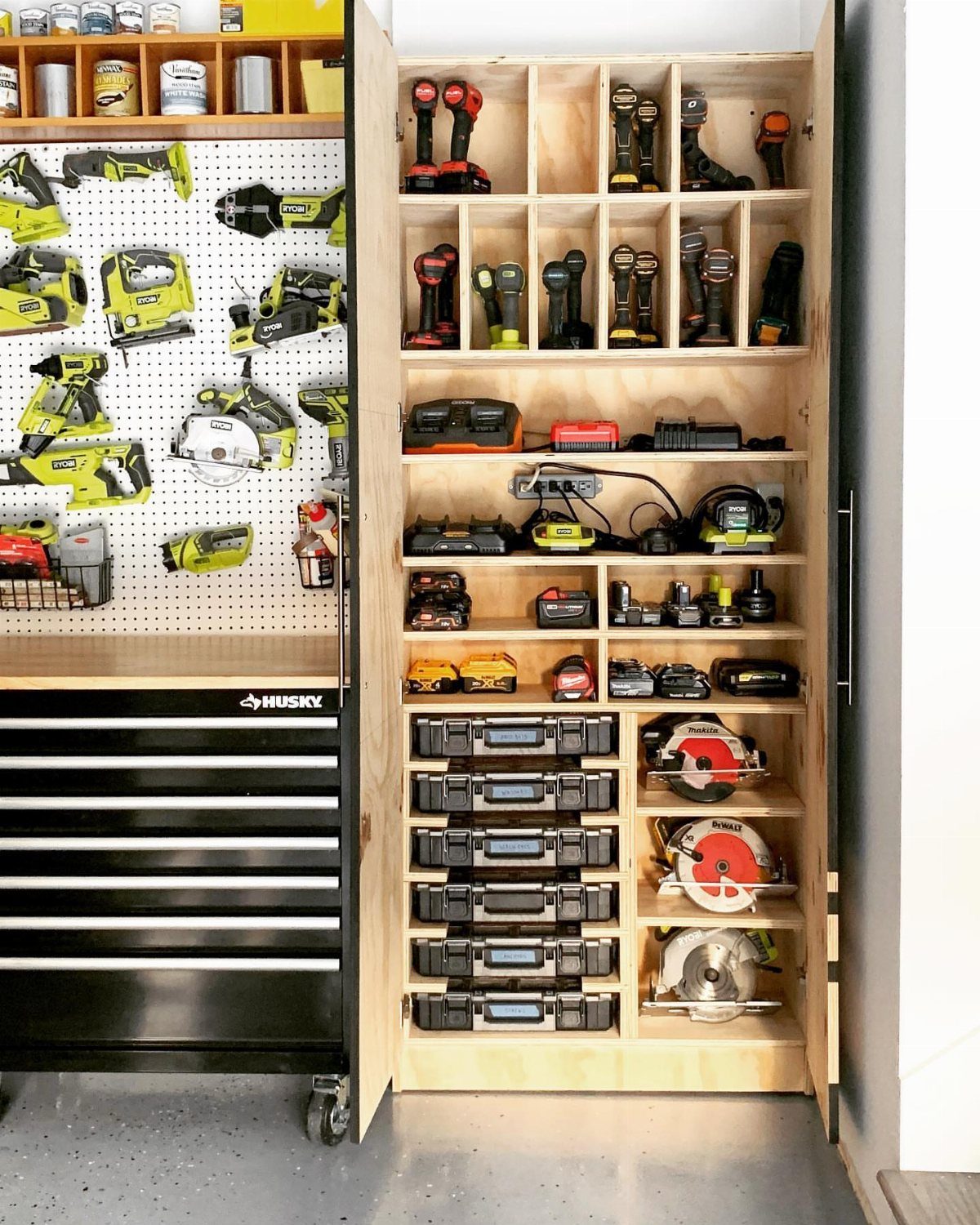
Open plywood shelving next to a pegboard gives you 2 retrieval speeds: grab-and-go on the wall, staged projects on the shelf.
I would measure the interior against your largest tool case before cutting any wood; upright storage only works if the cabinet is deep enough to match.
A common mistake is building shelves to fit the tools you own now, then buying a new circular saw that overhangs the front lip.
Build in one extra foot of depth and height; the small cost in lumber beats rebuilding later. I would finish the plywood with polyurethane, not paint, so splinters and stains wipe off.
Rollout shelves and sliding bypass units can make more efficient use of the sidewalls of your garage. The bypass unit adds 50 percent more storage for long-handled tools and all sorts of items that take up too much wall space.
9. Built-In Workbench Hardware Compartments
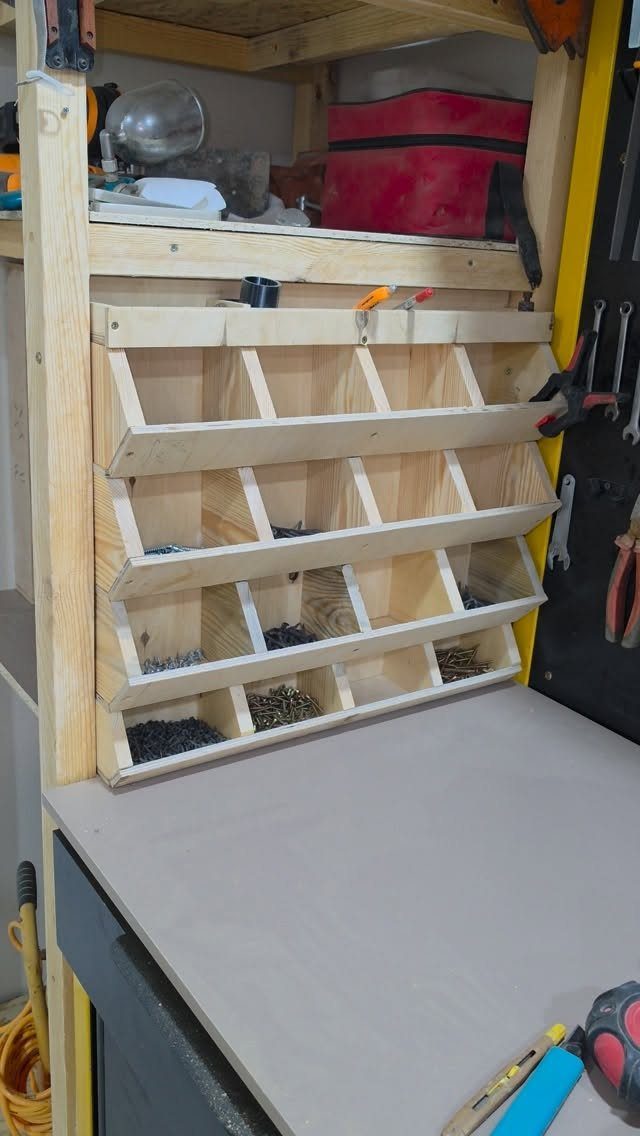
Slanted compartments keep small fasteners visible and reachable without the rummaging that flat bins require.
The wood here looks like scrap cut to fit the workbench post, which is how I would build it: measure the dead space beside your bench leg, then rip dividers from 1/2-inch plywood.
Angle the fronts so gravity does the sorting; screws roll to the back, heads stay forward.
What to check first is whether your bench post is square or offset; an angled leg needs a custom back piece or the compartments tilt wrong.
I would size each bay for one fastener type, not mixed hardware, or you will still end up dumping and sorting.
Tips for Maintaining Organization
A system only works if you actually run it. I would schedule a quick reset at the end of every project, not when the bench is already buried; that is when skipping feels easiest and costs the most later.
Labels fail when the label stays but the contents change, so I write in pencil or use erasable tags for anything that shifts seasonally.
Rubber drawer lining is worth the small cost; it keeps the grid or dividers from sliding when you yank a drawer open in a hurry.
The real test is whether someone else can find a tool and put it back without asking. If they cannot, the system is still private, not organized.
Choosing the Right Tool Organizer
Match the organizer to the tool you reach for first, not the one you own the most of.
Hand tools used daily belong on a wall within arm’s reach of the workbench; power tools you use weekly can live in a rolling chest that moves to the job.
Ceiling racks are for the stuff you need, but rarely; if you are up there more than twice a year, the lift or the rack is undersized or misplaced.
I would draw the garage to scale before buying anything modular; a cabinet run that blocks a vehicle door or shortens a workbench by 6 inches is a daily irritation.
Cost is not the first filter. A cheap wall cleat that fails with a saw in hand costs more than the plywood you should have used.
Safety in the Garage
Every garage workshop needs a fire extinguisher rated for electrical and chemical fires, not just the standard household type, and it needs to be reachable without moving anything.
I would mount it on the wall nearest the door, not buried behind storage.
A first-aid kit is basic; add a box of sterile eye wash if you grind or cut metal. Ventilation is where garages fall short.
Exhaust fans or open windows are the minimum; if you spray finish or use solvent-based products, I would check whether a cross-draft actually moves air across your work area, not just out a single window.
The floor is a hazard I see ignored: sawdust, melted snow, and spilled oil are all trip risks that collect because they look minor until they are not.
Clean as you go. A stable workbench is part of safety too; a bench that shifts when you lean into a cut is an accident waiting.
Frequently Asked Questions
What is the best garage tool organization system?
The best system depends on what you reach for first, not what you own the most of.
I sort tools by how often my hand reaches for them: the ones I use every day go on a wall near the workbench, the weekly ones in a rolling chest, and the rest up to ceiling racks where they stay out of the way until I need them.
Before I buy any modular storage, I sketch the garage to scale on graph paper, because a cabinet run that traps a vehicle door is a mistake you pay for every morning.
How do I organize my workshop tools?
Match the organizer to how often you use each tool.
Wall-mounted systems keep daily tools visible and within arm’s reach; drawers and cabinets protect tools you use less often; portable carts follow the project when you are working away from the bench.
I set a timer for 10 minutes at the end of each project to put everything back, while the bench is still manageable, not after it has become archaeology.