The ideas below cover stackable bins, rolling carts, and full closet setups, and the one that fits you depends on whether you store products where you use them or in one central spot.
A rolling cart suits the first reader; a dedicated cleaning closet, the second.
The detail that stops most under-sink installs is the tight clearance between drawer and doorsill, which is why I would measure twice before ordering that two-tier wire organizer.
1. Stackable Bins
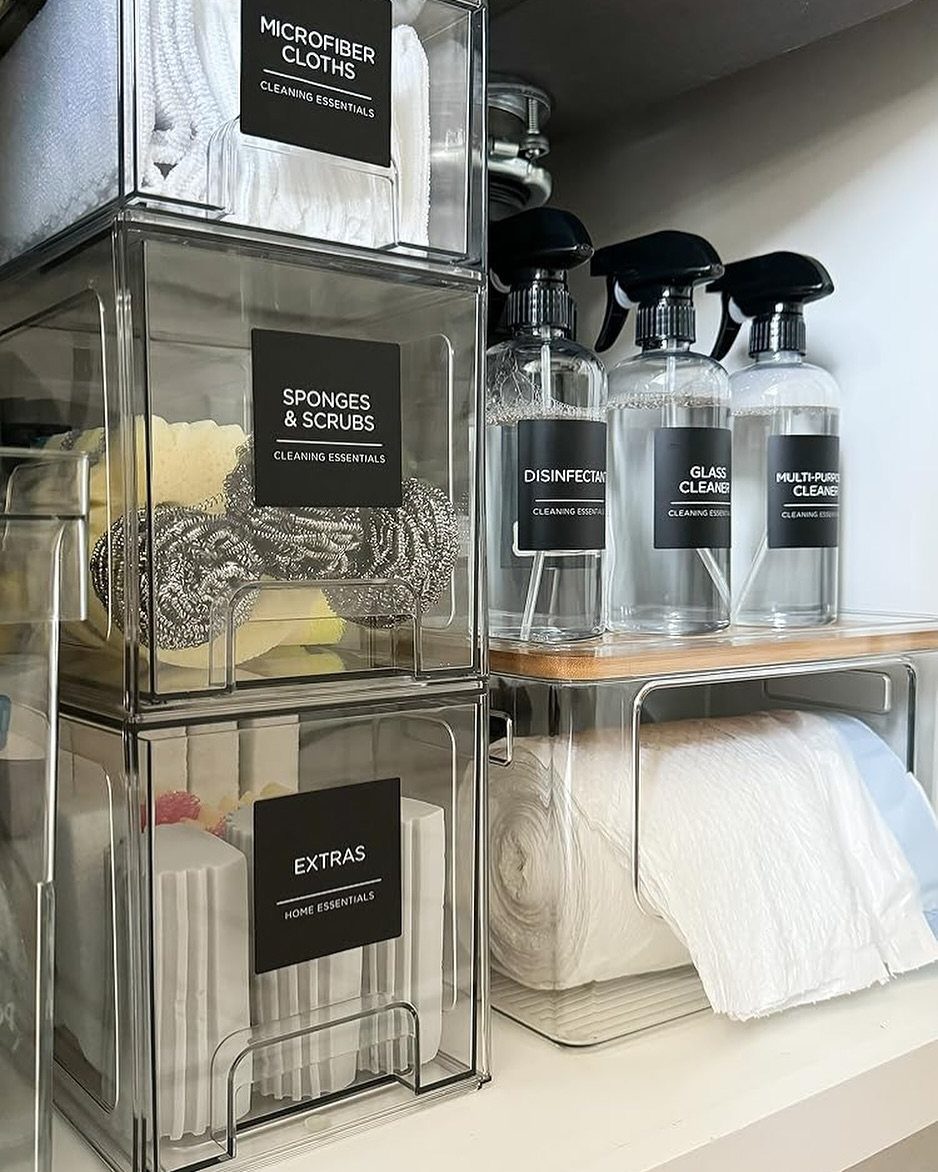
Stackable bins turn a single cabinet shelf into two or three usable surfaces, which matters when you are working with the shallow depth most under-sink cabinets give you.
If the bin is too tall, you lose the stack; too short, you waste vertical space.
2. Use a Cleaning Caddy
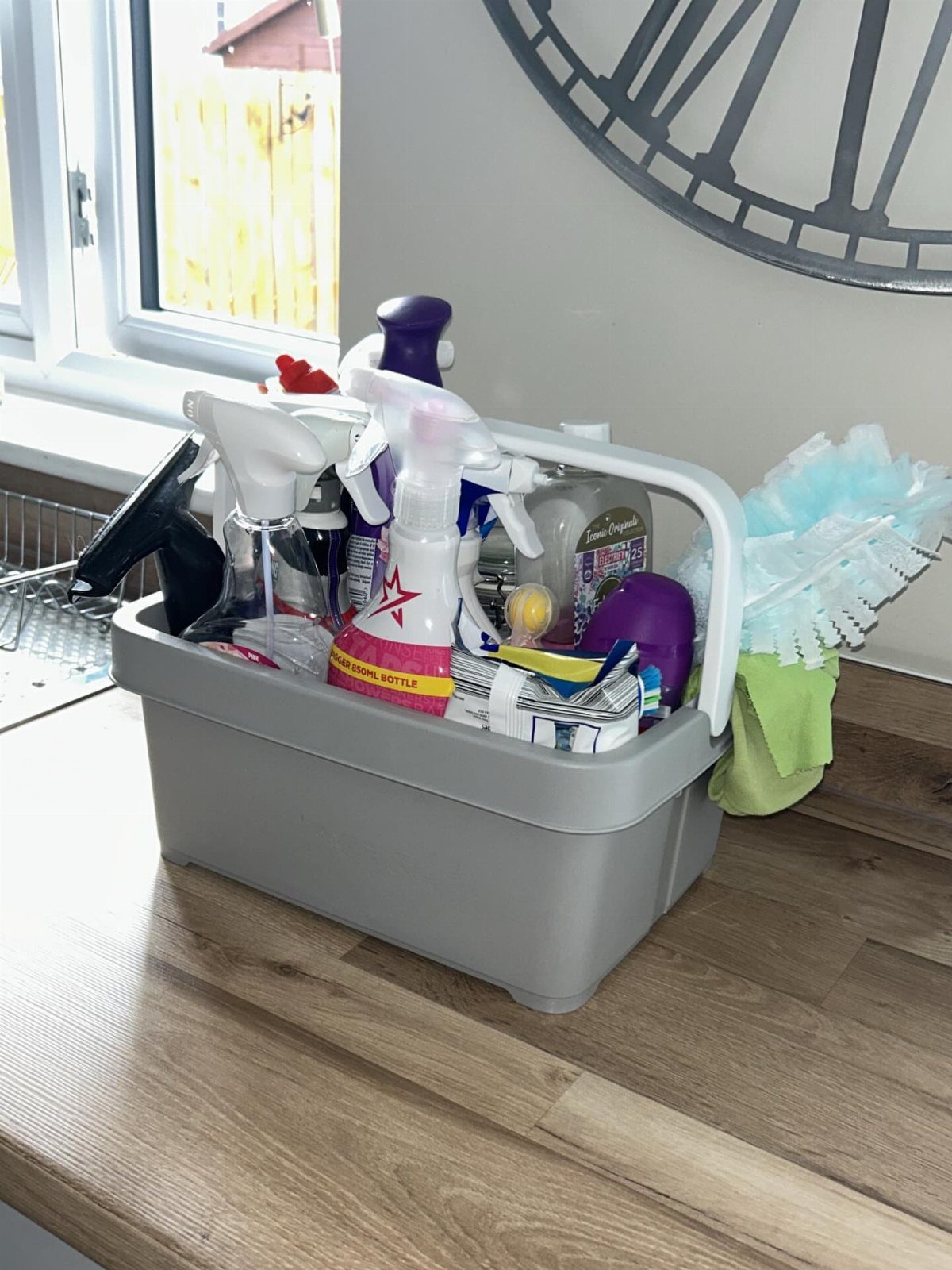
A cleaning caddy carries what you need room to room without the back-and-forth that turns a quick wipe-down into an hour.
Before buying, test the handle with a full load: bottles of cleaner add up fast, and a thin grip will dig into your palm.
3. Baskets in a Closet
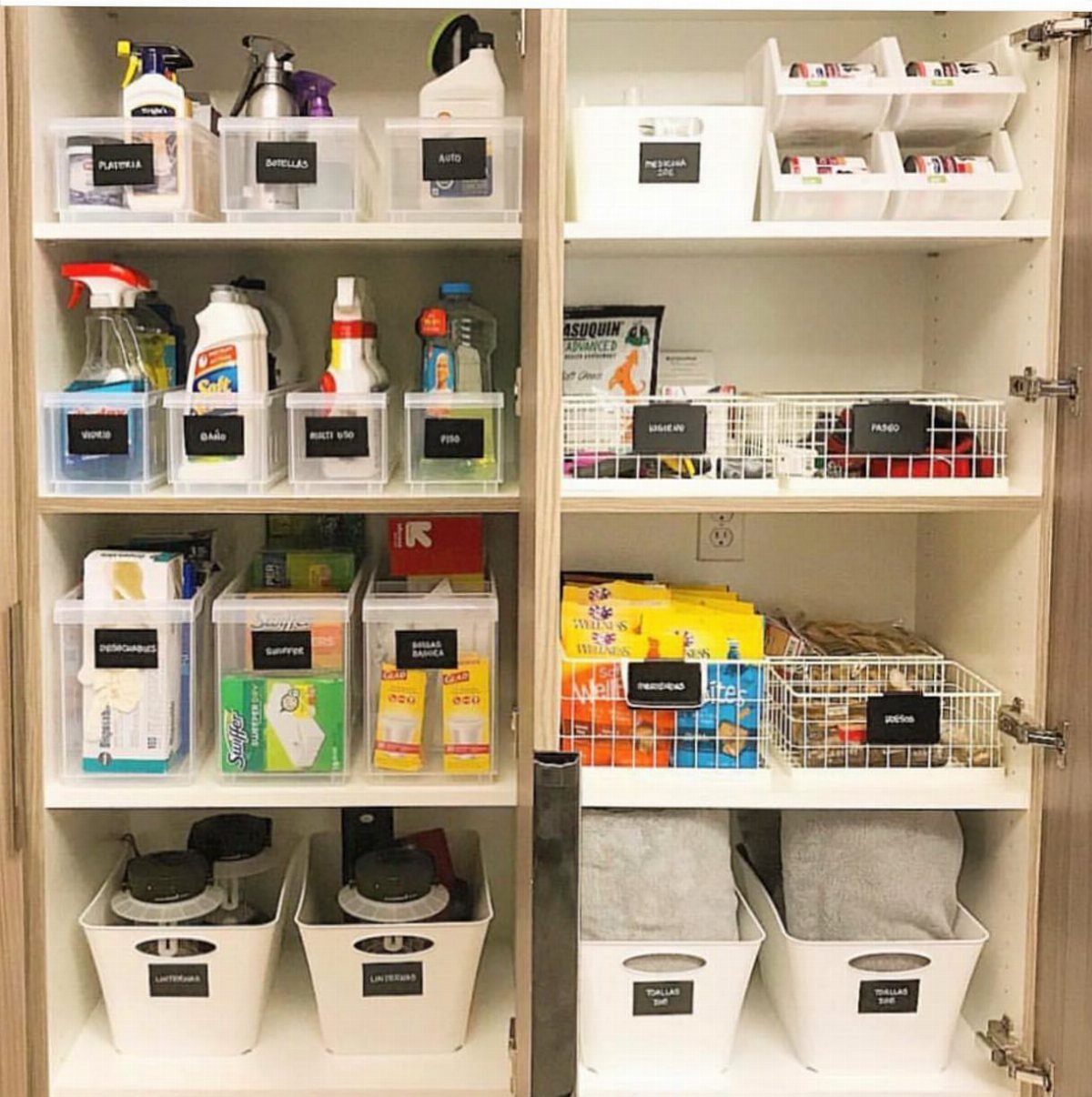
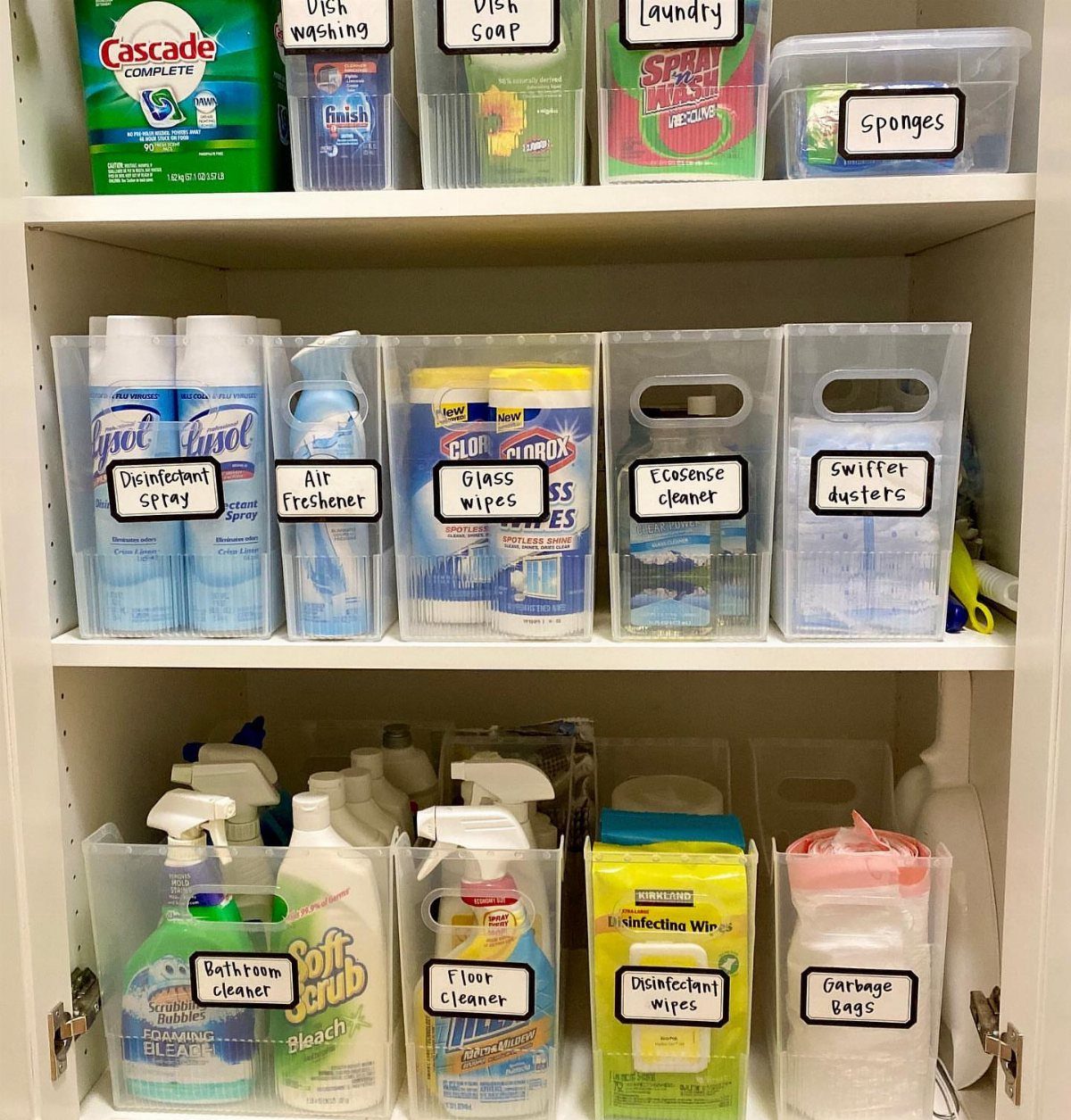
Baskets in a closet work because they corral the odd-shaped stuff that falls over on shelves: spray bottles, Swiffer refills, rolled towels.
Check your shelf depth against the basket base; a basket that overhangs the shelf lip tips forward when you pull it.
4. Labeling for Organization
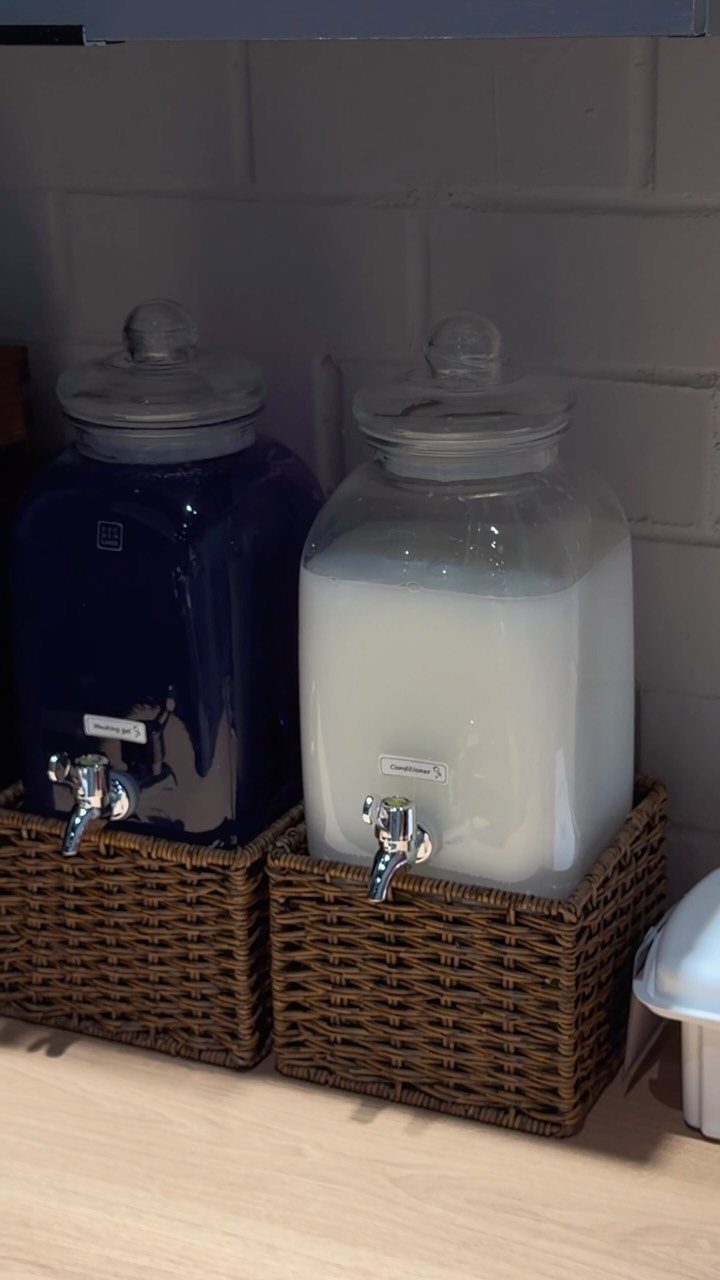
Labeling sounds obvious until you open 2 identical glass dispensers to find which holds washing gel and which holds conditioner.
The photo uses small white labels on woven-basketed beverage dispensers, a setup I would only try where the spigot clears the counter by enough to fill a measuring cup.
I prefer waterproof labels for anything near a sink; paper dissolves in humidity and leaves you guessing again by month three.
5. Rolling Cart for Cleaning Supplies
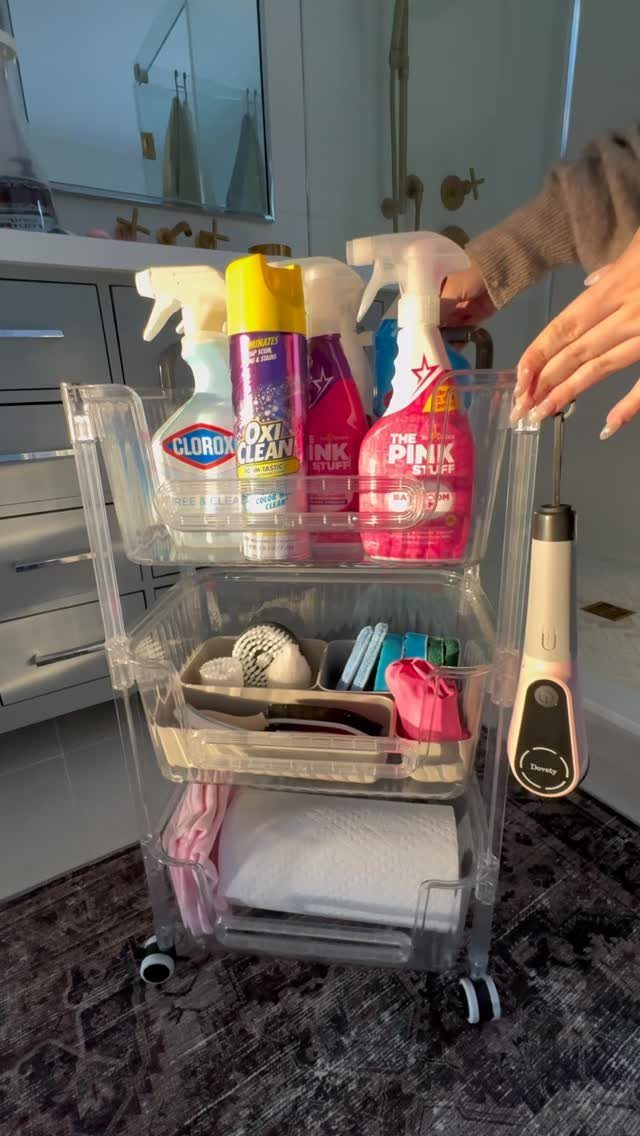
A rolling cart for cleaning supplies suits the reader who stores products where they use them, kitchen to bathroom to laundry, rather than centralizing in one closet.
I would load the heaviest bottles on the bottom tier to keep the center of gravity low; a top-heavy cart tips on thresholds and grout lines.
6. Dedicated Cleaning Closet
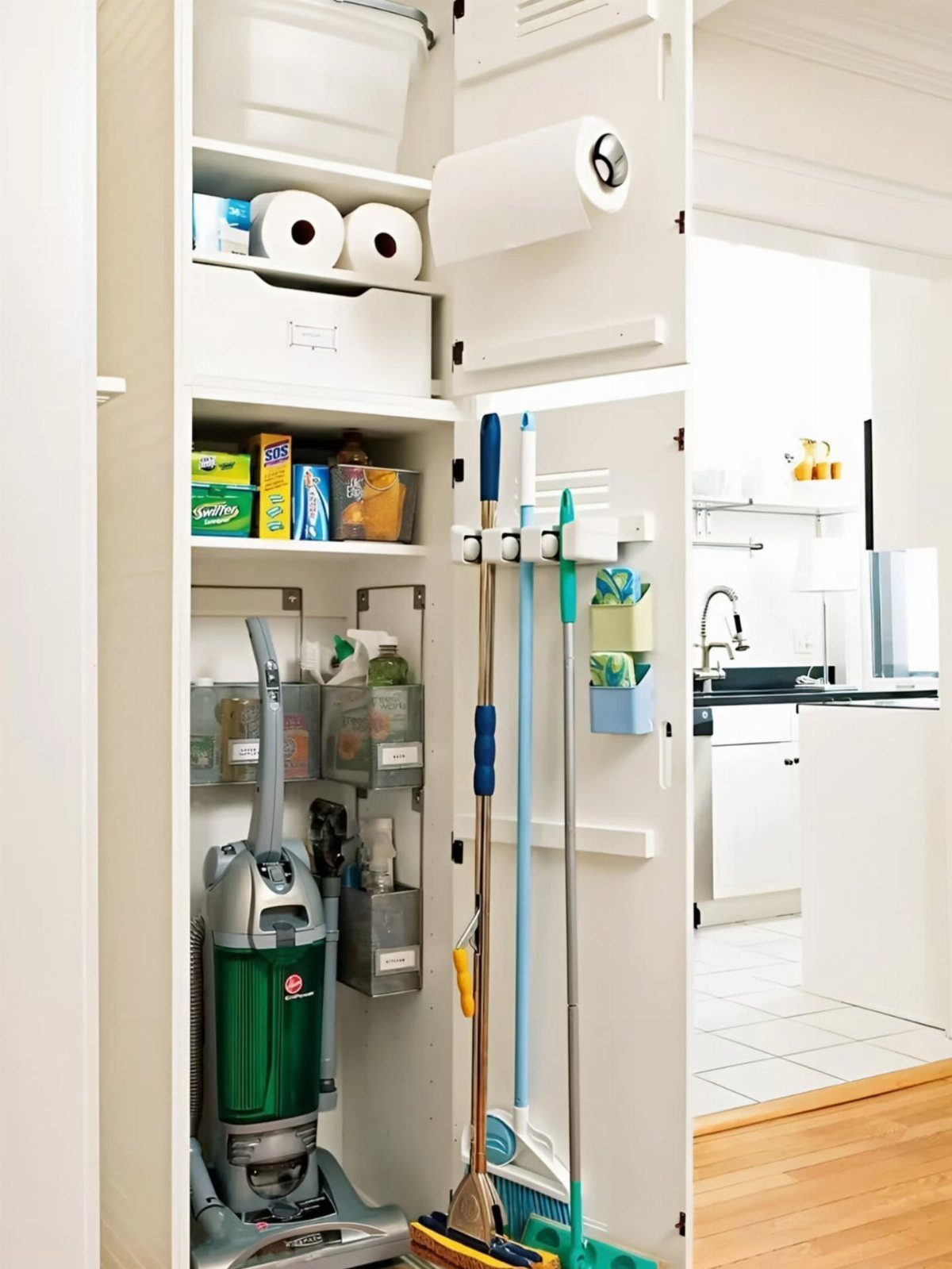
I would check the door swing before mounting anything; a broom holder that blocks the door from closing full is a daily annoyance.
This setup trades away proximity for capacity, so it works best when the closet sits central to the rooms you clean most often.
7. Under-sink Two-tier Wire Organizer
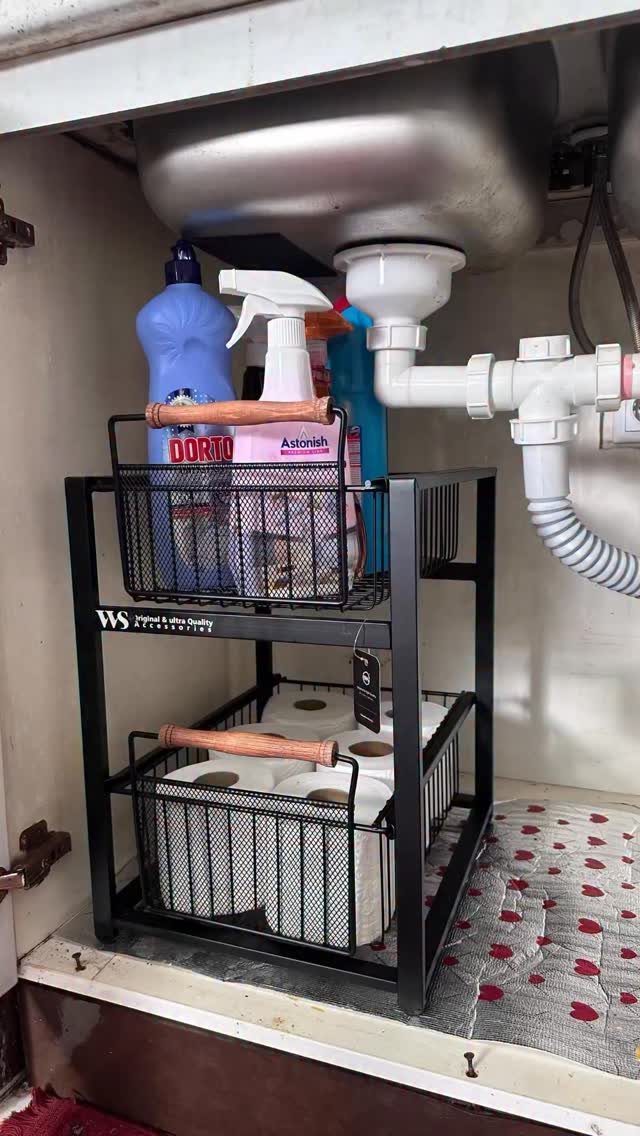
A two-tier wire organizer on rollers turns the dead zone at the back of an under-sink cabinet into reachable storage.
Check your plumbing first. The center of most under-sink cabinets is eaten by the drainpipe and disposal, so measure the narrow channels on each side before ordering.
A unit too wide sits useless in the box. I would also confirm the drawer clears the cabinet doorsill; half an inch short still means it jams.
8. Clear Bins for Laundry Supplies
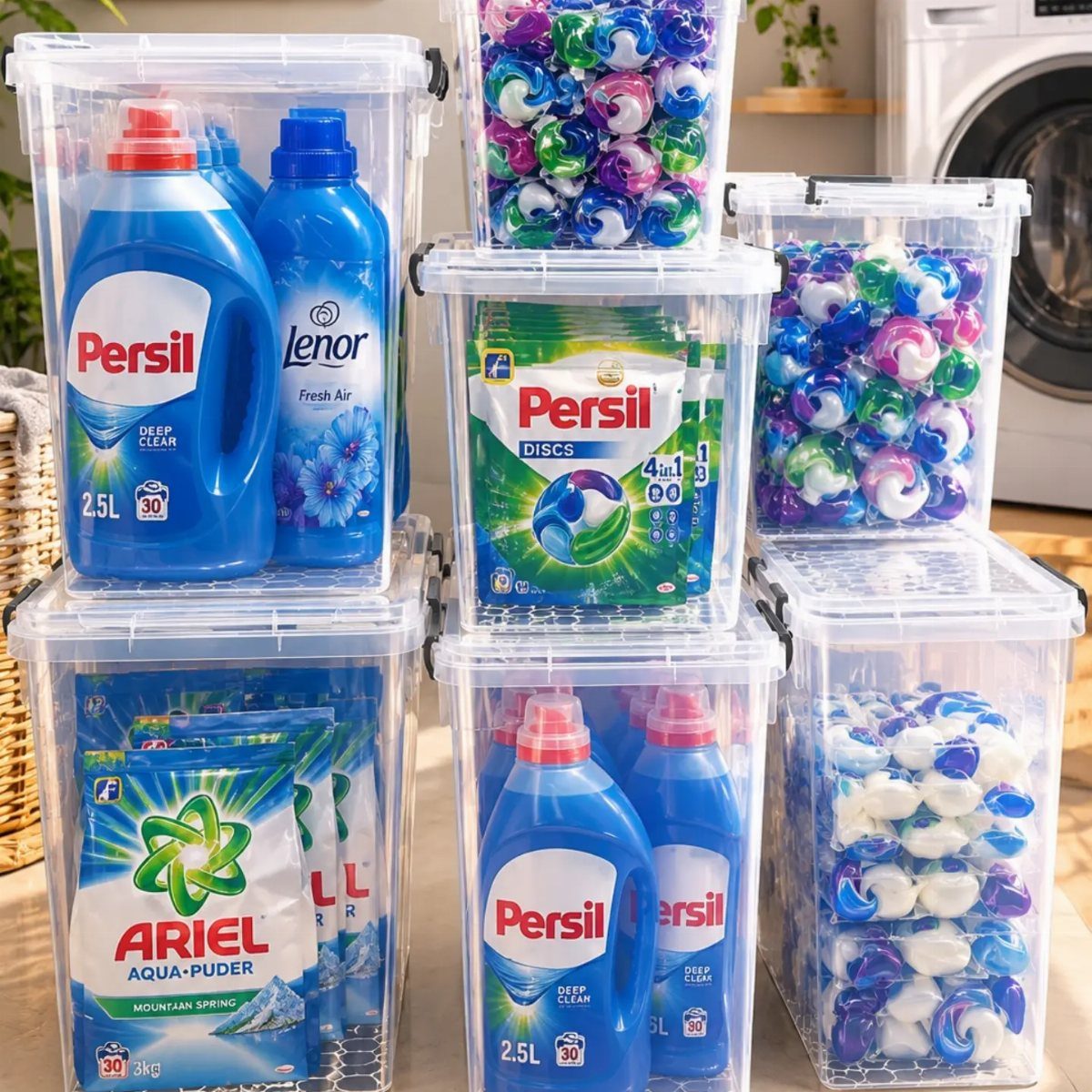
Clear bins for laundry supplies work because you see the Persil or Ariel level before you start a load, not mid-cycle with a basket of wet sheets waiting.
Latching lids keep powders from clumping in humidity, which matters more than most people expect in a laundry room.
Stacking is where this setup lives or dies. Put the heaviest detergent on the bottom; a large bottle on top warps the lid below and risks a collapse.
I would leave one bin unlatched for pods or scent beads you grab often, because opening every clip for a single wash gets old fast.
9. Wall-mounted Organizers
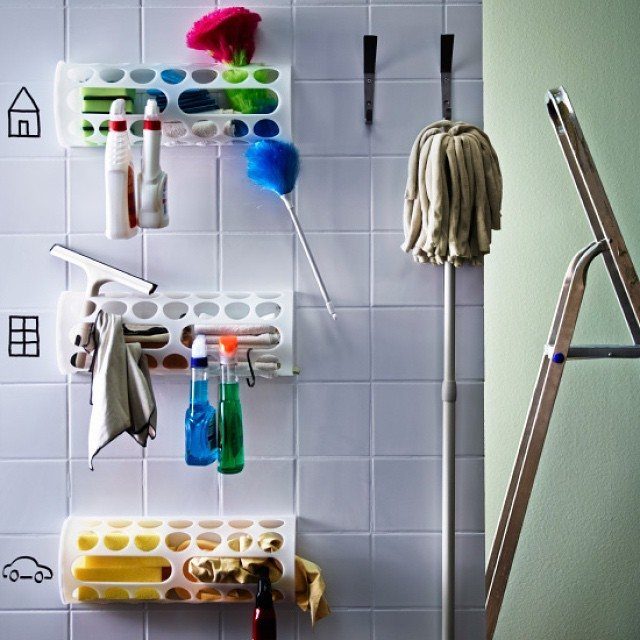
Wall-mounted organizers suit the reader with no cabinet space to spare, or a utility wall that can take the load.
Perforated plastic holders and hooks on tile, with small icons drawn beside each station, work well if more than one person cleans this house. A sponge icon beats a label for speed when you are rushing.
Wall-mounted organizers only work if you actually put things back where they belong. Adhesive strips fail in steamy bathrooms; drill and anchor, or plan to rehang.
I would mount spray bottles with the trigger forward, not the base, so they lift out cleanly. The mop hook should sit high enough the head clears the floor, or it will mildew where it rests.
10. Under-counter Clear Bins
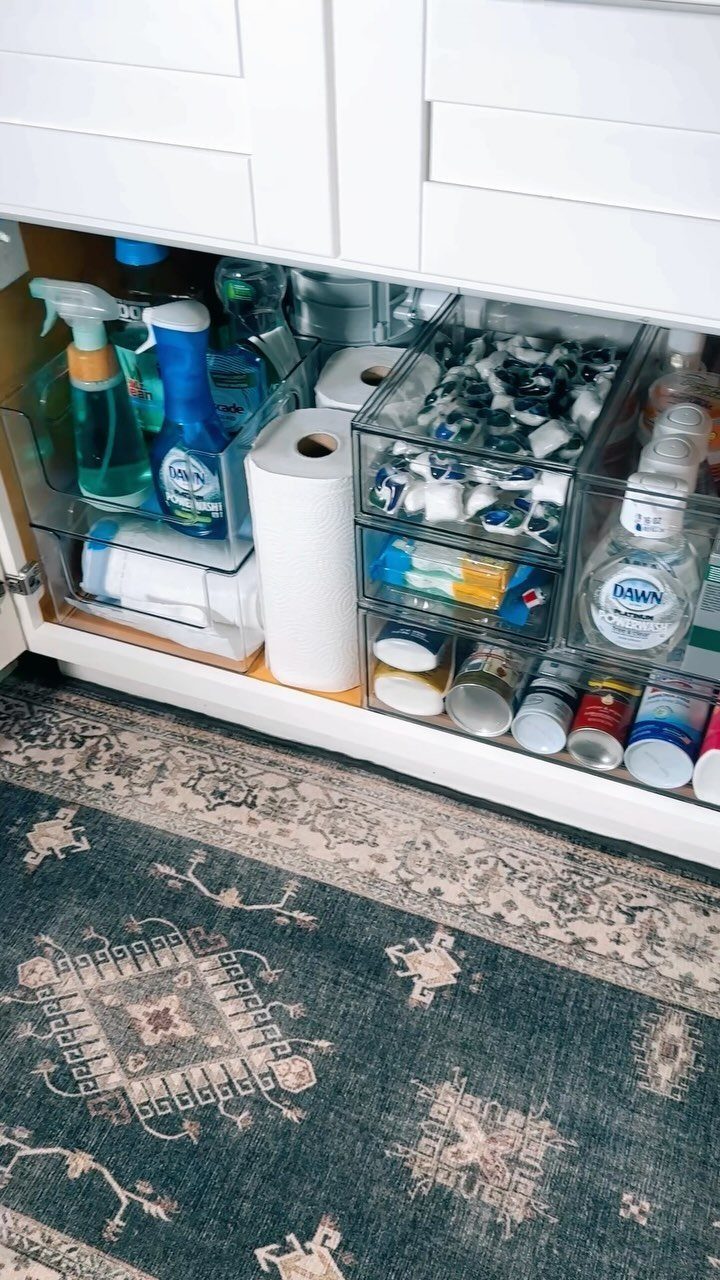
Under-counter clear bins bring the same visibility to a base cabinet that the laundry bins bring to detergent.
Acrylic drawers that stack in the open space beside the plumbing tell me the user measured around the trap rather than fighting it.
Drawers beat bins here. A bin forces you to unstack to reach the bottom; a drawer pulls out with contents intact.
I would size the top drawer for dish pods and wipes you grab daily, the deeper ones below for backup bottles and paper towels.
Check that the stack leaves room for the spray hose to move; a drawer that blocks the faucet hardware is a sink you cannot use fully.
Importance of Organization
Organized cleaning supplies save time in a way that matters on a Saturday morning: you grab what you need, finish the job, and move on.
The opposite is a cabinet you open 3 times because the glass cleaner hid behind the toilet bowl cleaner again.
Safety is the sharper edge of this. Chemicals stored wherever they land become a hazard the moment a toddler pulls open the wrong drawer or a dog knocks over a spray bottle.
High shelves or locked cabinets are not paranoia; they are the minimum when bleach and ammonia live in the same house.
Kids and pets change the math completely.
What reads as convenient access for you reads as accessible poison for them. I would rather walk an extra 10 steps to a latched closet than trust a low cabinet in a busy kitchen.
Efficiency follows from knowing what you own.
A half-empty bottle of floor cleaner you forgot about buys you a duplicate you did not need. That is money and shelf space gone for no reason.
Safety Tips for Storage
Store chemicals where small hands and paws cannot reach them.
Upper cabinets work if you add child safety locks; a free-standing lockable shelf works better if you have the floor space for it. The lock is not optional if children live in the house or visit regularly.
Heat damages chemicals faster than most people realize.
Keep products away from pipes, vents, and any surface that runs warm. A cool, dry spot extends shelf life and reduces the risk of containers warping or seals failing.
Decanting into prettier bottles creates a problem when the original label disappears and you no longer know what is inside or how to store it safely. I would keep chemicals in their original containers, or photograph the label before transferring.
Low baskets inside cabinets catch leaks before they reach wood shelving. That matters less for metal or laminate, but most under-sink cabinets are particleboard that swells and delaminates when wet.
Checklist for Supplies
Start with inventory.
Pull everything out, check dates, and discard what expired or separated. A bottle of cleaner you used once and forgot is clutter, not a backup plan.
List what remains, then note what you actually reach for in a typical month.
That list becomes your core: the products you replace before they run out. Everything else is optional, and optional items should not take prime storage space.
A checklist attached to each tote or caddy keeps the system honest.
Laminated cards with a wipe-off marker let you mark a job done without printing fresh sheets each week. I would split by task rather than by room: one tote for glass and mirrors, one for floors, one for dusting.
Some overlap is normal; either buy a second bottle of window cleaner or accept that one item migrates between totes.
The point of the checklist is knowing what you have before you shop. Running out of dish pods mid-week is the small failure that starts the cascade into disorganized restocking.
Frequently Asked Questions
What is the best way to organize and clean my house?
A portable caddy with your core supplies cuts the back-and-forth that stretches a quick wipe-down into an hour. I would split supplies by task, not by room: one tote for bathrooms, one for floors, one for dusting.
What are some creative ways to store cleaning supplies?
Stackable bins split a single shelf into two or three surfaces, which matters in shallow under-sink cabinets.
For open wall space, perforated plastic holders with small icons drawn beside each station work well when more than one person cleans the house.
What cleaning supplies do I need?
Start with inventory: pull everything out, check dates, and discard what expired or separated. Your core list is what you actually reach for in a typical month; everything else is optional and should not take prime storage space.
Should I organize by product type or room use?
I use a mix: task-based totes for grab-and-go cleaning, with a small shelf of extras by product type for restocking. Some overlap is normal; either buy a second bottle of window cleaner or accept that one item migrates between totes.