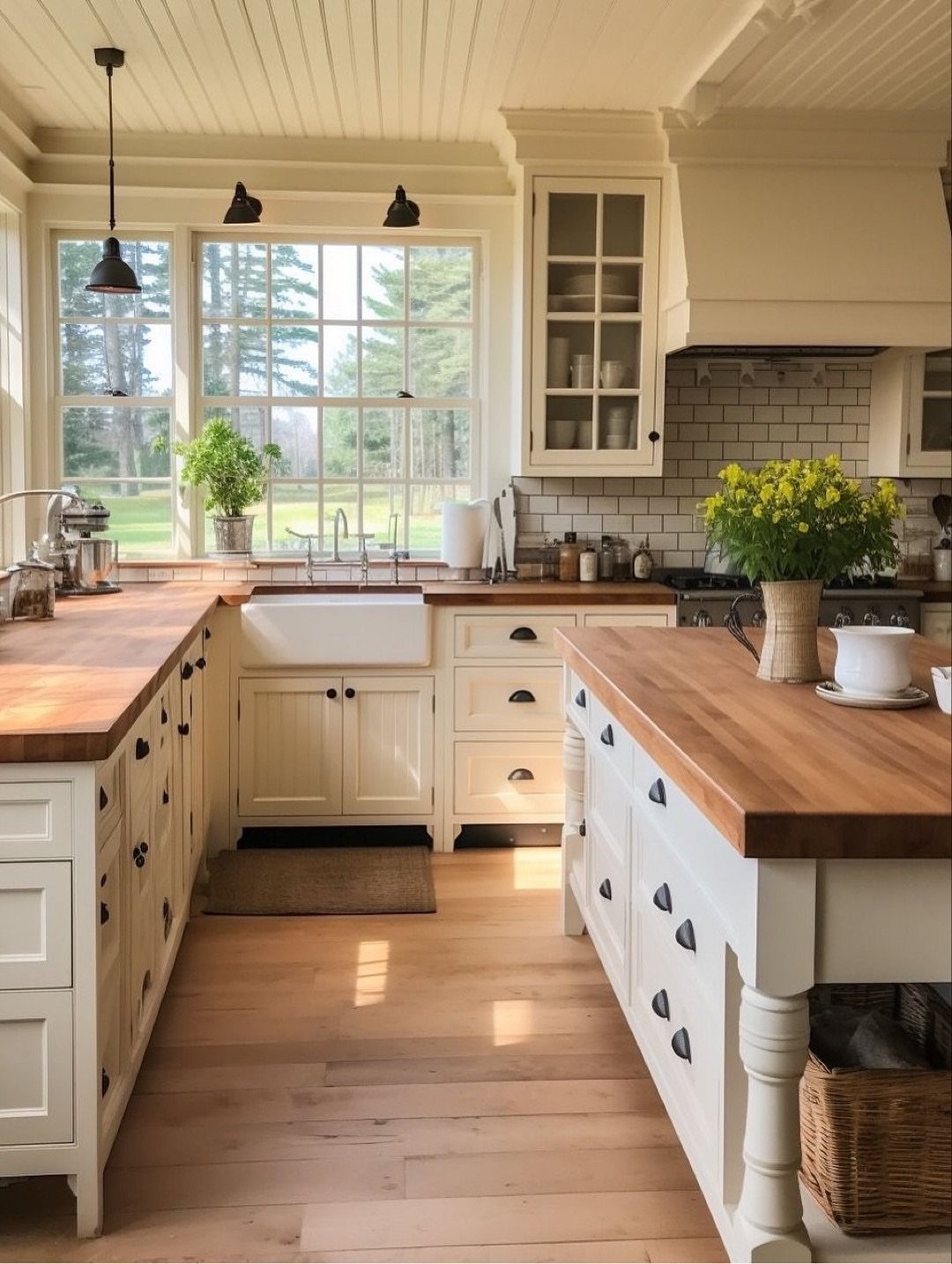
These 28 country farmhouse kitchen ideas range from a single afternoon swapping in open shelving or vintage accessories to installing a range hood or reclaimed wood island that needs a contractor’s schedule.
What picks one over another is whether you are renting and can only use peel-and-stick tile or portable pieces, or staying long enough that permanent choices like a brick accent wall or distressed ceiling beams make sense.
I keep coming back to the sage green Shaker cabinets and the five-piece door that survives trend cycles because the recessed panel does not collect grime like raised profiles do.
1. Open Shelving
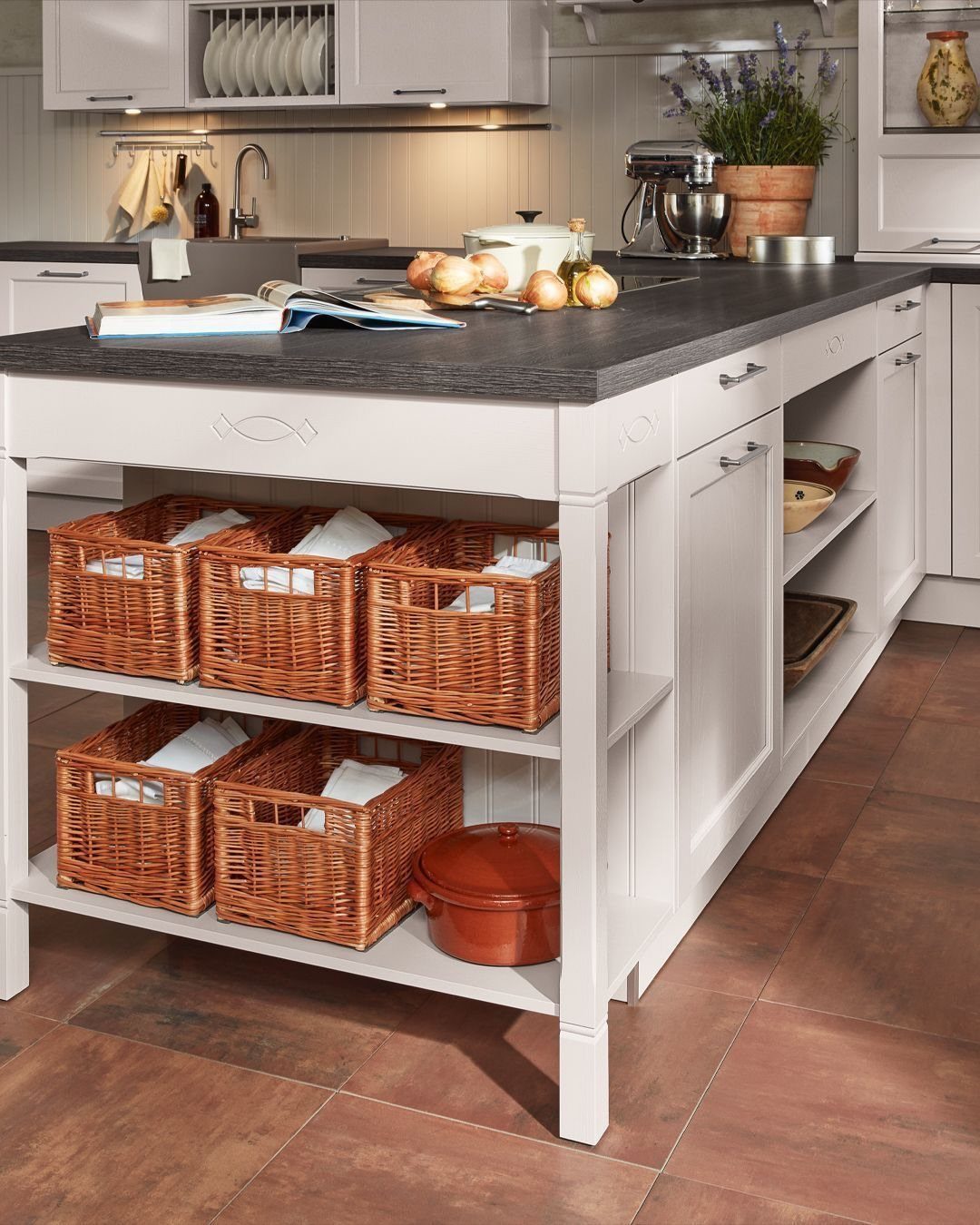
Open shelving turns the kitchen island into working storage you actually use.
I like it best when the shelves hold something with texture, like woven baskets, rather than a cluttered row of daily dishes. Dust and grease collect fast; anything on these shelves needs wiping down more often than closed cabinets.
Before you commit, check whether your cooking style is tidy enough for display, or whether you’ll end up with a visual mess that stresses you out every morning.
2. Vintage Accessories Like Mason Jars
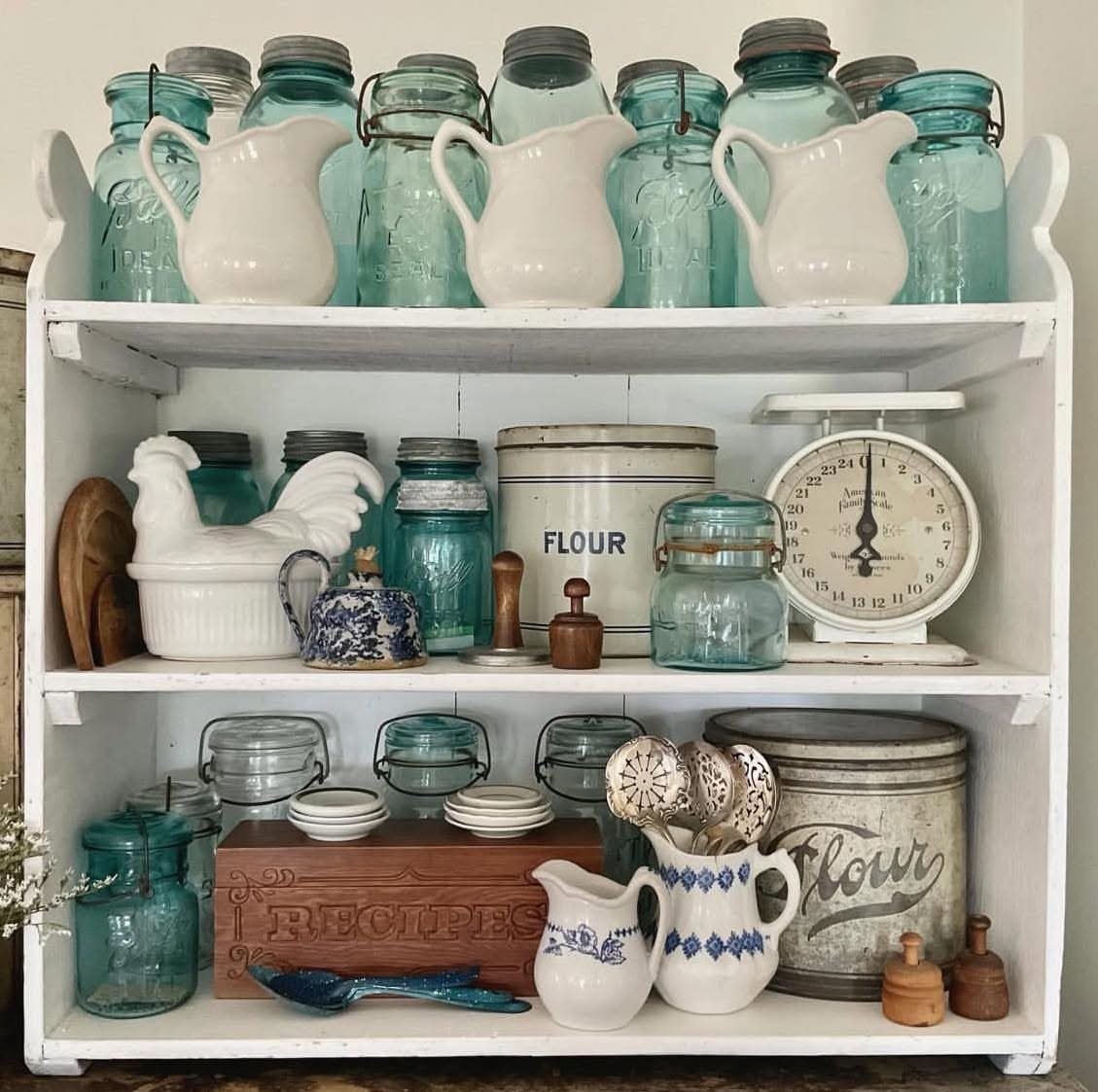
Mason jars and vintage canisters work because they’re cheap, uniform, and read as intentional the moment you group them.
I skip the actual antique hunt and buy reproductions at estate sales or the bulk section of craft stores; the turquoise glass here is doing the heavy lifting, not the age.
The risk is looking like you staged a photo instead of living in a kitchen.
My rule: limit it to one shelf or one corner, mix in one modern shape so it doesn’t feel like a movie set, and never label a jar for something you don’t actually keep on hand.
3. The Lighting
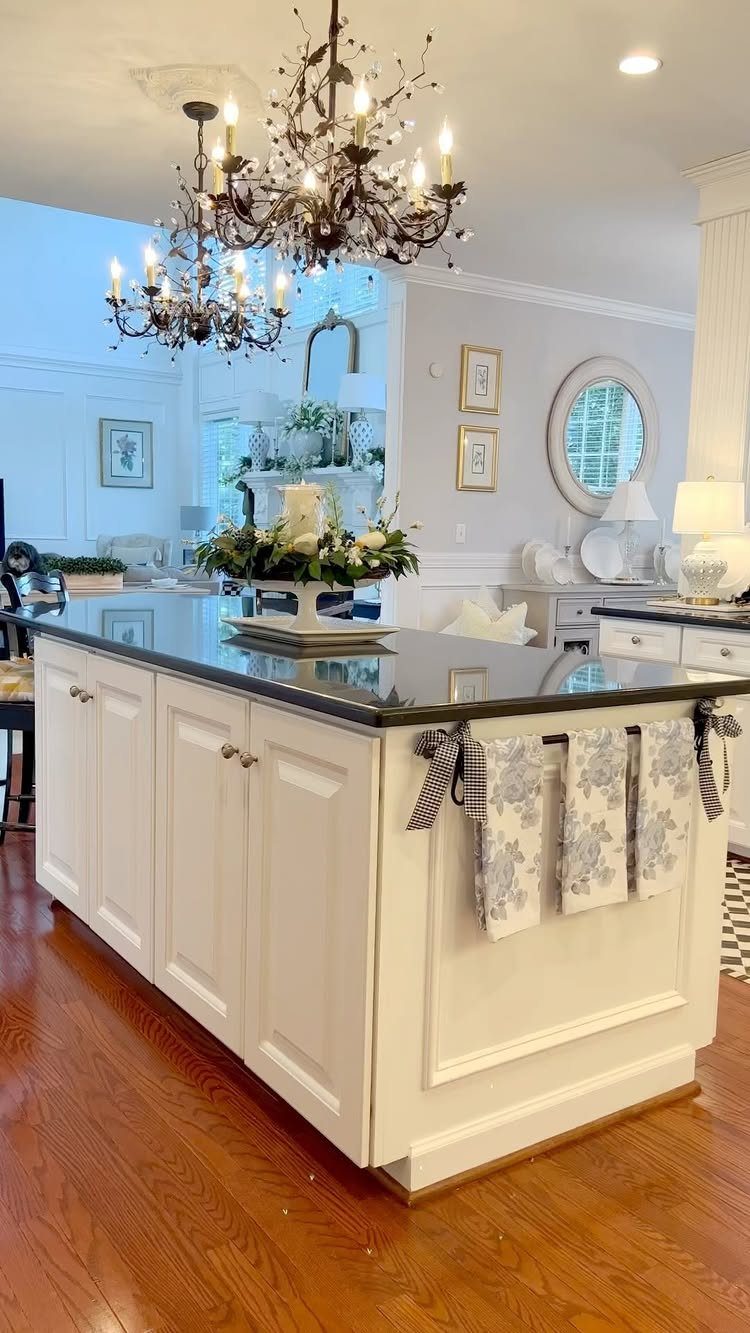
2 chandeliers over an island is a move I rarely see done well, but it works here because the room has the ceiling height and the visual weight to carry it.
The dark metal keeps them from floating away against all that white. What I’d check before buying: your ceiling height, first.
In a low kitchen, 2 fixtures start to feel like obstacles. Then the wiring; two junction boxes means more cost than one long fixture, and if you’re renting, that’s probably a dealbreaker.
For a weekend project, I’d swap in plug-in pendants and a ceiling hook rather than opening the ceiling at all.
4. Apron-front Sink
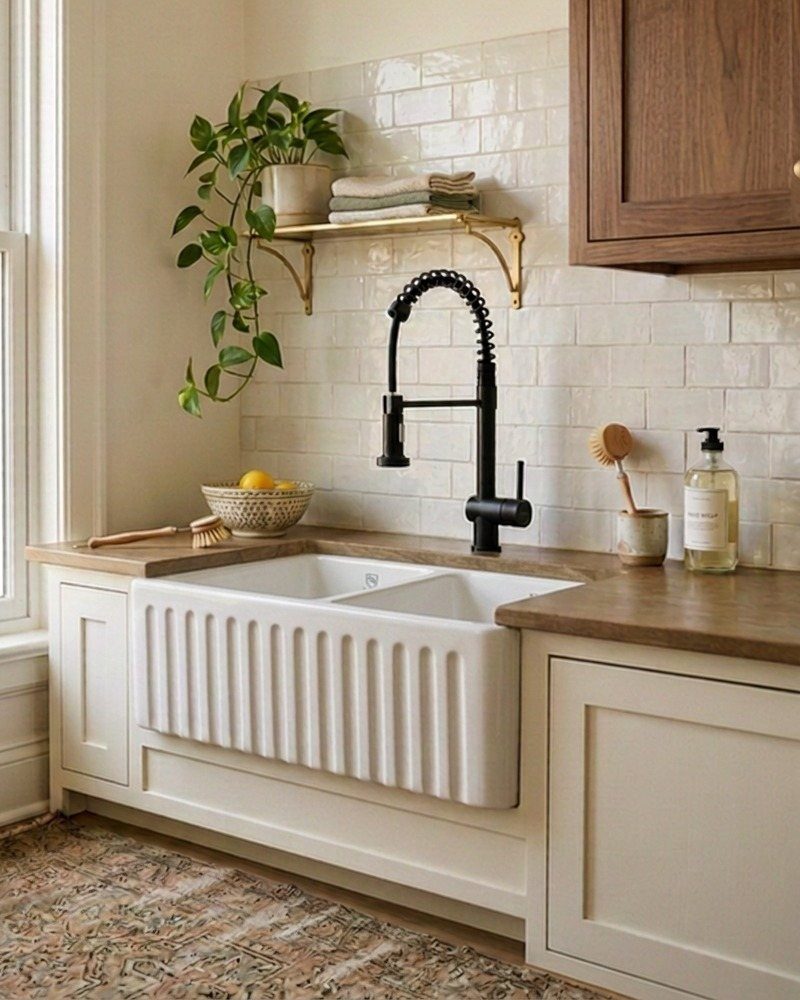
The fluted front on this apron sink is what separates it from the flat farmhouse sinks that have gone generic in every flip house. I prefer the fluting; it catches light and hides water spots better than a smooth surface.
The matte black faucet is the right pairing, brass would fight the lines. What I’d verify before ordering: the cabinet base needs to be cut back to accept the apron front, and not every standard cabinet will take the modification.
If you’re retrofitting, measure the reveal you want, the sink you like, and your existing cabinet in that order, or you’ll end up ordering twice.
5. Natural Materials
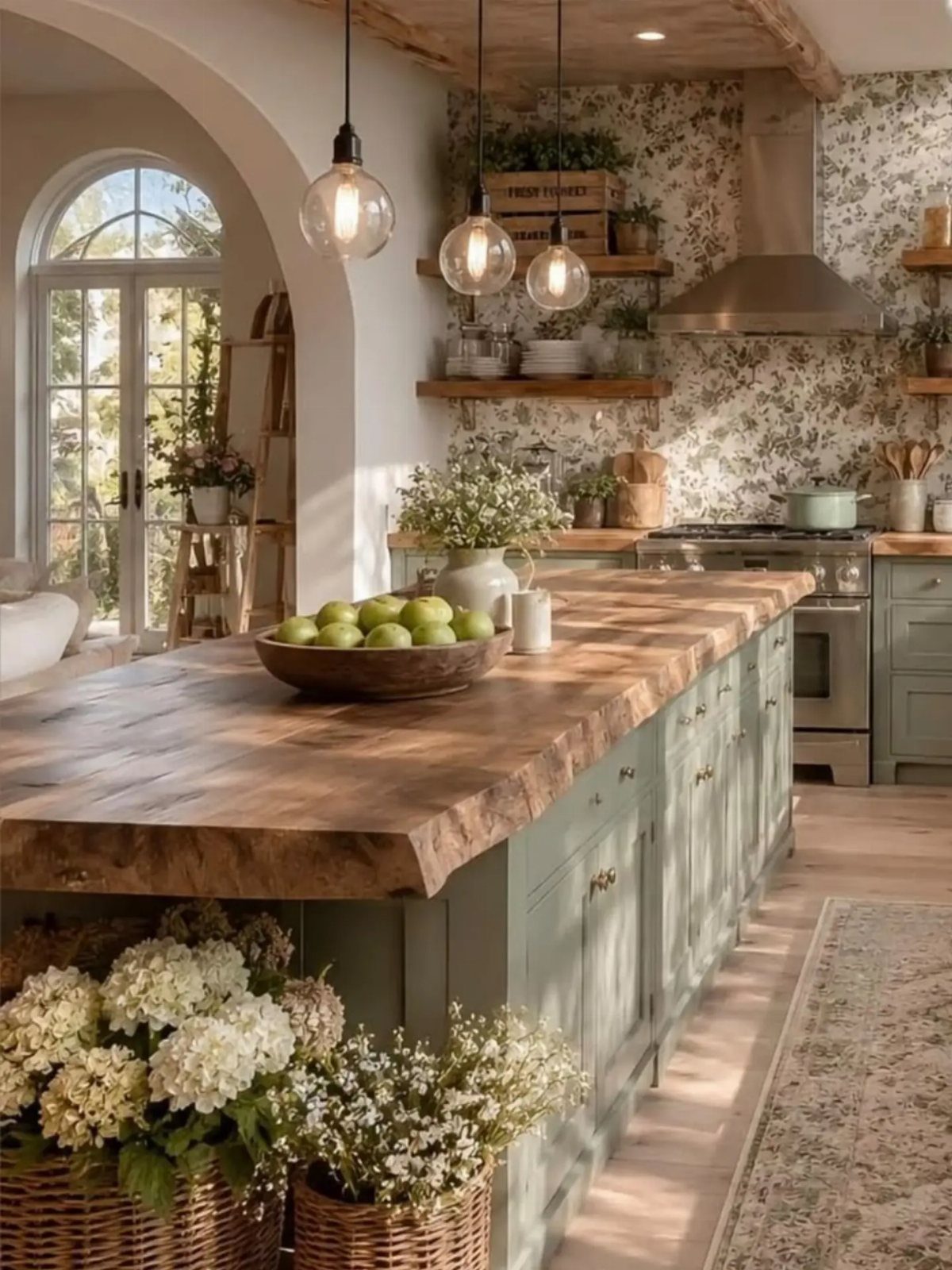
A live-edge slab as a countertop is the kind of natural material statement that reads farmhouse without trying too hard.
Thickness is what makes it feel substantial; anything thinner looks like a cutting board that got away from you. I always seal with a hard wax oil and plan on re-oiling on schedule depending on how hard you cook.
You will put in more maintenance than with a sealed countertop. Sealed stone gives you until morning on a red wine spill; wood asks you to wipe it now.
For a weekend project, I’d use a finished slab from a local mill rather than trying to flatten and finish raw lumber myself.
6. Soft Whites and Creams Color Palette
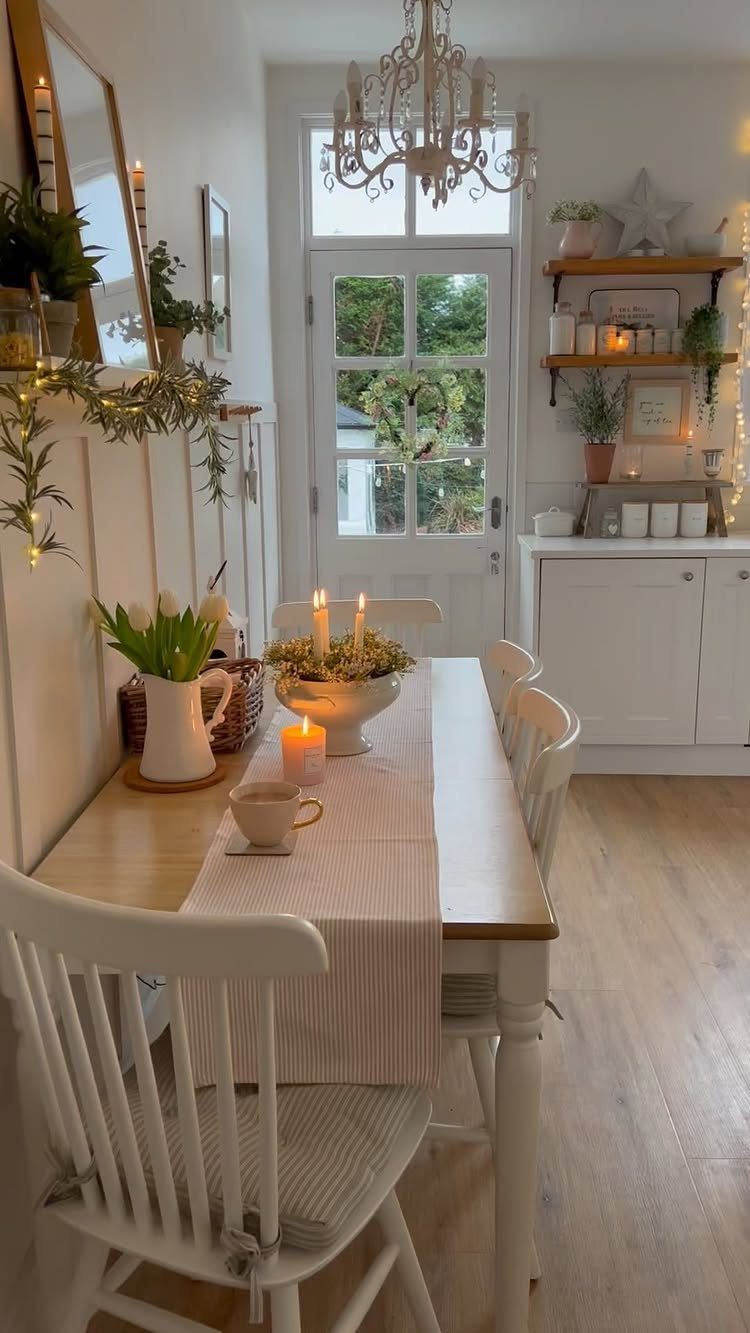
Soft whites and creams survive in farmhouse kitchens because they reflect the light you have rather than demanding more of it.
The painted table legs against natural wood top here is the combination I keep coming back to; it keeps the room from going flat. What I’d watch: the undertone.
Cream with too much yellow goes sad under LED bulbs, too much pink fights wood tones. Test your paint at the time of day you actually use the kitchen, not just in morning light.
And buy the scrubbable finish; a farmhouse kitchen is a working room, and matte paint that won’t take a sponge is a mistake you live with for years.
7. Farmhouse Table
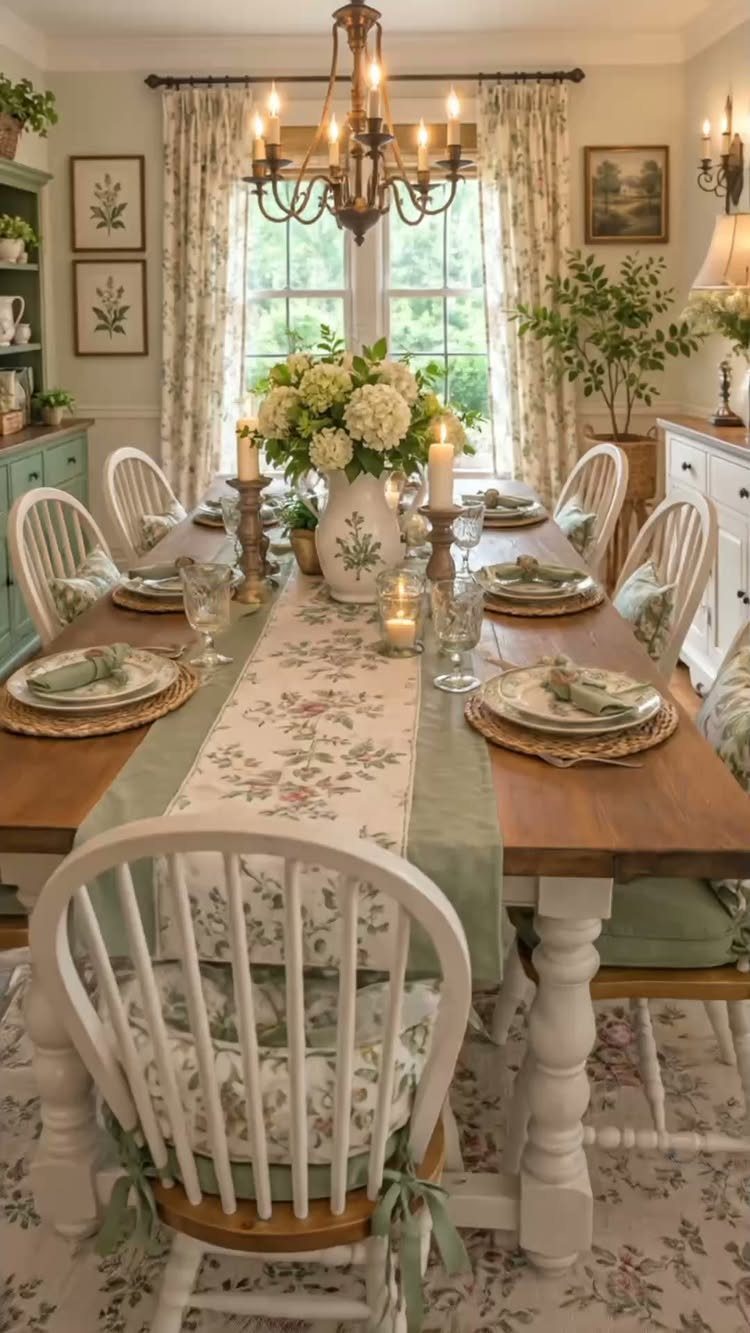
A farmhouse table with turned legs anchors the room better than a standard dining set because the visual weight sits low and spreads wide.
The white painted legs against a natural top is the combination I keep specifying for clients who want the look without the heaviness of all-wood.
Before you buy, measure your circulation: leave enough space on all sides for chairs pulled out, and more if people pass behind seated diners.
A low centerpiece wins on a table meant for gathering; anything tall breaks sightlines across the faces you actually want to see.
To nail the neighbourly atmosphere of a farmhouse kitchen, it’s imperative that your seating evokes a social yet laidback vibe.
8. Farmhouse Kitchen with Brick Accent Wall
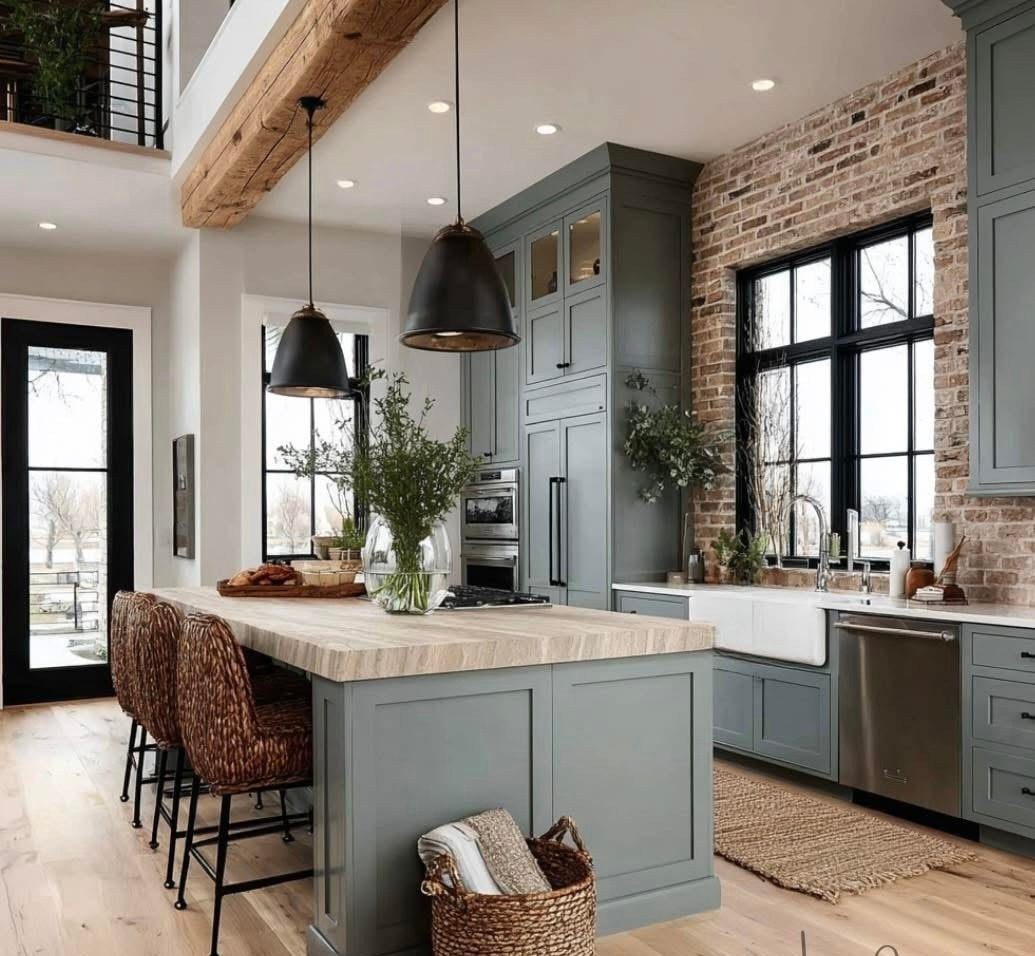
Exposed brick around the window turns a standard kitchen run into something that reads as original architecture.
The gray-blue cabinets against that warmth is the pairing that makes this work; brick with true red tones would fight this palette. What I’d verify before starting: whether your wall is structural brick or a veneer you can add.
True brick costs more and eats floor depth, but it carries the weight this look needs. A thin brick tile applied over drywall reads flat in person, though it photographs well enough for most renters to consider it.
9. Shaker Cabinets
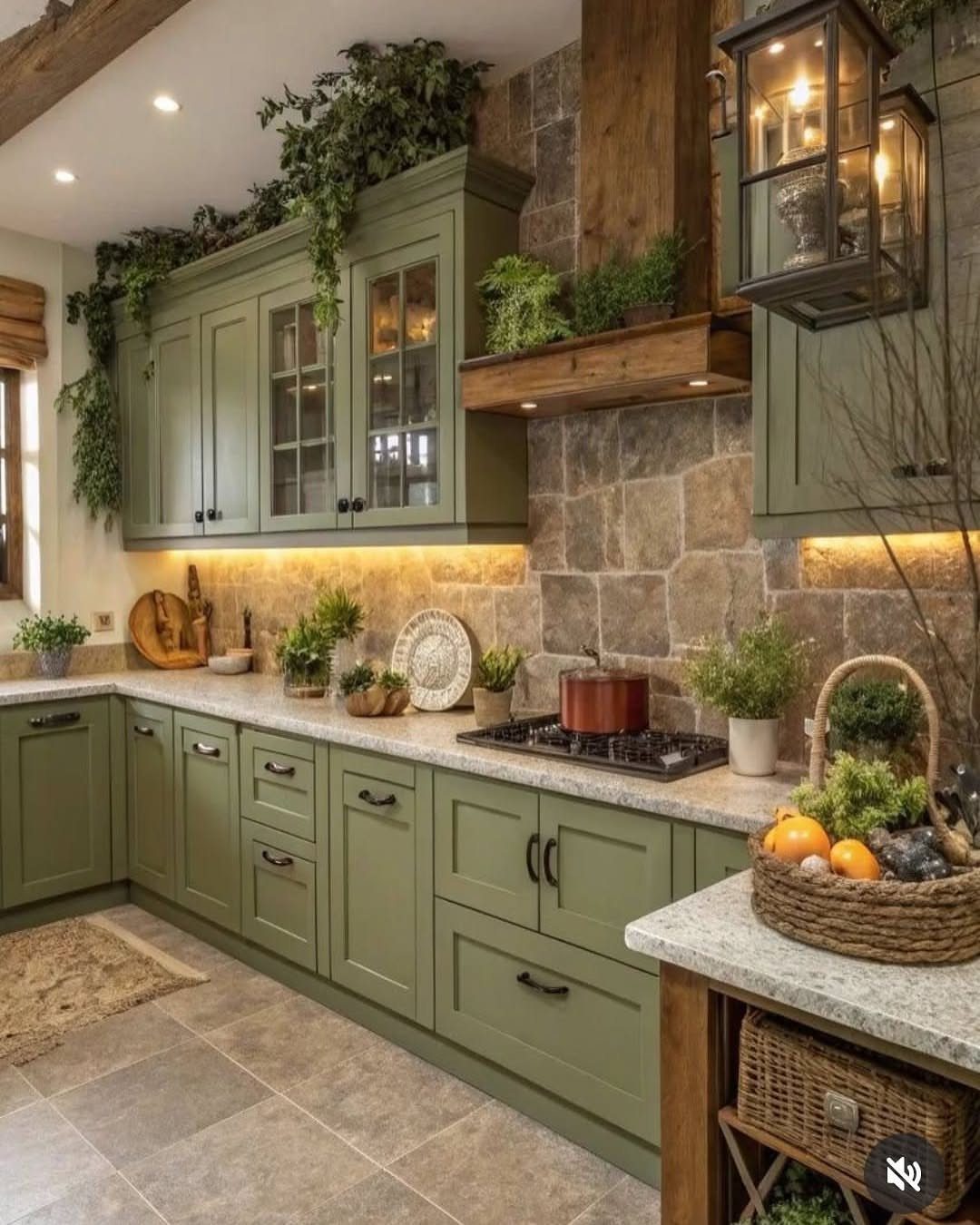
Sage green Shaker cabinets survive trend cycles because the five-piece door is simple without being plain, and the recessed panel doesn’t collect grime like raised profiles do.
Stone backsplash and light granite is the traditional pairing; I’d keep the countertop lighter than the cabinets to avoid a cave effect in smaller kitchens. What to check before ordering: the stile width, the vertical frame piece, varies by manufacturer.
Narrow stiles read more modern, wider ones more country. Order a sample door, hold it in your actual light, and live with it for a week before you commit to thirty of them.
10. Wooden Countertops
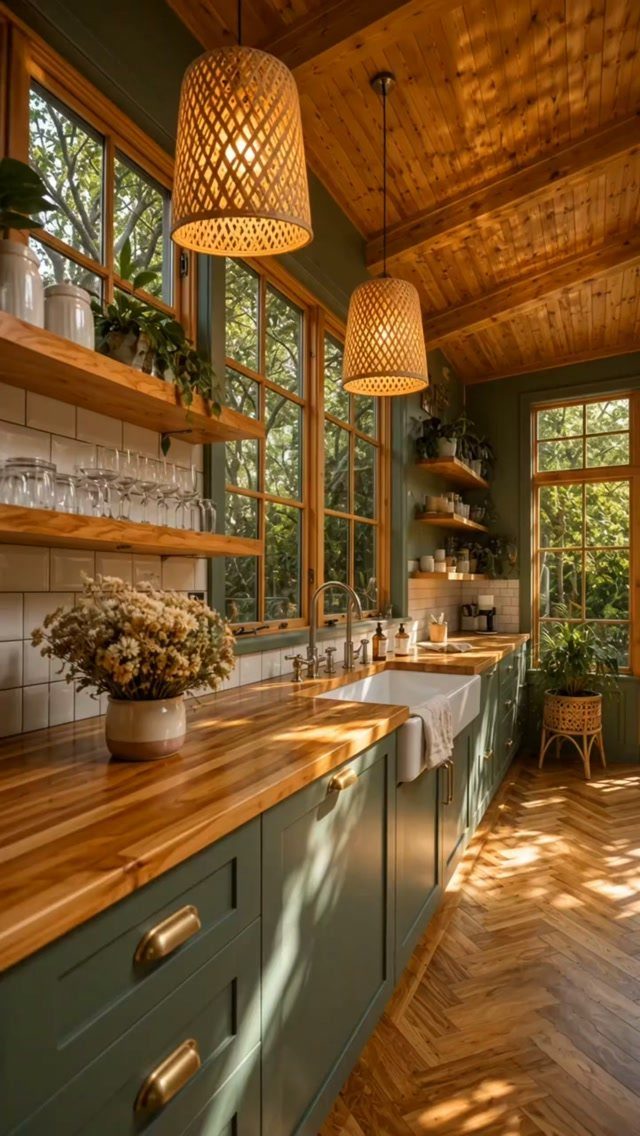
Butcher block over painted cabinets is the farmhouse combination I specify when someone wants warmth without the cost of stone. Wood-on-wood works when you vary the tones and scales so no single element dominates the room.
Maintenance is the tradeoff. I oil mine monthly, more often near the sink, and I cut on a board, never directly on the counter.
Water is the enemy; a puddle left overnight will raise the grain. For a weekend install, buy pre-finished butcher block and seal the underside before you carry it in, not after.
11. Copper Pots and Pans
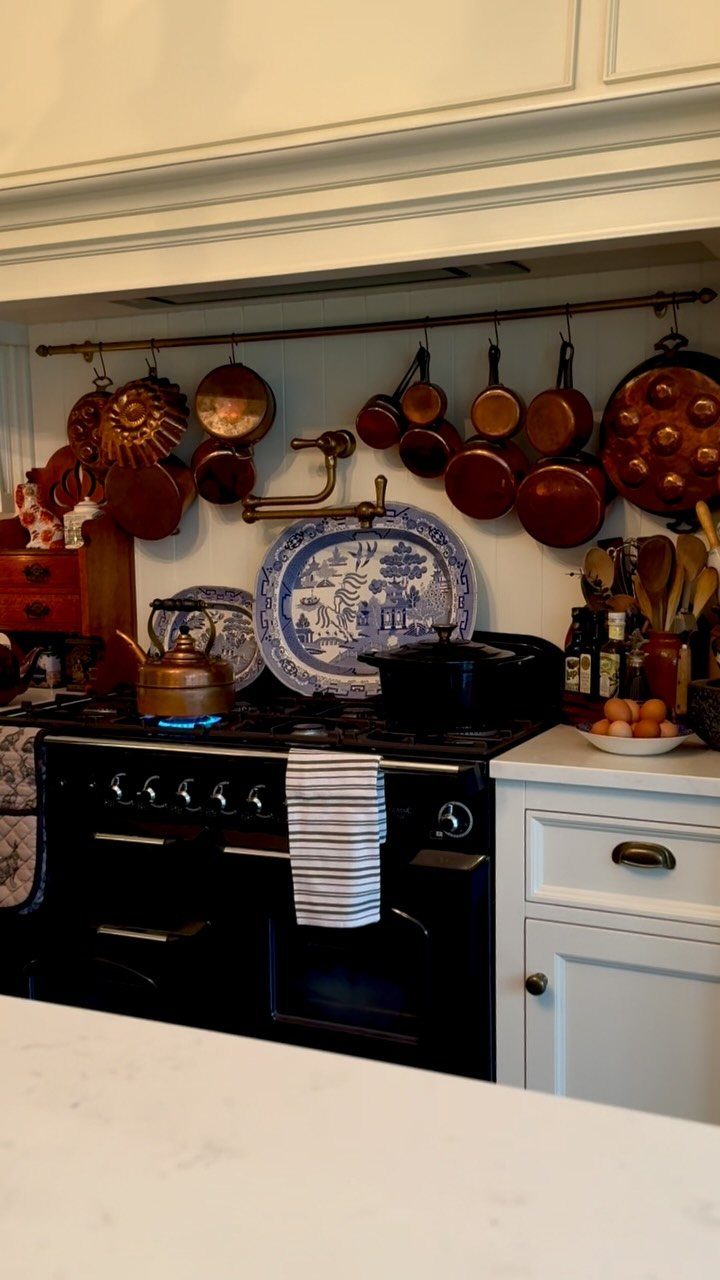
Hanging copper where you cook is part storage, part display, and entirely dependent on your ventilation. Grease particles travel; without a good range hood, you’ll be polishing more than cooking.
The brass rail here is the warmer choice against white cabinets; stainless would read colder. What I’d buy first: one or two pieces you actually use, hung where you reach them, not a full set for show.
Copper conducts beautifully but reacts with acidic foods; lined pans are for cooking, unlined are for looks or sugar work. If you’re starting out, a single sauté pan and a display pot get you most of the way there.
12. Shiplap
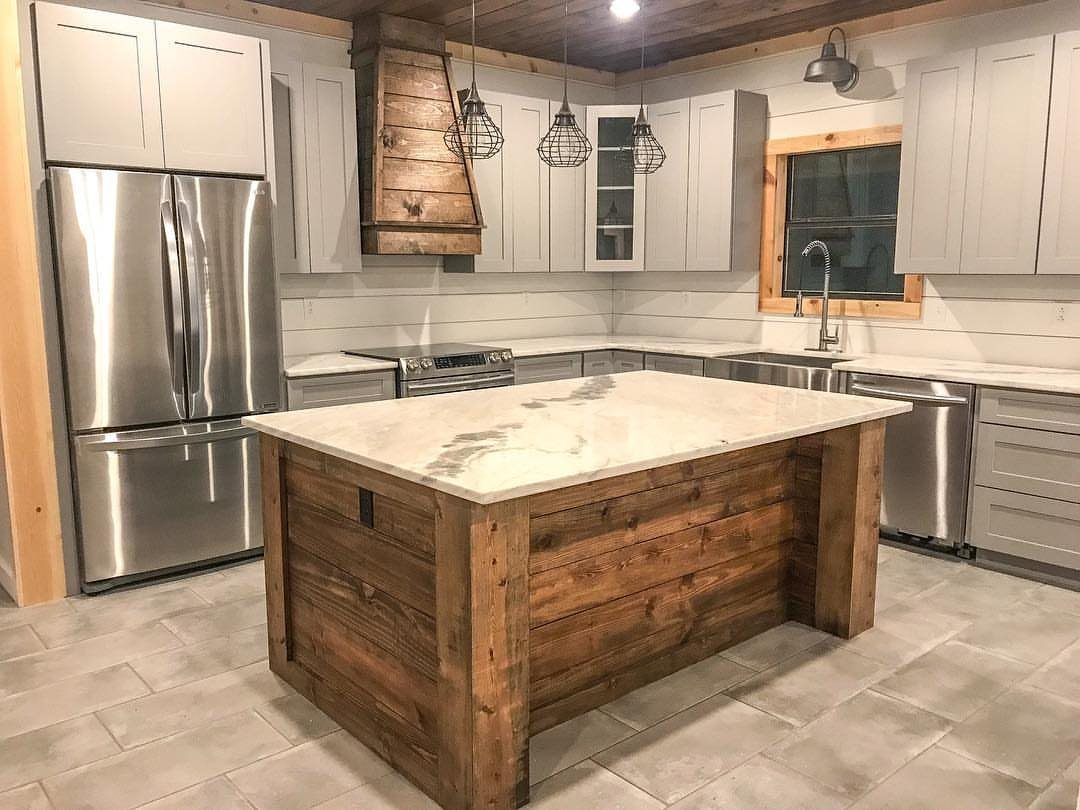
Horizontal shiplap behind the range, as a backsplash rather than full wall treatment, is the more practical farmhouse move; grease wipes off painted wood if your finish is right, but I’d still keep a splatter screen handy.
The white against gray cabinets here works because the contrast is sharp enough to read as intentional.
What to decide before you buy: actual shiplap with a rabbeted edge, or nickel-gap boards with a tongue-and-groove joint. The latter is easier to install flat and costs less, but the shadow line is narrower.
For a rental or a weekend project, peel-and-stick wallpaper that mimics the joint pattern fools the eye from a few steps back and comes down clean.
13. Farmhouse Kitchen with Wicker or Rattan Chairs
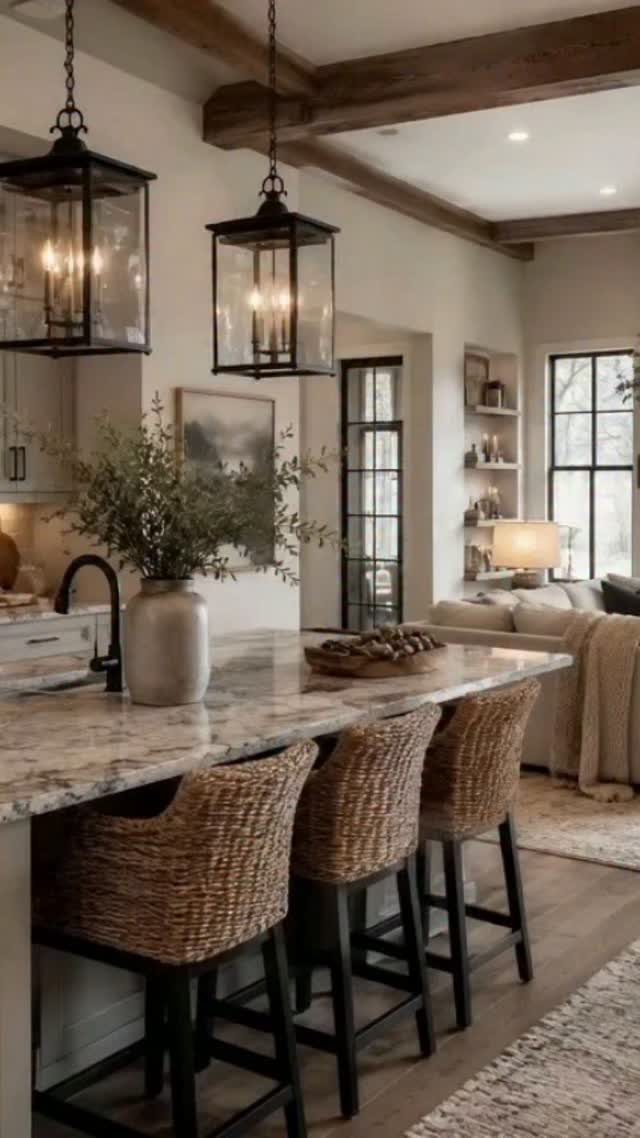
Wicker bar stools at island height add texture that painted metal or plain wood cannot match. The open weave keeps visual weight light, which matters in open-concept layouts where the kitchen flows into living space.
What I’d check before ordering: seat height against your counter, since wicker bases don’t adjust, and whether the weave is tight enough that crumbs won’t fall through to the floor.
For a rental, these are easy to swap in and carry out later; for a buy, I’d look for a frame that can be re-woven when the material ages.
14. Range Hood
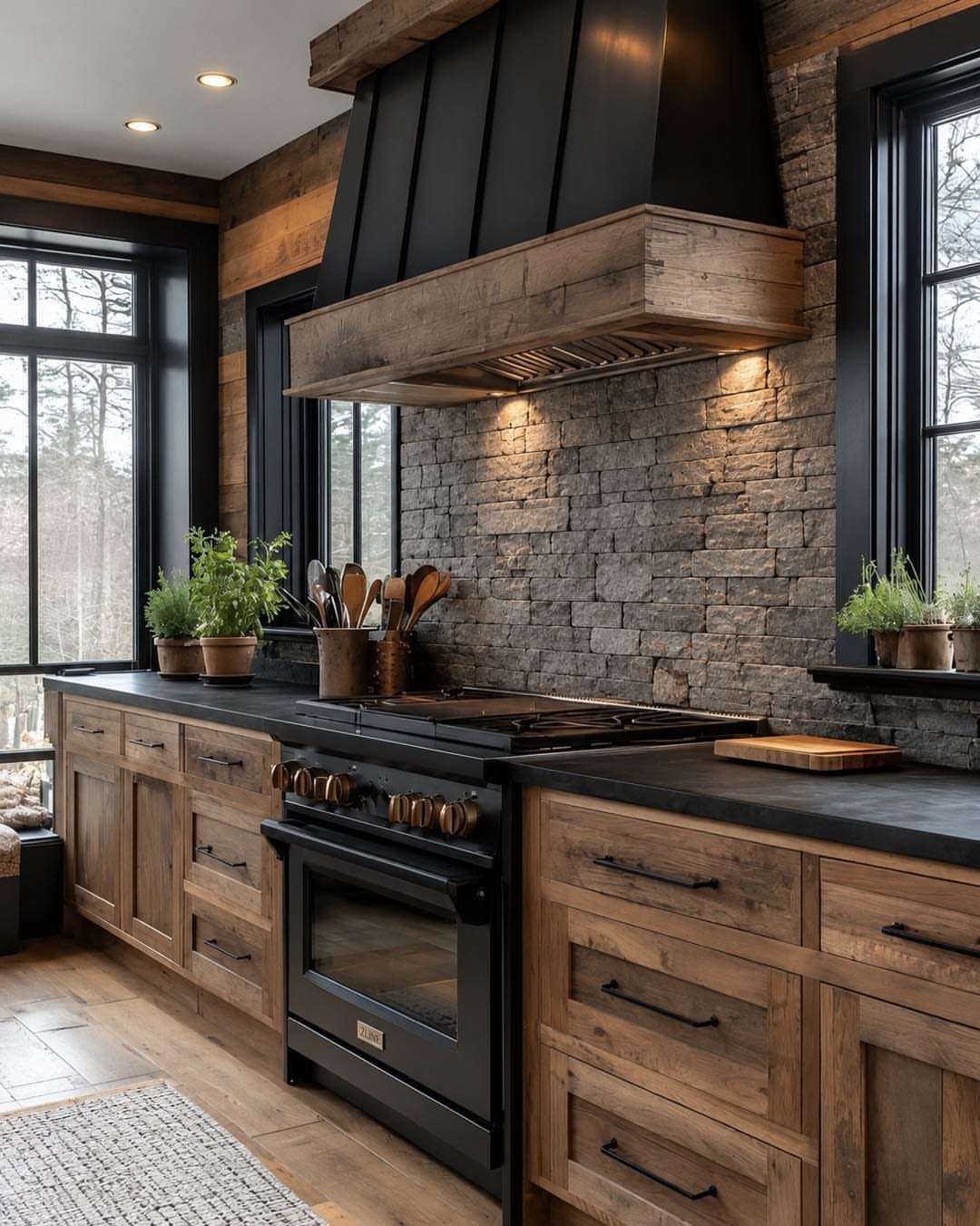
A range hood framed in reclaimed wood turns a required appliance into the room’s signature piece.
The black metal body here keeps it from reading as pure rustic cliché; the mix of industrial and barn is what makes it work now.
Before you commit, measure your ceiling height and your cooking output. A decorative hood that doesn’t move air is fine for show kitchens, but if you fry or sear regularly, you need CFM to match your stove’s BTU.
Ducted is always better than recirculating, and ducted through that wood trim takes planning you do before the cabinets go in.
15. Farmhouse Kitchen with Distressed Wood Ceiling Beams
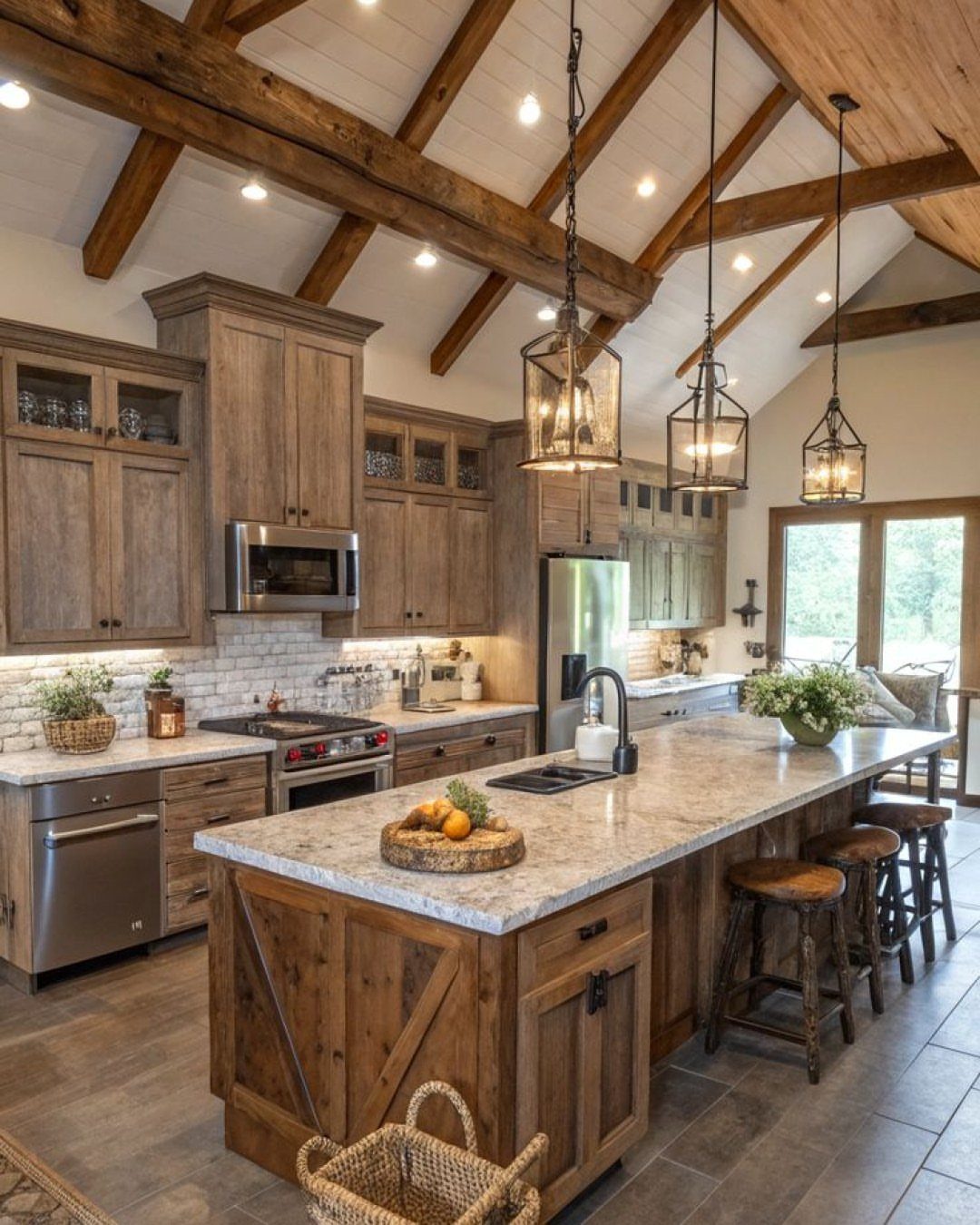
Dark beams against a white vaulted ceiling draw the eye up and make a large kitchen feel intentional rather than empty.
The V pattern here is structural drama you cannot fake with applied trim; the beams carry load or they read as decoration close up.
What I’d verify: your ceiling height. Below standard ceiling height, heavy beams start to press down.
If you’re adding beams to an existing flat ceiling, box beams hollow out above the drywall and weigh less, but the shadow line differs. For a weekend project, I’d paint existing beams darker rather than installing new ones.
16. Checkered Floors
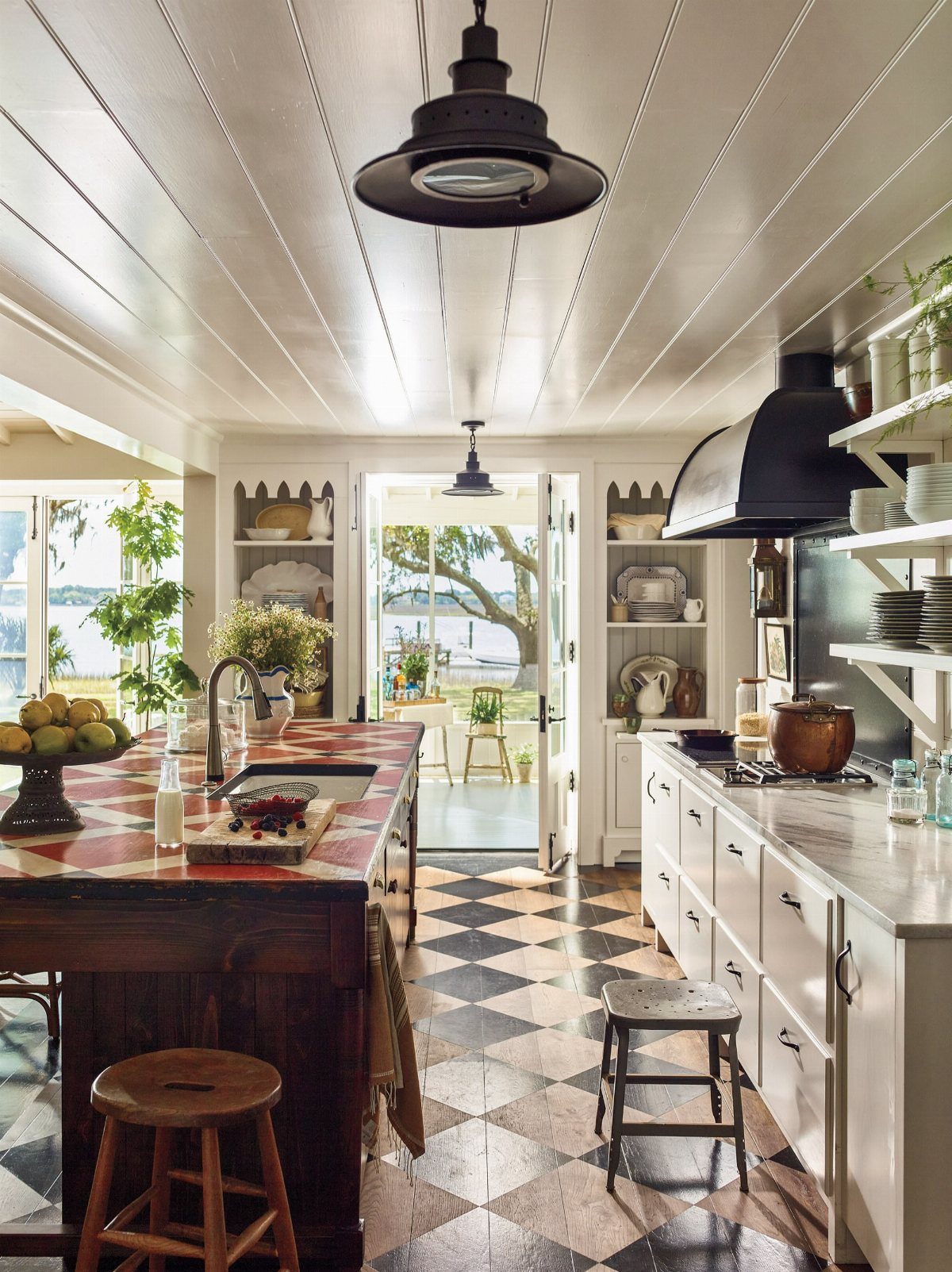
Checkered flooring reads country farmhouse because it predates the style by decades; it is nostalgia without quotation marks.
The black and natural wood here warms the room more than black and white tile would, and the wood side forgives scuffs that show on painted squares.
What I’d decide before buying: scale. Large checks make a small kitchen feel smaller, small checks busy.
And the finish; a penetrating oil on wood squares needs reapplication, polyurethane doesn’t. For a rental, peel-and-stick vinyl tiles in this pattern install in an afternoon and lift clean.
17. White Beadboard Ceiling
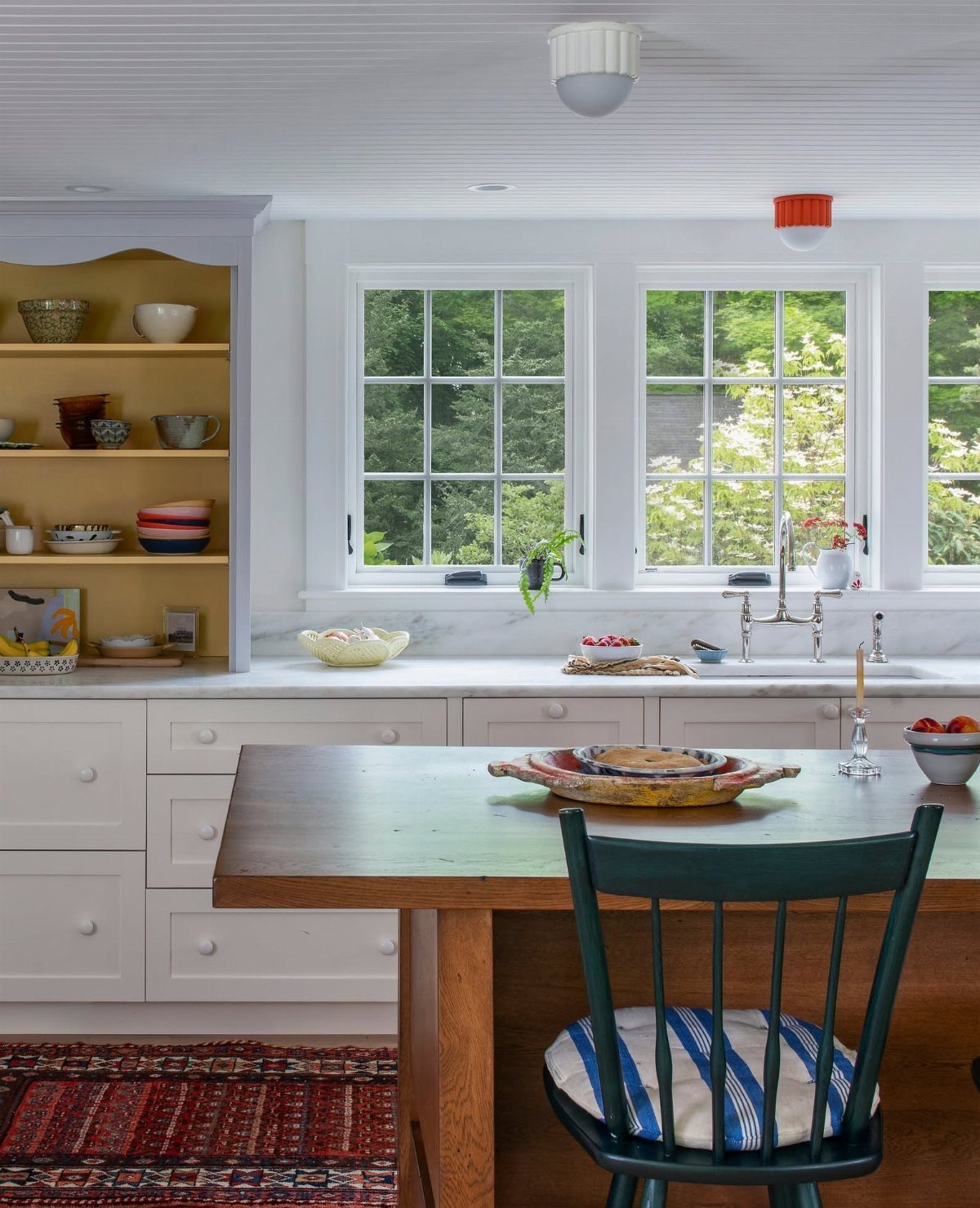
Beadboard on the ceiling adds texture where flat drywall reads as forgotten.
The vertical lines draw the eye across the room, which helps in long galley layouts. What I’d watch: the joint pattern.
Random-length boards look authentic, same-length panels look manufactured. Paint in semigloss or satin; flat finish shows every hand mark when you change a bulb.
For a weekend project, beadboard panels that come in stock widths go up faster than individual boards and cost less in labor, though the bead spacing is uniform in a way purists notice.
18. Rustic Stone Walls
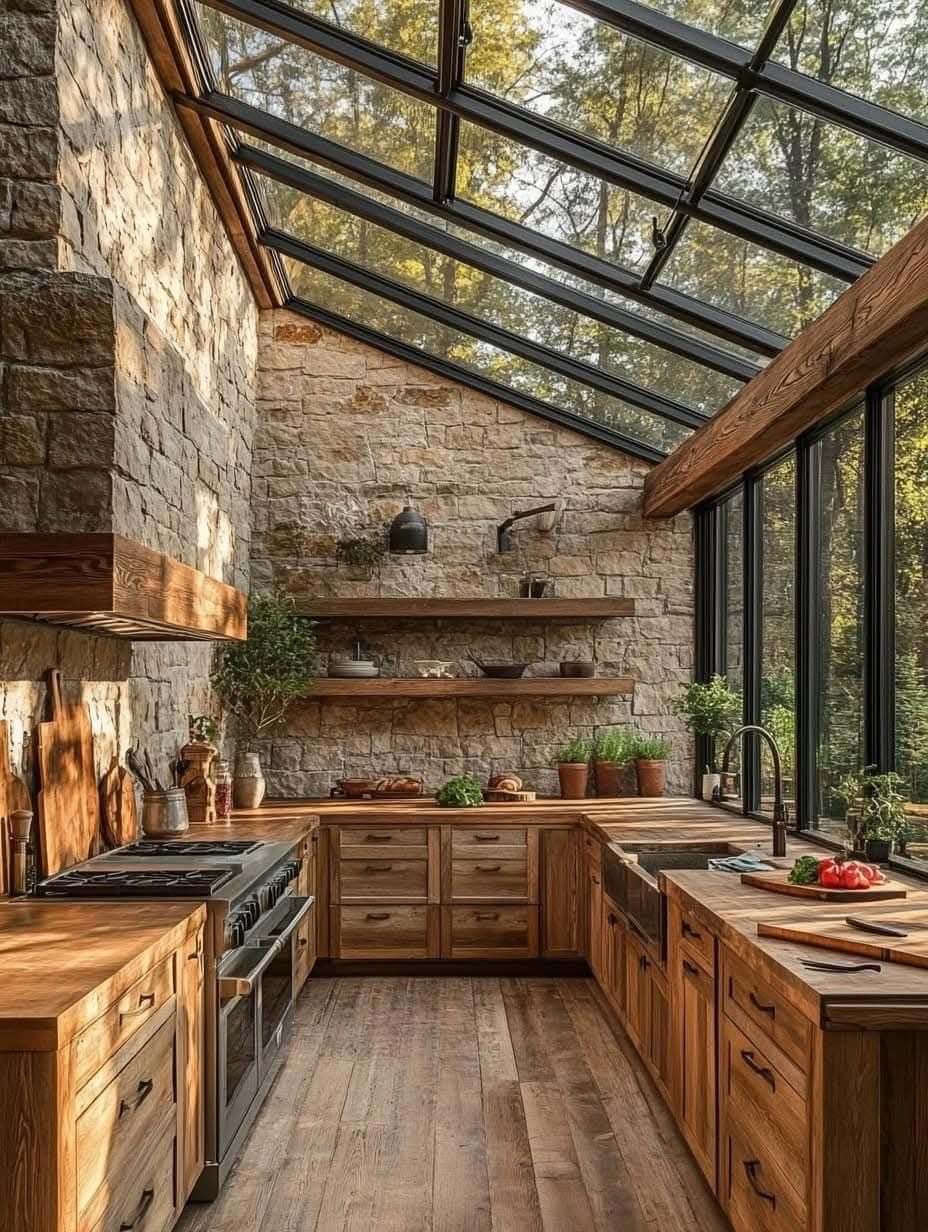
Exposed stone walls carry the weight of actual history, which veneer cannot replicate under daylight.
The rough texture against smooth cabinetry is the contrast that makes this kitchen work; too much rough and the room feels like a cellar. What I’d check: moisture behind the stone, especially with a glass roof overhead.
Stone breathes, but the wall behind it needs to dry. In a retrofit, I’d verify whether the structure can take the load; full stone runs heavy enough that the framing has to be checked.
For a lighter touch, a single stone column or the wall behind a range carries the idea without engineering.
19. Cozy Countertop Styling
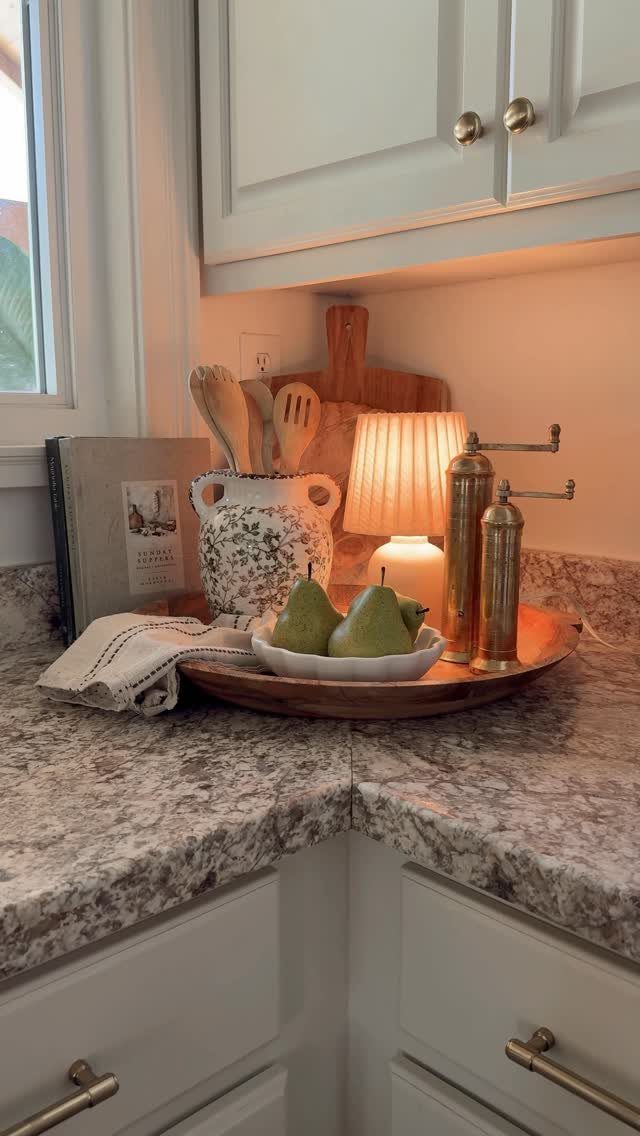
A small lamp on the counter turns a working surface into a place where someone might actually sit. The wooden tray corrals what would otherwise scatter; the brass mills and ceramic crock give the eye something warm to rest on.
What I’d check before setting this up: whether your outlet situation supports a lamp without a cord across your prep zone, and whether the light is dim enough that it competes with nothing.
Reserve this setup for a counter that sits out of the main prep zone.
20. Rustic Wooden Hutch
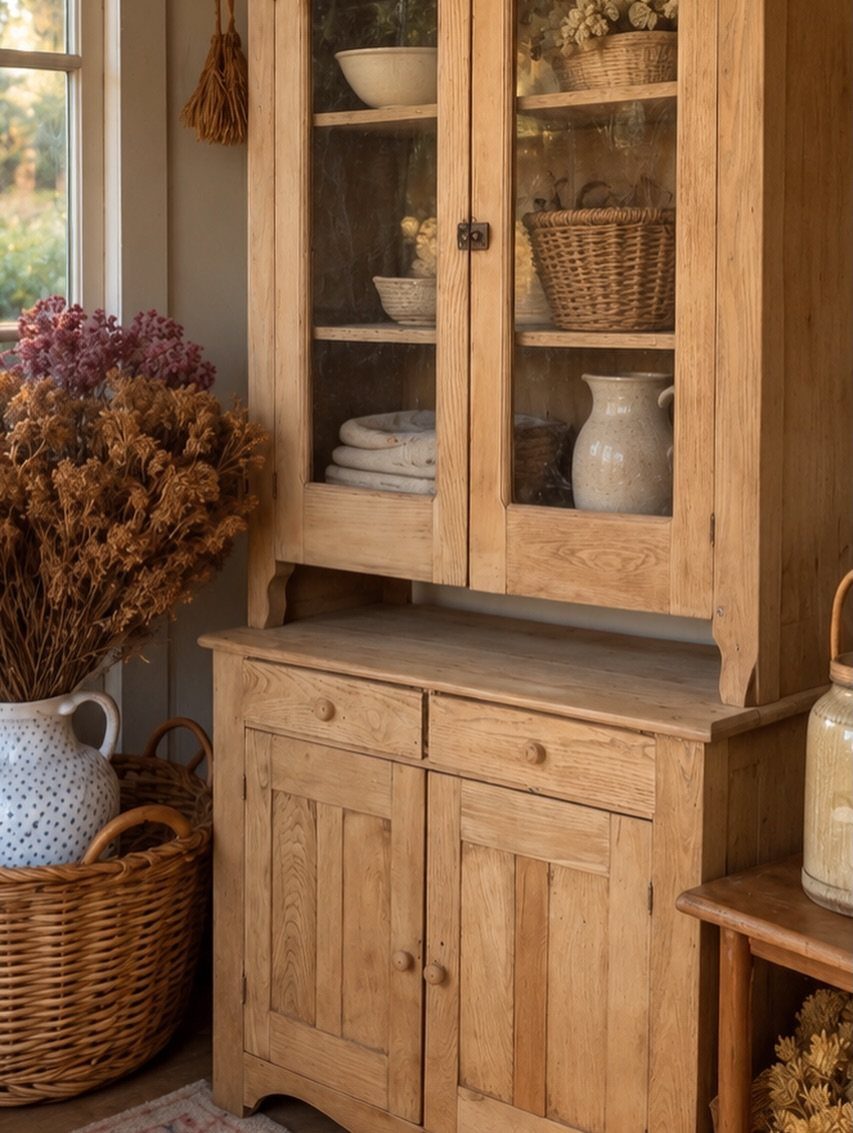
A hutch with glass above and solid below gives you display space for the pieces you like and hiding space for the ones you do not.
The light natural wood here keeps the room from going heavy; darker hutches can dominate a small dining area.
What I’d measure first: the footprint, including door swing, and whether the upper shelves sit at a height you can actually reach without a step stool.
For a rental, a two-piece unit comes apart to move; a single built-in stays where it is.
21. Reclaimed Wood Kitchen Island
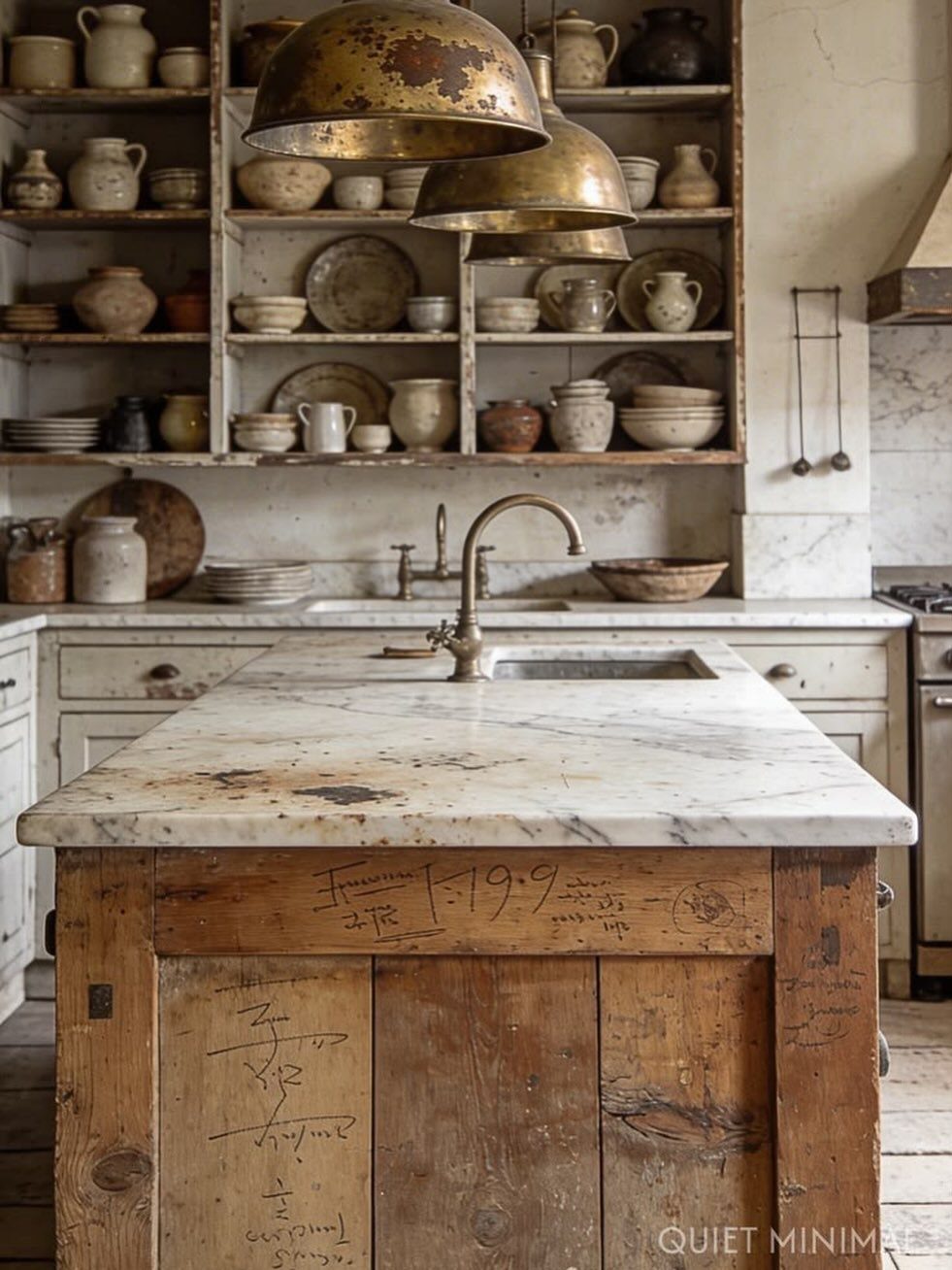
A reclaimed wood base with a marble top gives you the farmhouse feel without letting wood take over every surface. The carved markings on the base tell you this was something else before; that history is the point.
What I’d verify: the slab’s weight against your floor, especially in older homes, and whether the wood is stable enough that the marble won’t crack with seasonal movement.
The open shelves behind it need editing; too many pieces and the room goes cluttered.
22. Light Blue Cabinetry
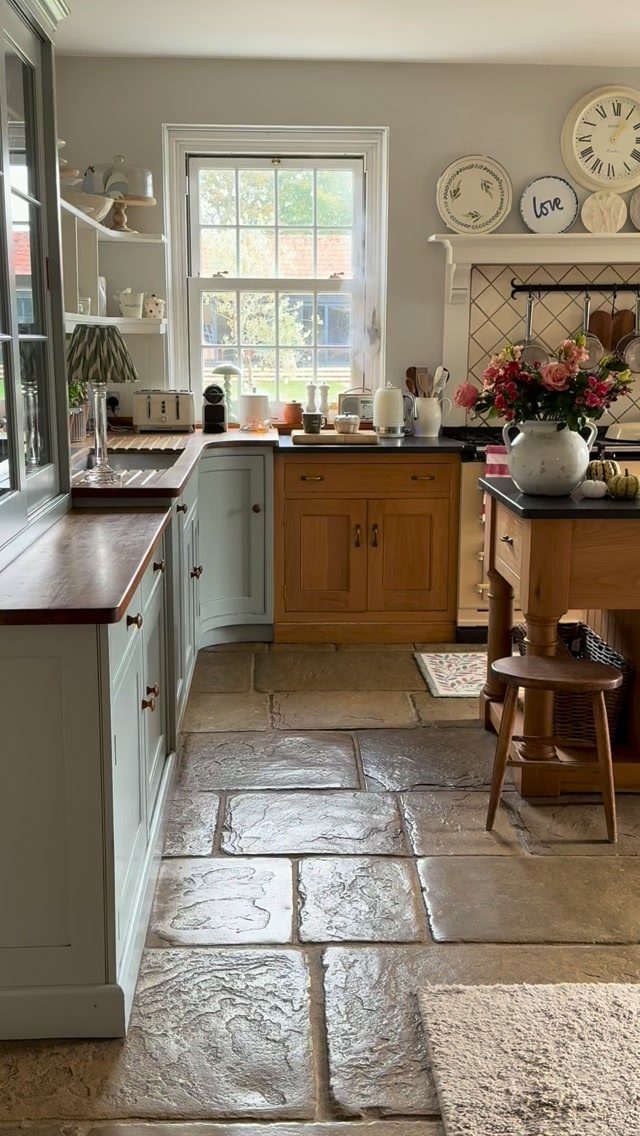
Pale blue cabinets against wood counters is the pairing I return to when a client wants color that does not shout.
Stone flooring below keeps the blue from feeling untethered; the weight matters. What I’d test: the paint in your actual light, because this shade shifts toward gray or toward green depending on the window direction.
And the wood tone matters more than people think; orange-toned pine fights this blue, ash or oak with gray in it works.
23. Subway Tile Backsplash
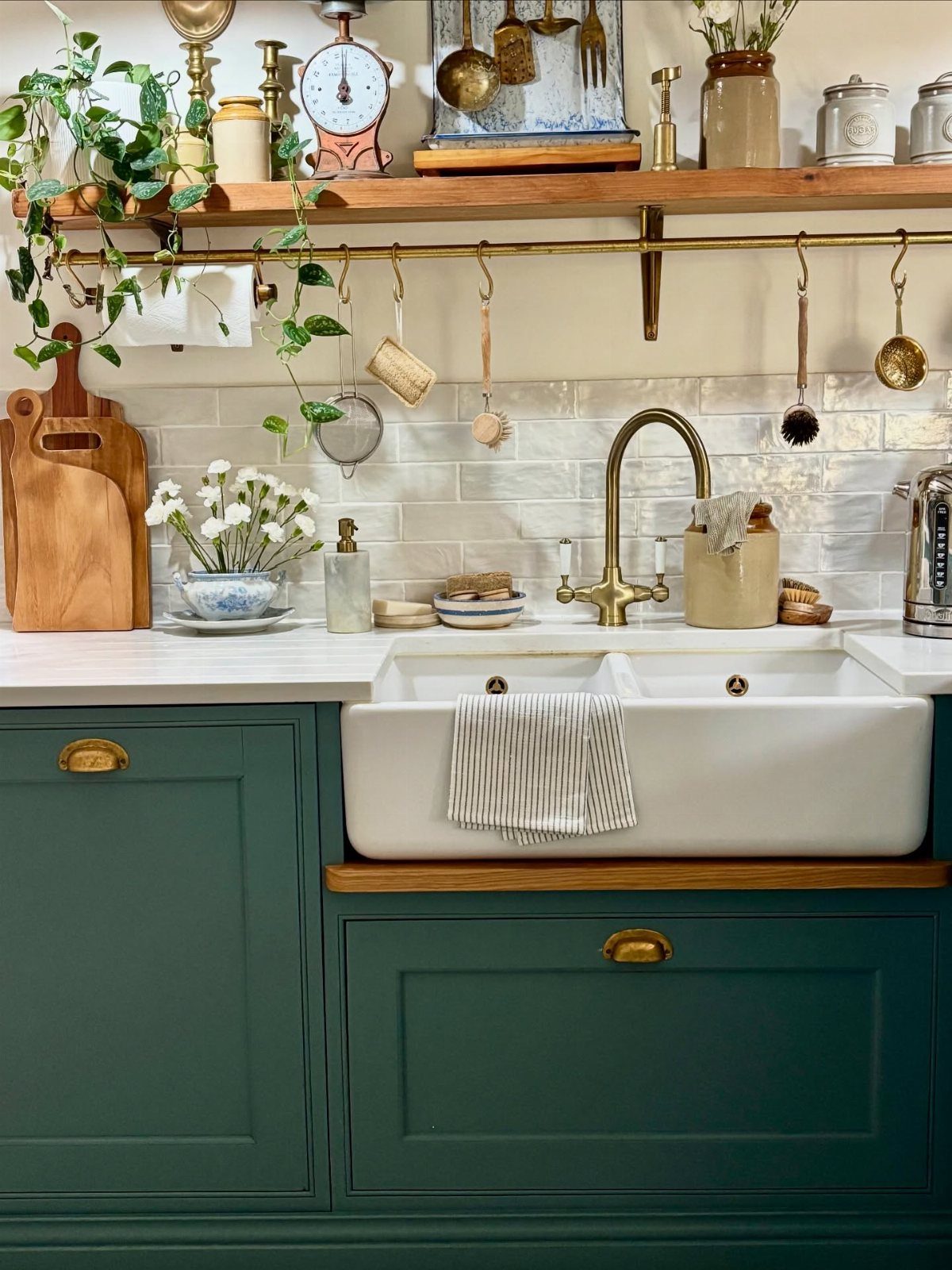
White subway tile behind a farmhouse sink is the backsplash choice I treat as a default because it is almost always right.
The glossy finish here bounces light back into the room; matte tile absorbs it and can read institutional. What I’d decide before ordering: the grout width.
Grout color changes the whole look: white on white reads clean and quiet, gray throws the grid into relief. For a weekend, peel-and-stick subway tile exists, but I’d only use it in a rental you plan to leave.
24. Warm Brass Hardware and Fixtures
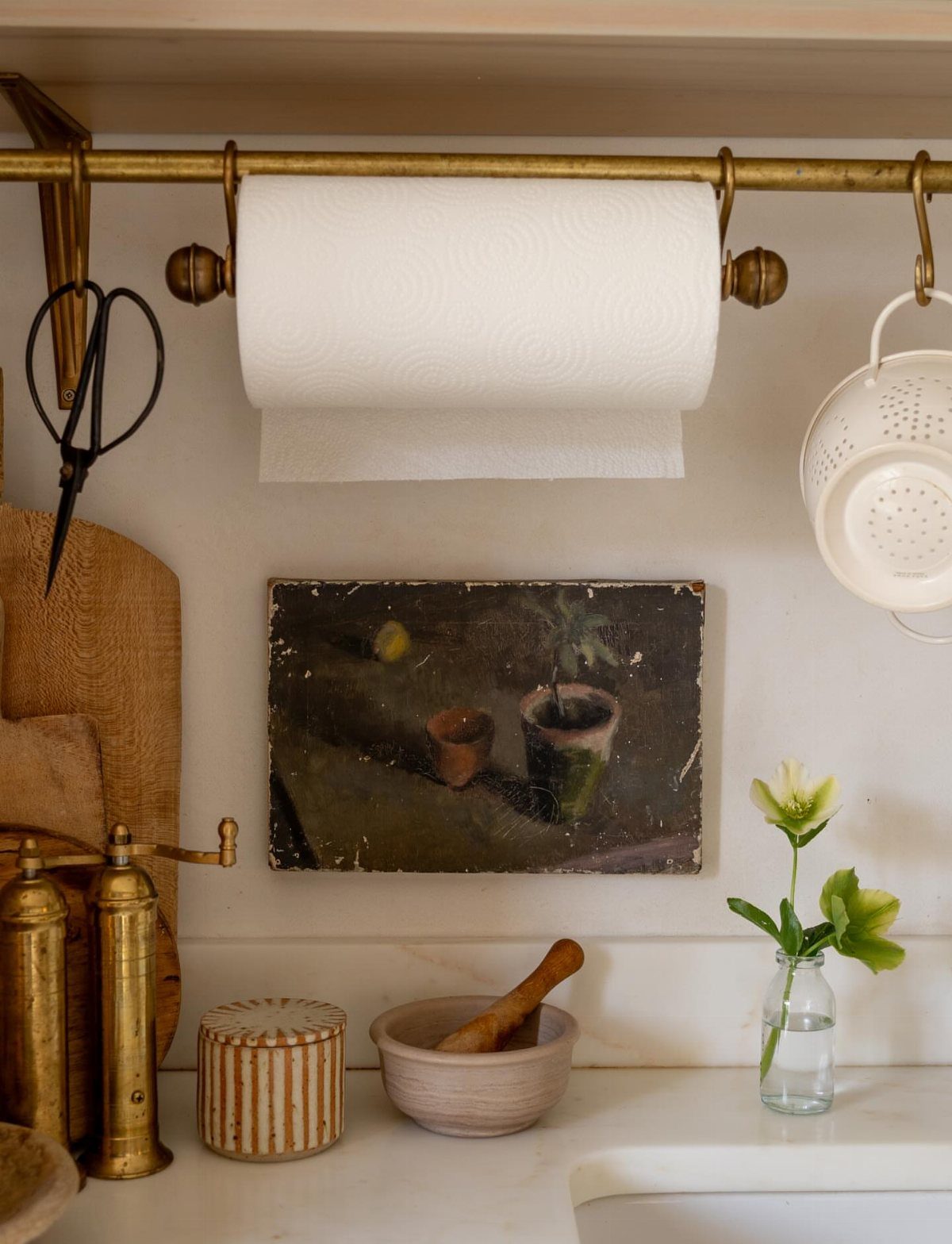
Brass hardware warms a kitchen in a way chrome or black cannot match, but it needs the right context.
The rail here, with paper towels and tools hung where you reach them, is the practical application; canisters on the counter are the decorative one.
What I’d watch: the finish. Polished brass shows fingerprints and water spots; aged or satin brass forgives more.
And the undertone, some brass runs yellow, some runs pink. Hold your sample against the wood and paint you have before you order the full set.
25. Vintage-style Colored Stove
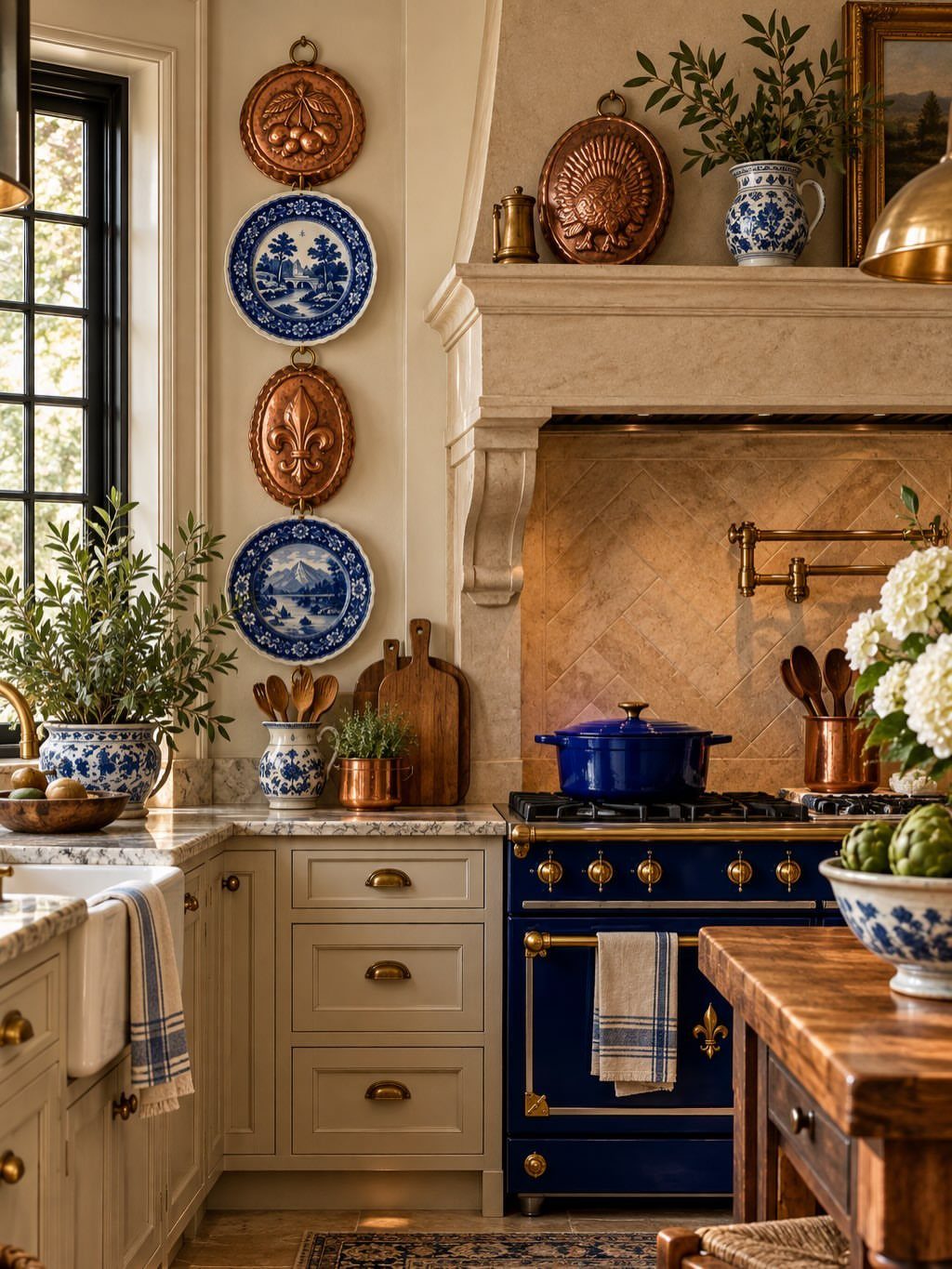
A cobalt range beneath a stone mantel hood is the farmhouse move for someone who wants the room to center on a single object.
The stone surround here is heavy enough that I’d verify the wall structure before ordering; a standard cabinet run won’t carry that load without reinforcement.
The blue reads classic rather than trendy against cream cabinets, and copper molds hung nearby pick up its depth without matching exactly.
What I’d decide first: whether you cook enough to justify a smaller vintage-style unit or need the wider model most families use. The smaller sizes look proportionally right in a corner installation like this one.
26. Weathered Wood Plank Ceiling
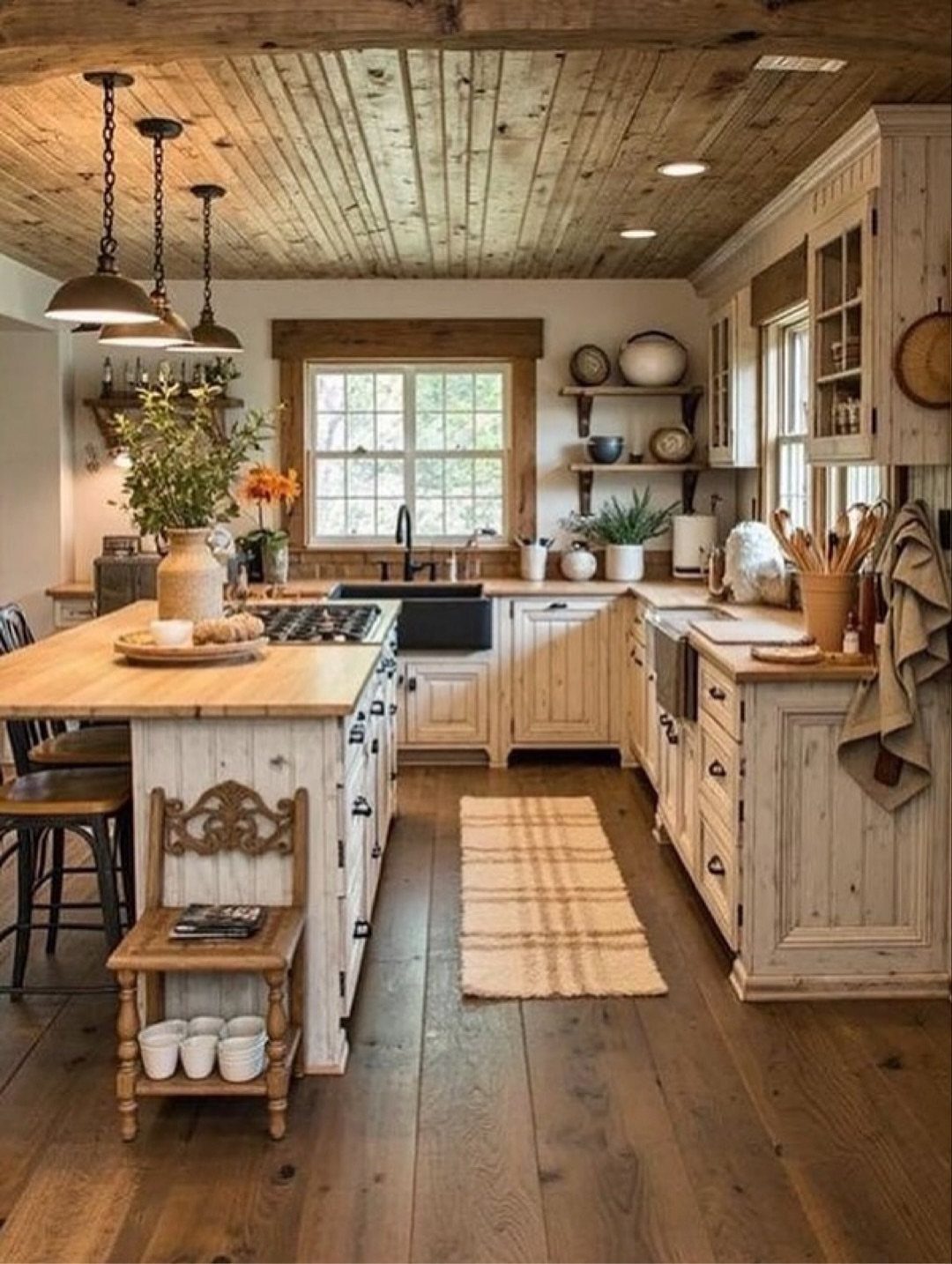
Horizontal weathered planks overhead warm a kitchen that might otherwise read as too white and too new.
The distressing matters; clear-finished new pine would look like a cabin, but grayed wood with nail holes and variation carries the farmhouse history without pretending.
Wide boards in a low room feel heavy, narrow boards in a tall one read as siding.
For a weekend project over an existing ceiling, I’d use reclaimed-look panels rather than individual planks; the install is faster and the gap pattern stays consistent.
27. Patterned Tile Flooring
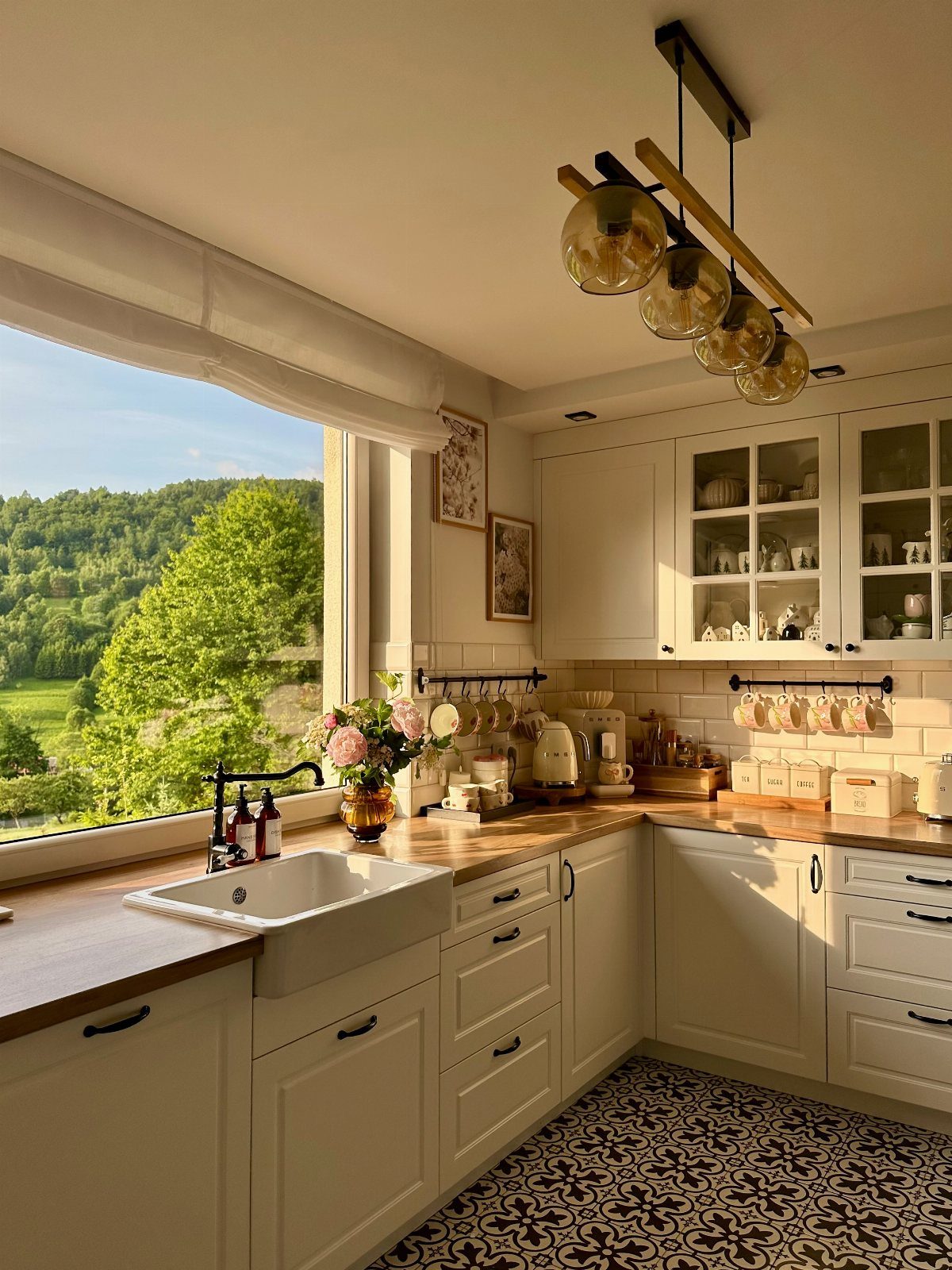
Patterned floor tile under white shaker cabinets is the risk that pays off when the pattern stays small in scale and limited to 2 colors.
The black and white here anchors the room without competing with the wood counters and the view beyond the sink.
Large-format patterns feel modern, small-format reads vintage; this kitchen splits the difference at a medium format that suits the farmhouse middle ground.
And the grout: dark grout hides traffic, light grout shows the pattern. For a rental, I’d use luxury vinyl tile in this pattern; it installs with a utility knife and lifts when you leave.
28. Marble Waterfall Island
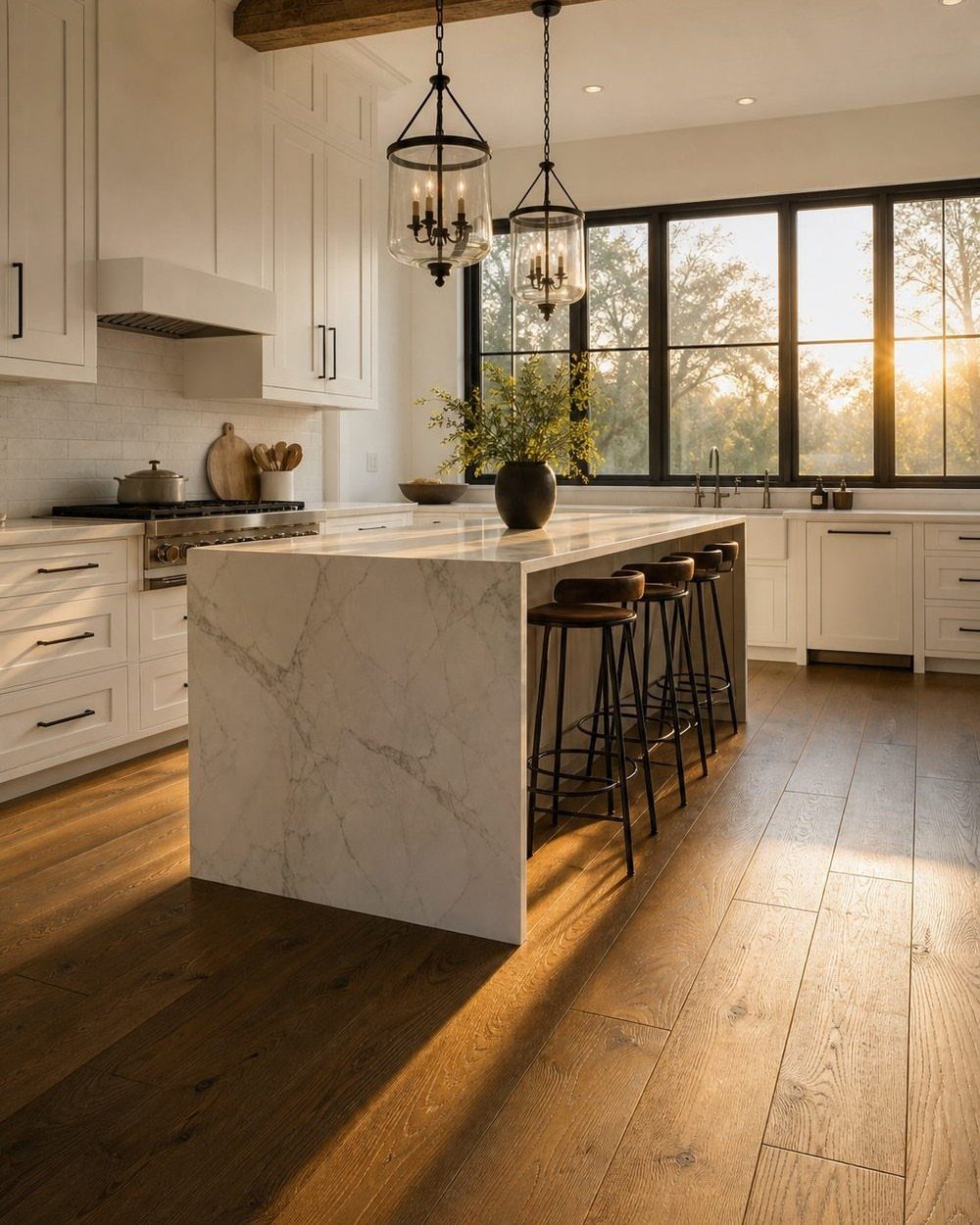
A waterfall island in white marble is the contemporary farmhouse statement that works when the rest of the kitchen stays quiet.
The stone running down both ends removes the need for paneling or trim, which keeps the look clean. What I’d verify: the slab thickness and the overhang.
A 2-inch slab reads substantial; the next step up feels monumental and costs accordingly. The barstools tucked underneath need clear knee space, and the marble edge will show wear from feet and vacuum bumps.
For a budget approach, I’d use quartz with a marble pattern; the veining is more consistent, and it forgives the red wine you will eventually spill.
Common Mistakes in Farmhouse Decor
The all-white farmhouse kitchen has become a trap I see often. White cabinets, white counters, white walls, and suddenly the room feels like a showroom no one lives in.
The fix is not more white; it is adding something that carries weight, like the wood beams that ground a rural English kitchen, or a single color that came from outside.
Going literal with farmhouse signs, rooster motifs, or theme-heavy accessories is the faster way to date the room than any color choice.
I skip the word "farmhouse" on anything purchased for the house itself. The style works when it looks inherited, not purchased as a set.
A farmhouse kitchen needs things that have been used, not cleared away. Minimalism falls flat here because the style grows out of layers built up over years, not empty space.
A kitchen that looks staged for a photograph will feel wrong by next spring. I add one imperfect thing, a worn cutting board or a single vintage piece, before I call a room finished.
Best Colors for a Country Kitchen
Soft whites and creams are the base I start from, not because they are safe, but because they read differently as the light changes through the day.
Sage green, muted blues, and natural wood finishes layer on that base without fighting it. The Charleston kitchen that pulls nature-inspired color into white space is the model: one earthy tone, used enough to matter, not enough to overwhelm.
French country pushes further into color than American farmhouse typically does, with creamy yellows or pale blues against dark beams and stone.
Carved legs and floral fabrics carry more ornament than I would choose, but the principle behind them is sound.
Color that comes from the landscape outside the window will outlast any trend cycle because it was never trendy to begin with.
Defining a Country Kitchen
A country kitchen is defined by what it is built from and how it is used, not by any single feature.
Wood cabinets, open shelving, and vintage accessories create the lived-in character that separates the style from a kitchen that merely looks at a farmhouse. The materials are honest: exposed wood, stone, warm neutrals, nothing pretending to be something else.
French country farmhouse adds European ornament to that same base.
Dark textured beams, stone, and brick pair with more color and more decoration: crown molding, carved legs, bolder fabrics. The island matches the cabinetry grain; nothing is accidental.
The warmth comes from use, not age. A new kitchen can read as country if the layout favors function and the materials are left to show their nature.
I look for where the room will wear first, the edge of a counter, the handle of a drawer, and choose what will look better for it rather than worse.
Frequently Asked Questions
Is farmhouse style still in for 2026?
Farmhouse style is shifting rather than disappearing. Farmhouse style is not disappearing, but it is shifting.
I see more Warm Modernism with clean lines and darker palettes, more European Farmhouse with layered elegance, and more story-driven looks like English Storybook that trade the traditional formula for more personality.
The core idea, a kitchen that functions well and feels honest, does not go out of style.
The core idea of a kitchen that functions well and feels assembled over time still holds, but the all-white, all-shiplap version is reading dated to me now.
What is a country farmhouse kitchen?
A country farmhouse kitchen works when it looks like someone actually cooks there: warm materials, simple layout, nothing staged for a magazine shoot.
The defining elements are natural materials like wood, stone, and brick; open shelving or glass-front cabinets that display daily tools; and a color palette grounded in soft whites, creams, and earthy tones.
What separates it from a staged look is function: the vintage scale sits where you weigh flour, the baskets hold actual produce, and the wear on surfaces is real rather than manufactured.
What colors are best for a country kitchen?
Soft whites and creams are the foundation I keep specifying because they reflect the light you have rather than demanding more of it.
Darker grays, navy blues, and even black can ground the composition if the room has enough light to carry them.
What are common mistakes in farmhouse decor?
The biggest mistake I see is all-white palettes and minimal, cookie-cutter layouts that feel sterile rather than lived-in.
Literal farmhouse themes in homes that are not actual farmhouses date fast: too many mason jars, too much shiplap, too many signs with sayings.
My rule is to mix in one modern shape or finish so the room does not read as a movie set.
What are some ideas for a modern cottage kitchen?
A modern cottage kitchen keeps the rustic feel but adds contemporary function: soft-close drawers, proper task lighting, appliances that actually work hard.
I would start with natural materials like wood, metal, glass, or stone, then add a central island as a functional focal point for gathering.
Creamy tones provide the cozy foundation, but bolder cabinet shades modernize the look without losing warmth. Keep functional tools within reach and buy well-made pieces that last, rather than decorating around items you never use.