These six picks sit between the impulse buy and the full closet system, all under $30, and the right one depends on whether your problem is a bare rod, a wasted shelf, or no built-in storage at all.
A 375-pound steel rack on wheels solves a different puzzle than a 6-tier hanging shelf that splits in half for your next rental, and buying the wrong match is how a weekend project turns into a closet that still swallows gloves whole.
My Top Picks
| Product | Award | Best for | Why it won | ||
|---|---|---|---|---|---|
 | Fab Totes Storage Bags | Best Overall | Budget-conscious organizers | Balances cost, space, and easy installation better than alternatives | Check price |
 | Criusia Linen Closet Organizers | Best Budget-Friendly Products | Ready-made bargain hunters | Looks good and uses space well without requiring a big investment | Check price |
 | Homsorout Hanging Closet Organizer 4 Tier | Best Space Maximizers | Cramped closet owners | Uses vertical space efficiently when floor and hanging room is tight | Check price |
 | Sorbus Dresser 6 Drawers | Best Family-Friendly Options | Multi-person households | Versatile style works for all ages sharing a single organized space | Check price |
 | ULIFHOME P6C Plus Rolling Clothes Rack | Best DIY Solutions | Hands-on customizers | Portable and adjustable for building a personalized setup from scratch | Check price |
 | STORAGE MANIAC 6-Shelf Hanging Closet Organizer | Best Seasonal Organizers | Rotating wardrobe keepers | Keeps off-season clothes accessible and neatly separated year-round | Check price |
Best Overall: Fab Totes Storage Bags
Premium Material: Made of high-quality non-woven fabric + clear PVC window, soft and strong for long-term storage of clothes, sweaters, bedding, and comforters – no side or...
Quick Verdict
For renters who need closet space to appear out of nowhere, these bags hit a useful middle ground.
The 15.8-gallon capacity swallows a full bedding set or a bulky winter coat collection, and the window means you can identify contents without unstacking everything.
The real limitation is the material itself: owners describe the fabric as sturdy for seasonal storage but not something you can load and drag around weekly.
Key Specifications
- Storage Capacity: 15.8 gal
- Installation Type: 1 easy
What It Does Well
- 60-liter capacity per bag translates to fitting two queen comforters or several pillows in one unit, which changes how much floor space your off-season items occupy.
- Clear window panel means you stop pulling half the stack onto the floor to find the guest sheets; owners mention this as the detail that keeps them using the bags instead of abandoning them in the closet corner.
- Fold-flat structure when empty lets the whole 6-pack store inside one bag, taking up drawer space rather than shelf space between organizing projects.
Where It Falls Short
- Zipper strain at full capacity: owners report the closure track bows or separates if you press past the stated volume, so the usable space sits slightly below the rated number.
- No rigid bottom means shelves or rods do the structural work; the bags sag and distort on open wire shelving, which limits where they perform as intended.
Who It’s For
Someone in a one-closet apartment who rotates bedding twice a year and wants the changeover to take an afternoon, not a weekend.
The buyer who should look past these is the person hauling camping gear to a basement laundry room every two weeks; the handles hold up to lifting, but the fabric abrasion from regular transport shows faster than owners expected.
How It Compares
The Criusia Linen Closet Organizers use a heavier linen weave that independent reviewers describe as more structured on open shelving, and the rigid sides keep shape even half-full.
That construction suits buyers who want bins that stand at attention and slide like drawers.
The Fab Totes win back those buyers only if the project is purely seasonal storage in a tucked-away space, where the lighter weight and lower cost matter more than shelf presence.
Where to buy: Amazon · healthymeliving.com
Best Budget-Friendly Products: Criusia Linen Closet Organizers
Large Capacity: Our Large linen closet organizer are made of breathable and durable non-woven fabric and PP board, with dimensions of 15.8x10.6x6.7 inches. These closet...
Quick Verdict
Anyone renting a closet-sized bedroom or fitting out a first linen closet needs storage that looks intentional without demanding a full Saturday to set up.
The Criusia 4 Pack Linen Closet Organizers won this spot because the maker’s dimensions, 15.8 x 10.6 x 6.7 inches, hit a useful middle ground: deep enough for folded towels or off-season sweaters, shallow enough that stuff in back does not disappear forever.
The mesh window on each bin means you see what you grabbed before you pull it down, which matters more than it sounds at 7 AM.
The real compromise is the non-woven fabric body; it holds shape fine when full, but owners who load and unload weekly will notice it softens faster than rigid bins.
What It Does Well
- Breathable fabric plus PP board bottom keeps the structure light but upright, so a half-full bin does not slump and spill onto the shelf below.
- See-through mesh window eliminates the guesswork of which bin holds the guest towels versus the beach towels; the maker notes it is meant for quick identification at a glance.
- Folds flat when empty suits renters who reorganize between leases or stash seasonal bins under the bed for three months a year.
- Neutral fabric texture reads as intentional in an open closet or bathroom shelf, not as a dorm-room afterthought.
Where It Falls Short
- Assembly is manual; the bottom panel drops in, but four bins means doing this four times, and the fit can feel tight until the fabric relaxes.
- Non-woven fabric has a lifespan; heavy items like hardback books or dense blankets will stress the sides more than clothes or linens.
- Uniform sizing only; the four identical dimensions do not help if your closet mixes deep shelves with narrow medicine-cabinet widths.
Who It’s For
A renter in a postwar apartment with one shallow closet and a landlord who painted the shelves last decade fits this well; the bins look finished enough to leave visible and adapt when the next rental has different shelving.
Someone running a busy household with kids pulling toys in and out daily probably wears through the fabric faster than the value justifies, and rigid plastic or wire baskets handle that rhythm better.
How It Compares
The STORAGE MANIAC 6-Shelf Hanging Closet Organizer hangs from the rod and uses vertical drop space, which suits a coat closet or wardrobe with no built-in shelving at all.
The Criusia set sits on existing shelves or the floor, so it fits renters who already have horizontal surfaces and want to divide them cleanly.
A buyer with a blank closet and a rod only should look at the hanging route; one with shelves that currently swallow items whole gets more immediate use from the Criusia bins and their windows.
Where to buy: Amazon
Best Space Maximizers: Homsorout Hanging Closet Organizer 4 Tier
Extended Design: This hanging organizer features a trapezoidal design that helps keep items from slipping out. Open shelves improve access and suit walk-in closet organizers...
Quick Verdict
Vertical space in a closet usually dies above the hanging rod. The Homsorout organizer claims to reclaim it with a four-tier drop that hooks over a standard rod and stays put.
Its strongest point is the modular zip-together build, which lets you run all four shelves or break off one or two for a dorm or RV.
The real weakness is the trapezoid shape itself, wider at the bottom than the top, which costs you some lateral room against the wall.
What It Does Well
- Trapezoidal shelves angle outward so folded clothes or bins sit without sliding into the gap behind, a problem owners of flat-bottomed hanging units often describe
- Detachable tiers zip together or separate, meaning you can move a single basket to the laundry room or pack two in a camper without the full 47-inch drop
- Eight hooks with reinforced stitching distribute weight across the rod instead of concentrating it at two points, which matters when the load is sweaters or shoes rather than t-shirts
Where It Falls Short
- The 10.24 by 12.2 inch footprint per shelf is modest, so bulky items like winter bedding will overhang or need another home
- Side zippers and straps add security but also steps, so adjusting or detaching a tier takes longer than lifting a single rigid shelf out
- At 47 inches tall, the full unit hangs low enough to brush shoulders or block light in closets under 72 inches of rod height
Who It’s For
A renter with one rod and no shelf above it gets four levels of storage without drilling into a landlord’s walls.
The buyer who should pass is the one with a walk-in already fitted with built-in shelving, since the Homsorout’s hanging design competes for rod space rather than adding to it.
How It Compares
The ULIFHOME P6C Plus Rolling Clothes Rack stands on the floor and rolls, which suits someone who needs to move storage between rooms or wants a garment rack that doubles as a room divider.
The Homsorout stays fixed to the rod and trades that mobility for height, so it fits buyers who need layers in a static closet, not wheels in an open bedroom.
Where to buy: Amazon
Best Family-Friendly Options: Sorbus Dresser 6 Drawers
6-DRAWER DRESSER (PINK) — Style meets function with this dresser chest, complete with a wood surface and colorful storage drawers — Pairs beautifully with the Sorbus...
Quick Verdict
Families juggling shared spaces need storage that handles daily chaos without looking like it came from a dorm lost-and-found.
The Sorbus dresser with 6 fabric drawers and wood top won this slot because its hard surface lets a kid’s room double as a homework nook or changing station, while the soft drawers keep small hands from getting pinched.
The fabric construction has limits: it holds less weight than solid wood sides, and the whole unit feels light enough that enthusiastic climbers can tip it if you skip the wall anchor.
What It Does Well
- Hard wood top for real use. The MDF surface handles lamps, alarm clocks, and the inevitable water cup without the sagging that kills fabric-topped competitors; that turns the top drawer zone into usable nightstand space.
- Drawers fold flat when you move. The maker says the non-woven bins collapse for storage between kids or during a relocation; for renters and first-home owners doing a project a year, that beats hauling rigid furniture up apartment stairs.
- Quiet pull handles. Reinforced bases with easy-grip openings mean a 6-year-old can dress themselves without the slam-and-rattle symphony that wakes a napping sibling.
Where It Falls Short
- Fabric sides show wear. The non-woven material collects dust and can snag on toy edges or zipper pulls; owners report it looks tired faster than woven bins or hard sides.
- Lightweight frame needs anchoring. The steel skeleton keeps weight down for portability, but that same lightness means the unit shifts on carpet and requires a wall strap to stay upright with climbing toddlers.
Who It’s For
A parent setting up a nursery or tween room where the piece will stay put for a few years and the budget runs toward practical over heirloom.
Someone furnishing a heavy-traffic hallway or expecting the dresser to survive three kids back-to-back will find the fabric drawers and 11.75-inch depth too limiting; the sides simply do not take the beating that plywood or solid wood tolerates.
How It Compares
The Storage Maniac 6-shelf hanging organizer hangs on a closet rod and costs less real estate, but it stays hidden behind doors and offers no surface for daily life.
That suits a seasonal closet purge or off-site storage, while the Sorbus piece sits out in the room as functional furniture.
Pick the Sorbus when the bedroom itself needs the storage, not just the closet behind it; pick the hanging shelf when floor space is already gone and aesthetics do not matter.
Where to buy: Amazon
Best DIY Solutions: ULIFHOME P6C Plus Rolling Clothes Rack
Ample Storage Space: The overall dimensions of the ULIFHOME clothes rack with cover are 46" W × 16.5" D × 76.8" H, with a maximum load capacity of 375 pounds. It provides...
Quick Verdict
Rolling storage that actually holds weight earns its place in a rental.
The ULIFHOME P6C Plus won this slot because it moves when you need it to and stays put when you do not, all without asking for a drill or a security deposit conversation.
Its strongest point is the tool-free assembly paired with real capacity, 375 pounds spread across 46 inches of hanging width.
The real weakness is the same as any portable closet: you will outgrow it if your wardrobe runs deep, and the fabric cover, durable as the maker calls it, still reads temporary to anyone walking through your bedroom.
What It Does Well
- Carbon steel frame with powder coat. The maker specifies thickened carbon steel with a coating against water, rust, and scratches, which matters when a rack lives near a bathroom or gets shoved against a damp basement wall.
- One-inch shelf adjustment. The slip-sleeve locking system lets you raise or lower wire shelves in 1-inch increments, so boots and folded sweaters do not waste the same fixed height as hanging shirts.
- Lockable wheels on a covered frame. Two of the four 360° rubber wheels brake, and the zippered oxford cover opens fully with hook-and-loop side straps, giving you a dustproof closet that still rolls through doorways for laundry day.
Where It Falls Short
- Assembly required, and the cover ties on. The maker says no tools, but "easy" assembly on a carbon steel frame still means an afternoon of sleeve-locking and fabric tying before your clothes see it.
- 76.8 inches tall in a 46-by-16.5 footprint. That height-to-base ratio is why anti-tip accessories are included; the maker notes them, which tells you the physics without saying it outright.
- Fabric walls, not doors. The zippered cover gives privacy, but it is still fabric. Noise, light, and the general impression of "staging area, not closet" come with it.
Who It’s For
A renter in a studio or older home with shallow closets and a landlord who does not want to know about your storage solutions.
The P6C Plus fits your annual weekend project budget and your timeline because it leaves no holes.
It does not fit someone building a permanent walk-in system; the 16.5-inch depth and hanging-rod-plus-shelf layout assume you are organizing, not expanding, and the first time you try to stack three shoeboxes where one shelf lives, you will feel the difference.
How It Compares
The Sorbus Dresser 6 Drawers sits at the same budget level but solves a different problem.
Drawers hide clutter completely and need no cover, yet they do not move on wheels and they do not hang a coat fresh from the dry cleaner.
The Sorbus works for folded clothes in a corner you know you will keep; the ULIFHOME works for garments in motion, literal or figurative, in a space that might not be yours next year.
Where to buy: Amazon
Best Seasonal Organizers: STORAGE MANIAC 6-Shelf Hanging Closet Organizer
【Efficient & Versatile Storage】 Maximize vertical space with this hanging closet organizer. Each 3-shelf unit includes two see-through mesh pockets for small items like...
Quick Verdict
Seasonal storage usually means fighting with bins under the bed or stacking sweaters until they topple.
This hanging organizer turns that same vertical space in your closet into six reachable shelves, and the separable design lets you split it between two rods if your layout changes.
The 6.6 lb per-tier limit keeps it in the light-to-medium duty range; owners with heavy wool coats or loaded denim stacks will need to look elsewhere.
What It Does Well
- Two units click together or split apart. The maker notes you can hook two 3-tier sections into one 6-tier column, or run them separately on different rods. That adaptability matters when you move from a rental with a single closet bar to one with a wider wardrobe setup.
- Mesh pockets on each 3-shelf section handle the small stuff. Belts, socks, and underwear stay visible and off the main shelves, so you are not digging past gloves to find a pair of tights.
- The 600D Oxford and support boards keep the shape. Unlike soft-sided organizers that sag into a funnel after a month, each tier has a rigid base; the 8mm rods and PVC front panel add enough structure that items do not slide off when you bump the unit reaching past it.
- Folds flat for off-season dorm or camper storage. The maker mentions it packs into luggage, which tracks with the lightweight build; useful for anyone splitting time between a college closet and home.
Where It Falls Short
- Weight capacity tops out at 6.6 lbs per shelf. That covers folded flannel and fleece, but a stack of heavy sweaters or a loaded shoe box will push the limit.
- Needs existing hanging rod space. If your closet is already short on horizontal rod length, this competes with your shirts for that real estate.
- No enclosed sides or back. The open design keeps contents visible, but dust from a closet shelf above settles straight onto your clean clothes.
Who It’s For
Someone with a standard reach-in closet who swaps out shorts for sweaters twice a year and wants those piles off the floor without installing hardware.
The buyer who should pass is the one with a walk-in full of heavy outerwear and boots; the 6.6 lb limit and open-frame construction will feel undersized fast.
How It Compares
The Sorbus Dresser 6 Drawers sits on the floor rather than hanging, with enclosed fabric drawers that hide dust and hold more weight per compartment.
That makes it the better pick for basements or spare bedrooms where floor space exists and you are storing bulkier items.
The STORAGE MANIAC wins where rod space is available and you need the footprint to stay at zero; the Sorbus wins where the load is heavier and the closet rod is already crowded with coats.
Where to buy: Amazon
How I Chose the Best Closet Organization
I evaluated 25 models available to U.S. buyers and researched 7 of them in depth, drawing on 7 sources: manufacturer specifications, professional reviews, long-term owner feedback, and owner discussions on Reddit.
Each product was scored against the factors that matter most for this use case (cost, space utilization, ease of installation, durability, aesthetic appeal), with every score tied to documented evidence.
What to Look for When Buying Closet Organization
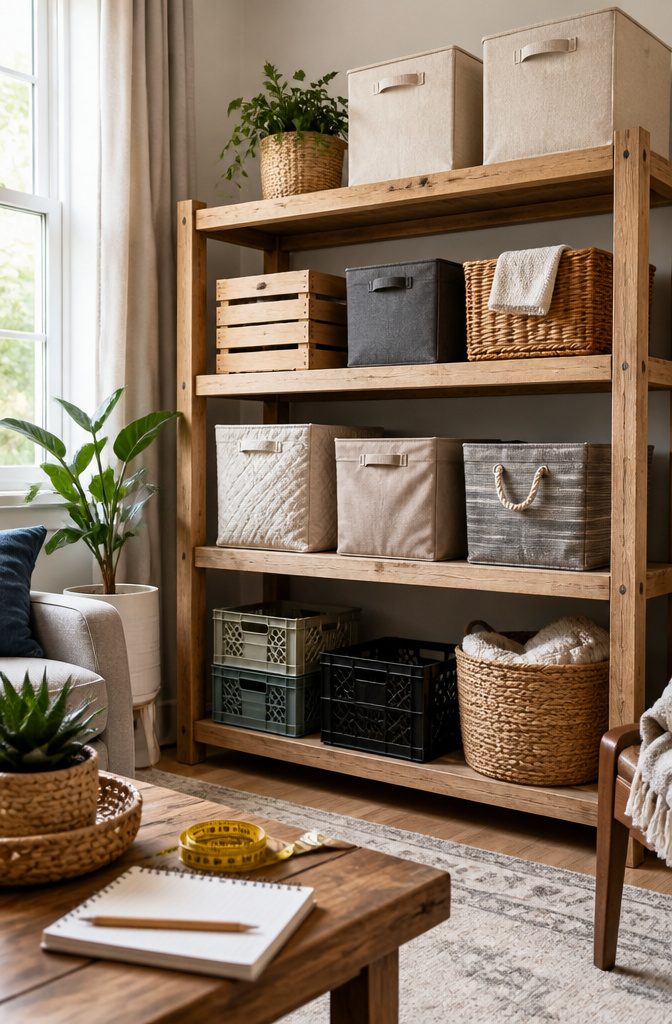
Managing costs is crucial, as multiple under-$30 items may be needed for full organization.
Total Cost of Organization Solutions
The first thing that separates a weekend project from a deferred one is whether the total spend stays manageable across every shelf, rod, and bin you need.
A single under-$30 find looks harmless, but most closets need several pieces to function.
I look at this by counting what the space actually requires before anything goes in the cart. A narrow reach-in with one rod and a shelf above might only need two or three pieces.
A wider closet with wasted floor space or awkward corners starts adding up faster, and that is where the budget either holds or breaks.
Buyers in apartments or starter homes should care most here, since the closet is usually working harder than the square footage suggests.
The cost factor matters less only when someone is treating the closet as a permanent remodel with a bigger allocation.
Maximized Storage Space
A closet organizes well when vertical space stops getting treated like dead air. The gap between a top shelf and the ceiling, the back of a door, the floor beneath hanging clothes: these are the places where clutter actually lives.
The right finds add layers without adding footprint. I pay attention to depth, since a 12-inch organizer that overhangs the door swing or blocks the light switch creates a new problem.
Small closets in older homes or converted bedrooms are where this matters most, because there is nowhere else for overflow to go.
Buyers with walk-ins or spare bedrooms can ignore this to a degree, but even then a closet that swallows more than it should tends to stay messy longer.
Installation Difficulty
Some closet solutions need a drill, a stud finder, and an afternoon of patience.
Others slide onto a shelf or hook over a rod and are done before the coffee cools. The gap between those experiences matters when you are working alone, renting, or balancing the project against everything else Saturday holds.
I have seen owner reports where a promising organizer sat in its box for months because the hardware looked intimidating. Tool-free options suit renters and anyone hesitant about wall anchors in drywall.
The difficulty factor fades only for buyers who already own the tools and treat mounting hardware as routine. Even then, a simpler install usually means a sooner result.
Longevity of Materials
Plastic bins crack, wire frames sag, and fabric drawers lose shape after a few seasons of heavy use. In a budget context, longevity means getting through two or three years without replacement, not handing something down.
I notice that owner reviews often mention this in the 18-month mark, when the initial satisfaction has worn off and the cheap particleboard is swelling from humidity.
Buyers who reorganize frequently or treat the closet as a staging area for future moves do not need to prioritize this.
Anyone building a system they intend to live with should at least avoid the flimsy end of the spectrum, even at under $30.
Visual Appeal and Multi-Use Functionality
These two factors trade against each other in most budget buys. A matching set of canvas bins looks calm and intentional; a repurposed shoe organizer hacked into accessory storage does not, but it solves two problems at once.
I think visual appeal matters more for closets that open into bedrooms without doors, or for buyers who use the space daily and want the mental effect of order.
Multi-use functionality wins when the closet is irregular, when seasonal storage needs shift, or when a buyer wants one trip to the store to cover the whole project.
Neither deserves heavy weight here, but together they shape whether the result feels finished or merely contained.
Customer Satisfaction and Ease of Access
Ratings and retrieval speed are the last checks before something goes in the cart. I read owner feedback for patterns: does the organizer slide off the rod, do the drawers catch, does the label window actually hold a card?
Access is the test of whether the system survives past the first month. A bin on a high shelf that requires a step stool every time defeats its own purpose.
A drawer that sticks stays half-open and collects dust. These factors matter most for buyers who have organized before and watched it backslide.
First-timers sometimes ignore them, then learn why the clutter returned. The combination of honest reviews and smooth daily use is what separates a find that lasts from one that becomes garage storage by spring.
How the Top Picks Compare
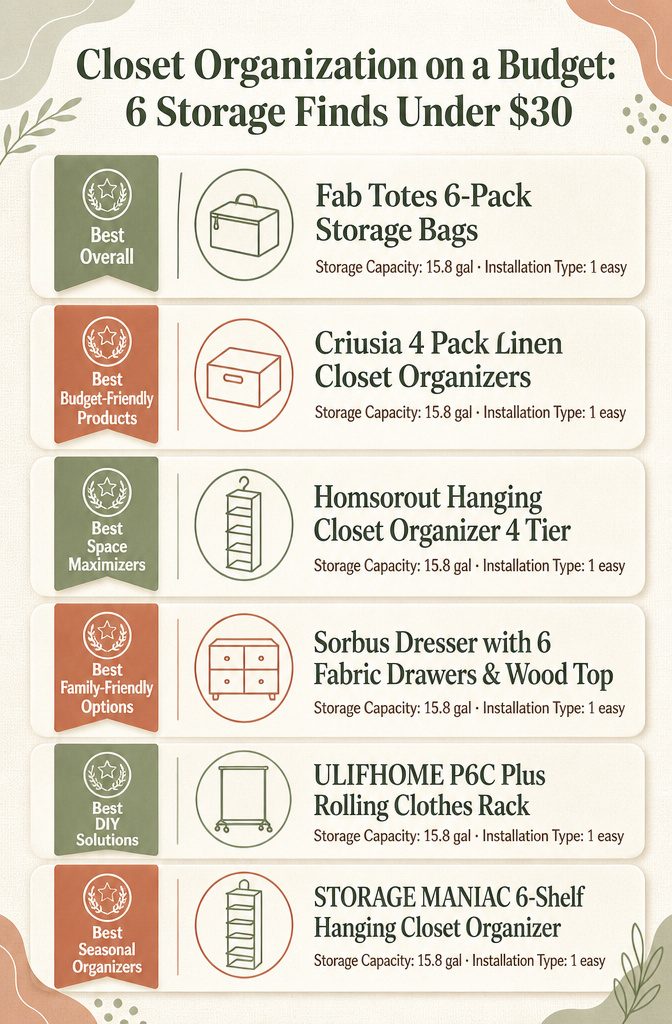
Each Fab Tote can hold 15.8 gallons, suitable for larger items like comforters.
The Fab Totes and the Criusia organizers both handle soft items, but the difference in volume changes what you actually store.
Each Fab Tote holds 15.8 gallons, which is enough for a queen comforter or a full winter wardrobe switch. The Criusia set spreads the same wall of fabric across four smaller bins.
That means the Fab Totes suit the person who wants seasonal gear sealed away and forgotten until October; the Criusia works better when you open the closet every morning and need to grab one thing without unstacking.
I see buyers go wrong when they buy big for daily access.
A 15.8-gallon bag on a high shelf is a project to pull down. Four smaller bins on a middle rod let you swap a single sweater.
The Homsorout hanging organizer and the STORAGE MANIAC version look similar at first.
Both hang from a rod and add vertical shelf space. The Homsorout stops at four tiers, which keeps the footprint narrow and leaves room for shirts or a vacuum on the closet floor below.
The STORAGE MANIAC runs six shelves deep, and that extra height starts to matter in a standard 8-foot closet.
Fill all six with jeans or sweaters and the bottom tier sits low, sometimes brushing shoes or bins you already stored underneath.
I think of the Homsorout as the pick for a shared closet where floor space still belongs to someone else. The STORAGE MANIAC makes sense when you have the full vertical channel and nothing below but carpet.
The Sorbus dresser and the ULIFHOME rolling rack both stand on the floor, but they solve opposite problems.
The Sorbus unit is contained: six drawers, a wood top that holds a jewelry tray or folded laundry, and no visual noise spilling out.
The ULIFHOME rack is exposed by design, meant for garments that wrinkle when folded or outfits you want to see at once.
You pick between speed and tidiness. A family with kids dumping clean clothes needs the Sorbus drawers; a single person rotating work outfits wants the rack’s immediacy.
I have seen people buy the rack for a child’s room and regret it within a month. Exposed storage does not forgive a messy refolder.
DIY organization ideas
Shoe boxes and the cardboard trays from sparkling water packs are the oldest free tools in closet organization, and they still earn their keep if you treat them right.
I line mine with scrap paper or leftover wrapping paper so the edges look intentional instead of recycled, then stack them on existing shelves to create shallow compartments for accessories, folded tees, or rolled belts.
Keep the height uniform; a wobbly tower of mismatched boxes collapses the moment you pull one from the middle.
For hanging space that isn’t earning its keep, I look at vertical dividers made from lightweight board or stiffened fabric that clip or hook onto a standard rod.
A trapezoid shape keeps sweaters or folded jeans from sliding off, and open shelves beat closed pockets when you need to see what you own before 7 a.m.
The versions that zip together in modules let you reconfigure as seasons change: four narrow units become one wide column, or you split them between a closet and the laundry nook.
The hanging approach works best when you check the hook hardware.
Eight hooks with reinforced stitching distribute weight across the rod instead of concentrating it at two points, which matters once you load in bulky knits or a stack of denim.
Side zippers or securing straps keep the unit from tilting when you grab something from the bottom shelf.
If floor space is the only space left, a rolling frame with a fitted cover turns an open garment rack into something that reads storage instead of dorm room.
Lockable wheels matter more than people think; a rack that drifts every time you brush past it becomes frustrating fast.
The cover itself should open fully and secure back with hook-and-loop straps, not a half-zip that traps you in a wrestling match with your own sweaters.
Fabric bins with a stiff bottom panel and a see-through window solve the mystery-box problem.
At roughly 16 by 11 by 7 inches, one bin holds a surprising load of linens or out-of-season layers, and the mesh panel means you stop pulling three containers before you find the spare sheets.
Fold flat when empty, pop open when needed: that flexibility is what makes them worth the closet real estate they occupy.
Decluttering tips
The hardest part of closet organization is not the bins or the rods.
It is deciding what actually belongs in there. Most people skip this step and end up shuffling the same clutter into prettier containers.
I start every closet project with three piles: keep, donate, and a maybe box that leaves the room entirely.
The maybe box sits in the garage or a hallway for 30 days. If I do not go looking for something in that month, it goes to donate without a second round of decisions.
That single trick cuts more clutter than any sorting system because it removes the emotional negotiation that happens when you stand in front of a full rack.
Seasonal clothing is where small closets drown. I rotate spring and summer items into bins during fall, then swap when the weather turns.
Labels only work if they actually help: ‘sweaters, heavy’ or ‘linen, work’ instead of just ‘winter.’ A mesh window on a bin beats a handwritten label every time because you can see the contents without unstacking.
Vertical space is the other overlooked zone. Most closets use the rod and the floor, leaving 4 feet of empty wall above the hanging bar.
A hanging shelf unit drops into that gap with no drilling and instantly adds tiers for folded items. The ones with side pockets handle the small stuff that otherwise ends up in a jumble on the floor.
For rentals with fixed shelving, I look for modular pieces that zip together or detach.
A 4-in-1 hanging organizer can become two separate 3-tier units if your next closet has a different layout. That adaptability matters more than capacity numbers because closet dimensions change every time you move.
The last mistake I see is overloading any single solution.
A hanging shelf rated for 6.6 lbs per tier will sag if you treat it like a dresser drawer. Folded lightweight items, not dense jeans or wet towels, keep these pieces shaped and stable for the long term.
Choosing the right storage solutions
Start with the problem, not the promise. A closet that looks organized on Saturday morning falls apart by Wednesday because the bins are too deep, the shelves are too high, or the thing that holds scarves does nothing for shoes.
I spend more time undoing bad purchases than making new ones, so I now measure twice and buy once, even at this price level.
Depth matters more than width in a standard reach-in closet.
A 12-inch shelf loses less hanging space than a 16-inch one and still fits folded jeans in stacks of four. I look for open fronts on anything above eye level.
A mesh panel or clear window saves the guesswork that turns organization into archaeology. The fabric bins in this list run 15.8 by 10.6 inches, shallow enough to slide out without disrupting the whole row.
Installation type separates the weekend project from the one that bleeds into Monday.
Tool-free assembly sounds minor until you are working in a closet with no floor space to spread out. Snap-together frames and fold-flat designs mean you can reposition after a month if the first layout fails, which it often does.
Durability at this price means managing expectations.
Non-woven fabric and powder-coated steel will not survive a move intact, but they do survive a season. I treat these as 2-year solutions, not heirlooms, and plan to replace or reinforce before sagging starts.
Versatility is where budget buys earn their keep. A hanging shelf that converts from 3-tier to 6-tier, a rolling rack that becomes seasonal overflow storage, a dresser that folds flat for the next apartment.
One item that serves two purposes beats two items that each serve one, especially when square footage is the real constraint.
Frequently Asked Questions
What are the most cost-effective organization solutions?
The research points to modular fabric bins and hanging shelf systems that ship flat and snap together by hand.
A single set can reconfigure between a 3-tier and 6-tier layout, so you are not locked into one layout if your closet changes.
Buyers who track this closely tend to favor pieces with mesh windows or clear panels, since being able to see contents cuts down on double-buying and rummaging time.
How can I maximize my closet space with limited resources?
Vertical hanging organizers earn back floor space immediately.
The units that measure around 12 by 12 by 23.6 inches per 3-tier section stack to 47 inches total, and each shelf supports up to 6.6 pounds. That is enough for folded sweaters, towels, or a shoe row without stressing the rod.
For closets with no rod at all, a rolling garment rack at 46 inches wide and 76.8 inches tall gives you 375 pounds of hanging and shelf capacity, plus a zippered cover to keep dust off seasonal pieces.
What DIY options are available for closet organization?
Most of the pieces in this range arrive tool-free. The tapered sleeve locking systems let you snap steel tubing together by hand, and fabric drawers drop onto a base panel without hardware.
A 4-in-1 modular hanging set zips together or separates, which means you can start with one section and expand as budget allows.
The fold-flat design also matters for renters: when the lease ends, the whole system collapses into a box that fits in a car trunk.
How can I repurpose items I already own for organization?
This is where the multi-use language in buyer feedback becomes useful. A fabric bin sold for linens at 15.8 by 10.6 by 6.7 inches works just as well for toys, pet supplies, or pantry overflow.
The hanging shelves with mesh side pockets were designed for belts and socks, but owners report using them for craft supplies, camper trailer storage, and dorm-room toiletries.
Before buying anything new, map your actual clutter against the dimensions in the research: a 60-liter bin holds more than it sounds like if you are currently using mismatched cardboard boxes.