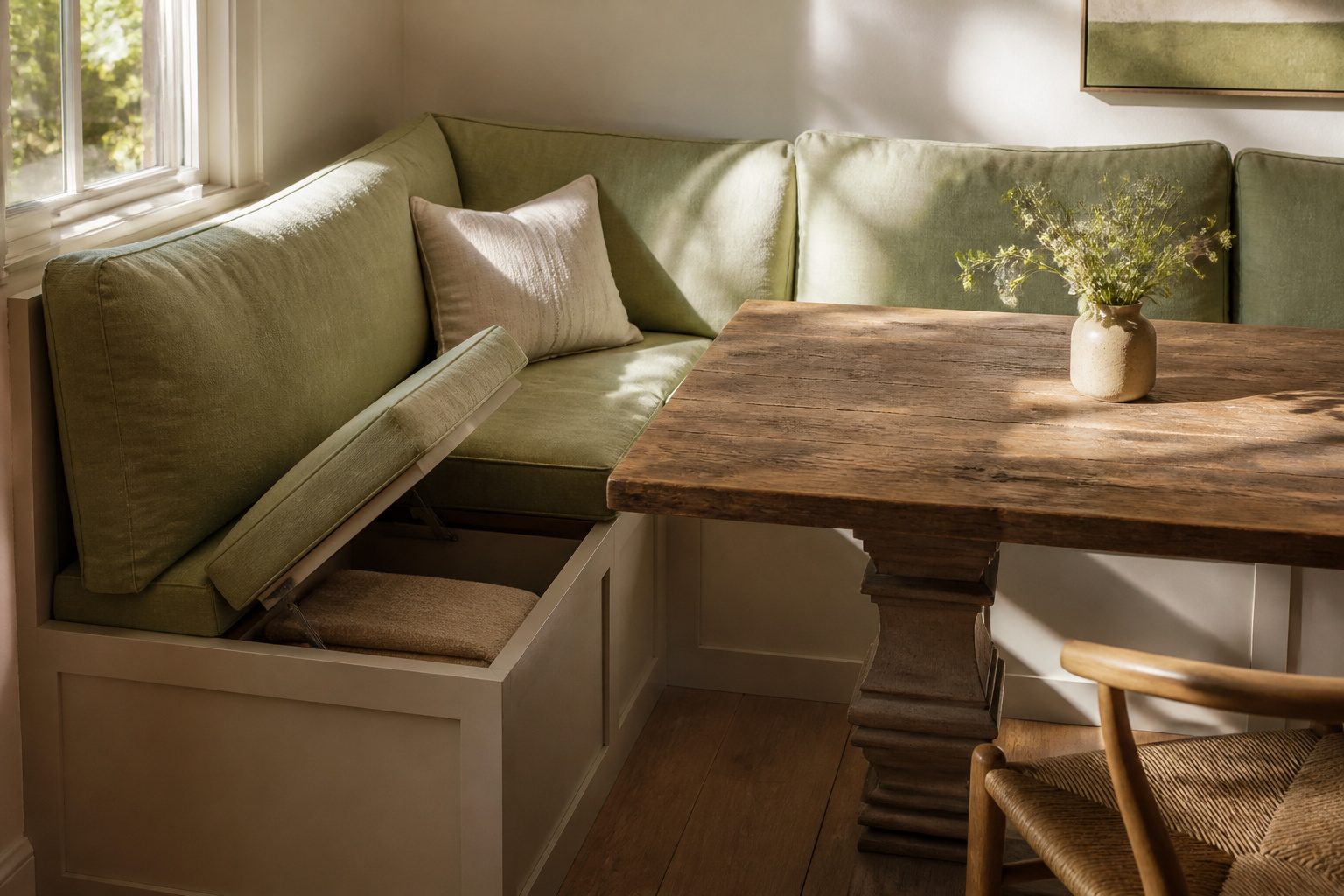
The right corner banquette depends on whether you need storage you access daily or twice a year.
Lift-top seats swallow holiday platters whole, but lifting an entire cushion weekly wears thin fast; drawers cost more and eat leg room, yet earn their keep for napkins and art supplies you reach for constantly.
One detail separates the options that last from the ones that frustrate: gas-strut lift mechanisms run on hardware that fails silently, while full-extension drawer slides announce their quality the first time you pull.
1. Upholstered Dining Bench with Lift-Top Storage
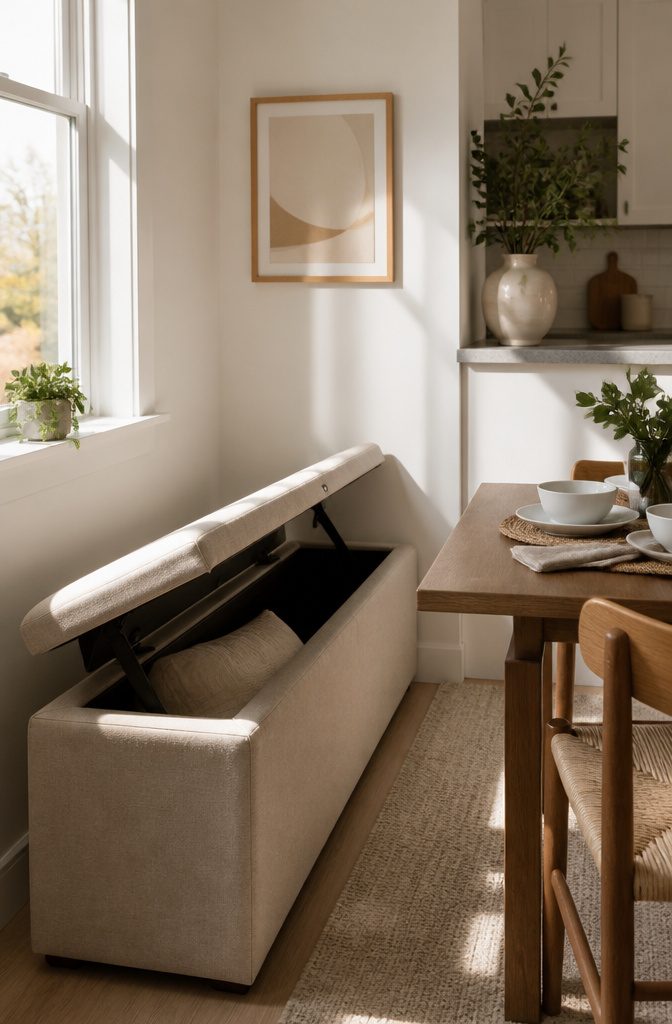
West Elm’s upholstered dining bench with lift-top storage arrives in 31 color and fabric options, which matters more than it sounds.
A corner banquette in a kitchen sees daily use: coffee spills, crumbs, the occasional marker from a kid who escaped cleanup duty.
The wrong weave traps everything, and a light linen in a high-traffic nook becomes a maintenance job you did not sign up for.
I would order swatches first and test them against the light your kitchen actually gets at breakfast, not the light in the product photo.
The lift-top mechanism runs on gas struts, so the seat rises without taking your hands off your plate. Storage underneath swallows table linens, small appliances, or the extra serving pieces that otherwise colonize cabinet space.
This style wins when you already own upholstered dining chairs and need the banquette to read as part of the set rather than an afterthought.
Match the leg finish and keep the fabric in the same family, even if the exact shade differs. The alternative is a visual argument every time you walk into the room.
White-glove delivery is available, though I would weigh the cost against how much of the assembly you can handle yourself. Two configurations mean the piece works in tighter corners or wider bays without a custom order.
2. Simple L-Shaped Storage Bench
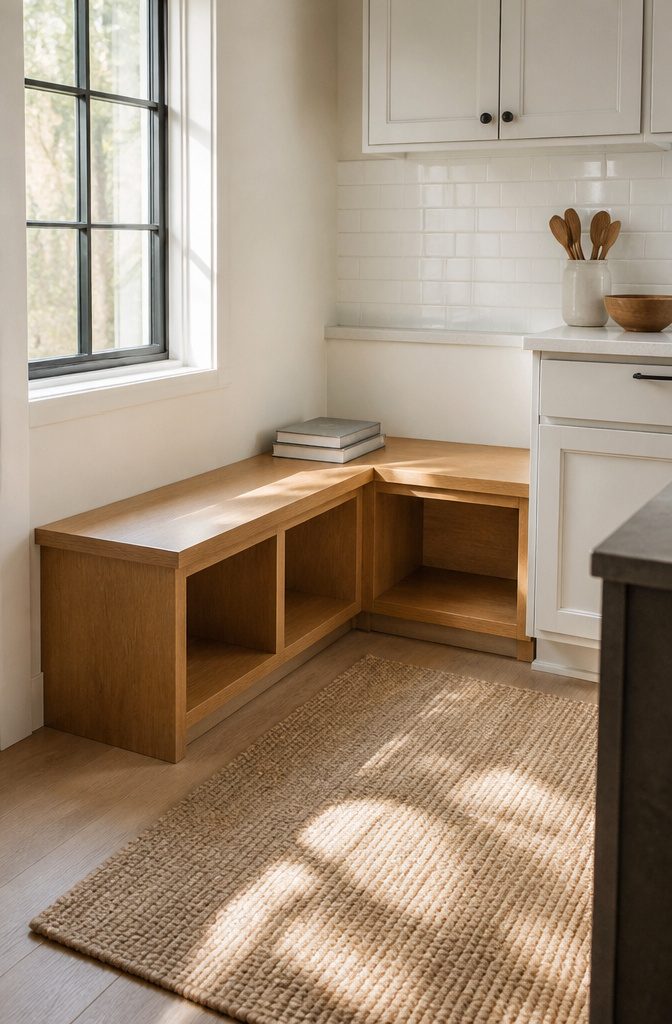
An L-shaped storage bench gives you two compartments, usually one under each leg of the seat, and that geometry is where the savings come from.
The simpler frame means less labor and less hardware, which keeps the price low enough that you can build the whole nook for what a custom banquette costs just to have drawn up.
The compartments sit directly beneath the seats you actually sit on, not in the corner wedge where the two sides meet. That dead space in the corner is structural; the usable storage runs along the front of each bench.
Plan on it for things you reach for often: placemats, the kids’ art supplies, the bread bin. It is not deep enough for anything you store and forget.
You gain storage, but you lose legroom.
Simpler construction means a fixed seat height, usually a fixed length, and no built-in back unless you add it separately. That matters less in a rental where you are working around a radiator or a window that sits low.
It matters more if you want the bench to read as a single custom piece. For a weekend build with a few hundred dollars and a drill, this is the option I would pick.
3. Couch-Like Dining Banquette
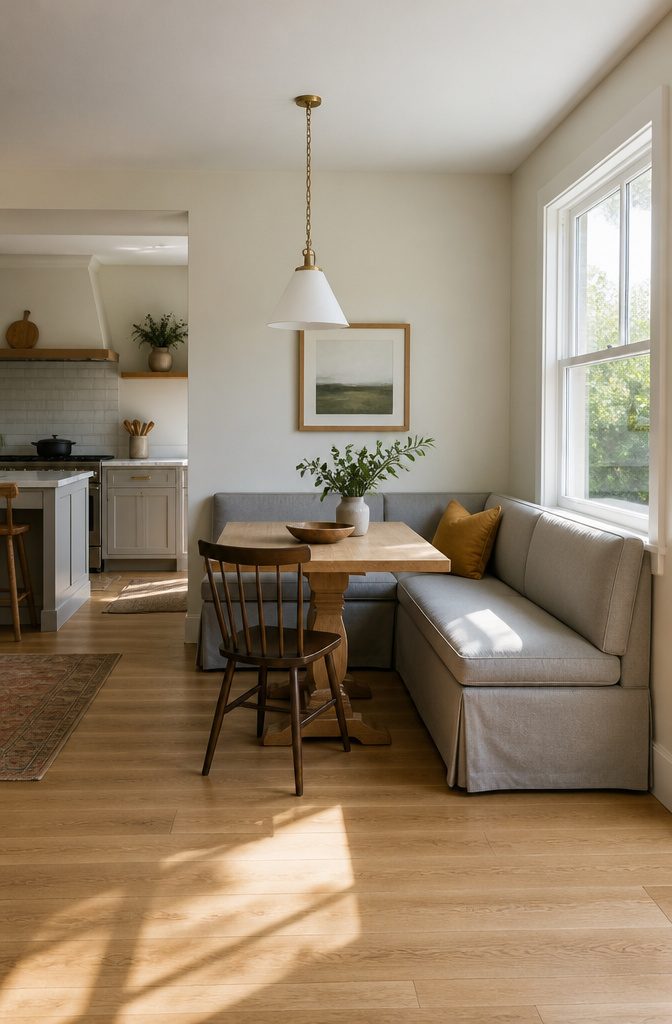
A couch-like dining banquette brings living-room comfort into the kitchen, and the detail that makes it practical is a washable slipcover you can throw in the machine after spaghetti night.
That matters more than fabric choice when you have a dog that sheds or a toddler who treats every surface as a napkin.
I would pick a medium-weight cotton or a cotton-linen blend with a tight weave, because loose textures trap crumbs and resist vacuuming.
The proportions change how you use the space. A firmer bench keeps you upright and ready to stand, which works for quick breakfasts.
A deeper seat with a softer cushion invites people to settle in, linger over coffee, and actually talk. In my experience, that shift in posture changes the whole mood of the room.
A couch-like banquette needs 20–24 inches of depth to feel right, and in a narrow nook that steals walking room. I would skip the plush option if the aisle between seat and table drops below 36 inches.
4. Farmhouse-Style Dining Nook
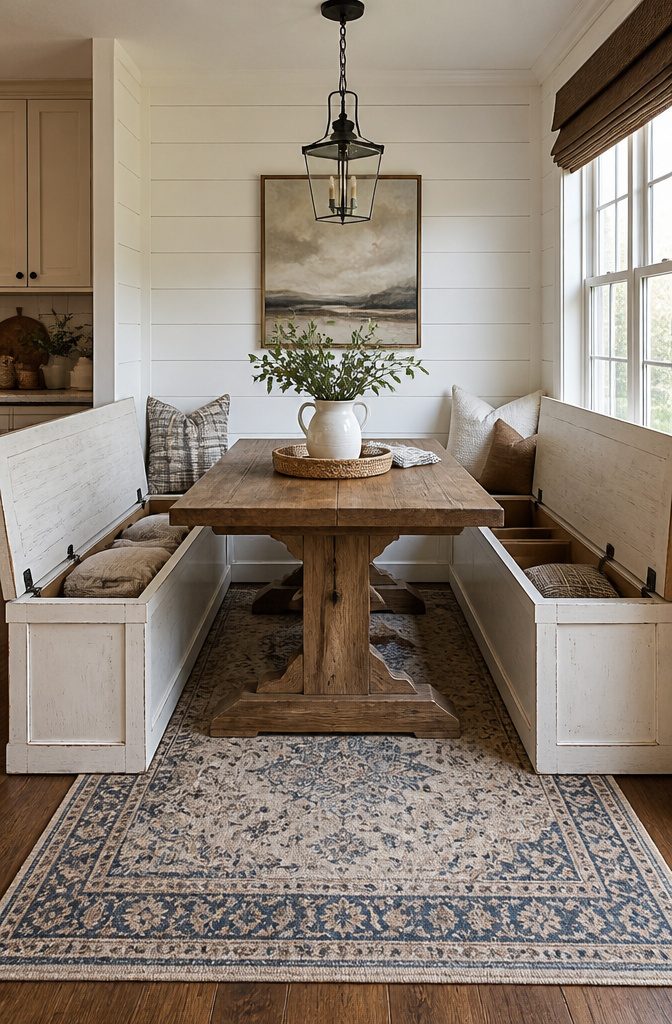
A farmhouse-style dining nook with lift-top storage on either side gives you the symmetry that makes a corner feel intentional, not crowded.
The Canora Grey set keeps both benches identical, so the storage compartments line up evenly and the whole unit reads as built-in even though it ships freestanding.
I like the dual compartment layout for kitchens that lack a proper pantry.
One side can hold bulk items or small appliances you rarely use; the other takes linens, extra serving pieces, or the kids’ art supplies that otherwise colonize every drawer.
The lift-top mechanism means you access it all without crawling underneath or pulling the bench away from the wall, which matters in a tight breakfast nook where the table sits close.
The modern farmhouse look this connects to runs through most of what Josie Decor readers already tackle in bedrooms and on patios: painted wood finishes, straightforward hardware, nothing overly refined.
This set comes in three sizes, with the largest seating up to seven, so it scales from a two-person rental nook to a first home’s eat-in kitchen without changing the visual formula.
Solid wood lasts, but it is heavy to move and install. Solid wood with storage compartments runs heavier than upholstered options, and you’ll want to check floor loading if you’re on an upper story with soft subflooring.
5. Modular Banquette Collection
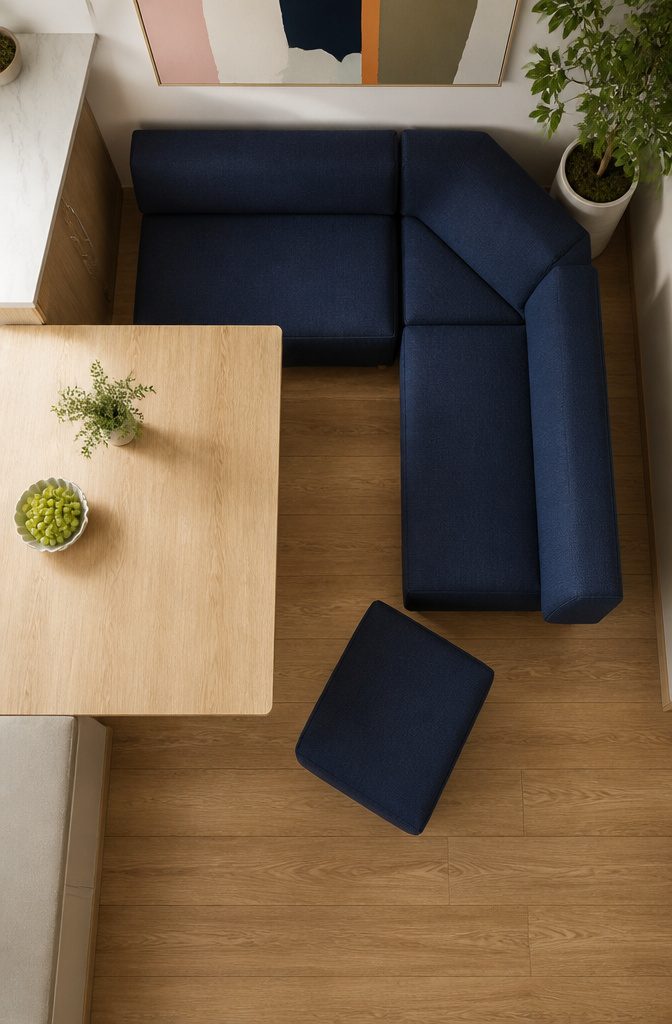
A modular banquette collection gives you the freedom to build exactly the seating your kitchen calls for, then rebuild it somewhere else when the lease ends.
Most systems break into three piece types: a corner wedge, left and right armless benches, and an ottoman or return unit that finishes the row.
The corner piece is your anchor; everything else clips or bolts to it, though some manufacturers design the armless benches to stand alone if you later split them into two straight benches.
Color and pattern choices run wider here than with built-ins, which matters when you are trying to match existing paint or tile.
I would pick a solid base upholstery and add pattern through loose cushions rather than committing to a bold print on the whole frame. Prints date faster than solids, and replacement cushions cost less than reupholstering a whole section.
For renters, the real advantage is in the planning. Measure your corner once, buy the corner unit plus whatever bench lengths fit the walls, and leave the return piece off if traffic feels tight.
In the next apartment, that same corner unit might become the center of a straight run against a single wall.
Modular frames read thicker than custom built-ins, and the connection hardware sometimes leaves a small gap. I accept that gap as the price of keeping my options open.
6. Corner Banquette with Built-In Storage
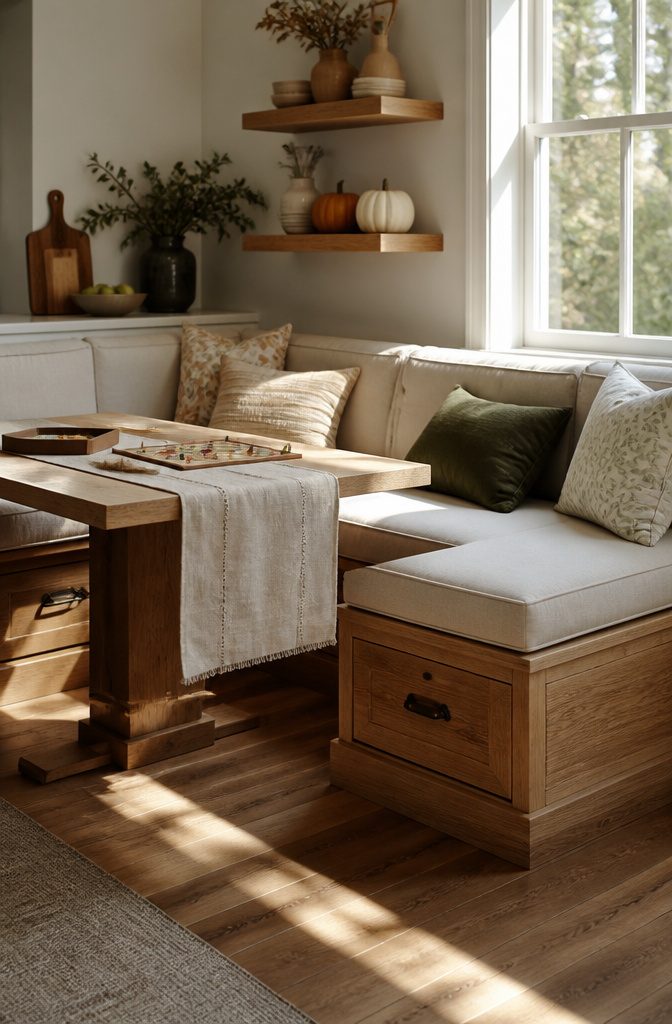
Drawers built into a corner banquette frame solve a specific storage problem that lift-top benches rarely handle well.
Board games, card boxes, and the loose entertainment pieces a family actually uses tend to slide and stack awkwardly under a hinged lid, where you end up lifting the entire cushion to retrieve one item from a cavernous cavity.
A drawer pulls the storage toward you, and that difference in accessibility matters more than the total cubic feet would suggest.
Drawers eat into the seating depth, so budget 18 inches minimum for the bench itself or the spot will feel tight.
A drawer front on a banquette seat typically stops around 18 to 22 inches of usable slide, while a lift-top box can use the full footprint beneath the bench.
What you store in drawers needs to be the stuff you reach for weekly, not the once-a-year items that belong in deeper, less convenient storage.
In the family getaway that Los Angeles designer Matt O’Dorisio planned, the drawer setup was built specifically for games and vacation entertainment, sized for items that come out after dinner rather than holiday serving platters that sit untouched for months.
For a weekend project with a few hundred dollars in materials, drawer hardware costs more than hinges and struts, and the build demands tighter tolerances.
I would put the money toward full-extension slides and skip the soft-close upgrade; the weight of a loaded game box already slows the motion enough.
If your corner is tight against a wall on both sides, drawers on the outer-facing sides win over a front pull that forces you to kneel into the nook.
7. Freestanding Kitchen Banquette
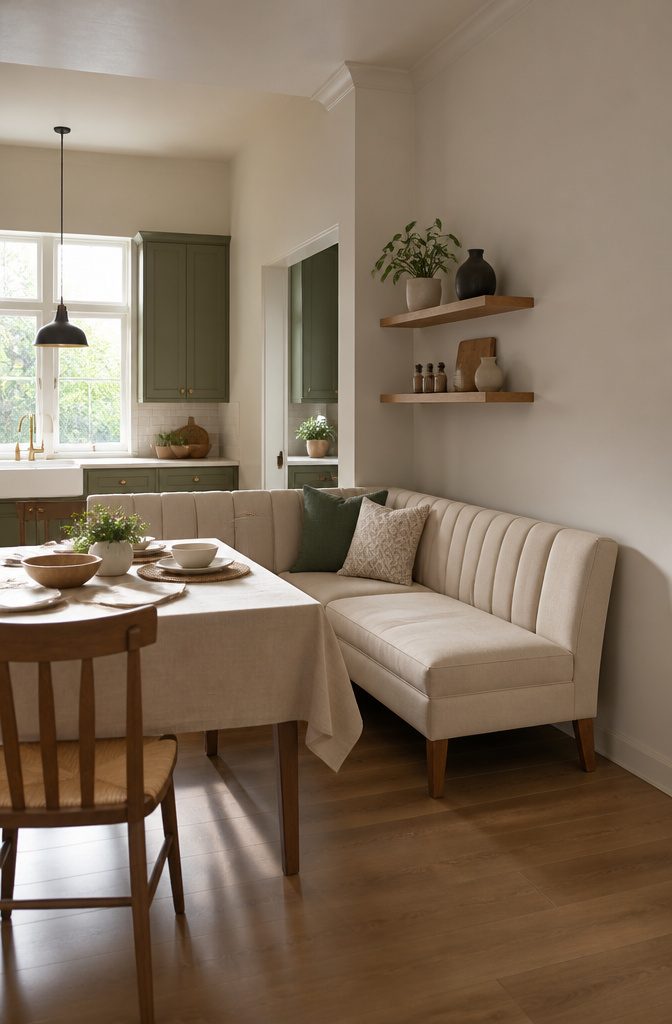
A freestanding corner banquette with open shelves above the seat solves the storage problem without touching a wall.
The Williston Forge five-person upholstered nook set fits this brief exactly: two small connecting shelves sit above padded storage benches, giving you a place for napkins, salt and pepper shakers, or a single-stem vase while the lift-top seats hide the bulkier stuff.
What goes where matters. Shelves are for the things you reach for daily; the cavity under the seat is for the backup stock, the extra placemats, the serving pieces you pull out twice a month.
Keeping the distinction clear prevents the shelves from turning into clutter magnets.
For renters, freestanding means your security deposit stays intact.
No screws into the landlord’s drywall, no patching when the lease ends. You assemble it in a couple of hours, and when you move, it breaks down the same way.
It reads as furniture, not architecture, and the gap where the unit meets the wall collects the dust a built-in would seal away.
I would take that trade every time in a rental, but I would also budget for a slim gap cover or accept that the vacuum hits that spot weekly.
8. Dining Nook Set with Coordinating Stools
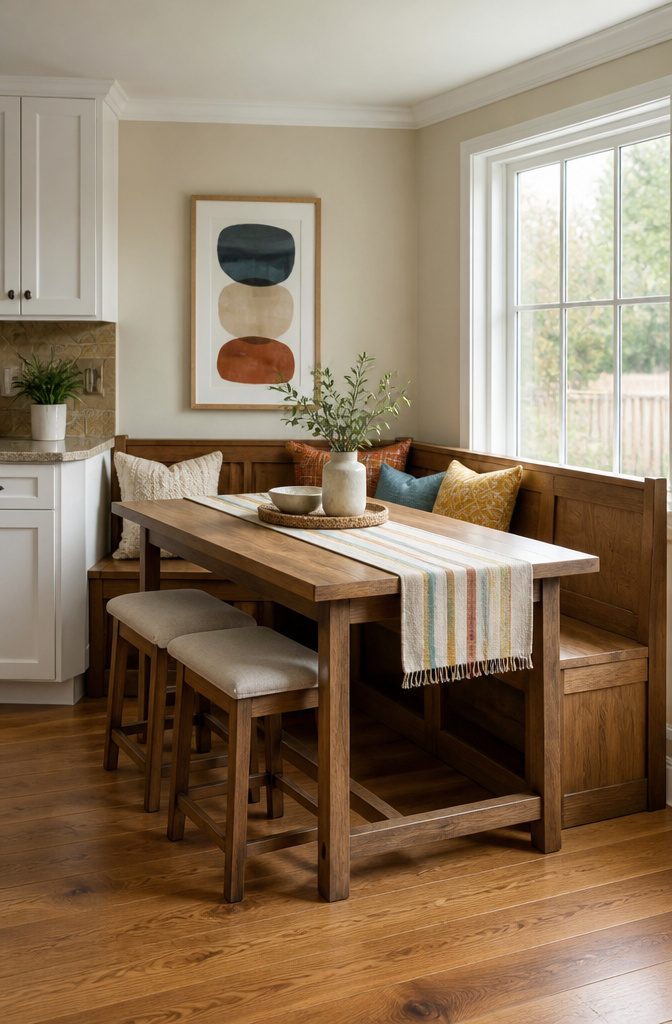
A dining nook bench corner banquette with matching stools that tuck underneath solves the extra guest problem without stealing daily floor space.
Most sets seat four on the bench itself, then pull out two slim stools when someone brings a plus-one.
The stools usually slide under the table apron or nest against the bench base, so you only notice them when you need them.
I would pick this setup for households that host casually but not often.
The seat count jumps from four to six without the permanent bulk of a six-chair dining set, which matters in a kitchen where every square foot routes traffic to the fridge or back door.
These are not seats you linger on for hours. They are plywood or thin upholstered pads, fine for a burger and beer, less so for a three-course dinner.
Storage varies by build.
Some stools stack in a closet; others have no home but under the table. Check that detail before you buy, because stools left against a wall become clutter the other six nights a week.
9. Extendable Breakfast Nook Table Set
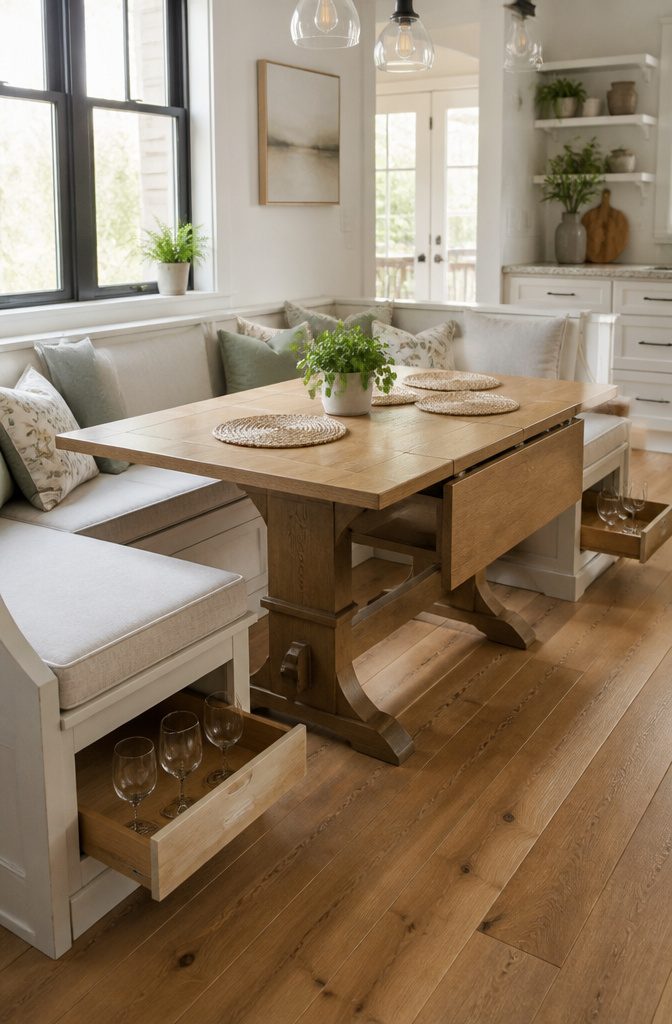
An extendable breakfast nook table set with built-in wine glass holders and storage underneath the bench seats solves two problems at once: seating more people when you need to, and keeping the everyday clutter out of sight.
The extension mechanism is usually a drop-leaf or slide-out panel that sits flush when closed and adds roughly 18–24 inches of length when open.
What changes is less about the table’s footprint and more about circulation; once extended, the bench on one side becomes harder to enter and exit, so I would plan the layout with the hinge side against a wall and the open side toward the room.
The storage beneath the benches typically runs the full depth of the seat, but the height is limited by the frame.
In most sets I’ve looked at, that space fits linens, serving pieces, or bulk pantry items better than stacked plates.
Wine glass holders routed into the underside of the bench top are a nice touch if you entertain, though they eat headroom and can rattle.
For a weekend project under $800, this style makes sense when you need flexibility more than a permanent built-in look.
All that storage boxiness reads heavier than a simple bench, so I would keep the finish light and avoid dark upholstery that shrinks the corner visually.
10. Wooden Corner Breakfast Nook Set
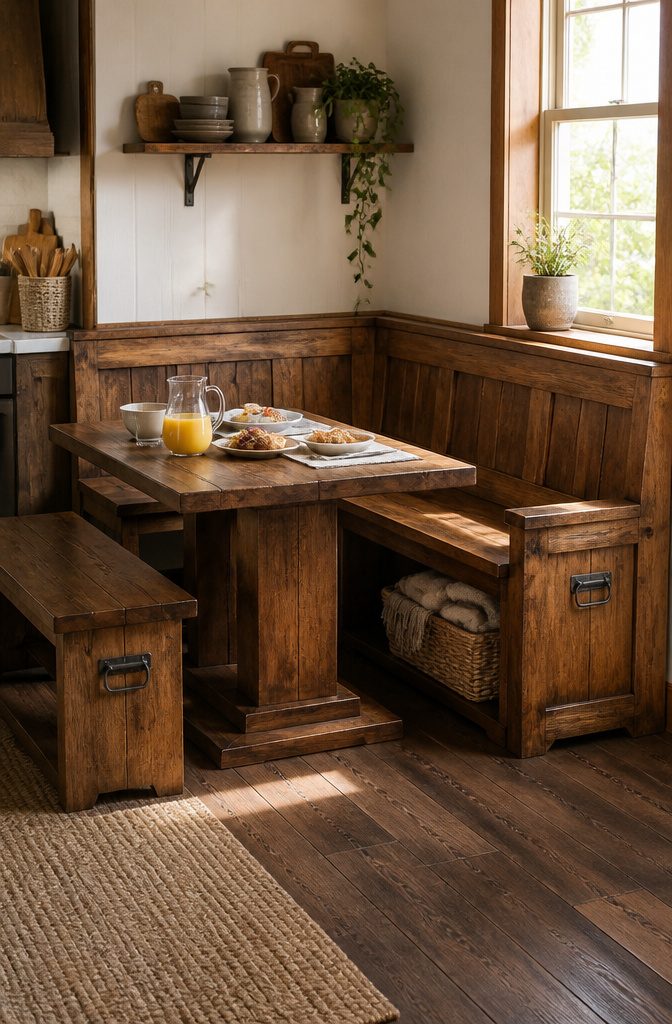
Solid wood corner breakfast nook sets with trunk-style handles signal something the veneer options rarely match: the front rail and lid are thick enough to take a mortise, which means the bench is built from stock that can survive decades of sitting, leaning, and the Sunday pancake routine.
That hardware style belongs on storage pieces meant to haul weight, and in a dining nook bench it promises the lid won’t warp or split where the hinge meets the frame.
The wood ages openly. Maple and oak develop the shallow dents and sun-bleached spots that read as character after five years, not damage.
A painted finish hides that process, but I usually steer clients toward a clear seal or a light stain if they want the piece to look intentional rather than tired.
Weight is the real separator here. A solid wood set runs two to three times heavier than its MDF or plywood equivalents, which makes it a poor choice for anyone who rearranges quarterly or needs to haul it up stairs.
For a permanent kitchen nook, that mass is an asset: the bench does not skate across tile when a kid climbs up, and the back feels planted against the wall.
You are buying a large piece that needs careful delivery and placement, and it will probably outlast the paint color you chose for the walls.
Storage Options Across Every Style
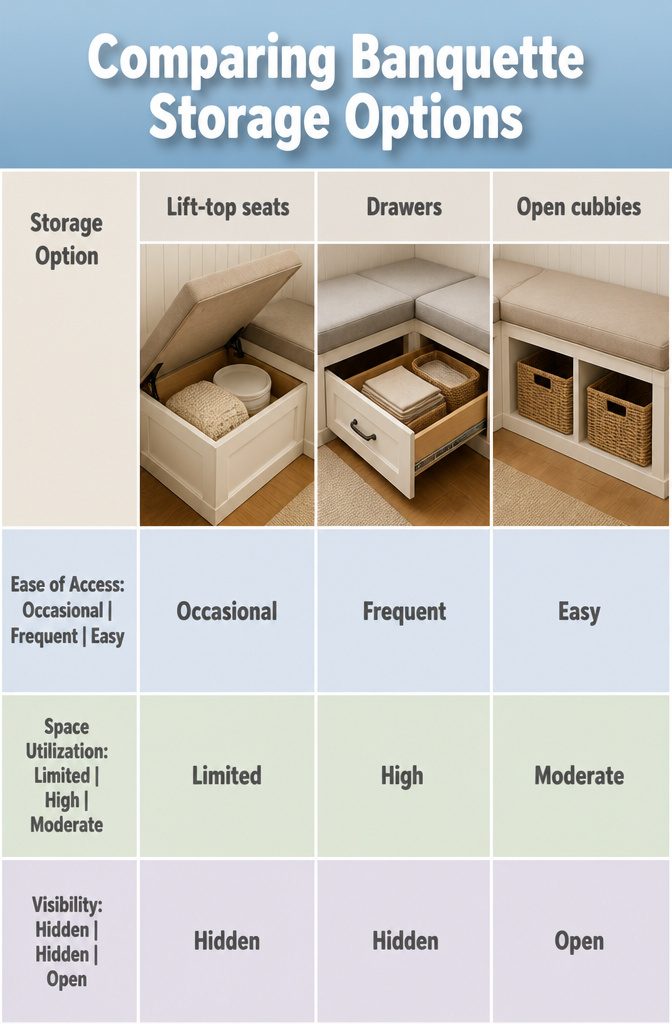
Under-seat storage in a corner banquette falls into three practical types, and the right one depends on what you actually need to stash away.
Lift-top seats work best for items you reach for a few times a year: holiday platters, extra chairs, or that roasting pan you only need at Thanksgiving.
The mechanism is simple, but lifting the entire cushion gets old fast if you are doing it weekly. I would skip this for anything you need daily.
Drawers change the equation completely. They cost more and eat into leg room because the hardware needs depth, but for napkins, placemats, kids’ art supplies, or the clutter that otherwise migrates to the kitchen counter, they earn their keep.
I have seen too many banquettes where the drawer fronts are decorative only, so check that you are getting full extension and real capacity before you buy.
Open cubbies sit in the middle: no moving parts, no hardware to fail, but nothing hidden either.
A pair of woven baskets turns the space into quick-grab storage for shoes, reusable bags, or dog leashes. This is the style I point renters toward, since it reads intentional even in a freestanding piece you will take with you.
Open cubbies collect dust and visual noise; if you are someone who needs surfaces clear, they will test you.
Design Styles That Fit Your Space
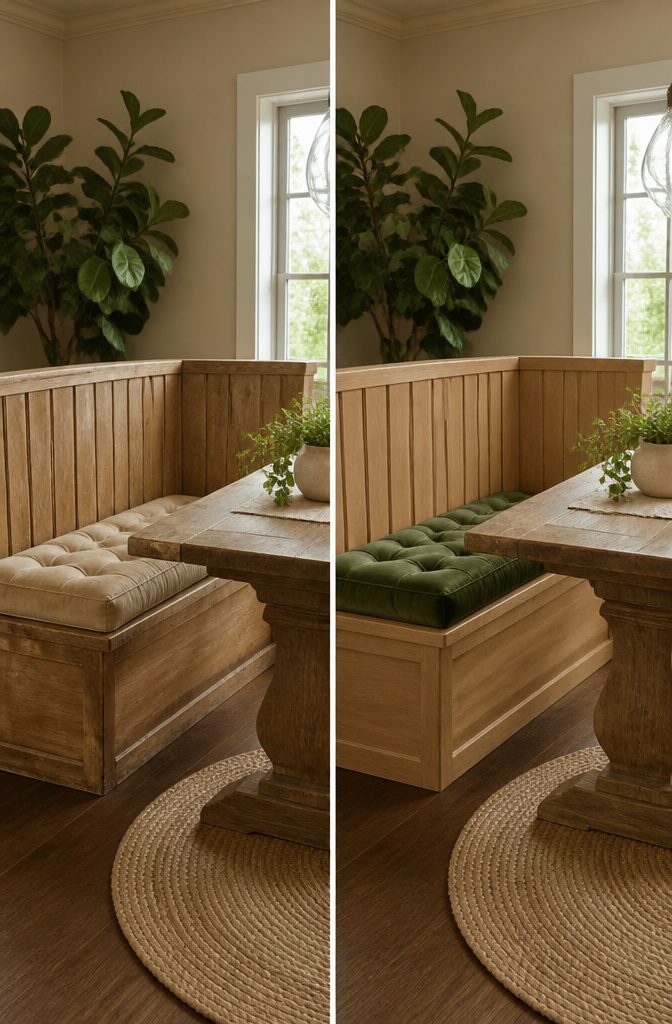
A dining nook bench corner banquette shifts style almost entirely through its back and base.
A vertical shiplap back with a visible wood grain leans farmhouse; paint that same profile in matte black or deep navy and it reads modern without changing the build.
Upholstery does more heavy lifting than people expect. Tufted velvet or a tight linen weave pushes traditional, while a flat, tight cushion in a solid warm gray or olive keeps things minimalist.
I would skip nailhead trim unless the rest of the kitchen already carries brass or iron hardware; otherwise it looks added-on.
For materials, painted MDF holds color evenly and costs less, but it chips at the corners where boots hit.
Solid pine or oak takes a stain and ages better, though it adds weight that matters if you are building in pieces and hauling them up stairs.
In a rental, I would go painted and accept touch-ups every couple of years. For a first home you plan to keep, stained wood with a simple cushion you can replace later gives you flexibility as tastes change.
The base matters too. A toe-kick recessed 3–4 inches looks built-in and traditional; legs left visible, even short block ones, loosen the piece and suit modern or farmhouse spaces better.
I have seen the same banquette body read completely different just from swapping that one detail.
Comfort and Fabric Choices for Daily Use
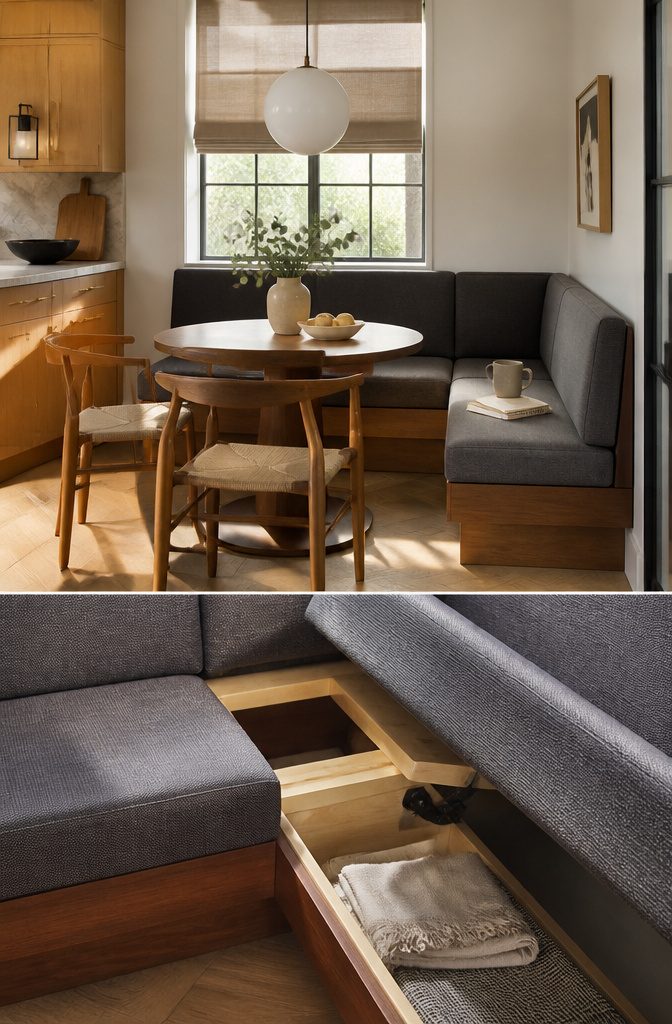
Performance fabric on a dining nook bench is not the same upgrade it is on a living room sofa.
You need it more. Maple syrup, coffee, and the occasional marker incident all land in the same spot where someone sits every morning.
A standard cotton or linen blend looks fine in the showroom and stains permanently by month three. I skip anything without a stain-repellent finish or a synthetic fiber content high enough to blot clean with water.
Cushion density matters most where the seat meets the back.
A bench you use for a quick breakfast can get away with softer foam, maybe 1.8 pounds per cubic foot. A corner banquette where you linger through dinner and homework needs 2.5 or higher, or the seat pancakes within a year.
I also watch seat depth. Twenty inches is standard for a dining chair.
A banquette you actually relax in should run 22 to 24 inches, enough to lean back without perching on the edge. Go deeper and you lose back support; shallower and nobody stays past the food.
Frequently Asked Questions
What is a banquette?
A banquette is a bench built to provide seating at a table, usually upholstered and often designed to fit a corner or wall.
In kitchens, it typically pairs with a table to create a dining nook and frequently includes storage under the seat.
How do I choose a banquette for my space?
Start by measuring your corner so the bench does not stick out past the wall, then match materials to what you already own.
If you have upholstered chairs, pick a banquette in a similar fabric family; if you have wood furniture, stay in that finish. Factor in how many people you seat daily versus occasionally, since more seating drives cost up fast.
Can I use a banquette outdoors?
Yes, banquettes can be built into a deck or patio as an alternative to traditional outdoor furniture.