Country kitchen sage cabinets run from a single painted island to a full room wrapped in muted green, and the deciding factor is how much natural light your kitchen gets.
A sage that reads fresh and grounded in a morning-lit farmhouse can turn muddy or clinical by afternoon in a darker space.
Paint shifts under morning light, afternoon sun, and after dark, and that shift is what sends most of these projects back to the starting line.
The sage island with cream perimeter cabinets is the proof: the same green and neutral pairing that glows under a bay window goes flat under recessed lighting alone.
1. Farmhouse Sage Green Cabinets
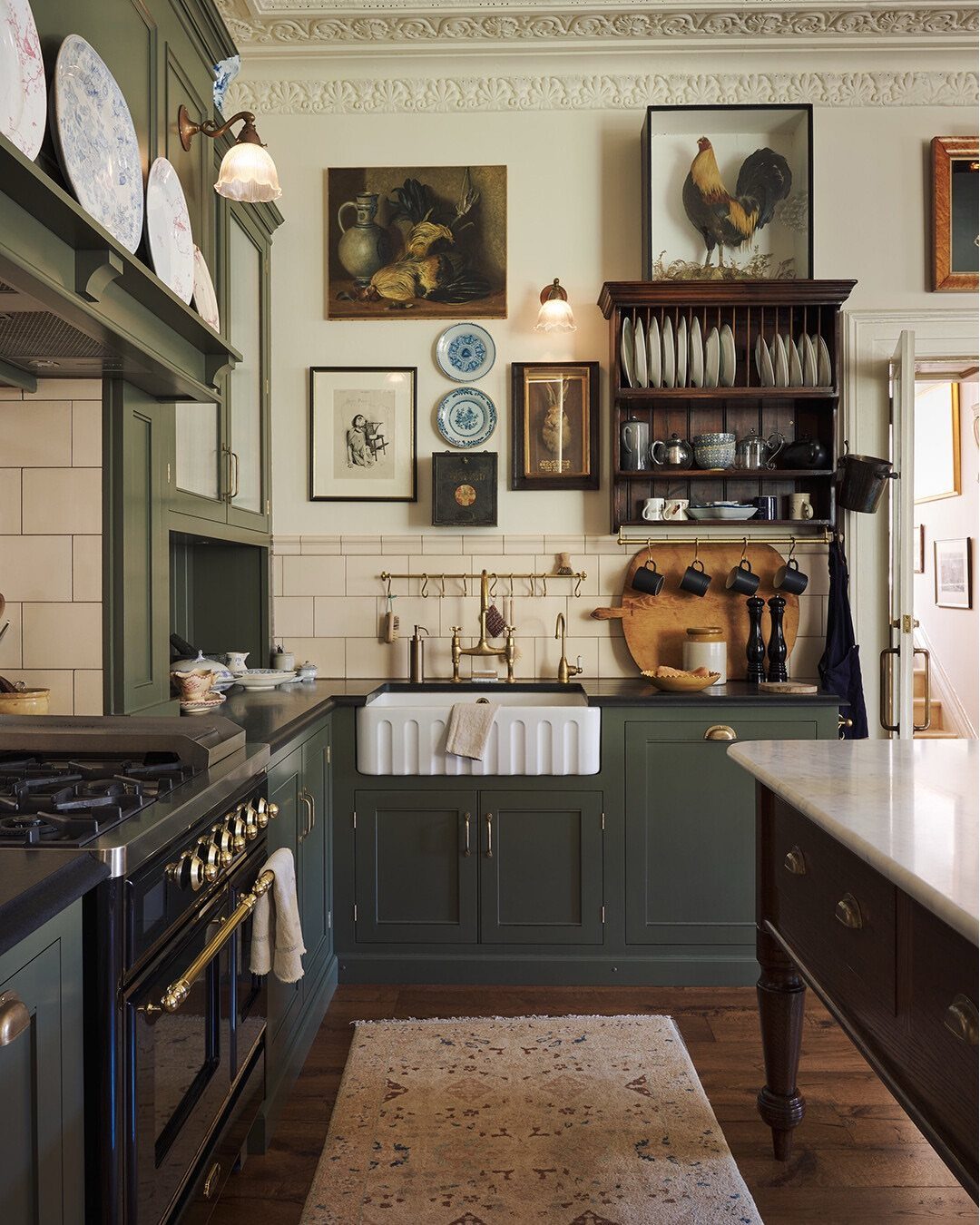
Farmhouse sage green cabinets work when the shade has enough gray in it to read as a color, not a pastel. Too bright and the kitchen turns nursery; too dark and you lose the fresh country feel.
An apron-front sink and plate rack sell the farmhouse look, but only if the cabinet color stays grounded enough to let them read as details rather than clutter.
I would check paint samples morning, noon, and evening before committing, because sage shifts dramatically with light. This is the entry point for most country kitchen projects, and the one where a wrong tone wastes the most money.
2. Sage Green Cabinets with Brass Accents
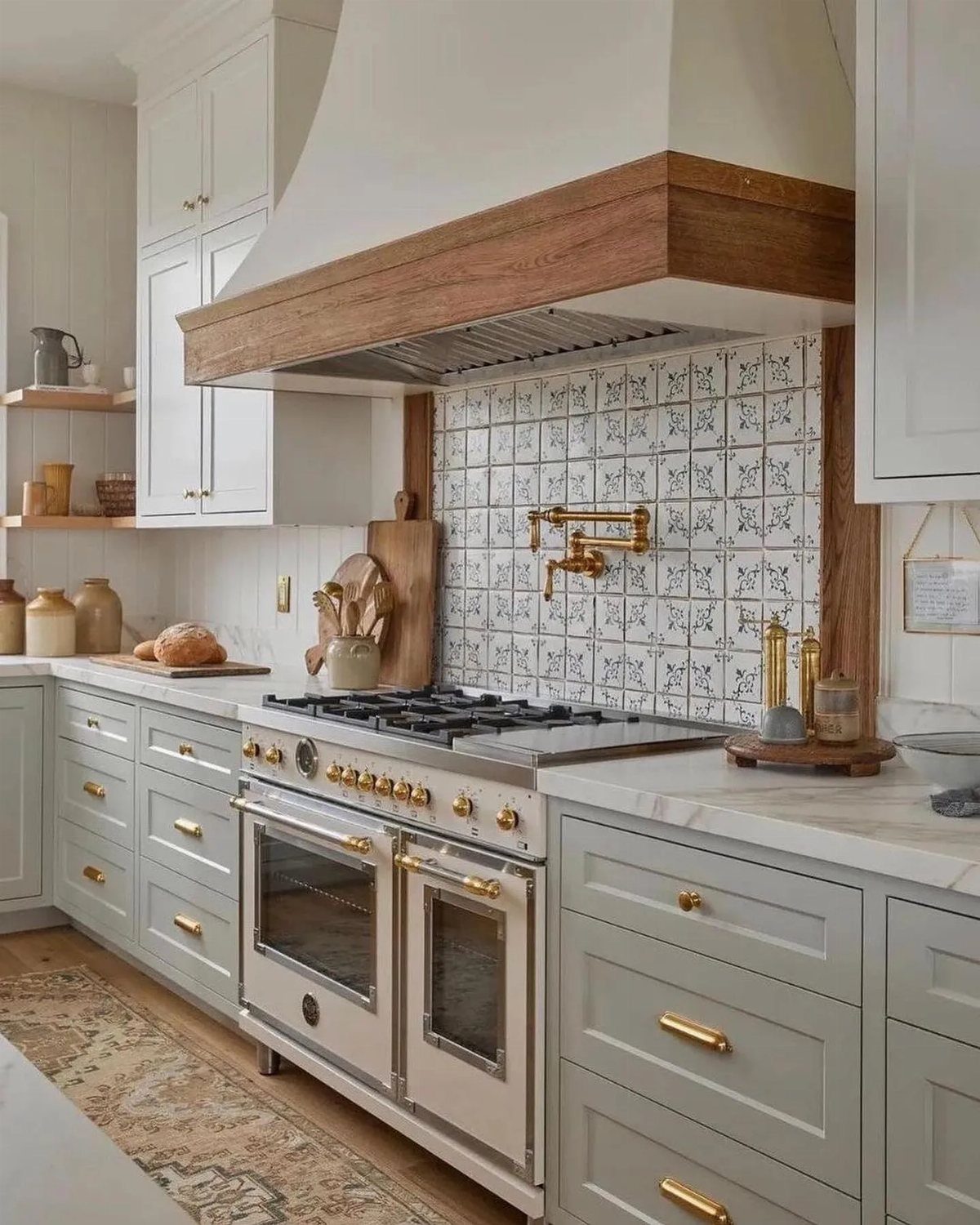
Brass with sage green cabinets is a pairing that can go wrong fast if the hardware finish fights the fixtures.
Brass handles, pot filler, and range knobs all matching in warmth is harder than it looks; one cool piece throws the whole thing off.
Unlacquered brass ages to a living finish; lacquered brass stays shiny and can look cheap against muted paint.
I would pick one and carry it through every metal detail in the room. The patterned tile backsplash adds movement, but the brass is what ties sage cabinets to a country kitchen without drifting into cottage cliché.
3. Soft, Muted Sage Green Cabinets
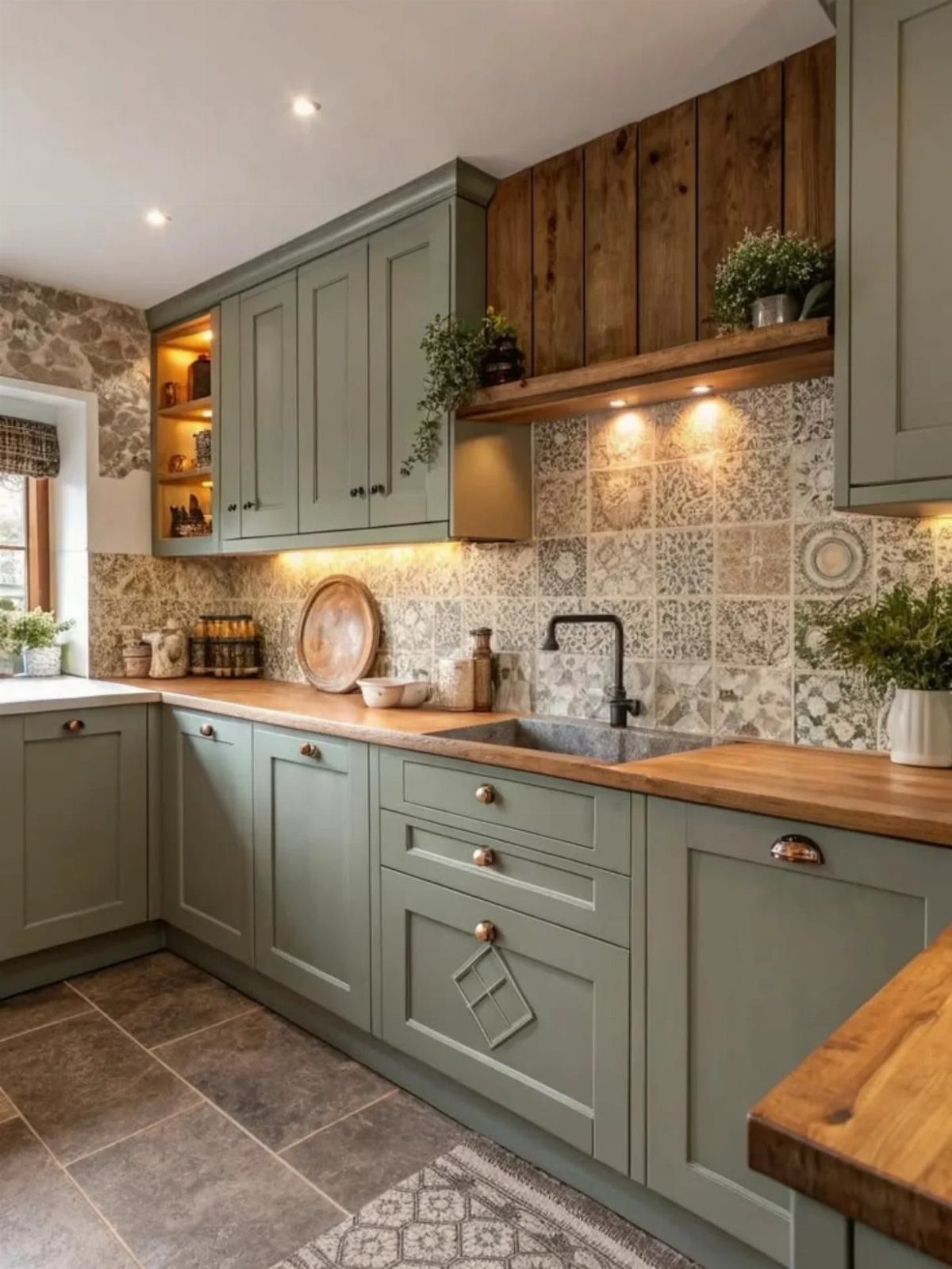
Muted sage reads quieter than the color name suggests, and that restraint is what makes it usable in a kitchen you live with daily. Butcher block counters warm it up; without them, the room can feel like a clinic.
Patterned tile adds contrast that stronger sage would make busy; the muted tone keeps it livable. I would test this tone if my kitchen had limited natural light, because muted green reflects poorly and needs help.
Stone flooring grounds the whole palette and keeps soft sage from floating away visually. Skip the rustic wood accents if your trim is already fighting the cabinets for attention.
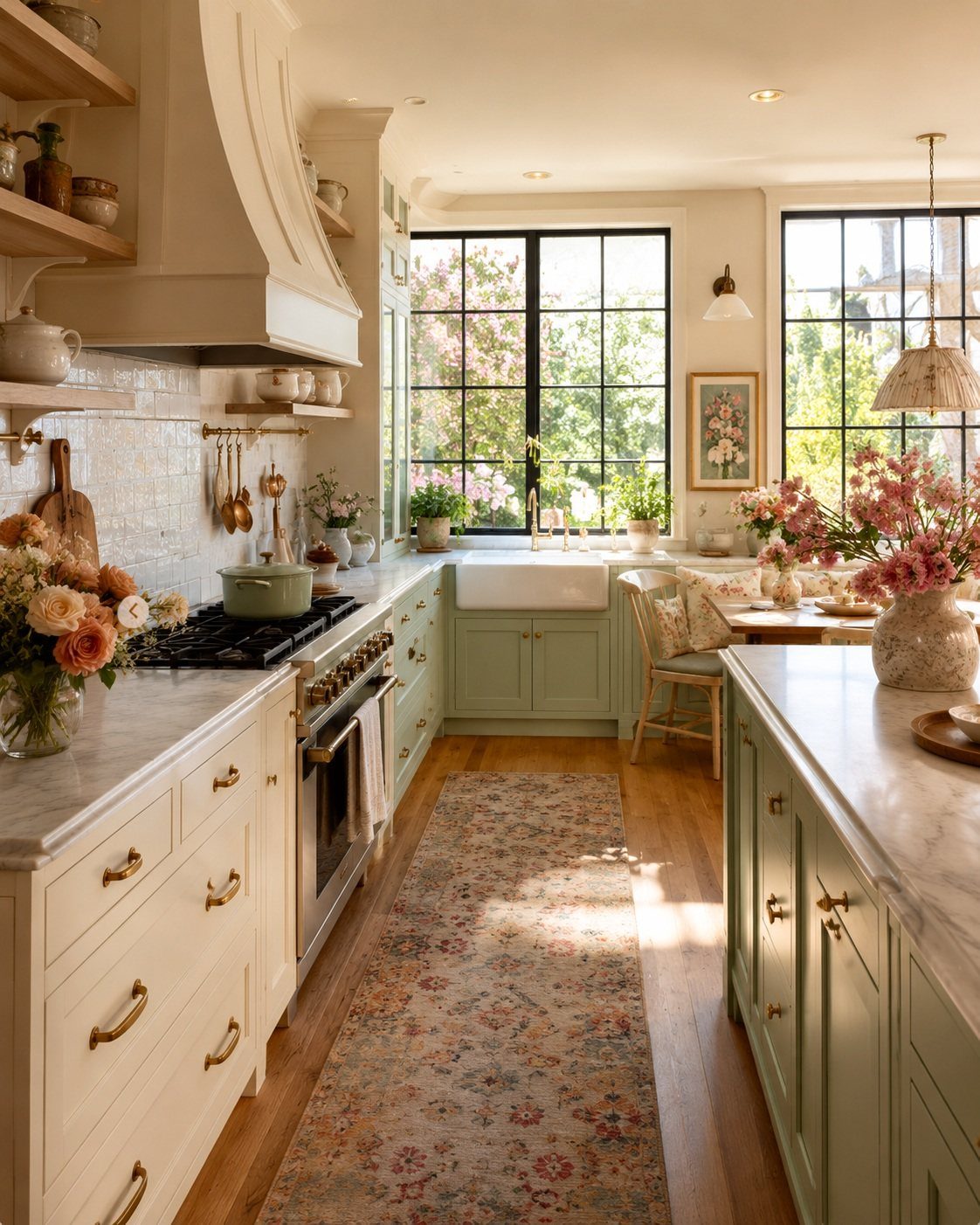
4. Sage Island with Cream Cabinets
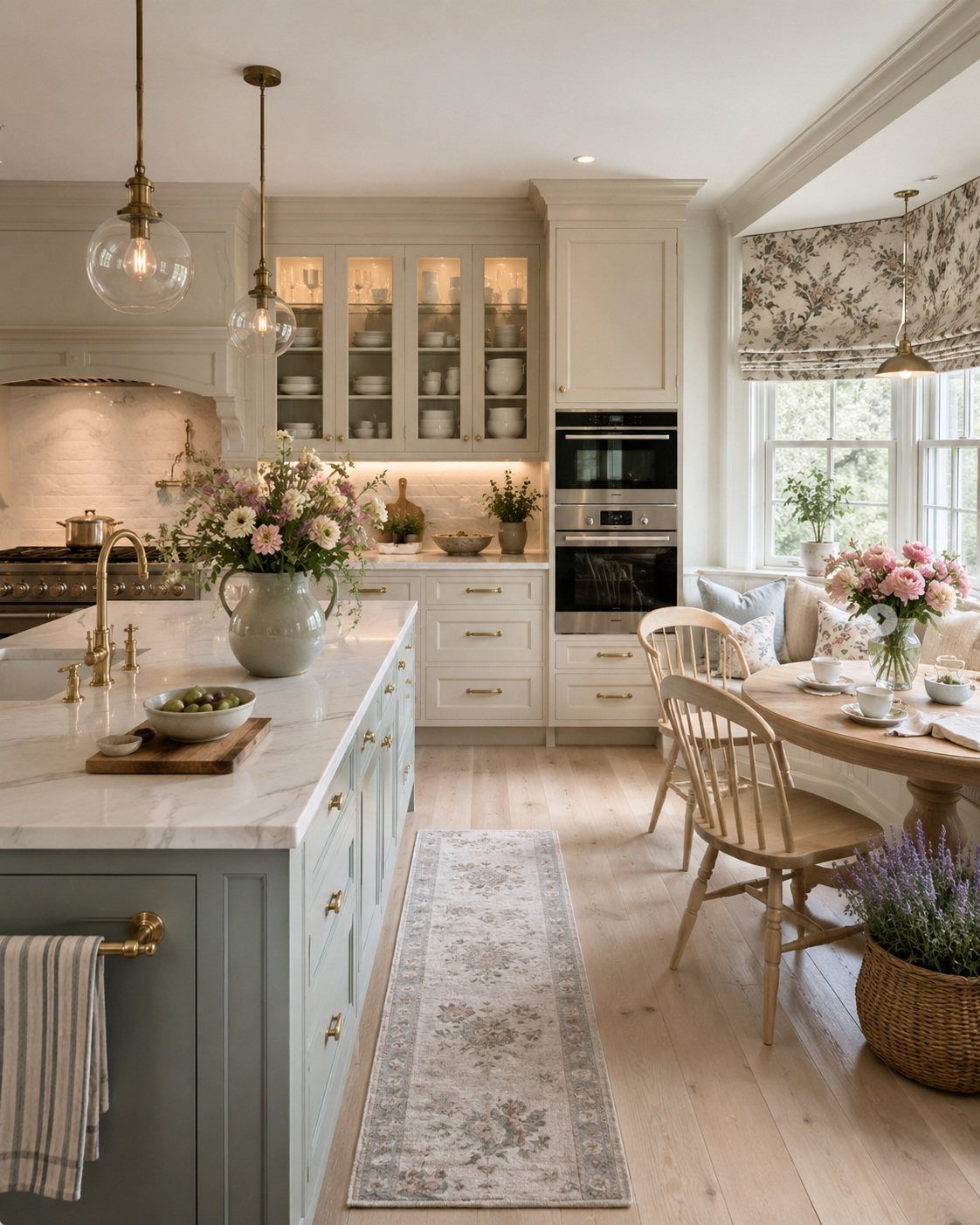
A sage island against cream perimeter cabinets lets you commit to color without painting every surface. The marble countertop on the island is the luxury item here; the cream cabinets keep the budget in check by staying simple.
I would measure carefully before ordering a stone top, because island overhang for seating changes the slab size and the price fast.
A breakfast nook with a bay window is not required, but the light is what makes sage read green instead of gray. This setup suits a kitchen large enough that the island anchors the room rather than blocks it.
5. Exposed Ceiling Beams
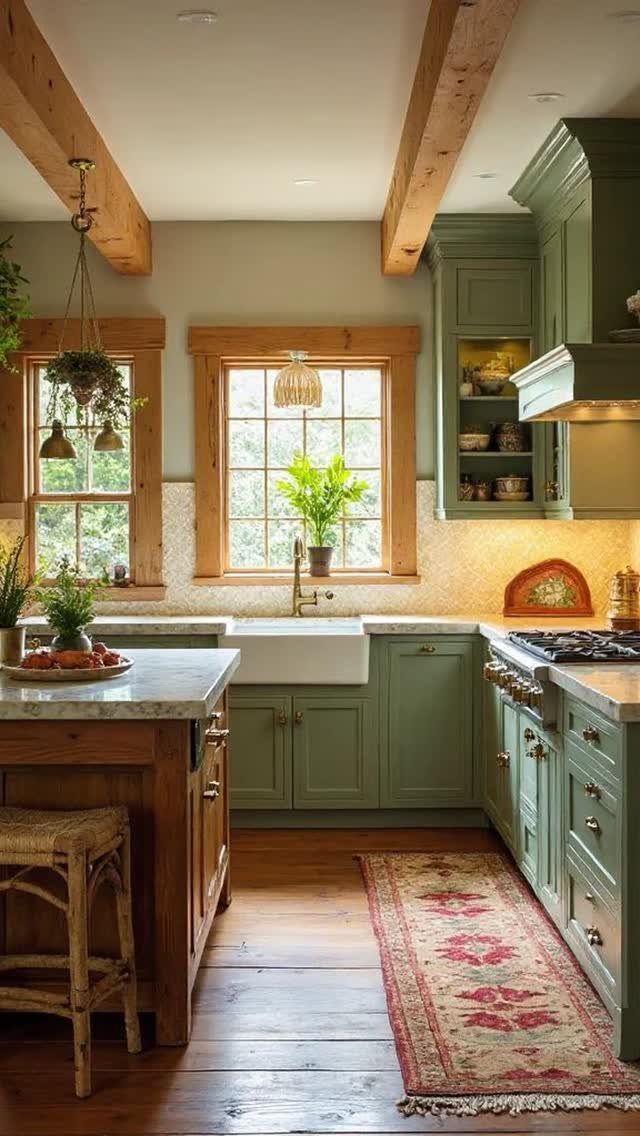
Exposed beams give a country kitchen its bones, and sage cabinets settle into that structure without competing. Rustic, light wood matters above sage cabinets; dark beams above dark cabinets close the room in.
I would check ceiling height before stripping drywall; beams need generous clearance to feel intentional, not oppressive. The maker’s note about unlacquered brass applies here too, and the same rule holds.
Carry one brass finish through all hardware and fixtures, or the room becomes a collection instead of a kitchen. Beams are structural theater; let them frame the space, not steal it.
6. Butcher Block Countertops
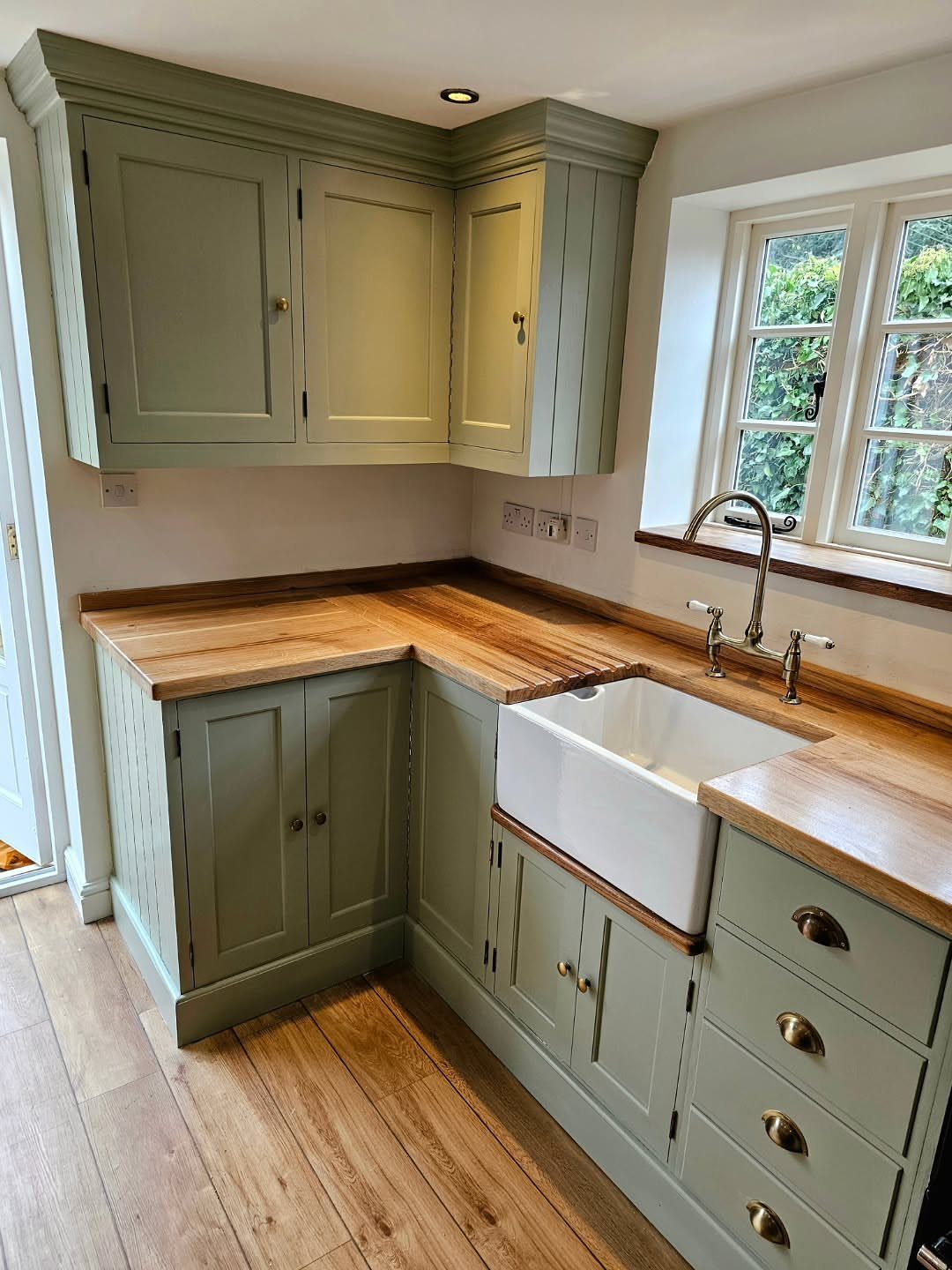
Butcher block countertops with sage cabinets give you warmth that stone or laminate cannot match, but the maintenance is real.
Oiled butcher block needs frequent re-oiling near the sink; sealed butcher block buys you time but loses some of the hand-rubbed look.
A brass faucet and apron-front sink are the classic pairing with butcher block, and the wood ties them together.
I would budget for a quality hardwood like maple or oak, not the soft pine that dents when you drop a pot. This is the countertop choice for cooks who do not mind a surface that shows its work.
7. Shiplap Walls or Backsplashes
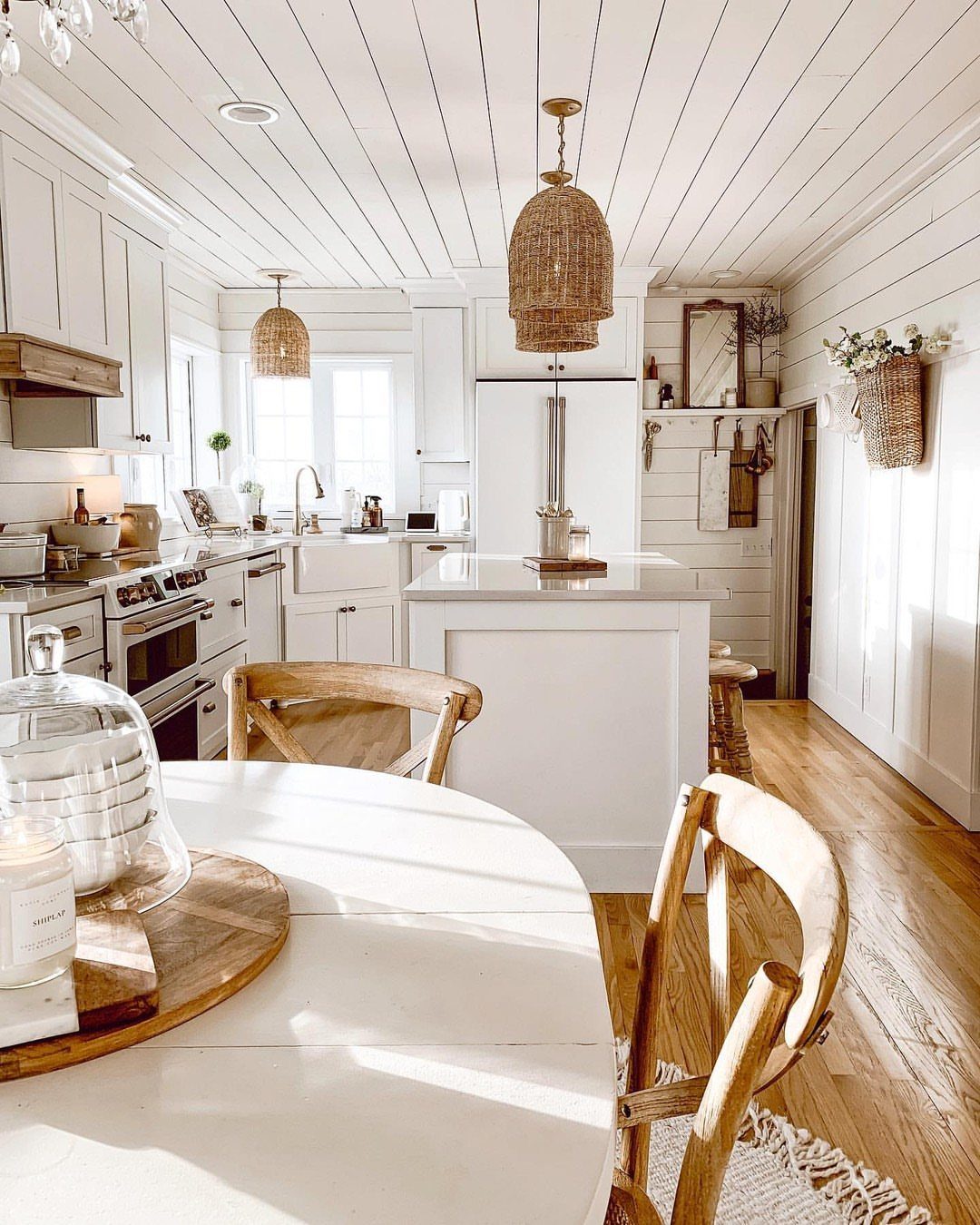
Shiplap reads farmhouse fast, but the width of the boards changes the feel.
Narrow planks look more refined; wider boards read rustic and cost less per square foot to install. In a kitchen with sage cabinets, I would keep shiplap white or cream so the green stays the star.
Vertical shiplap on a backsplash is harder to wipe down than tile; horizontal runs hide crumbs better and are easier to clean.
If your wall meets a range hood, plan the board layout around it before cutting. Pendant lights with open weave or aged metal finishes add texture without competing against sage cabinets for attention.
Ceiling shiplap needs a vapor barrier behind it in humid climates, or the boards cup. A weekend install is realistic for one wall; a whole room takes longer than most DIY timelines allow.
Frequently Asked Questions
What makes sage green cabinets ideal for a farmhouse kitchen?
Sage green works in a farmhouse kitchen when the shade carries enough gray to read as a color rather than a pastel, letting natural materials like wood and stone do their job without turning the room cute.
The muted tone stays calm against the busier elements that define farmhouse style: apron-front sinks, plate racks, exposed beams.
Testing samples under morning and evening light matters more with sage than with almost any other cabinet color, since the wrong tone wastes money fast and the right one settles into the farmhouse palette without fighting the wood and stone already in the room.
What countertop materials work best with farmhouse sage green kitchen cabinets?
Butcher block is the classic pairing for warmth that stone or laminate cannot match, though the maintenance is real: oiled block needs frequent re-oiling near the sink, while sealed block buys time but loses some hand-rubbed character.
Stone flooring also grounds the palette, especially with muted sage that can float away visually without something heavy below it.