
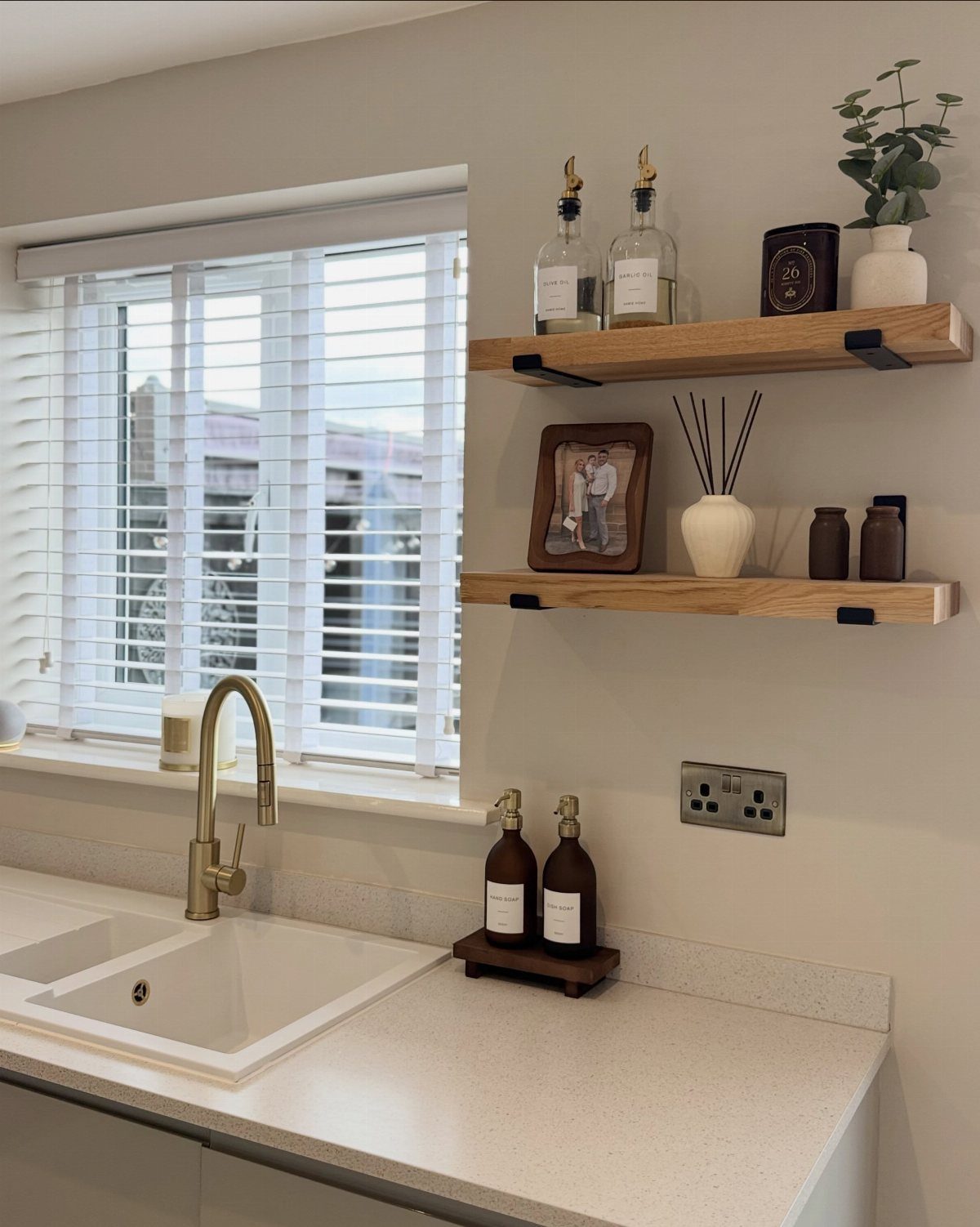
The taps below run from a simple aerator upgrade to a dual-spout system that can double your faucet cost, and the deciding factor is almost always your sink deck: how many holes it has, how much width sits behind the bowl, and whether you are keeping the counter you have or opening the wall.
A single-handle unit needs one hole but ships with a base plate to cover three, which turns out to be the detail that saves most renters from drilling.
1. Single-Handle Kitchen Faucet
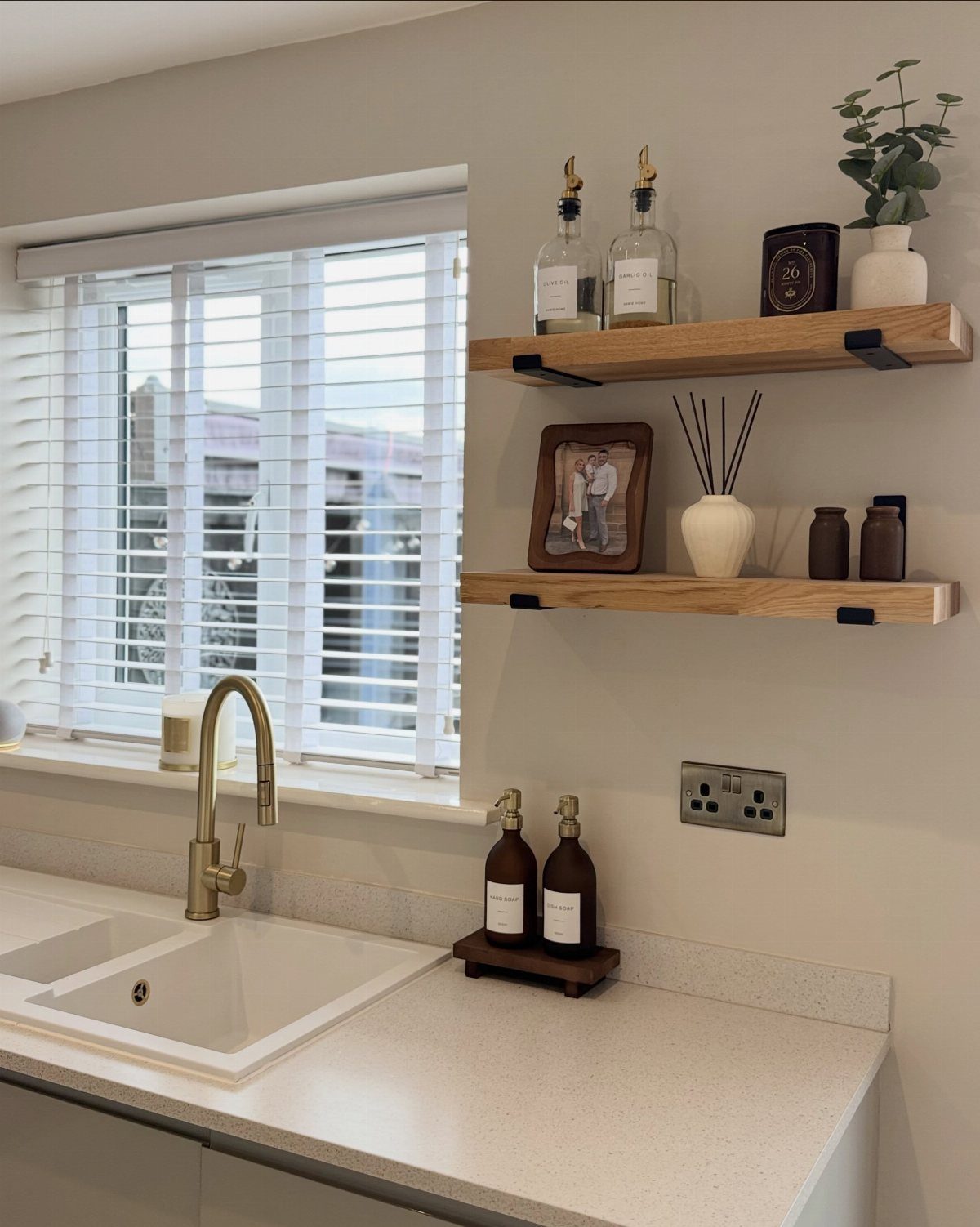
A single-handle faucet puts temperature and flow under one lever, which saves counter space and keeps the deck uncluttered.
A brass finish warms up a white sink without demanding a full hardware swap through the kitchen. Before buying, check the hole count in your deck: most single-handle units need 1 hole, but some come with a base plate to cover 3.
A deck plate covers the standard 3 holes cleanly; if your sink has an extra side sprayer opening, that still needs its own cap or plug.
2. Double Bowl Kitchen Sink
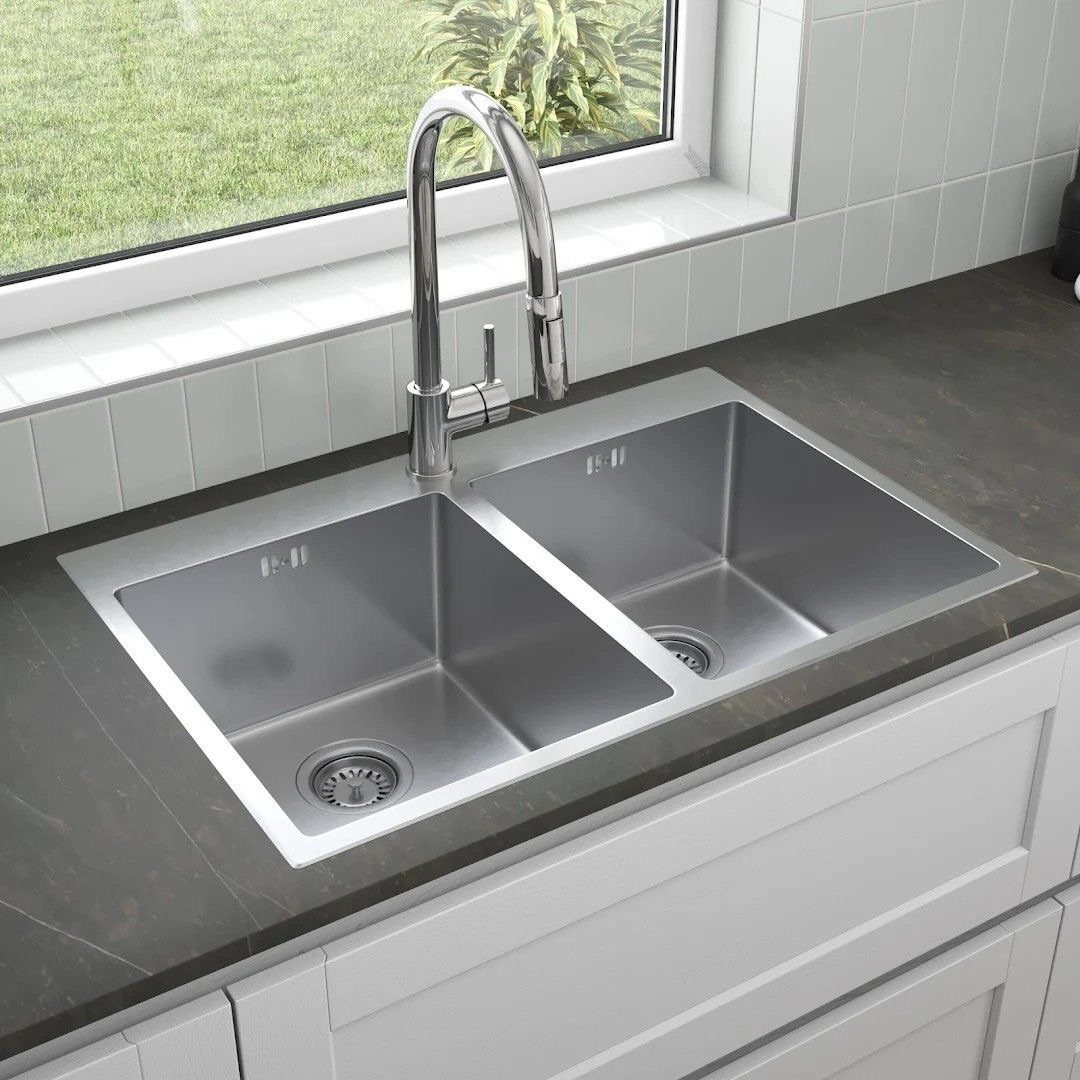
Two bowls let you soak on one side and rinse on the other, or keep a drying rack parked permanently while the second basin stays free for prep.
Stainless steel is the practical choice for Indian kitchens: it handles daily abuse and costs less than granite composite, though you will be wiping away hard water spots more often than with a textured finish.
Measure your base cabinet before ordering; an undermount like this one needs enough width to sit safely. I would skip the double bowl if my counter run was tight; the divided space starts feeling cramped fast.
3. Pull-Out Sprayer
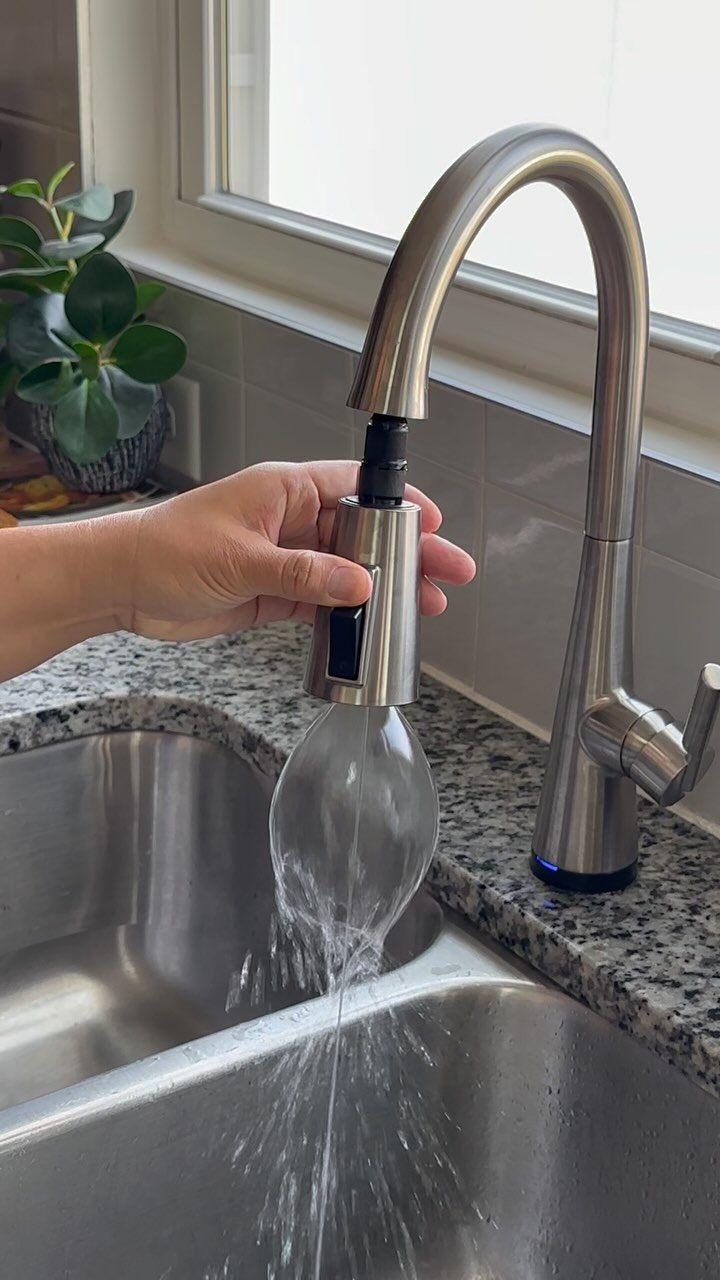
A pull-out sprayer extends on a braided hose, letting you direct water to the sink corners or fill a pot on the counter without lifting it.
For a compact Indian kitchen, this matters more than it would in a larger space; you gain reach without adding a separate side sprayer that eats deck room.
Check the hose length before you buy; too short and you’ll be fighting the reach around a standard sink. The retract mechanism wears out first on cheap units, so I would test the snap-back in person if possible.
4. Brass Kitchen Faucet
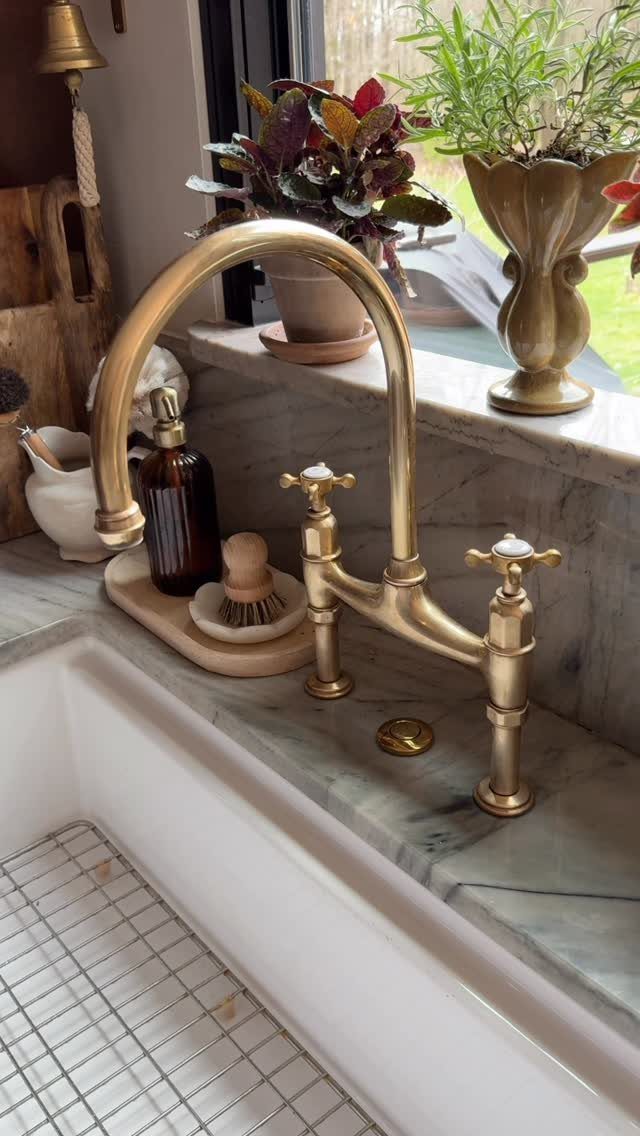
Brass develops a living finish that darkens and spots unevenly, which I like, though some buyers expect it to stay bright.
A vintage bridge style needs two separate hot and cold taps, so it suits a sink with a wider back deck; a narrow ledge leaves the handles crowded against the backsplash.
Unlacquered brass is the one that ages; lacquered brass stays gold longer but chips eventually and cannot be touched up.
For a rental or a first kitchen, I would probably choose a brass-look PVD finish instead; it keeps the color without the maintenance.
5. Wall-Mounted Faucet

Mounting the faucet to the wall keeps the sink deck completely clear, which helps in a small kitchen where every inch of prep space counts.
A gooseneck wall-mounted faucet works best as a simple spout; if you want pull-down spray, that hardware needs an undermount or deck-mounted setup where the hose weight can hang freely below.
In Indian construction, this usually means building out a false wall or choosing a sink that sits forward on the counter to leave room behind. Check your plumbing layout before committing; retrofitting from a deck-mounted faucet means opening the wall.
6. Chrome Kitchen Faucet
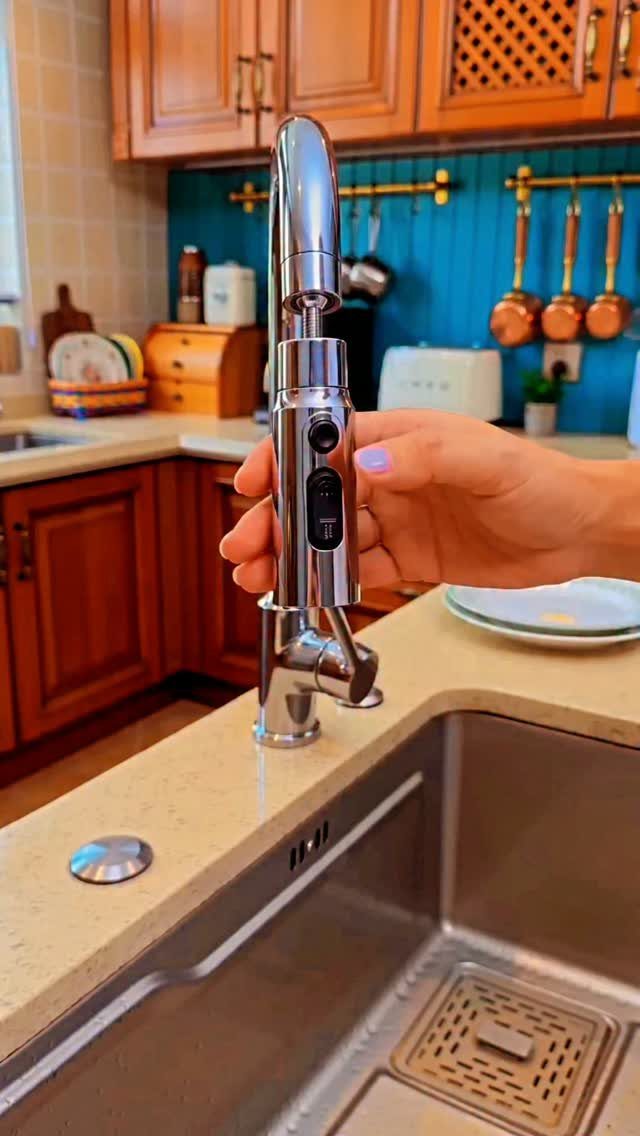
Chrome is the finish that costs least and lasts longest if you wipe it dry; hard water leaves spots, but the surface underneath does not stain or wear through.
A pull-down sprayer in a wood-cabinet kitchen gets extra value from a mirror finish that bounces light around, which helps a closed room feel larger.
I would pick chrome for a first kitchen or a rental where I wanted durability without the premium of brushed nickel or matte black.
Chrome shows every fingerprint and water spot, so a quick daily wipe matters more than it would on a textured finish.
7. Matte Black Kitchen Tap
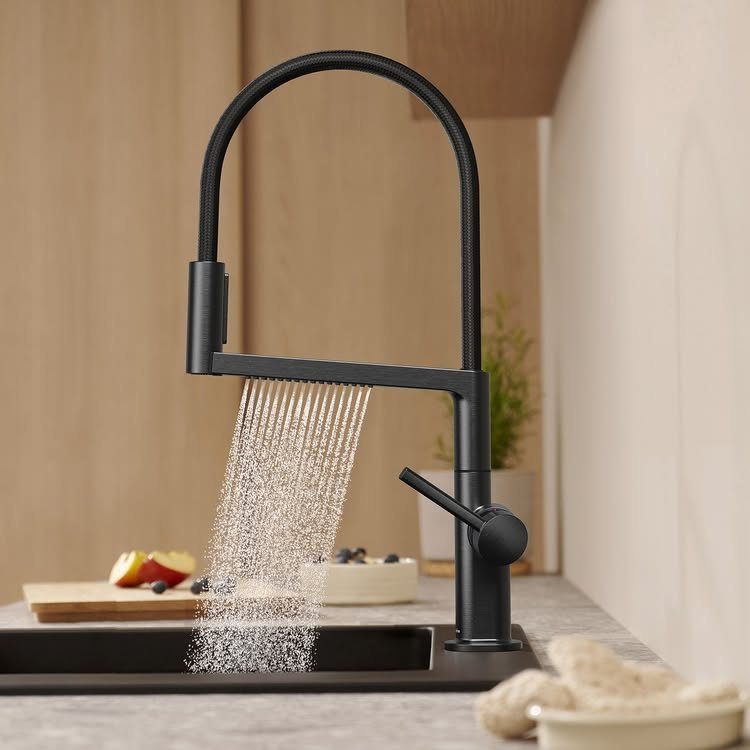
Matte black hides water spots and fingerprints better than chrome, which matters in a hard-water area where daily polishing is not realistic.
The flat finish reads modern against white or wood cabinets, though I would think twice about pairing it with busy patterned tile; the sink area starts looking busy fast.
A pull-down spray head adds function, but the matte coating on the hose housing wears first where it flexes. Check that the finish warranty covers the moving parts, not just the body.
Matte black costs more than chrome and shows soap residue more than you’d expect; what you get for that is style, and what you pay is scrubbing frequency.
8. Flexible Spring Neck Tap
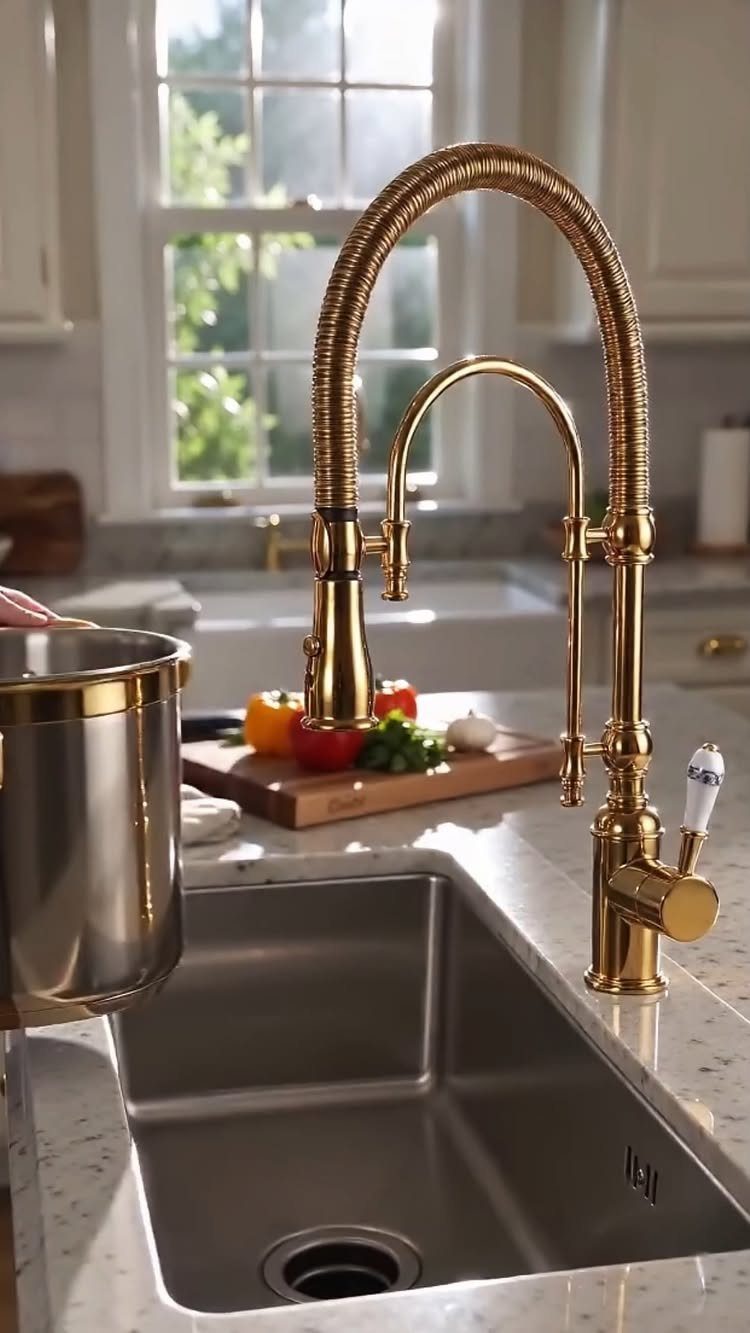
The coiled spring lets you pull the entire spout down and angle it, not just a spray head on a hose.
That reach helps when you’re filling stockpots on the counter or rinsing a sink that sits deep in the deck.
A tall profile like this needs clearance; measure from the counter to the underside of any upper cabinets before ordering.
I would probably go with brushed nickel or matte black for easier upkeep, since every joint and coil catches water and needs drying.
A spring neck also weighs more than a standard faucet, so your sink and counter need to handle the load without flexing.
9. Dual Spout Kitchen Faucet
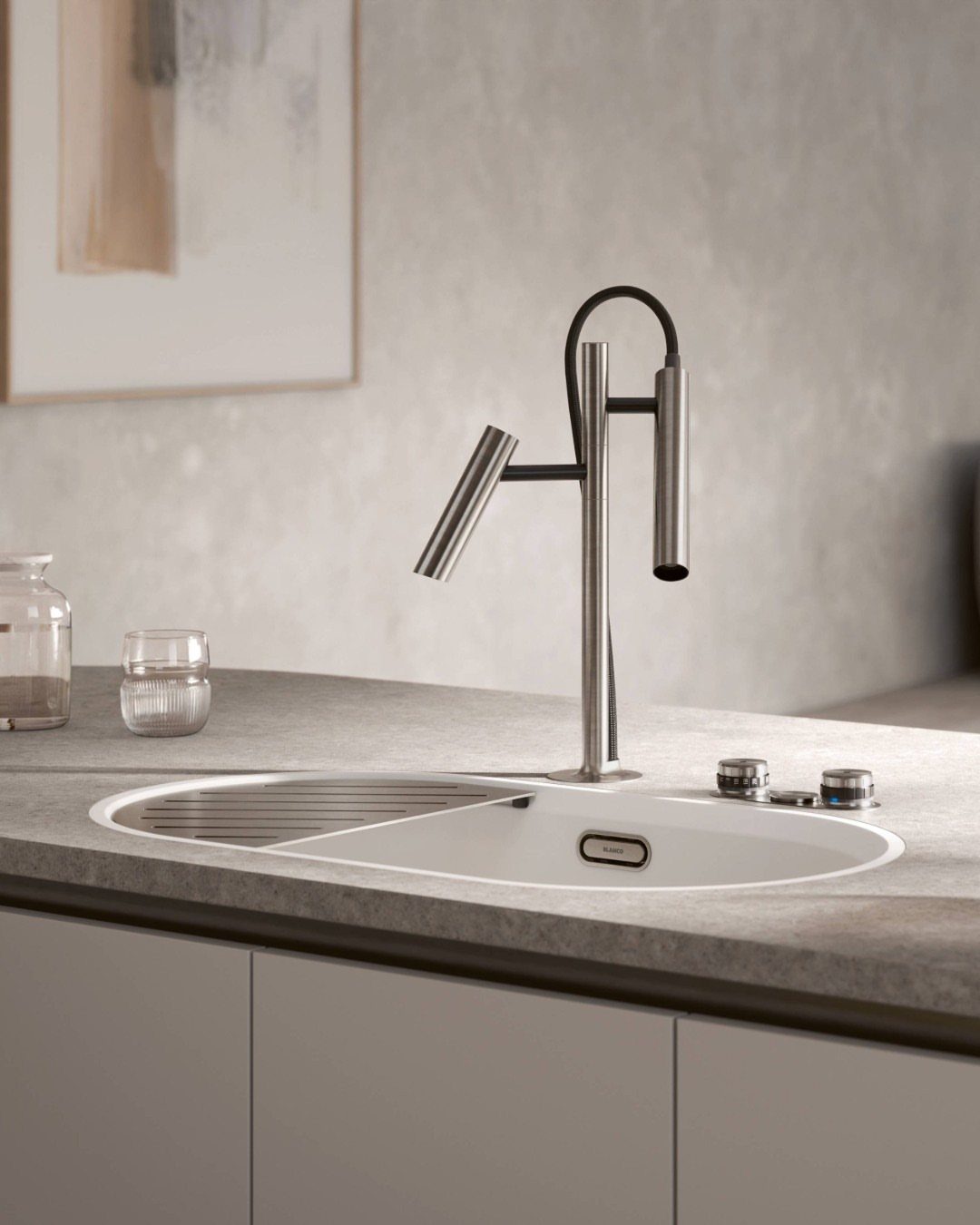
Two spouts give you a fixed high arc for filling tall pots and a separate pull-down spray for targeted rinsing, without switching modes on one head.
Brushed finishes are easier to maintain than polished; the light diffuses instead of reflecting every smudge.
A dual-spout body takes more deck space than a single, so check your hole count and the width behind the sink.
I would only choose this if I had the room; in a compact kitchen, the extra hardware crowds the backsplash and complicates cleaning around the base.
The second spout is a convenience, not a necessity, and the price step up from a single-spout model is usually significant.
Choosing a Kitchen Sink
A single bowl sink earns its keep in a small kitchen because one open basin fits sheet pans and stockpots that a divider would block.
A double bowl only makes sense when the base cabinet is wide enough to keep both sides functional. In a tight run, the split turns two decent spaces into two cramped ones.
Corner sinks use dead space in awkward layouts, though the cabinet below needs custom fitting.
For modular kitchens, handmade stainless brings a premium look and resists denting better than pressed steel. Quartz handles heavy daily use and stands up to heat and scratches, but the price step up is real.
I start every kitchen sink recommendation with the same question: what are you actually doing at that counter?
A household that rinses a lot of produce and washes big pots needs a deeper bowl than someone who mostly runs a dishwasher and rinses a coffee mug.
If you mostly rinse and load a dishwasher, one bowl gives you more usable room.
Faucet Installation Advice
The hole count in your sink deck decides which faucets you can even consider.
Retrofitting from deck-mounted means opening tile and plumbing, so I would only choose this if I were already renovating.
Water pressure matters more than people expect. A pull-down sprayer with weak pressure dribbles instead of sprays, and a tall gooseneck in a low-pressure house fills pots slowly.
A pull-down spray head is useless if your water pressure can’t push it past a trickle, so I always tell clients to test what they’ve got before they fall for a feature they can’t use.
Touchless operation sounds appealing for busy cooking, but the sensor needs power and the solenoid adds a failure point. For a first kitchen or a rental, I would keep it simple.
Yet it’s often chosen last, almost as an afterthought. A poorly matched sink and faucet can make daily tasks frustrating, while the right pair makes everything feel effortless.
Water Efficiency
An aerator screws onto the faucet spout and mixes air into the stream, cutting water use without the weak flow that makes rinsing frustrating.
Most modern faucets come with one pre-installed; if yours does not, the threads are standard and a replacement costs a few dollars.
The savings show up on the bill over months, not days. In a household that cooks daily, the reduction adds up faster than in a kitchen used mostly for coffee and takeout.
Aerators clog with sediment in hard water areas, so I would pull mine monthly to rinse it clean. If the flow drops suddenly, that screen is the first place to check.
Some units let you toggle between aerated and full flow, which I like for filling pots quickly. The switch is usually a small button on the side of the head.
For sustainability without sacrifice, this is the simplest upgrade. It needs no plumber, no tools beyond your fingers, and no change in how you use the sink.
Frequently Asked Questions
How to choose a kitchen sink tap?
Start with your sink’s hole count and your cabinet width, since those 2 specs eliminate more options than style ever will.
A single-handle unit saves deck space in a compact kitchen, while a pull-out sprayer adds reach without a separate side hole.
Match the finish to how much maintenance you’re willing to do: chrome needs daily wiping, matte black hides spots but shows soap, and unlacquered brass ages whether you want it to or not.
How much is a kitchen sink tap?
Prices in the Indian market typically run from ₹1,000 for a basic chrome mixer up to ₹10,000 for a feature-heavy model with a pull-down sprayer and PVD finish. The step up pays for better cartridge life, hose quality, and finish warranty.
For a first kitchen or a rental, I would stay in the middle range where the brass body and ceramic disc valve outlast the cheap stuff without buying features I can’t use.
How to change the faucet in a kitchen sink?
Shut off the water supply under the sink, disconnect the supply lines, and remove the mounting nuts that hold the old faucet to the deck.
Check your hole count before buying the new unit, and test your water pressure if you’re adding a pull-down sprayer that needs force to function.
What are the top faucet brands?
I would not invent a list of brands to rank; the right faucet depends on what your local supplier stocks and can service, not on a name alone.
In the Indian market, Cera, Parryware, and Hindware are commonly stocked at hardware stores and carry the spare parts you’ll need later.
I would buy from a brand with local service over an import with no parts availability, no matter how good the online reviews look.