These kitchen storage organization ideas run from a pack of S-hooks to a pull-out frame that eats most of a Saturday and needs a drill.
What picks one over another is whether you own the cabinets or answer to a landlord, since some of these fixes screw in and the rest rely on pressure, gravity, or the gap beside your fridge.
I would not hang a rail from particleboard I did not install myself, but a folding step stool that stores in dead space works the same in a rental or a forever home.
1. Containers for Pantry Items
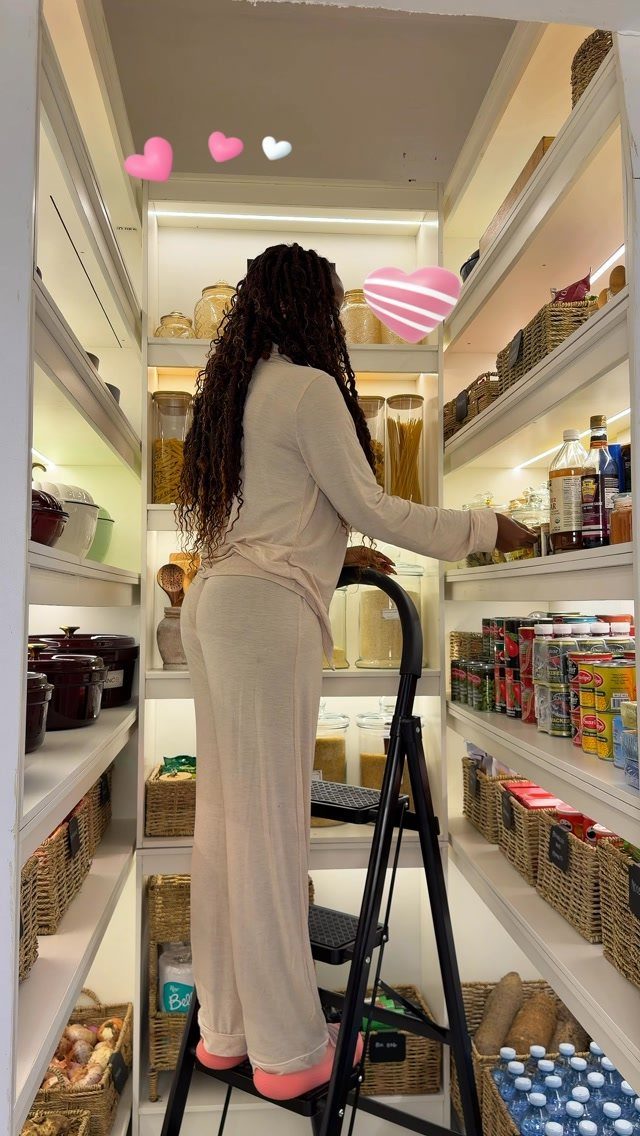
Glass jars with tight lids keep pasta and grains visible and pest-free on pantry shelves. I look for uniform sizes that stack without wasted height between them.
Before you buy a full set, measure your shelf depth and count what you actually store dry.
A 20-jar collection looks satisfying in photos, but half-empty jars waste the space they claim to save. I would start with 6 to 8 for the items you reach for daily, then add only when you know what fits.
2. Makeshift Pantry
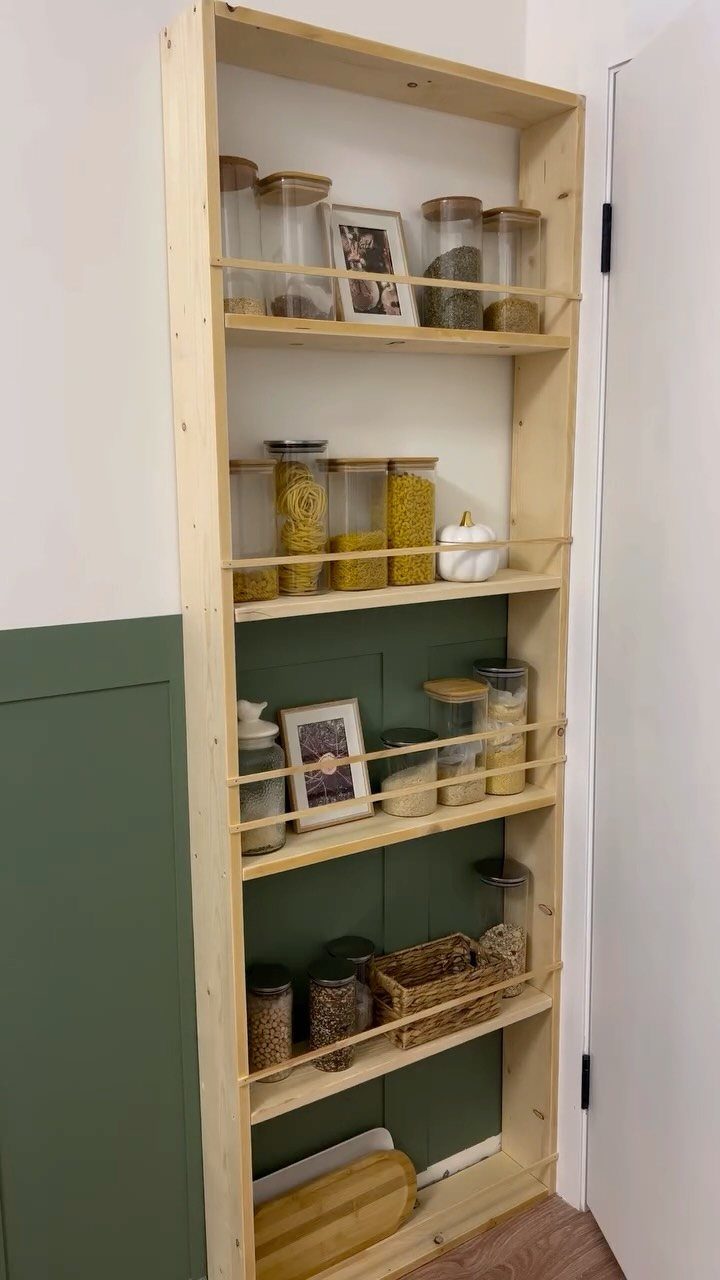
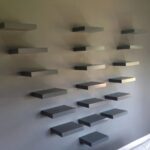
A shallow open shelf against any wall turns into pantry storage when you lack a built-in. A shallow shelf unit behind a door keeps dry goods accessible but out of sight when company comes through.
Depth matters more than height here. A shelf depth that holds jars one deep keeps the walkway clear and prevents the stack from hiding what you own.
I would check that the wall can take the load, especially in rentals where studs may be thin or missing.
If you are drilling into drywall alone, spring for toggle anchors over basic plastic sleeves; the hold is stronger and the peace of mind is worth the extra cost.
3. Bamboo Drawer Dividers and Trays
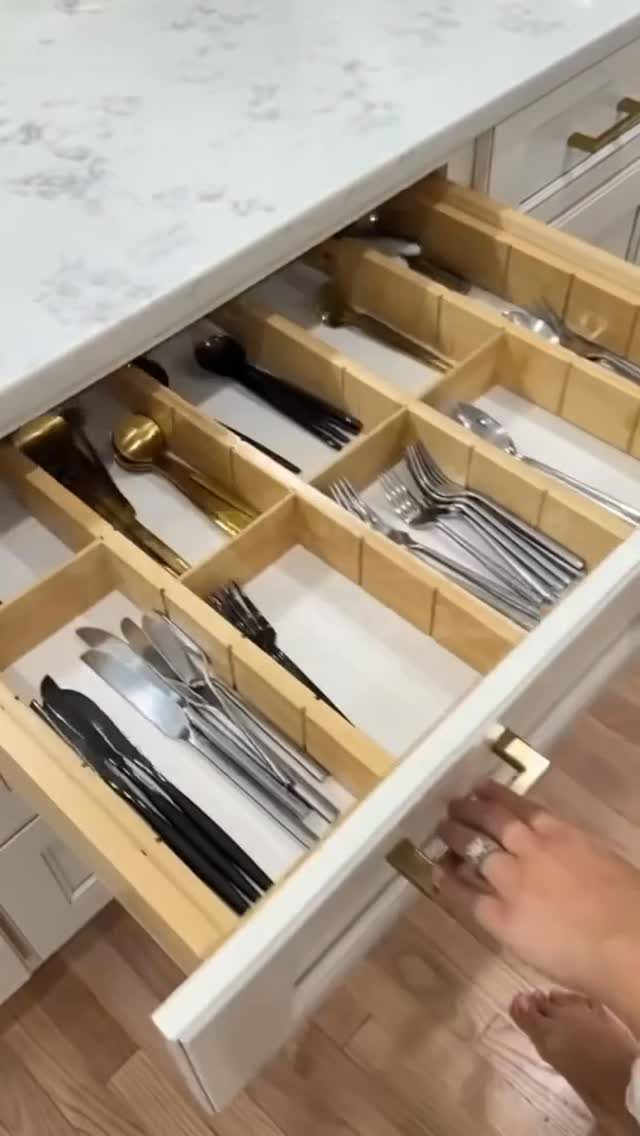
Bamboo dividers expand to grip drawer sides without hardware, which makes them easy to move when your utensil mix changes.
I have seen too many kitchens where the flatware tray slides around every time the drawer closes.
The pressure-fit ones solve that if your drawer box is square. Check the interior width before ordering; expandable dividers have limits, and a drawer even slightly wider leaves the whole assembly loose.
For deep drawers, I would add a shallow tray on top rather than one tall divider that wastes vertical space.
4. Cabinet Shelf Risers
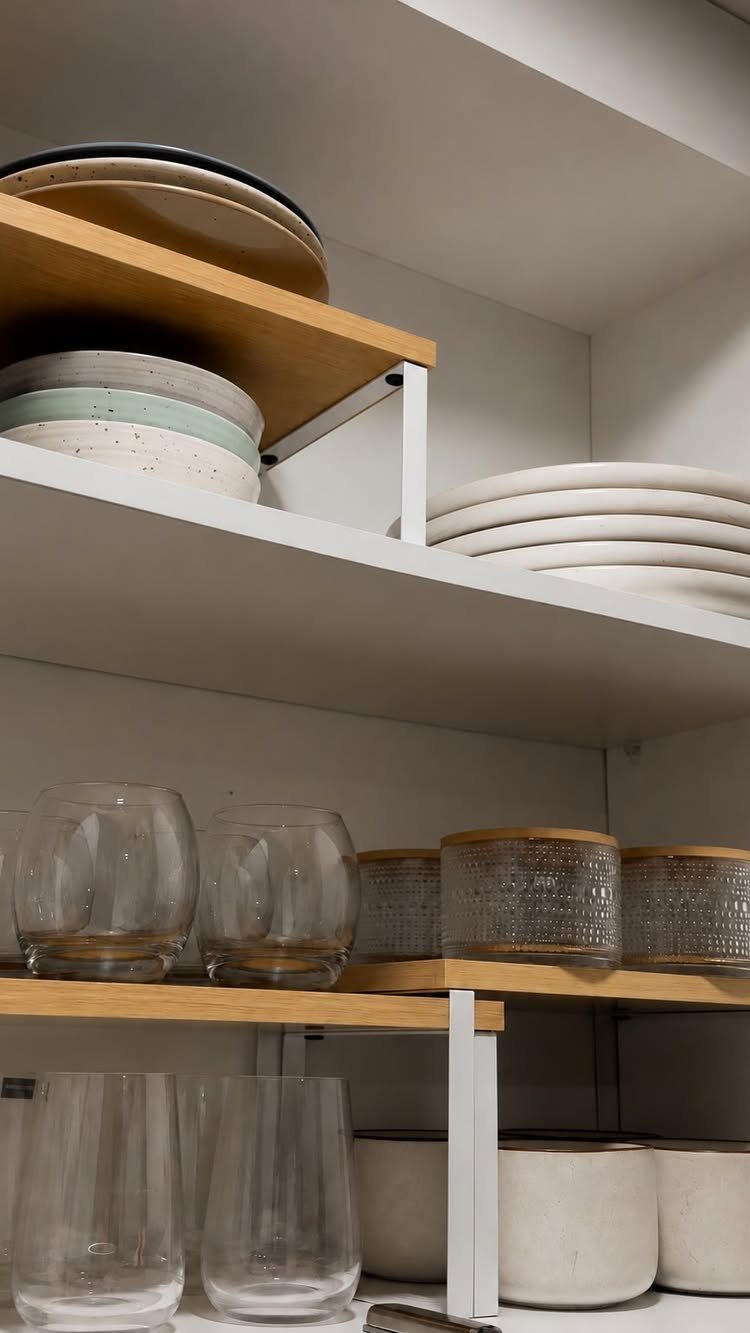
A riser doubles usable cabinet height for plates and bowls without installing a new shelf. A wood-and-metal riser sits steady on the base shelf and leaves the space beneath open for more stacks.
I would measure your tallest plate or glass first. A tall riser under short bowls leaves dead air above them; a short riser under dinner plates may not clear the lip.
The metal legs on these also scratch painted cabinet interiors over time, so a thin felt pad underneath costs almost nothing and saves the finish.
5. Lazy Susans
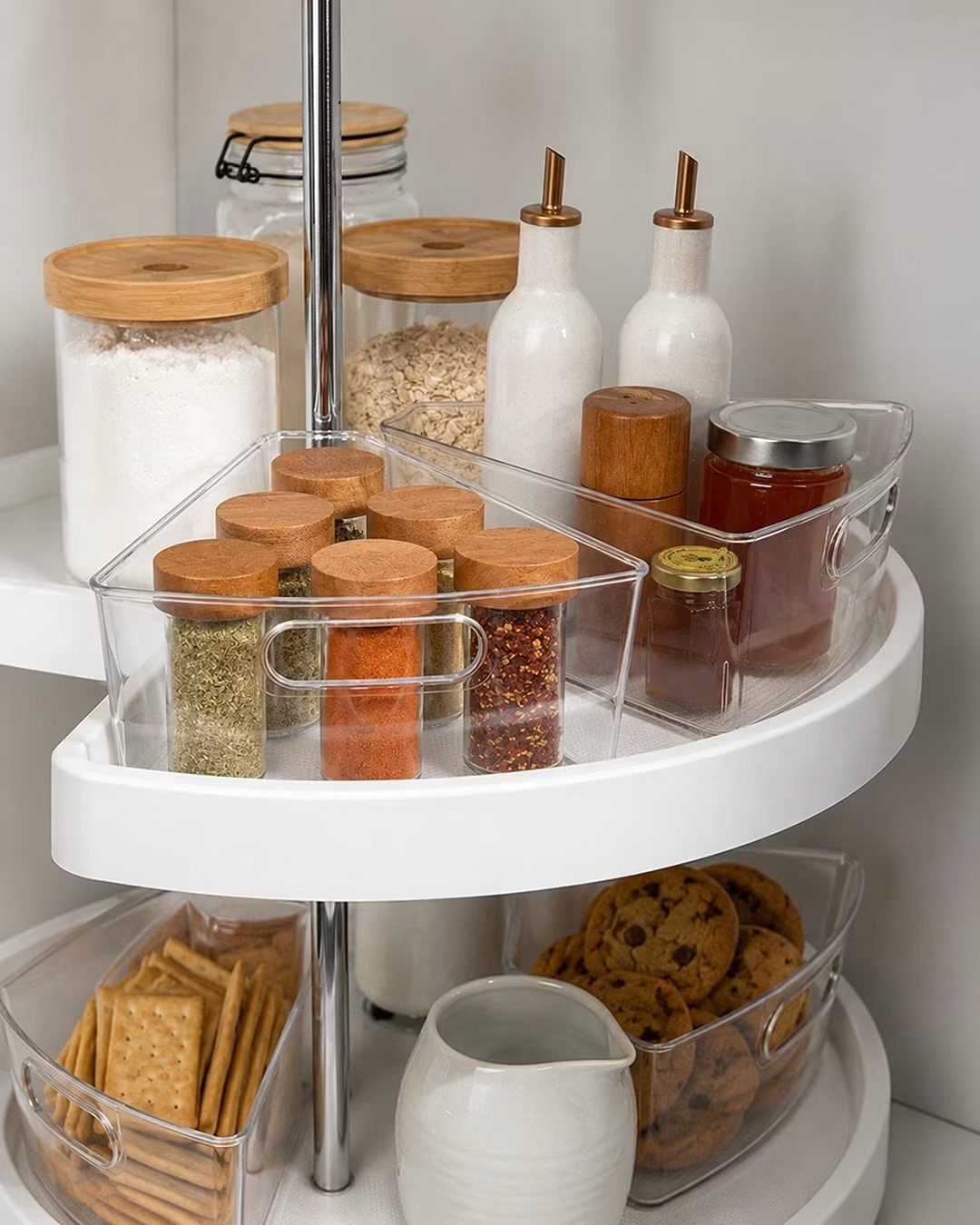
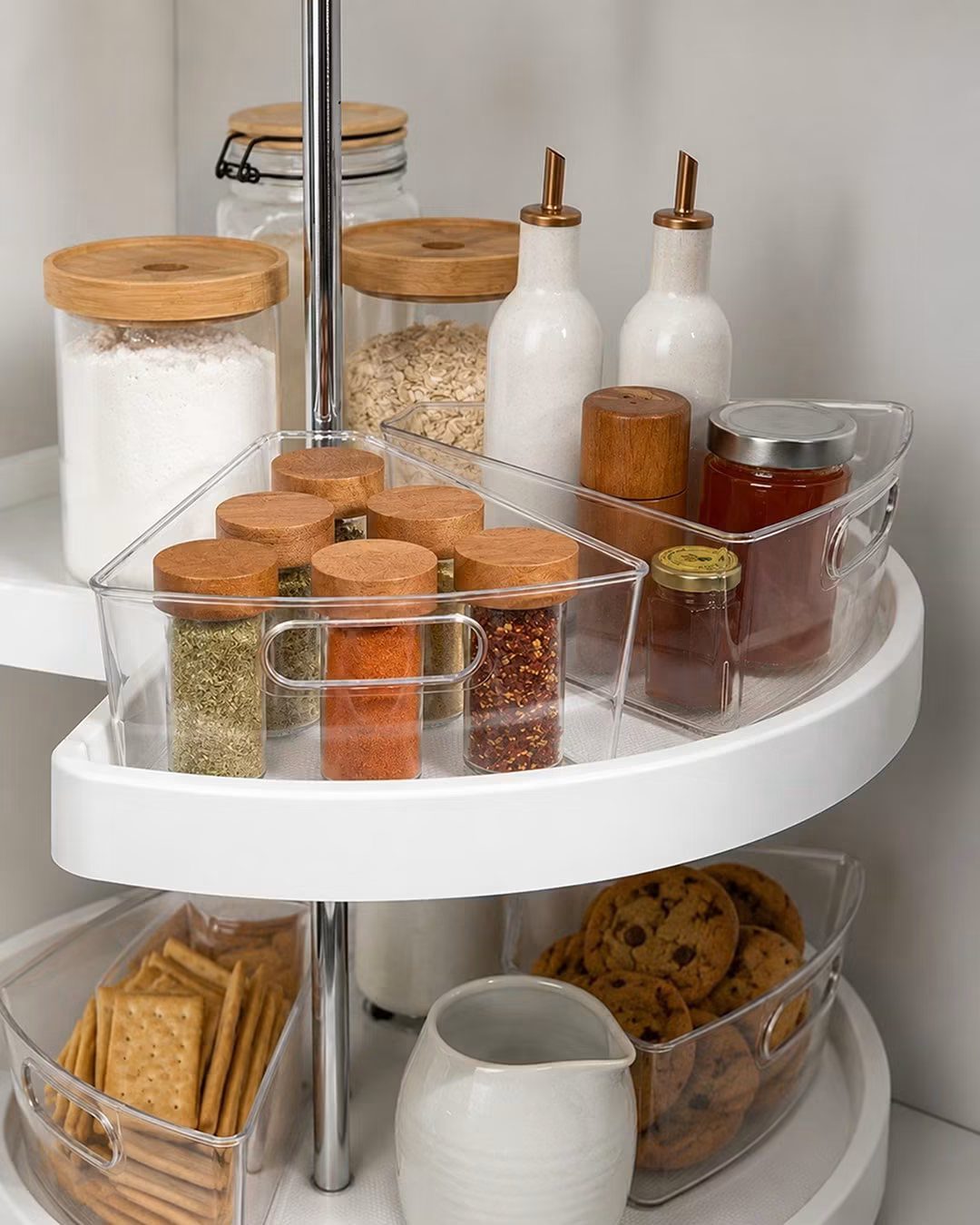
Corner cabinets swallow items in the back where no arm reaches easily. A two-tier lazy Susan brings everything forward with a spin.
Wedge-shaped bins keep small jars from tipping when the tray turns. I would not load the top tier heavy; the plastic bearing in most units handles weight but wears faster when it is uneven.
If your corner cabinet has a center post, measure the opening against the Susan diameter before buying. Measure your door opening against the unit diameter plus clearance; a tight fit means the tray never makes it inside.
6. Pull-Out Trash Bins Under the Sink
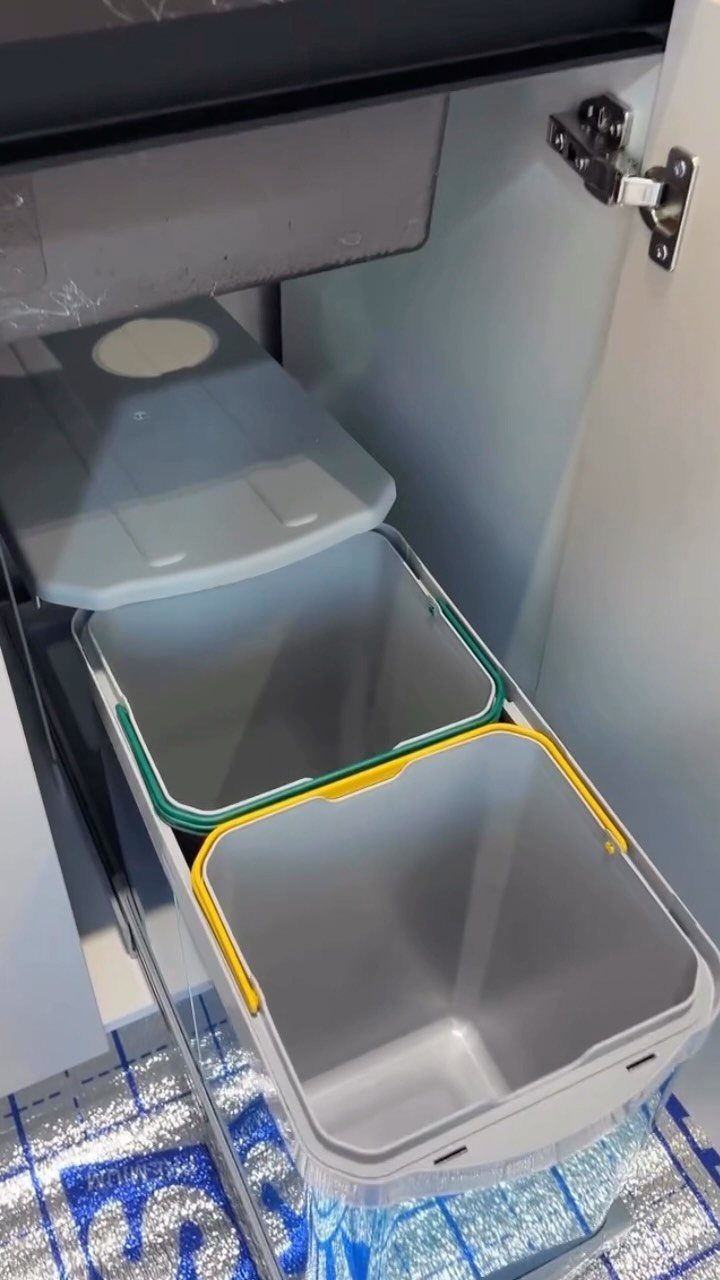
A slide-out frame with 2 bins under the sink keeps trash and recycling sorted without floor space. The gray plastic ones run on a metal track that mounts to the cabinet floor.
I would check your sink plumbing first.
Some disposals and P-traps sit low enough to block the track entirely. If your cabinet is smaller, a single-bin version or a door-mounted bag holder trades the hidden look for actually fitting.
7. Adjustable Cookware Racks
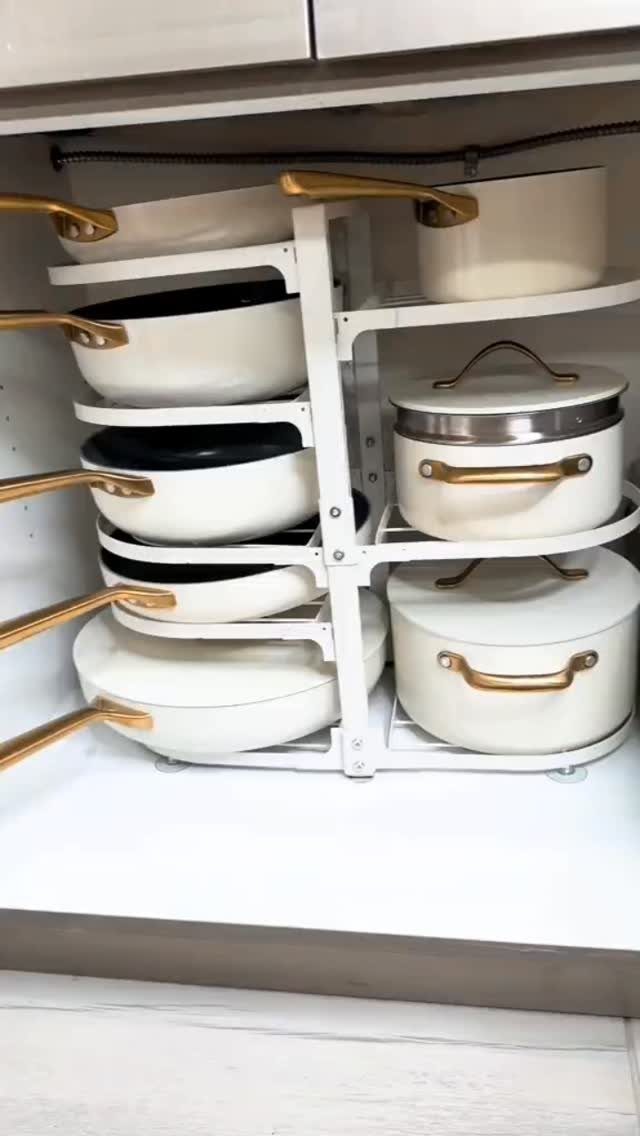
An adjustable rack with angled tiers turns a single cabinet shelf into storage for pans without stacking. The slots keep lids and pots separated so nothing needs lifting to reach what is underneath.
I would check the cabinet depth against the rack base before ordering.
A unit that fits front to back sits steady; one that overhangs tilts when you pull a heavy pan. Powder-coated steel chips less than painted wire but still marks if you drag cast iron across it.
With a tool-free assembly, this storage solution folds flat when not in use. Additionally, each unit will hold up to 10 pounds evenly distributed on the shelf.
8. Baskets for Storage
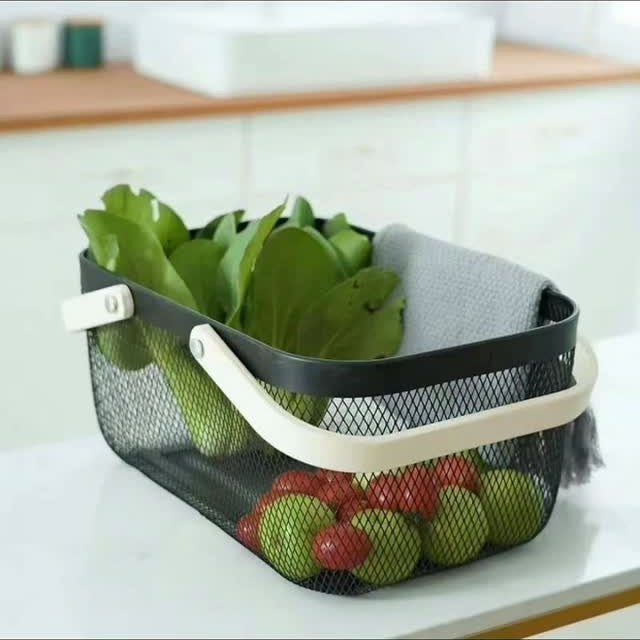
A mesh basket on the counter corrals vegetables that do not need refrigeration, tomatoes, onions, garlic, and keeps them visible so nothing rots in a dark drawer.
The open weave matters more than the shape. Tight mesh holds small items; looser wire lets onions breathe and reduces the moisture that starts sprouting.
I would skip the lidless style if your kitchen runs humid or fruit-fly heavy; a handled caddy like this one moves to the pantry fast when company comes.
9. Step Stool for High Shelves
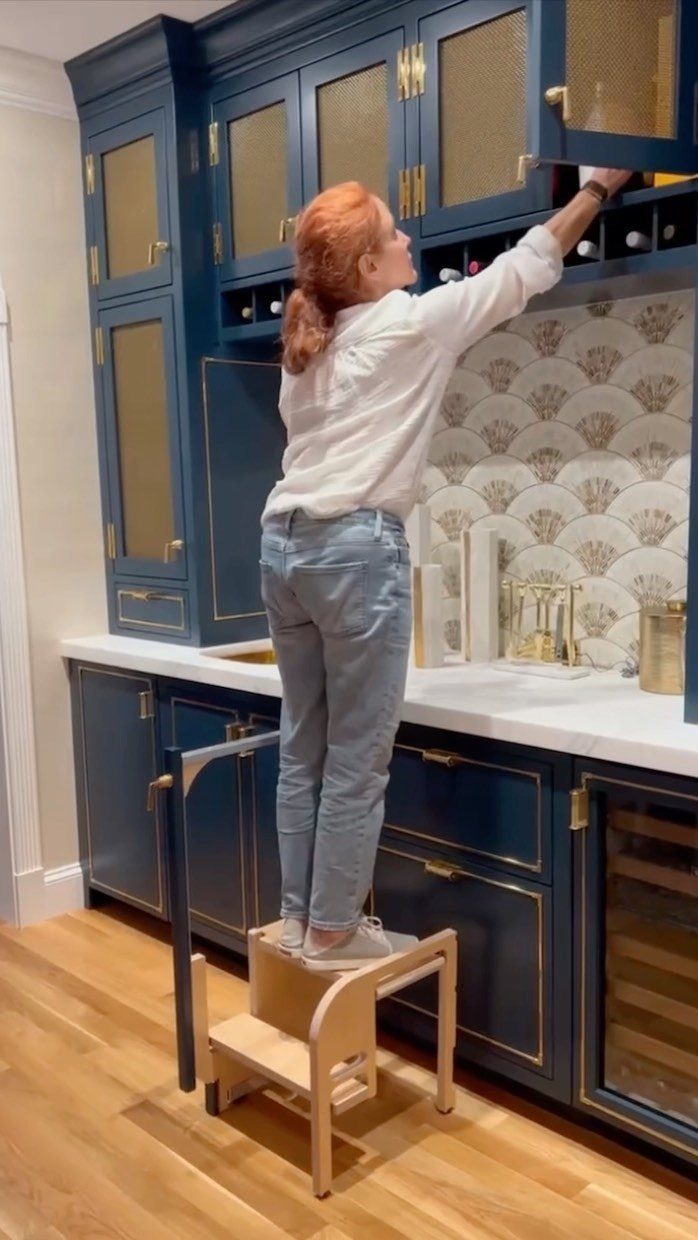
A folding stool that stores in the gap beside the fridge turns upper cabinets from wasted height into real storage.
A wooden step stool that folds flat and weighs next to nothing is the kind you will actually pull out instead of leaving in the closet.
I would check the step height against your cabinet toe-kick first. Your step plus your reach should clear the shelf lip; anything shorter and you are still stretching.
Solid wood beats particleboard for kitchens, steam warps the cheap stuff in a year. Store it where you will actually grab it, not behind the trash can.
10. Vertical Baking Sheet Dividers
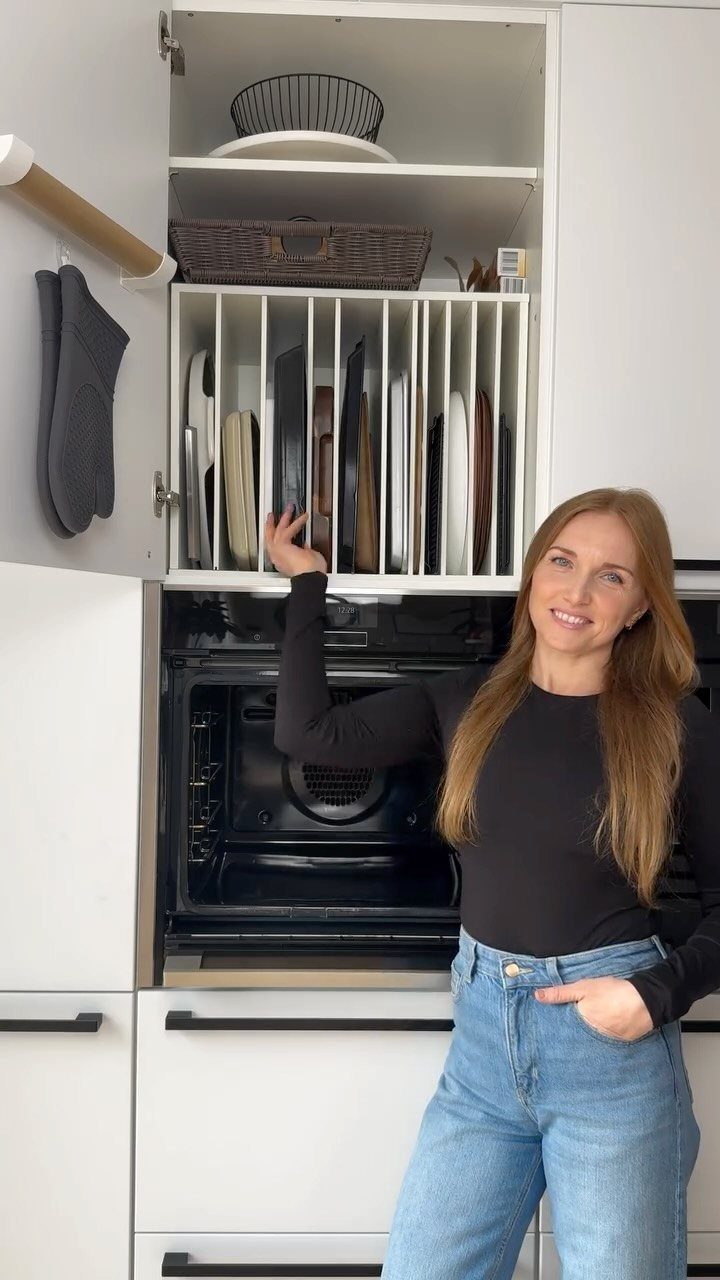
Vertical slots in an upper cabinet store baking sheets and cutting boards on edge, where you can pull one without toppling the stack.
A board that binds when you slide it in gets left out, and the whole system falls apart.
This setup trades away the height you could have used for stacking pots; it suits cabinets above counters, not the ones over the fridge where only light items reach anyway.
11. Pull-Out Base Cabinet Organizers
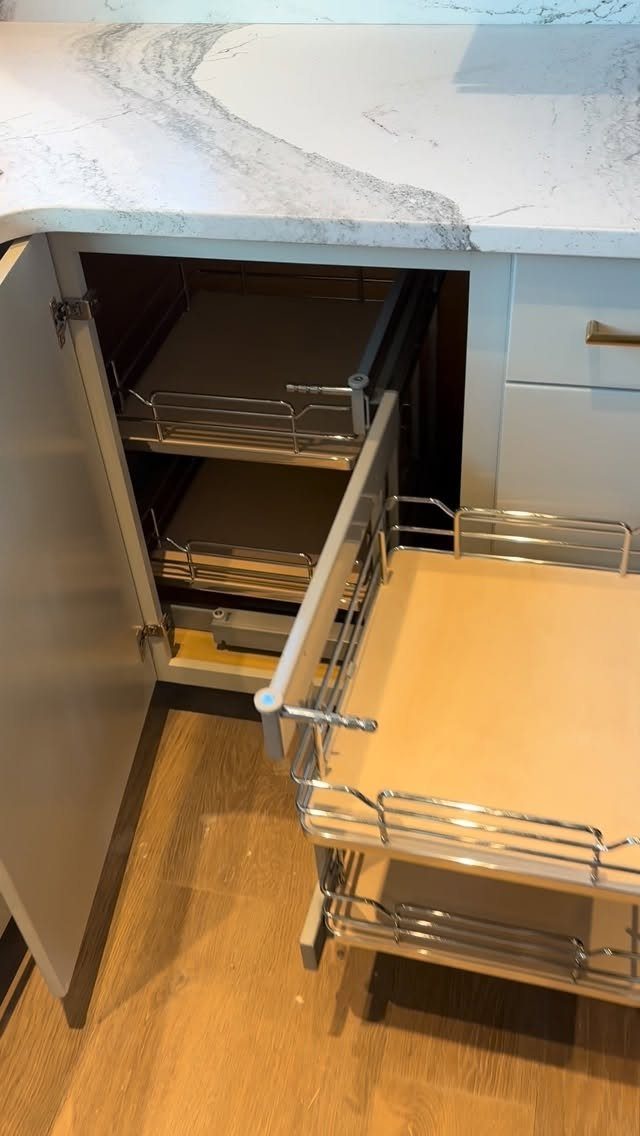
A pull-out frame with wire sides and wood bases brings the back of a deep base cabinet to you.
Chrome rails that mount to the cabinet floor and extend almost fully keep the contents in reach instead of lost in the back.
I would check the interior width against the frame specs. A unit even slightly too wide binds on the hinges or leaves gaps where small items fall through.
The wire sides ventilate potatoes and onions but let spice jars tip; I would add a shallow bin on one tier if you store jars there. Full extension costs more than three-quarter, but the back half is useless without it.
12. Under-Cabinet Hanging Utensil Rack
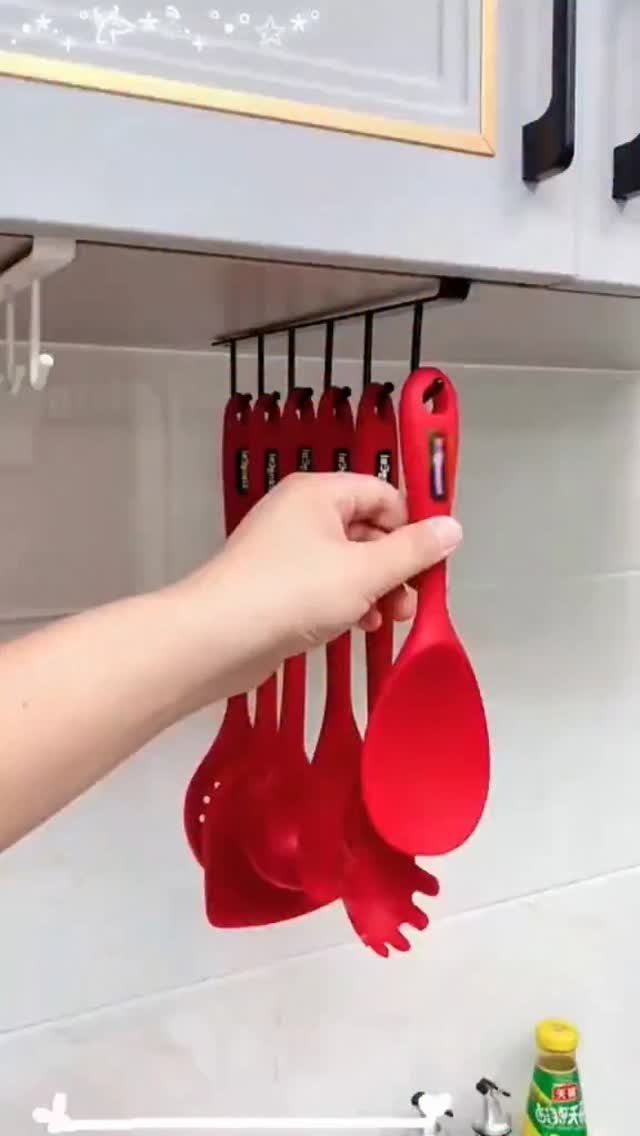
A rail screwed to the underside of an upper cabinet hangs utensils where they stay off the counter and out of the drawer.
S-hooks on a channel let you slide tools along the rail or lift one off without disturbing the rest.
I would check the cabinet box thickness before buying screws. A solid frame holds a rail loaded with spatulas; thinner particleboard pulls through over time.
Silicone tools stay light, but a full set of wooden spoons adds weight fast. Mount into the frame, not the panel, or the rail drops once the screws strip.
13. Under-Shelf Pull-Out Tray
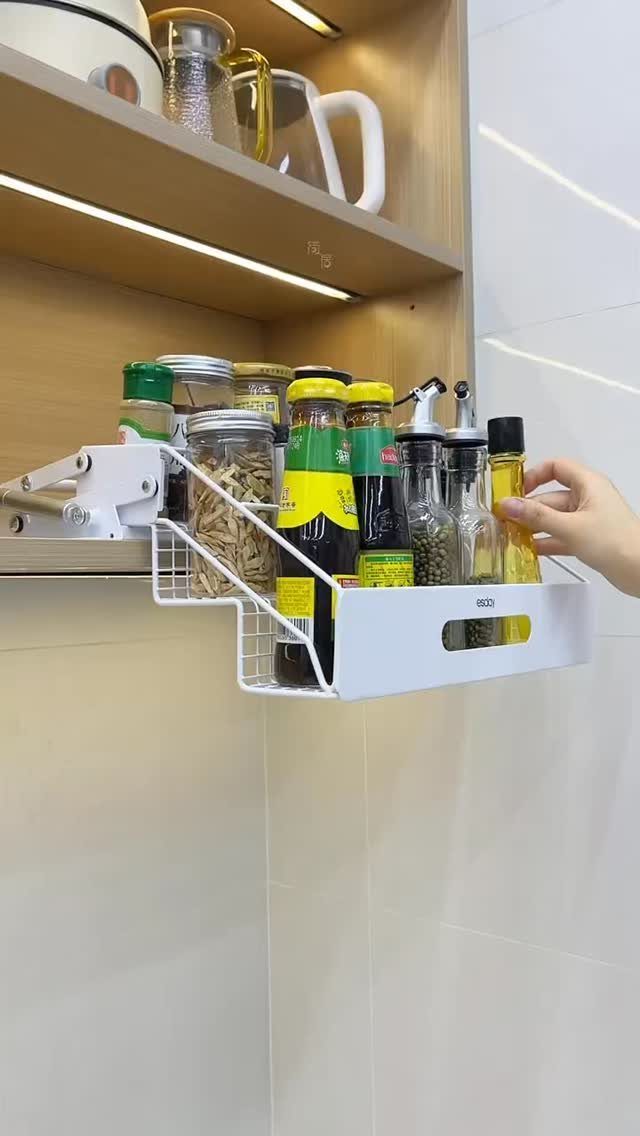
A wire tray that slides out from under an existing shelf turns dead overhead space into reachable storage for oils and small jars.
A thin shelf bows once the tray is loaded; particleboard needs reinforcement or the screws pull through. Set the tray back from the front edge so cabinet doors close over the handle or whatever sits on top.
14. Clear Refrigerator Storage Bins
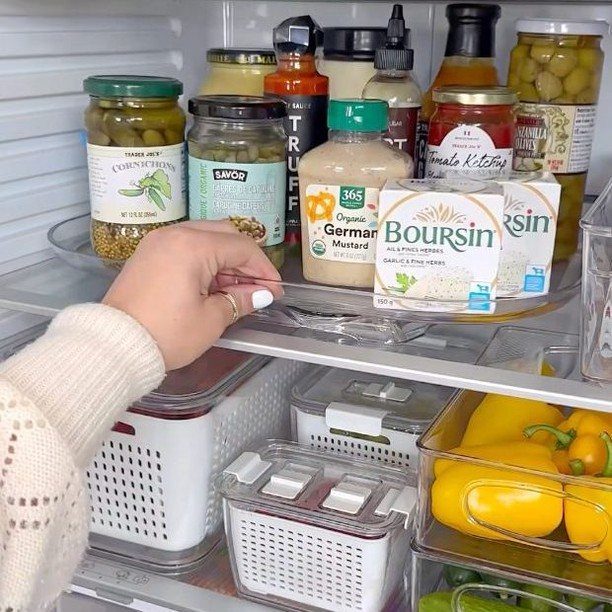
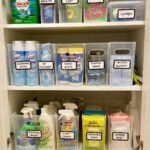
Clear bins and turntables inside a fridge keep condiments and produce visible so nothing hides behind the milk until it spoils.
I would size bins to your shelves, not buy a set and hope. Refrigerator shelf depths vary by brand, and a bin that overhangs catches the door seal.
The turntable suits round jars; square bottles waste the wedge space at the corners. For produce, a bin with a vented bottom handles moisture better than a sealed tub.
15. Dedicated Spice Drawers
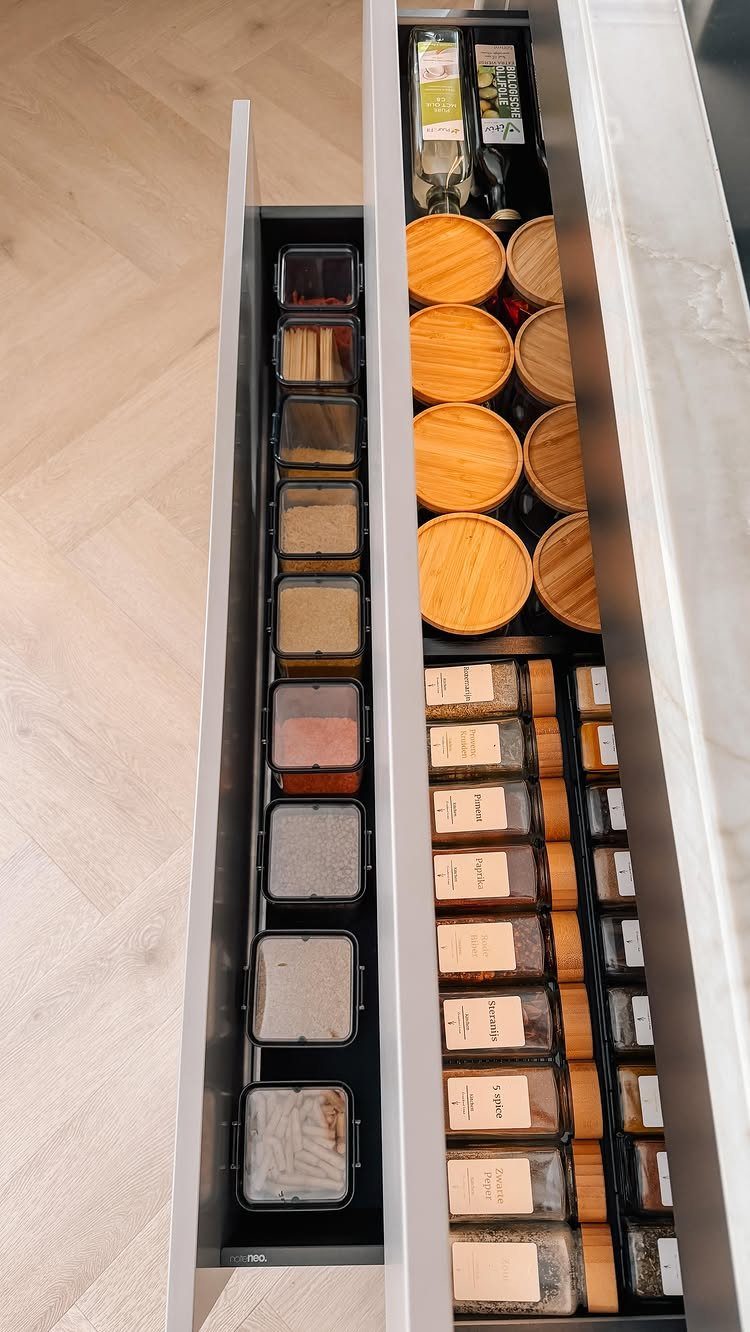
A shallow drawer laid flat with matching jars turns spice storage from rummaging into scanning. The labels face up, the lids stay uniform, and the whole collection stays dark and cool away from stove heat.
This setup needs a drawer you can spare. I would measure the interior height first; jars taller than the drawer box mean the lid catches or the drawer won’t close.
Wooden lids look warmer than metal but seal less tight, which matters more for spices you keep a while. For spices you keep past a season, I would check that the seal is enough to keep the oils from fading.
16. Pull-Out Cabinet Pan Rack
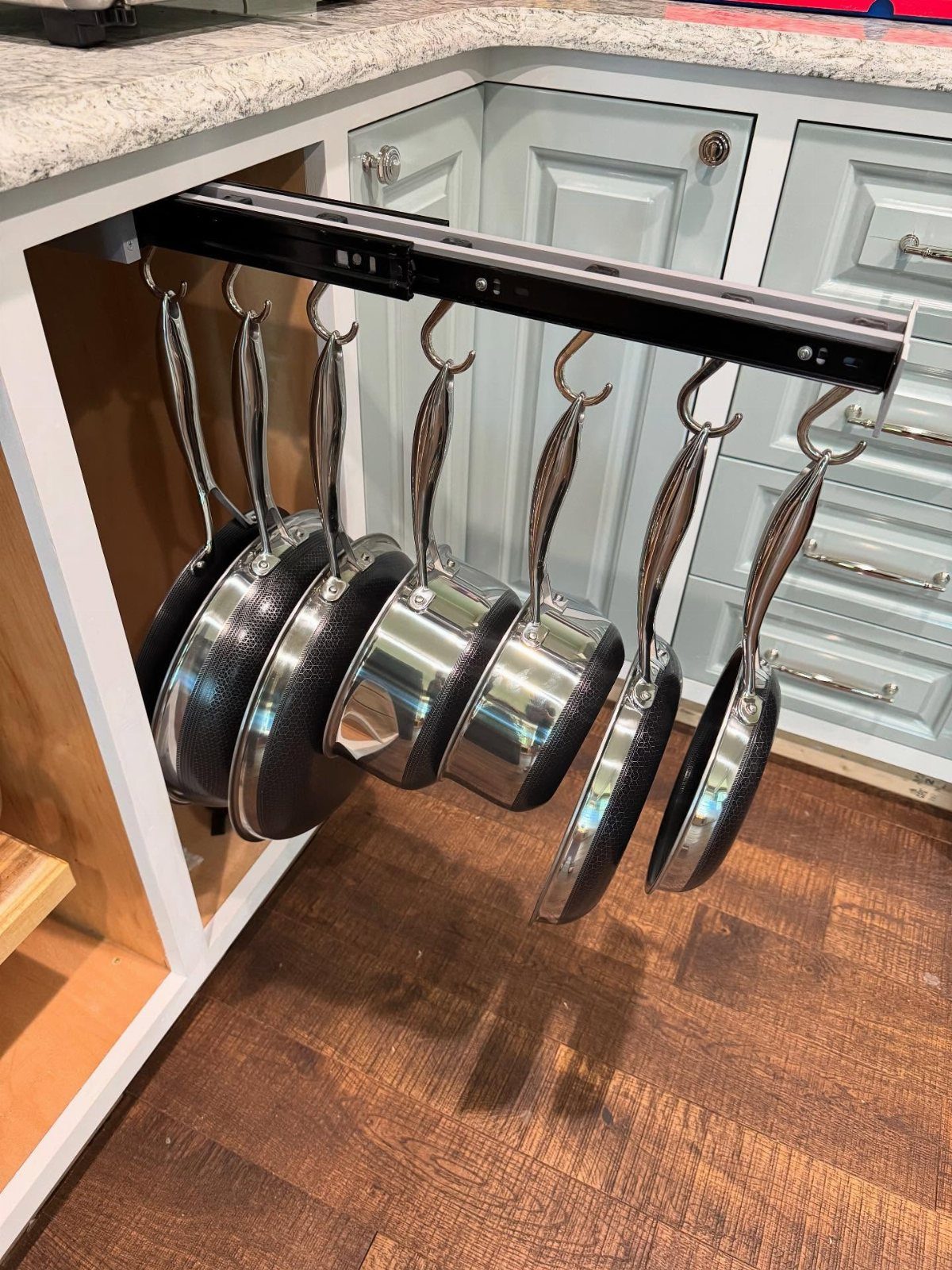
A slide-out frame with hooks inside a base cabinet stores pans by their handles, so you lift one without unstacking.
A skillet that hangs too low drags on the frame or blocks the slide.
Fixed-spacing hooks work fine until your pan handles vary in thickness; then some slip and some jam. I would mount the frame at the cabinet’s rear half to keep the swing arc clear of the door when it closes.
17. Cabinet-Mounted Countertop Trash Bin
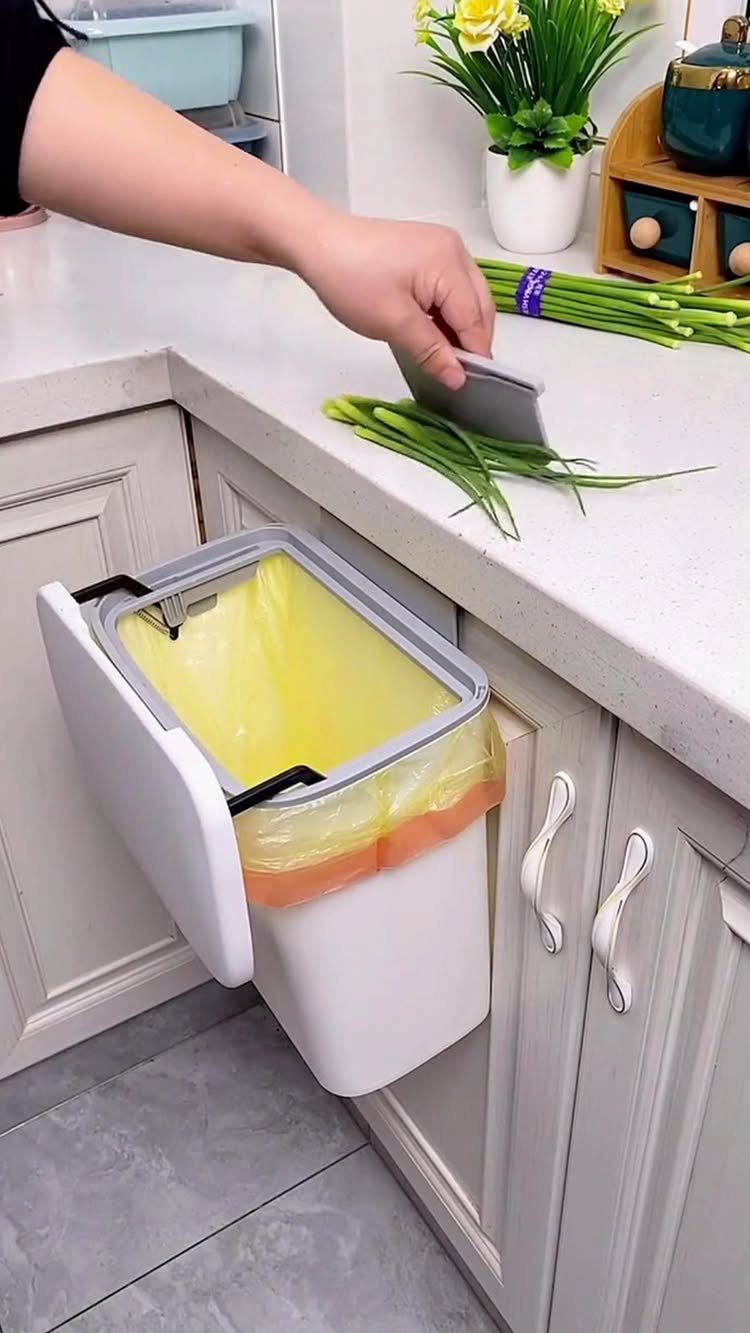
A small bin that hangs off the cabinet edge below your prep counter catches scraps without the walk to the main trash.
I would check the bag fit before committing.
Some units need branded liners; others take standard grocery bags that slip over the rim. A bin that wide handles onion trimmings fine; for chicken bones or wet waste, I would want a lid or a daily emptying habit.
The hook depth matters too: a thick countertop overhang or raised panel door may leave the bin tilting.
General Organizing Tips
Clear counters do more for a small kitchen than any organizer you can buy.
I would rather see a wall-mounted rail for utensils than a caddy that parks itself on the counter and takes over the only stretch where you could actually chop an onion.
Closed storage beats open every time for the visual noise alone; a matching bin on the counter still reads as stuff, just neater stuff.
The one exception is inside cabinets.
There, clear containers win because you need to know the flour from the powdered sugar without opening lids. I would keep the outside opaque and the inside visible.
Overflow space matters too: a single shelf or bin for bulk purchases, seasonal items, or that appliance you use twice a year. Without it, the good system you built starts creeping back onto the counter.
Planning and Measuring
Do not buy a single container before you measure what you have and what you store. I would stand in front of the pantry with a tape measure and a notepad, not a shopping cart.
Shelf depth, interior height, and the actual dimensions of your cereal boxes and pasta bags matter more than the container’s label claims.
Draw it out, even roughly. A sketch with real numbers shows fast whether four jars fit or only three, and whether those three leave dead space that a different shape fills better.
Update the drawing as you decide. The plan evolves; the mistake is skipping it and hoping the store return policy saves you.
Maintaining Organization
Start with one drawer or one shelf, not the whole kitchen.
Spreading everything across the floor at once feels productive; it usually ends in half-finished piles and decision fatigue. I would pull everything from a single cabinet, lay it out, and sort into keep, donate, and relocate before touching the next.
One-year unused is a solid rule for gadgets and duplicates.
A second wine opener or the spiralizer from that one recipe earns its space only if you reach for it regularly. When something new comes in, something old goes out; the one-in-one-out rule keeps the system from sliding backward.
Place what you use daily at the front, group like with like, and leave breathing room. A packed shelf hides what you own and trains you to buy what you already have.
Frequently Asked Questions
How to organize kitchen cabinets?
Cabinet organizers turn deep shelves into usable space. I would start with a pull-out frame or riser that brings the back row forward, because losing items in the rear is what makes cabinets feel cluttered.
Group by use, not by size: keep the baking supplies together and the everyday plates where you reach them first.
What are the best pantry organization ideas?
Glass jars with tight lids keep dry goods visible and pest-free, and uniform sizes stack without wasted height between them.
A lazy Susan in the corner brings the back row forward with a spin, and wedge-shaped bins keep small jars from tipping.