These ideas run from a fruit bowl you set down to a pegboard you drill into studs, and the one that fits depends on whether you rent, own, or simply need something gone by Sunday night.
I would start by asking how much of your counter you are willing to give up permanently, because some of these claim inches and others buy back feet.
The two-tiered wooden lazy susan that needs its diameter checked against your backsplash is the kind of detail that separates a solution from a new problem.
1. Using a Storage Shelf
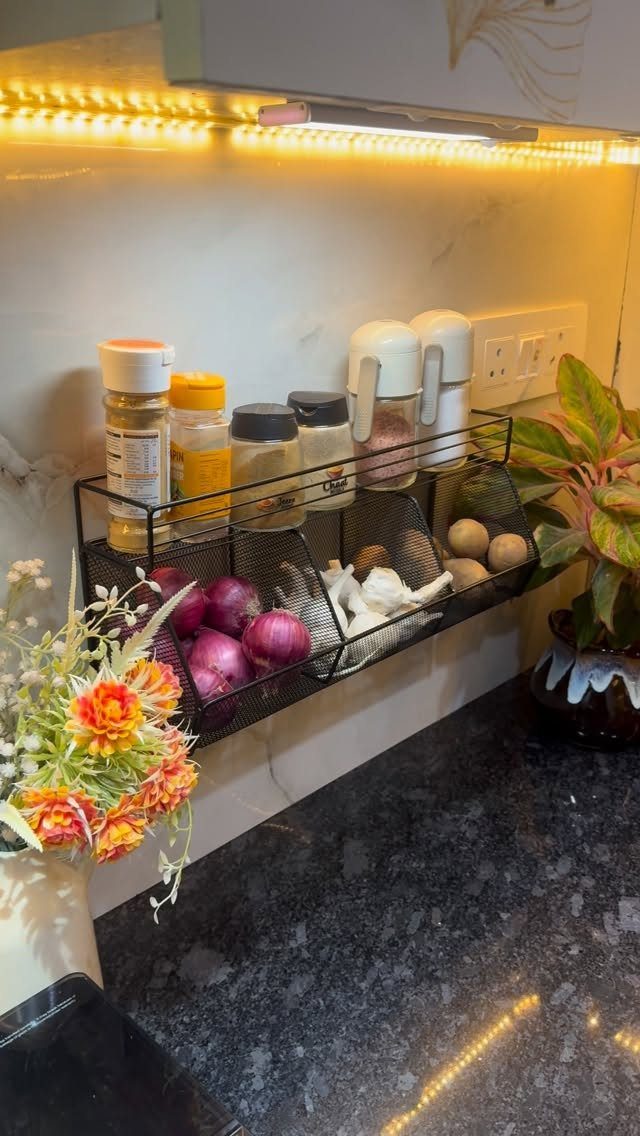
A wall-mounted storage shelf buys back the depth of your backsplash for jars, produce, or small tools you reach for daily.
A black wire storage shelf keeps spices up top and lets onions and garlic breathe below, which beats a crowded drawer for anything that needs air.
I would check 2 things before mounting: whether your tile can take anchors without cracking, and how much weight the bracket set is rated for.
Wire racks install fast if you locate studs or use the right wall anchors, and the payback is immediate counter space.
2. Clear Counters
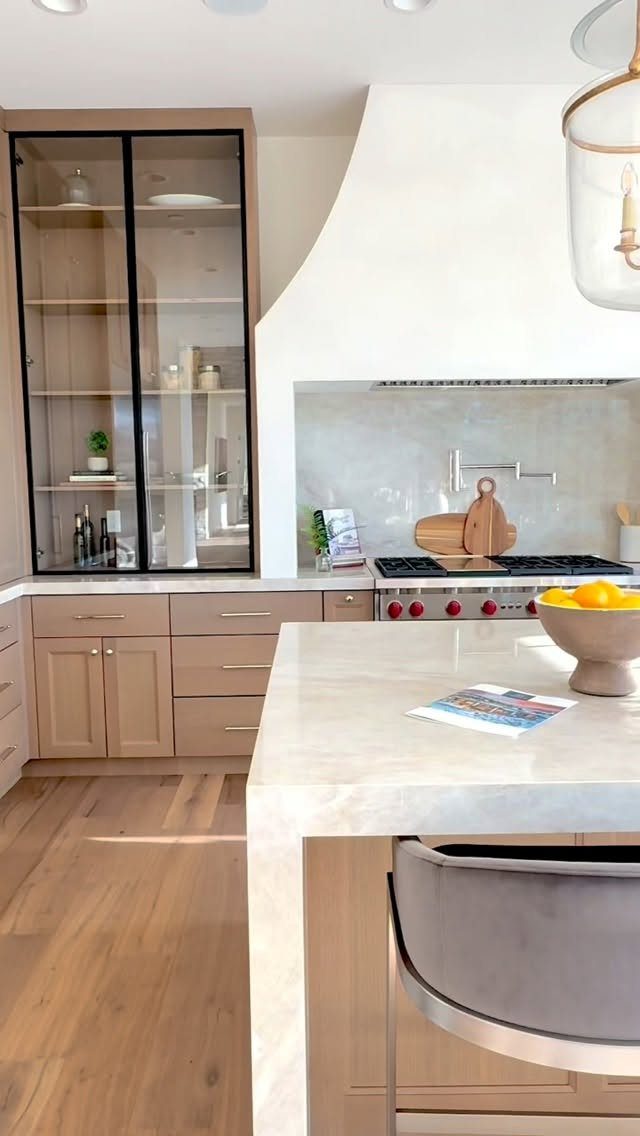
Clear counters are not a storage product; they are a habit that costs nothing and reads as design.
Clear counters happen when everything earns its spot in a cabinet or the island base, leaving surfaces to the few items that actually need to be out.
I think this works best when you have one landing zone for daily clutter, mail, and charging cables, and the rule that nothing else lives out overnight.
For renters or anyone in a small kitchen, the discipline matters more than the square footage.
3. Using Utensil Holders
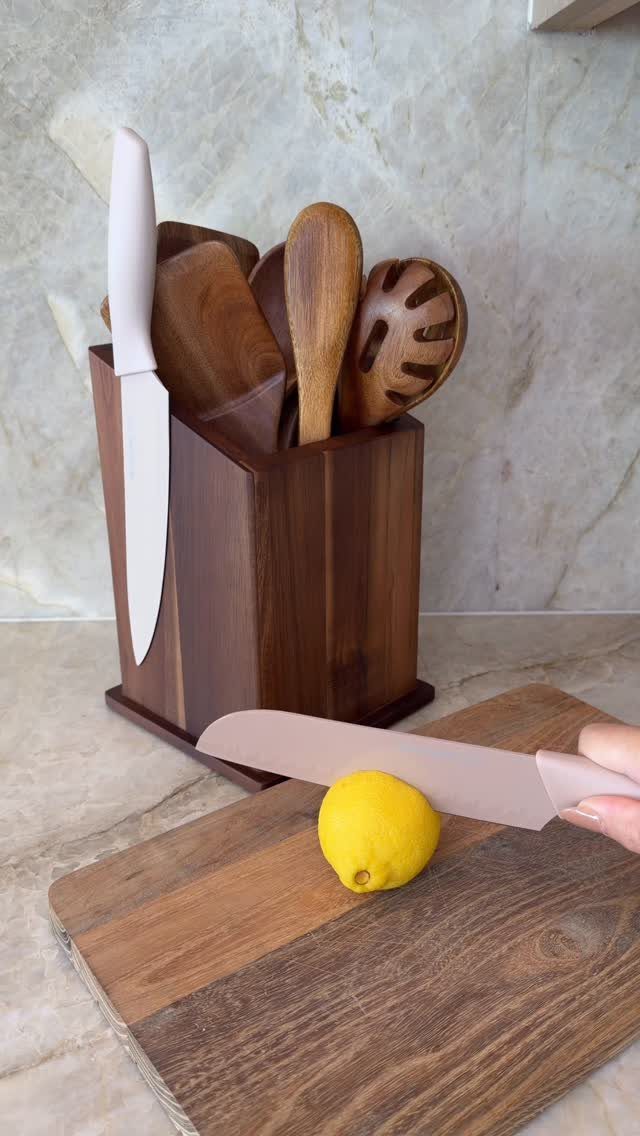
Wooden utensil holders keep the tools you cook with in arm’s reach without drawer-divider math. A four-sided magnet for grip matters more than it sounds if you have ever knocked a crock into a hot pan.
I prefer wood to ceramic for weight and to metal for noise; a diameter that holds a full set without crowding is the one to buy. This is a single-purchase upgrade that outlasts trends.
4. Trays and Baskets for Countertops
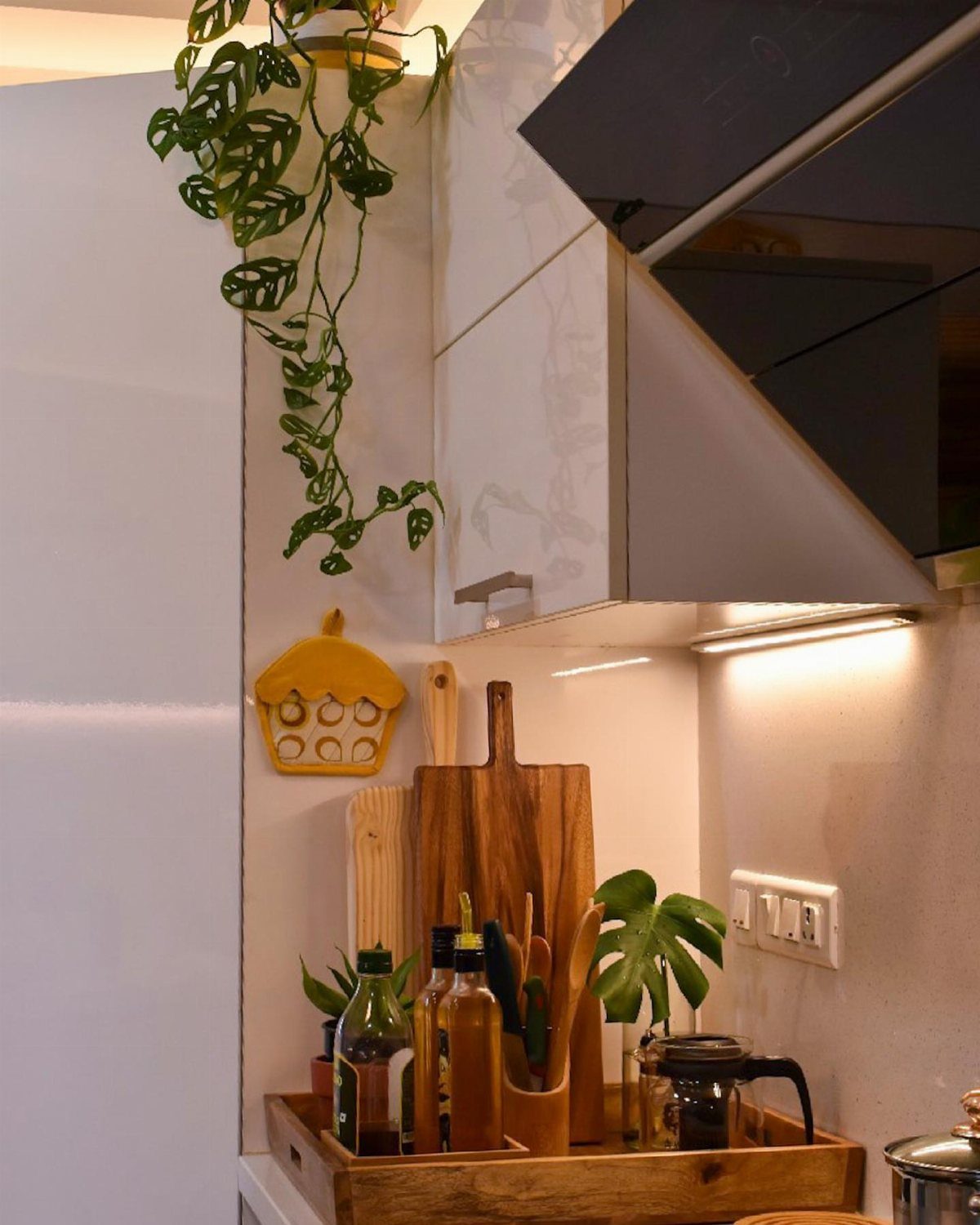
A tray or basket corrals the small items that otherwise colonize every flat surface into one moveable zone.
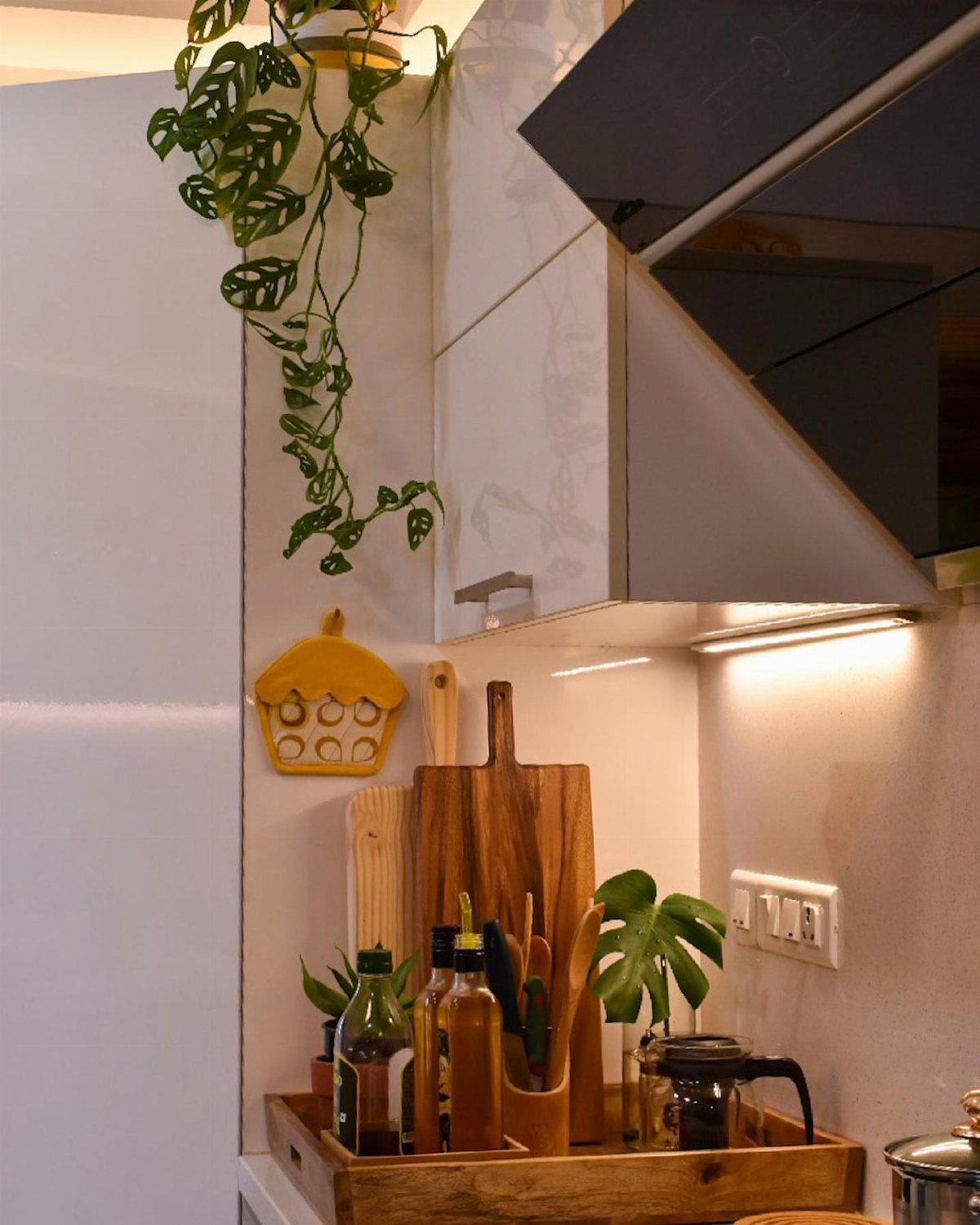
A wooden tray gathers oil bottles, a utensil holder, and cutting boards, which lets the counter read as intentional even when the contents are utilitarian.
I would size the tray to what you actually use daily; anything larger becomes a junk drawer on its side. For renters, this is especially useful: one lift and your kitchen looks staged for a showing.
5. Matching Containers for Countertops
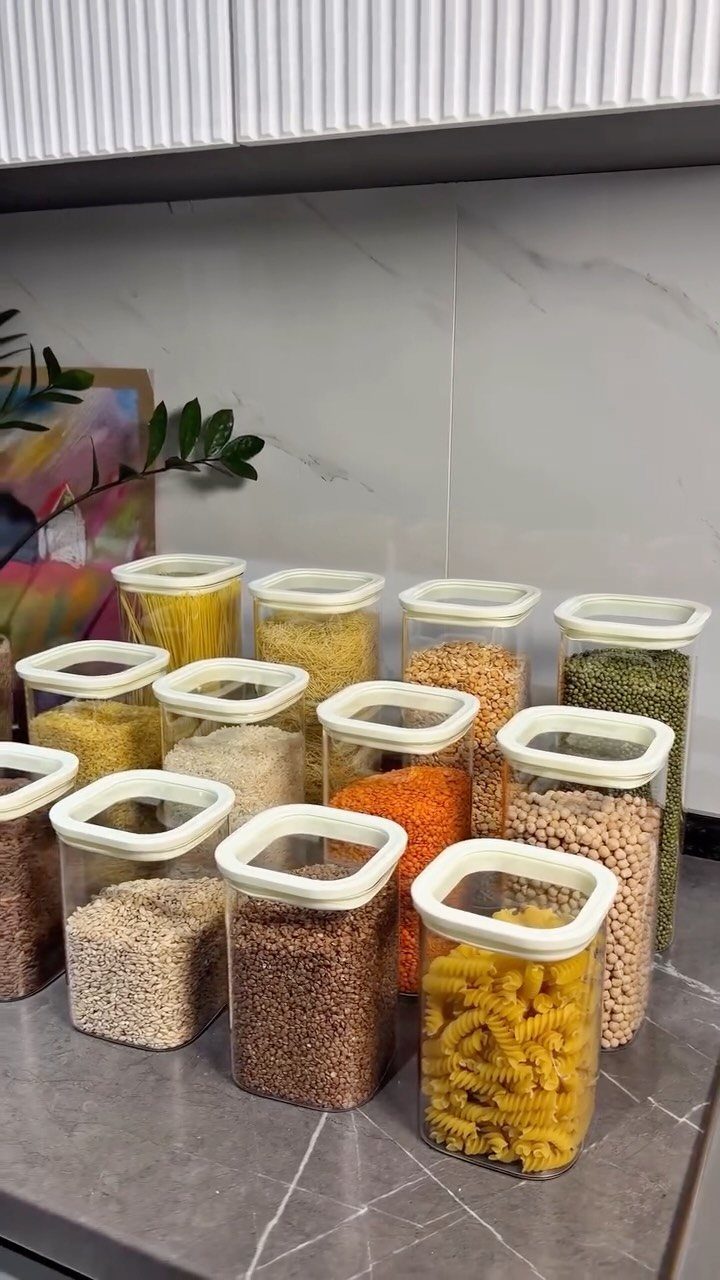
Matching containers turn open-counter dry storage into something that reads planned instead of leftover. Clear vessels that hold pasta, lentils, rice, and beans in rows do more visual work than the contents themselves.
I would buy only after measuring your tallest usual bag; a jar that cannot hold a full pound of spaghetti is a daily annoyance.
Labels help, but I skip them if the contents are obvious; the clean front matters more than pantry-catalog precision.
6. Using a Rolling Cart
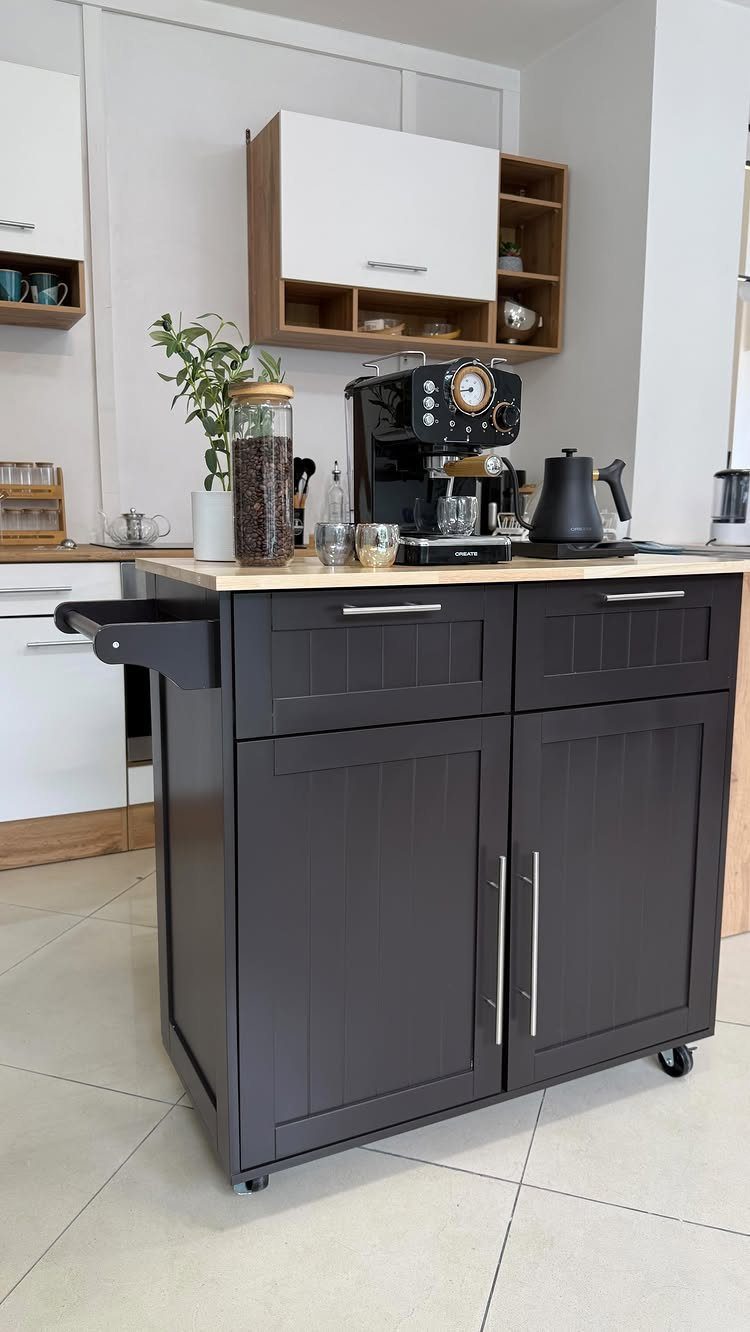
A rolling cart adds storage and work surface where built-ins stop, and the casters mean you can roll it out of the flow when you need floor space.
I would check wheel locks before buying; a cart that drifts while you tamp espresso is a hazard. This is the most flexible money you can spend in a small kitchen.
7. Coffee Station Setup
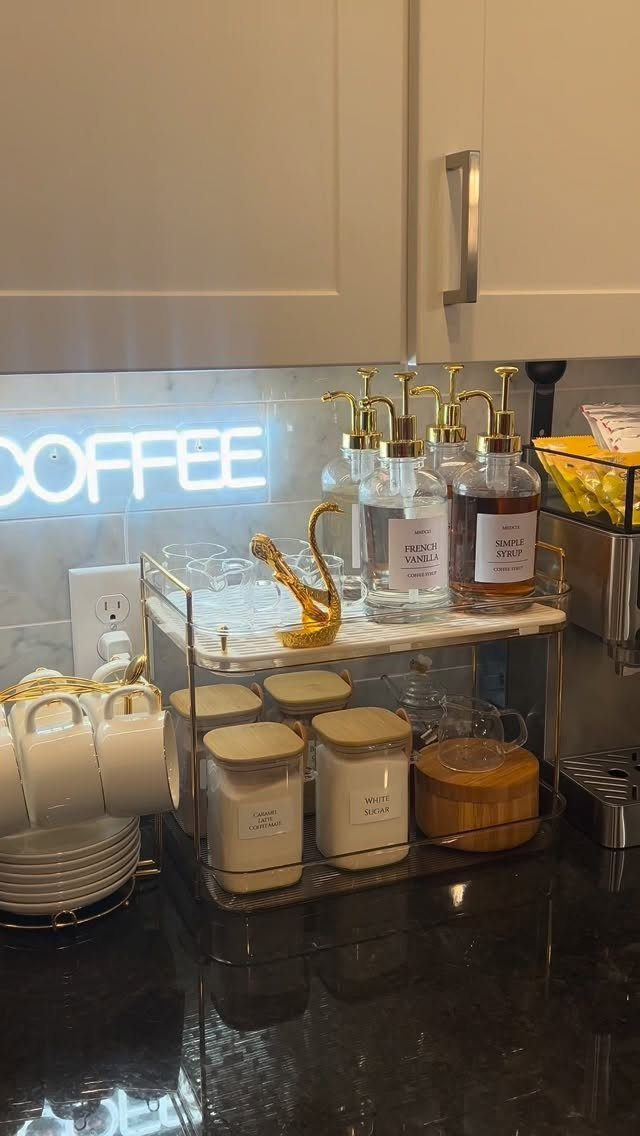
A coffee station setup dedicates one counter zone to everything you need before caffeine, which keeps the morning hunt for filters or sugar from spreading across the kitchen.
A two-tiered stand handles syrups and jars in a small footprint, and a mug rack below keeps cups ready without cabinet shuffling.
I would decide on the station’s width before buying any piece; a setup that creeps too far starts eating prep space you will miss later. The neon sign is optional, but the containment is not.
8. Bread Box
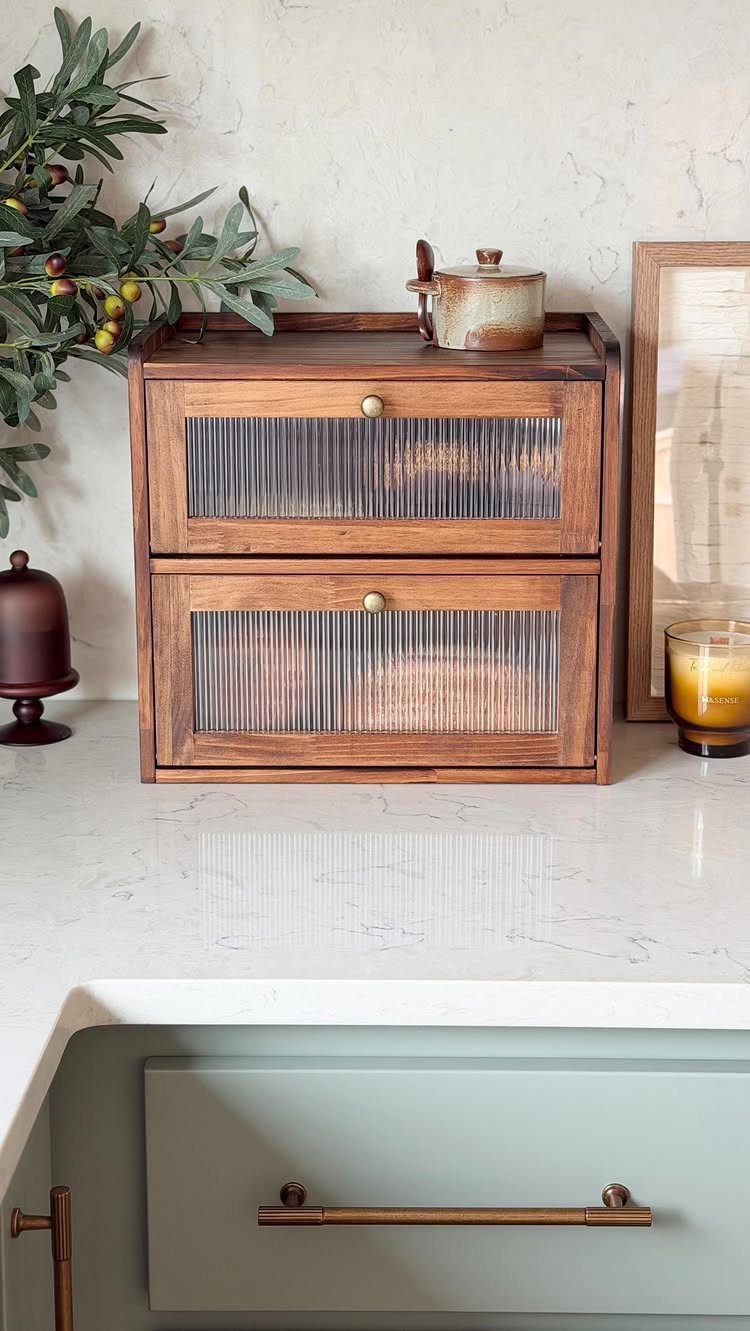
A bread box stores loaves at room temperature, which revives a counter spot that otherwise gathers plastic bags and clip ties.
The fluted glass doors on the two-tier version let you check stock without opening either drawer, and the wood finish warms up a marble counter that can read cold.
I would measure my usual loaf height before choosing; a box too shallow for a tall sourdough mangles crust every time.
This is one of the few countertop pieces that earns its space by doing actual preservation work, not just hiding clutter.
9. Using a Knife Block
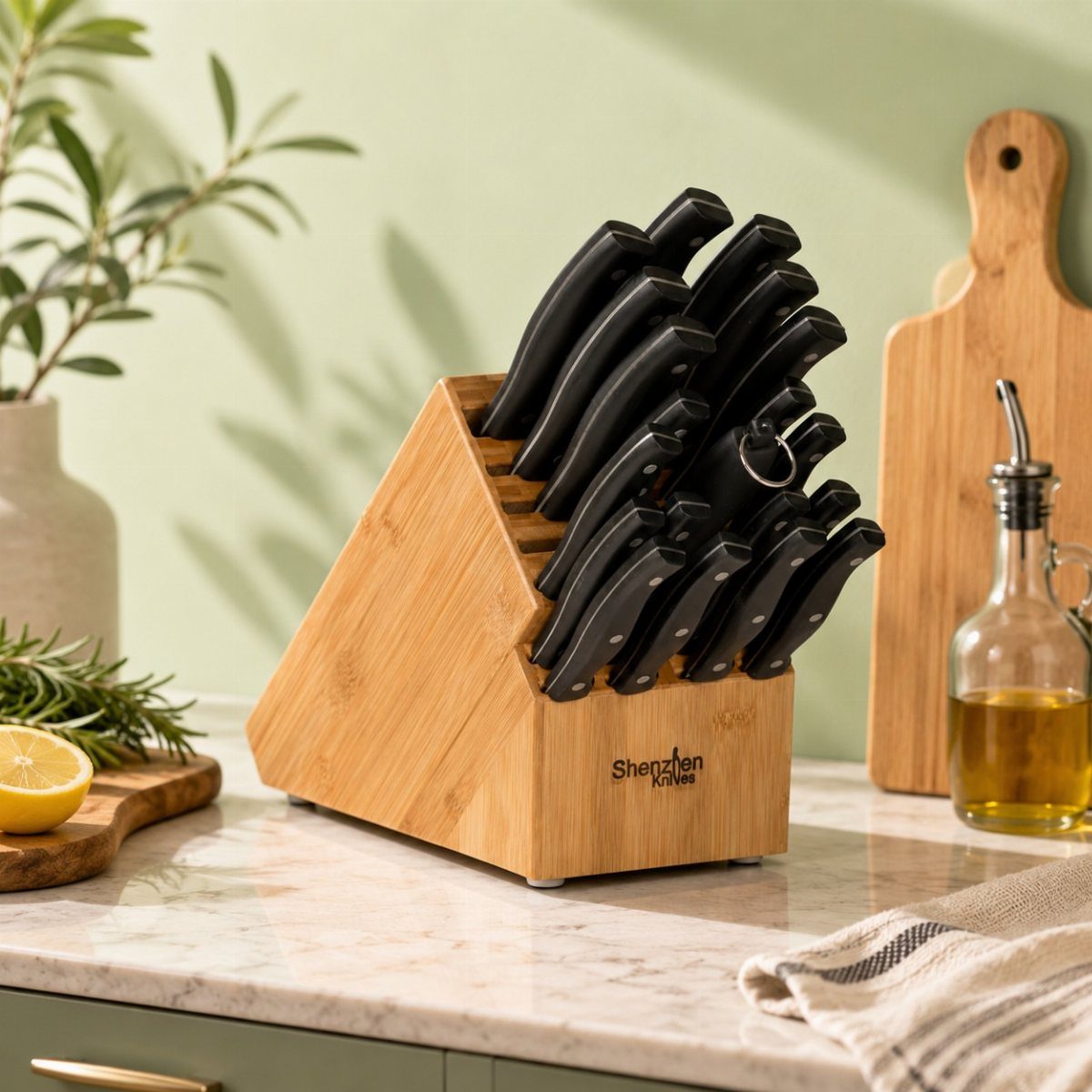
A knife block keeps blades edge-up and separated, which protects the edge better than drawer jostling and keeps fingers safer than a loose blade in a utensil tray.
A slanted slot design lets knives slide in without lifting high, which matters more in a busy kitchen than it sounds.
I would check whether the block fits my set; a block sized for a large set wastes space if you own a smaller one, and overcrowding a small block damages tips.
Wood absorbs moisture from wet blades, so I would dry knives before slotting them.
10. Using a Spice Rack
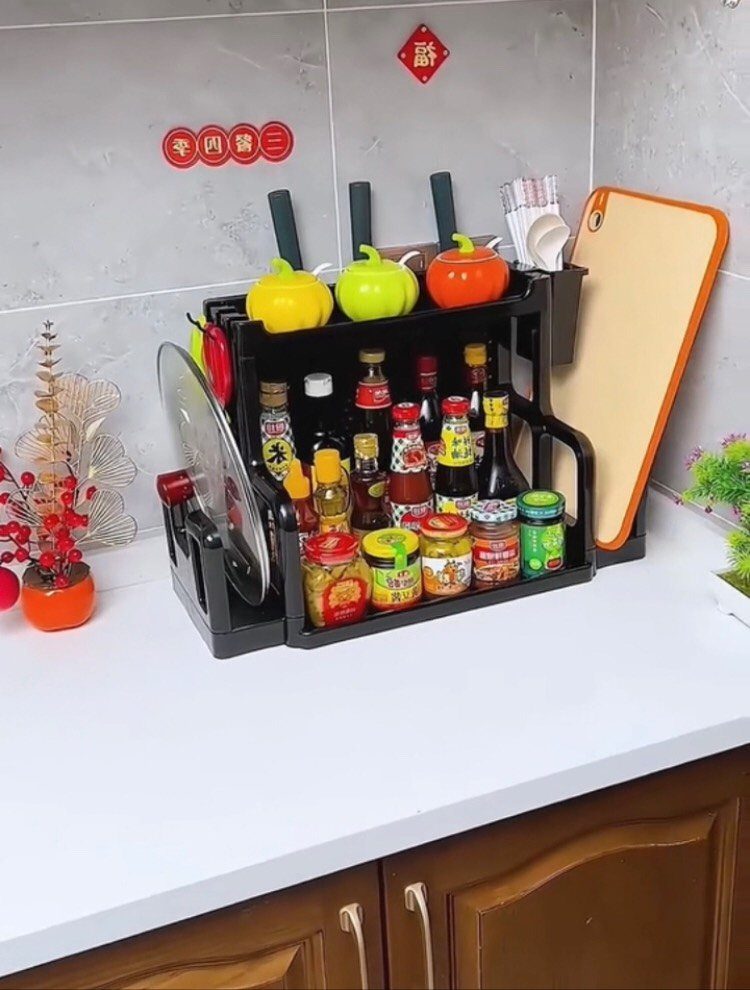
A tiered spice rack angles bottles so labels face you, which beats the front-row-only visibility of a flat shelf.
I would count my bottles before buying tiers; a rack with more levels than you fill looks half-empty, and one too short leaves overflow on the counter anyway.
This works best when you cook often enough that spices turn over before they fade.
11. Using a Cookbook Stand
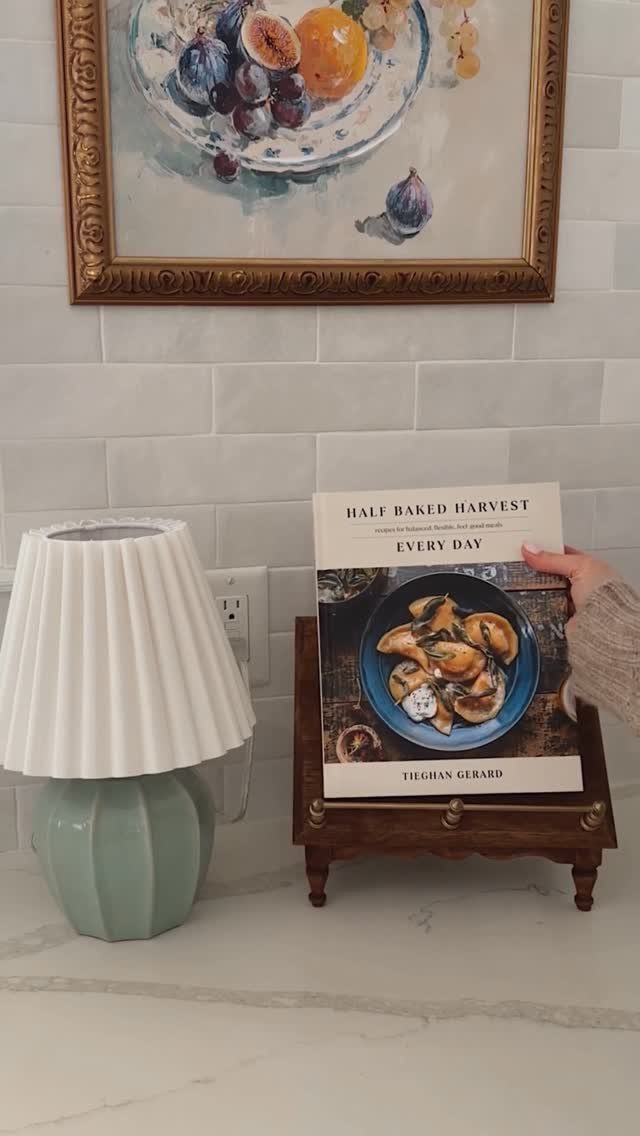
A cookbook stand holds pages open at angle, which keeps recipes visible without the counter space a flat book claims and the flour fingerprints that come with it.
A low wooden stand lets a lamp still reach over it, which matters in kitchens where under-cabinet lighting stops at the counter edge.
I would check the ledge depth against my thickest cookbook; a shallow lip lets heavy spines slide. This is worth the spot only if you cook from books more than screens.
12. Pegboard for Utensils and Tools
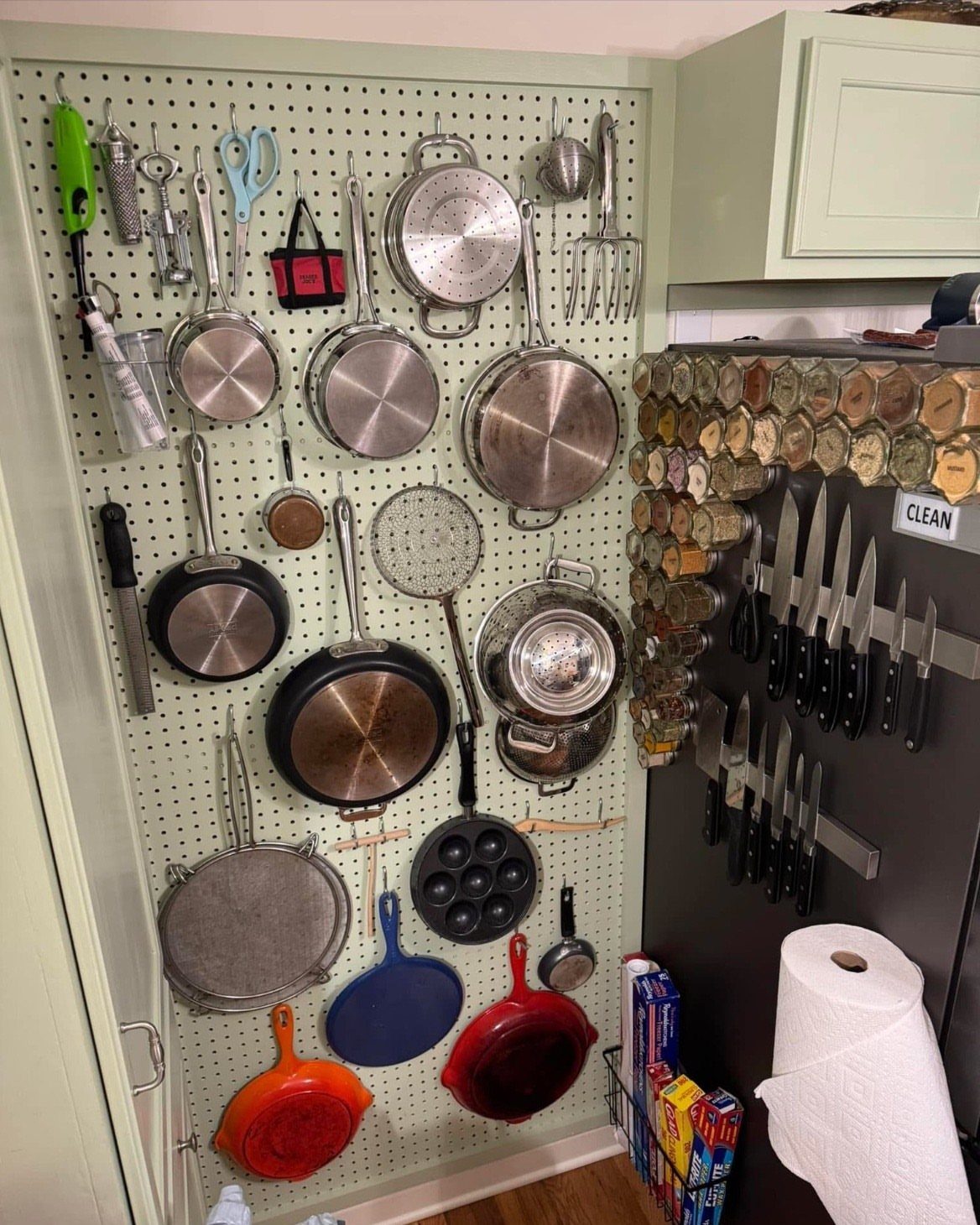
A pegboard wall turns the gap between counter and cabinet into storage for pots, colanders, and tools that otherwise stack badly and scratch each other.
Hooks at varying heights let a colander hang above a skillet without collision. I would locate studs or use heavy-duty anchors; a loaded pot falling early in the morning is not a small problem.
This trades the clean line of a bare wall for function, and in a small kitchen I would make that trade every time.
13. Using a Fruit Bowl
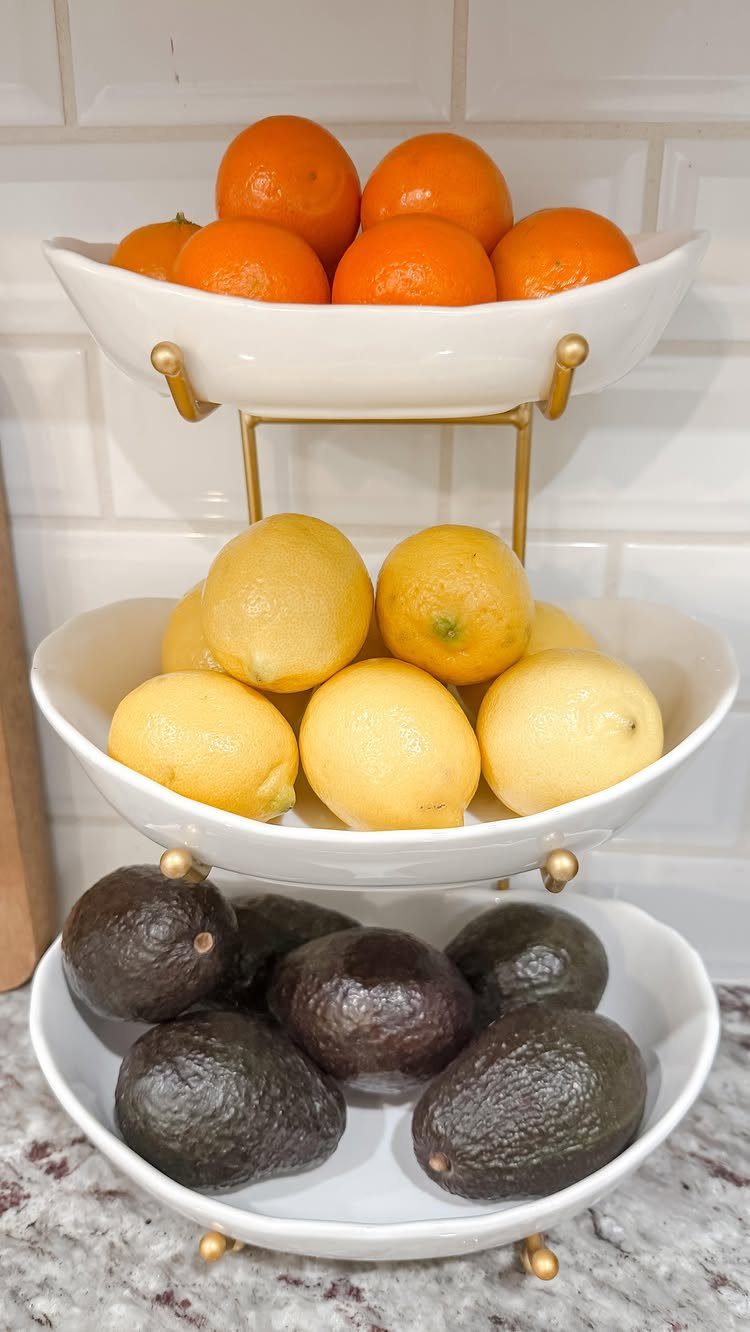
A tiered fruit bowl turns produce into something that reads as intentional display instead of countertop clutter.
The three-level ceramic stand with gold metal framing separates citrus by type, which keeps avocados from bruising under weight and lets you assess stock at a glance.
I would check the base width against my counter depth; a stand that overhangs gets knocked. This works best when you actually buy fruit weekly; otherwise it becomes a dust collector.
14. Tiered Lazy Susan Organizer
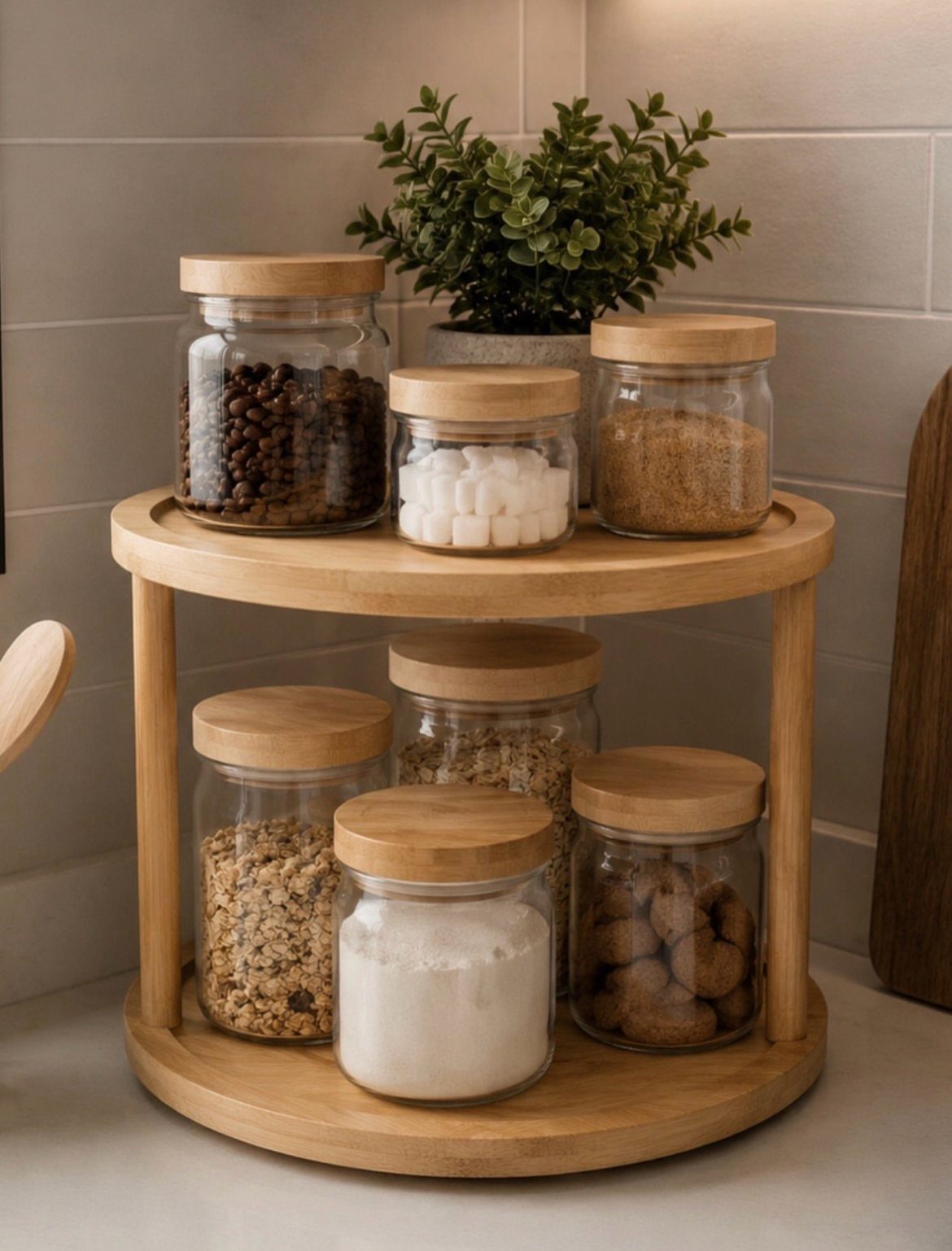
A two-tiered wooden lazy susan brings cornered items to you with a quarter turn, which beats reaching past jars to get the one in back.
The rotating base suits dry goods in matching glass jars with wooden lids, and the small plant on top softens the utilitarian look.
I would check the diameter against my counter space; a susan that bumps the backsplash binds and scrapes. Wood needs occasional oiling if it sits near a sink splash zone.
15. Under-Cabinet Banana Hanger
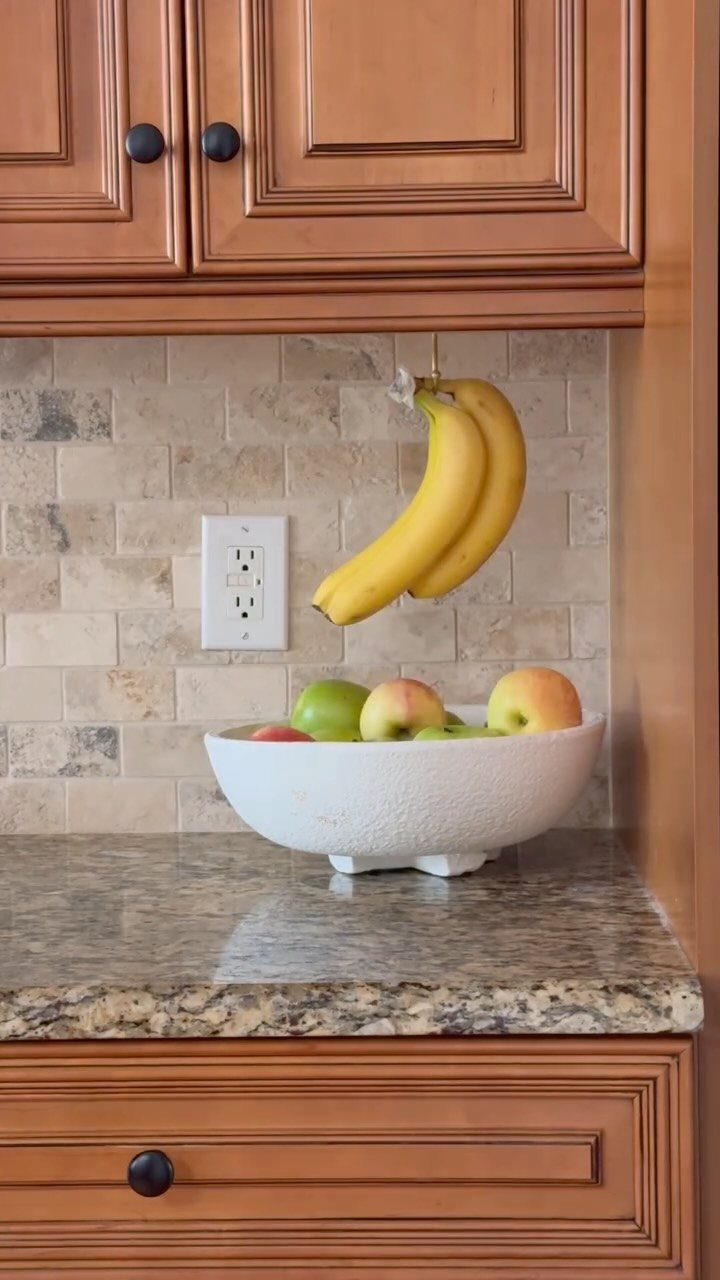
An under-cabinet banana hook suspends the bunch above the bowl, which slows ripening by separating ethylene-producing fruit from sensitive apples.
The hook mounts directly to the cabinet base, so no counter space is sacrificed. An under-cabinet banana hanger suits kitchens where the fruit bowl already lives in one spot and the bananas kept tipping it.
16. Wall-Mounted Utensil Hanging Rail
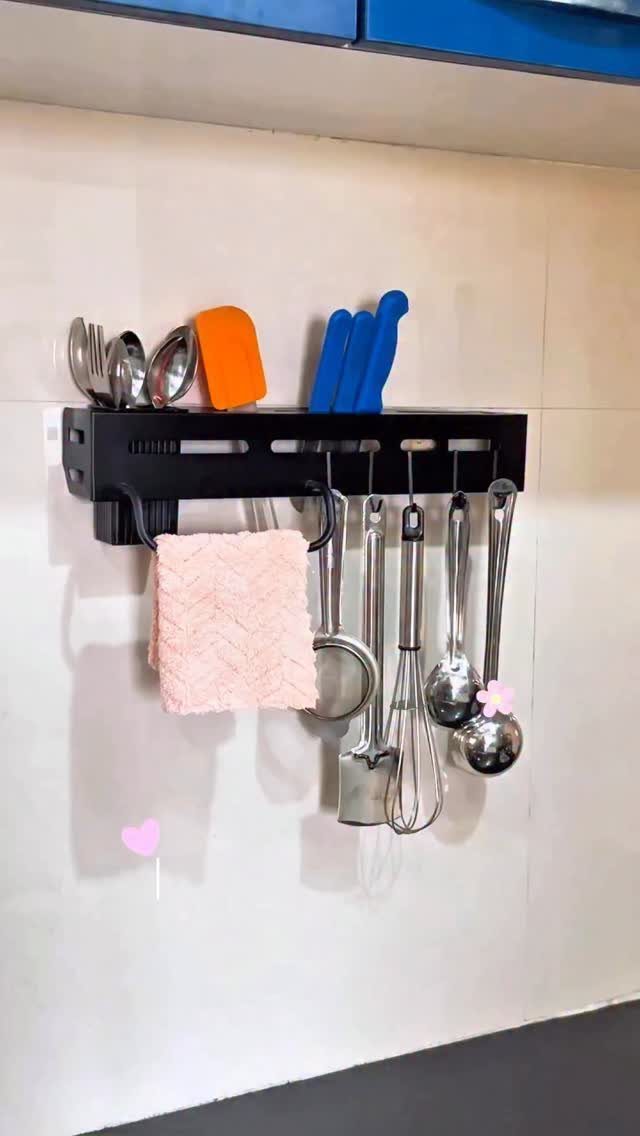
A wall-mounted rail with hooks moves utensils off the counter and onto the backsplash, which keeps handles dry and frees the spot where a crock sat.
I would check tile hardness before drilling; soft backsplash tile cracks under a standard bit. This trades a small amount of wall visibility for counter space, and in a narrow galley kitchen I would make that trade without hesitation.
Importance of Decluttering
Regular decluttering does more than keep a kitchen looking tidy. A clean counter does more for your head than most people realize.
Clutter competes for attention whether you notice it or not, and the mental load adds up fast. In a kitchen, that means a crowded counter makes cooking harder, not just slower.
I would set a monthly check to pull expired ingredients and unused items off the counter, since daily clutter clearing only handles surface mess. The real work is deciding what actually belongs in the kitchen at all.
When everything has a set spot, cleanup stops being a decision and becomes motion; that is where the mental load drops. A place for each thing sounds simple, but most counters fill because the system behind them failed first.
The key to achieving organized kitchen counters is eliminating clutter — or, cutting down on the number of things you need to keep on your counter.
Choosing What to Keep
The counter is workspace first, and dry storage only when the containers match and the arrangement earns its spot.
I keep only what I touch daily: the coffee maker, a utensil holder, maybe the knife block if I cook every night. Everything else earns a drawer or cabinet, even if that means walking 2 extra steps.
Apartment Therapy’s rule holds: a cleared counter stays clearer. One item left out attracts a second, then a mail pile, then a charging cable nest.
I treat it like the clean-sink rule: one item left out makes the next one feel welcome, and by Friday the whole surface is claimed.
The toaster, stand mixer, and dish rack only stay if I use them often enough that hauling them out would annoy me daily.
A drying mat folds away; a permanent dish rack claims space forever. If I have not used it this week, it does not get counter real estate.
Maintaining Clean Counters
A daily wipe-down matters more than any organizer.
I would clean the counter after the last meal, not before bed when I am tempted to skip it. That cloth needs soap and water after use, or tomorrow morning it just pushes yesterday’s grease around.
Decorative clutter is the silent killer of clean counters. I would pull anything that is not functional or genuinely pleasing to look at; a crowded counter with 3 small frames and a dried flower arrangement still reads as mess.
For loose items that must land somewhere, a single tray or bowl contains the drift. Raw vegetables and meat get their own dish before prep, not direct counter contact.
The routine itself is the tool.
Daily cleaning keeps the job small. Let it sit and the same work takes most of a Saturday morning.
I would match my cleaner to the surface: granite, stainless steel, and wood each need their own formula, and using the wrong one etches or dulls over time.
Frequently Asked Questions
What is the new trend for kitchen counters?
Right now I see more clients asking for counters that look almost empty, with only the tools they actually touch each day left in the open and the rest tucked into drawers or pantries.
Counters in 2026 are doing more with less, using streamlined organizers and subtle storage that blends into the room rather than shouting for attention.
I like a counter that looks lived-in but not crowded; the mug you use every morning stays, the gadget you bought last spring and forgot about does not.
How to make more room on kitchen counters?
Use vertical space, create dedicated zones, and cut the number of items that live on the surface permanently. Wall-mounted shelves, rails, and pegboards buy back counter depth by moving tools and produce to the backsplash or wall.
What to put in counter canisters?
Three to five canisters holding your most-used dry goods keep pantry staples visible and free up cabinet space. Clear vessels for pasta, lentils, rice, and beans read planned rather than leftover, especially when they match.
What should not be stored in kitchen cabinets?
Items you touch daily belong out where you can reach them, not buried in cabinets. Rarely used appliances and overflow pantry items clutter cabinets just as badly as they clutter counters.