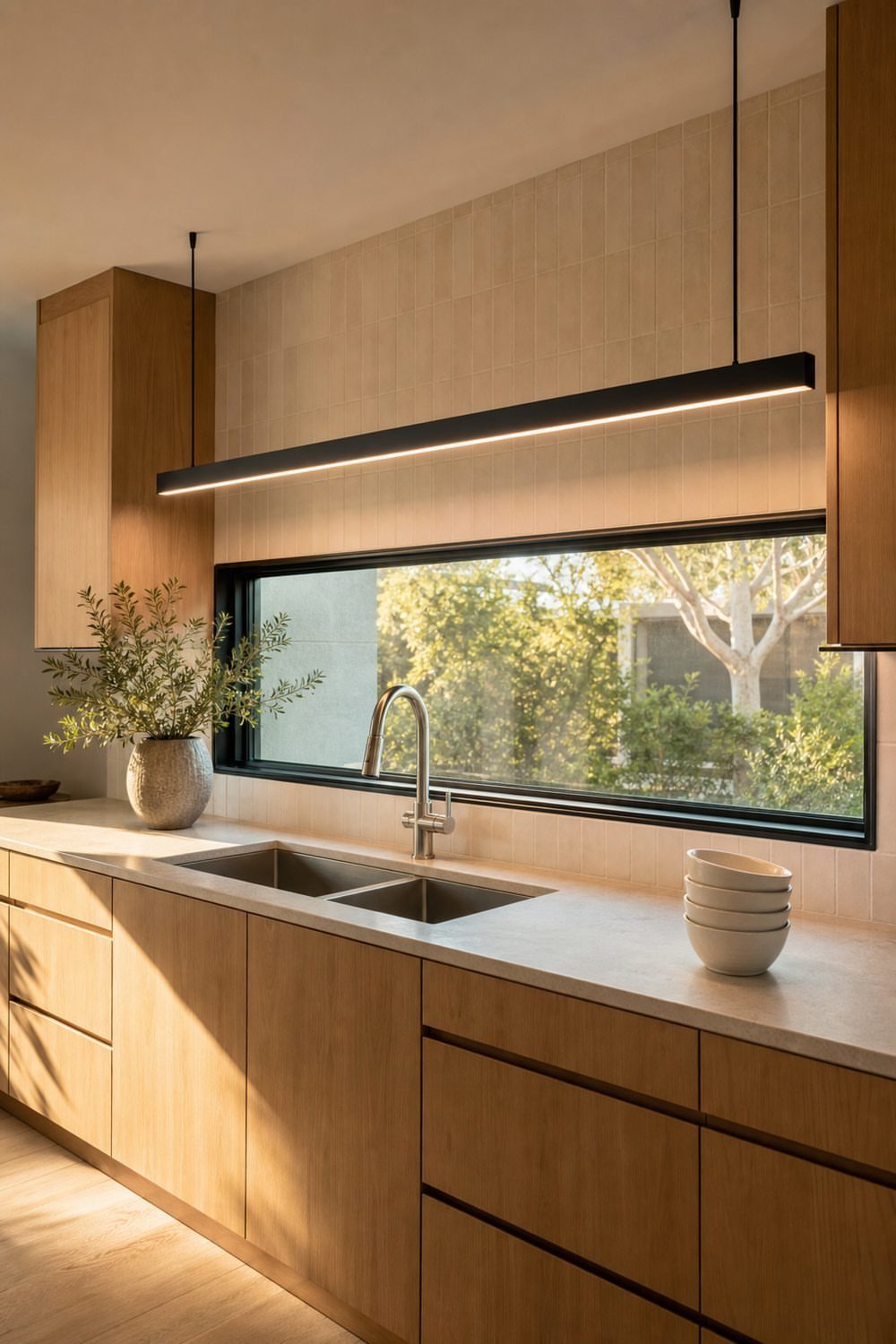
The light fixtures above a kitchen sink in this list range from a single pendant on a brass stem to a pair of sconces flanking a window, and the deciding factor is what your wall already offers: a centered junction box, a window that needs framing, or open shelving that cannot handle more visual weight.
I would hang a white dome pendant at roughly 59 inches of adjustable cord, but only after checking whether your farmhouse sink’s extra apron depth changes where the light actually lands.
1. White Pendant with Brass Stem
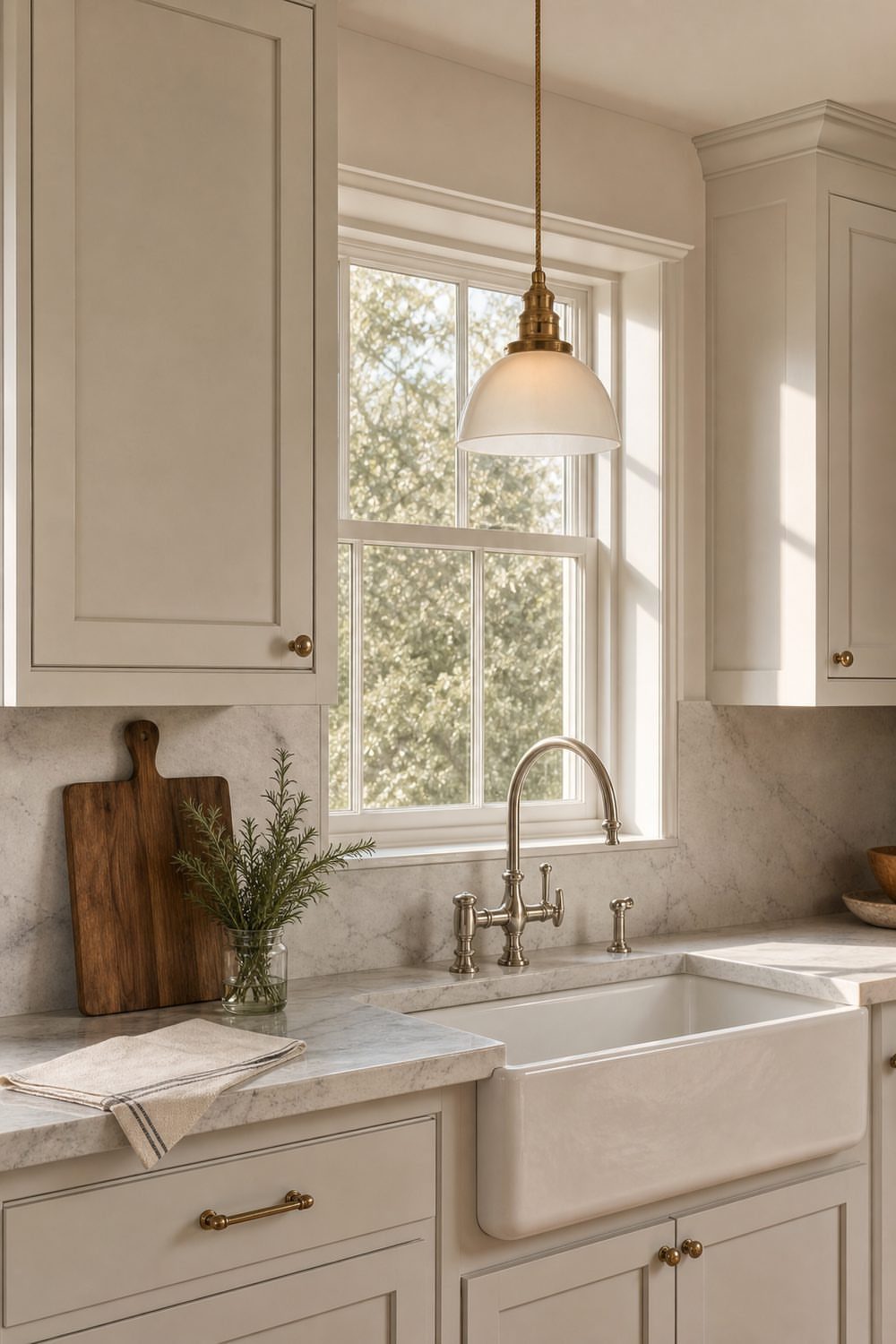
A single white dome pendant on a brass stem reads clean without going cold, which is why I keep pointing renters and first-home owners toward this pairing.
The brass warms up the white, and the dome shape throws light down onto the sink where you actually need it.
Before you order, measure your ceiling height and the drop you want. Too low and it blocks the window; too high and the light pools on the counter behind you instead of the basin.
I usually hang these a few feet above the sink rim, but a farmhouse sink sits higher than standard, so account for that extra apron depth.
Check that your junction box is centered over the basin, not just somewhere in the window bay.
2. Clear Glass Pendant Light
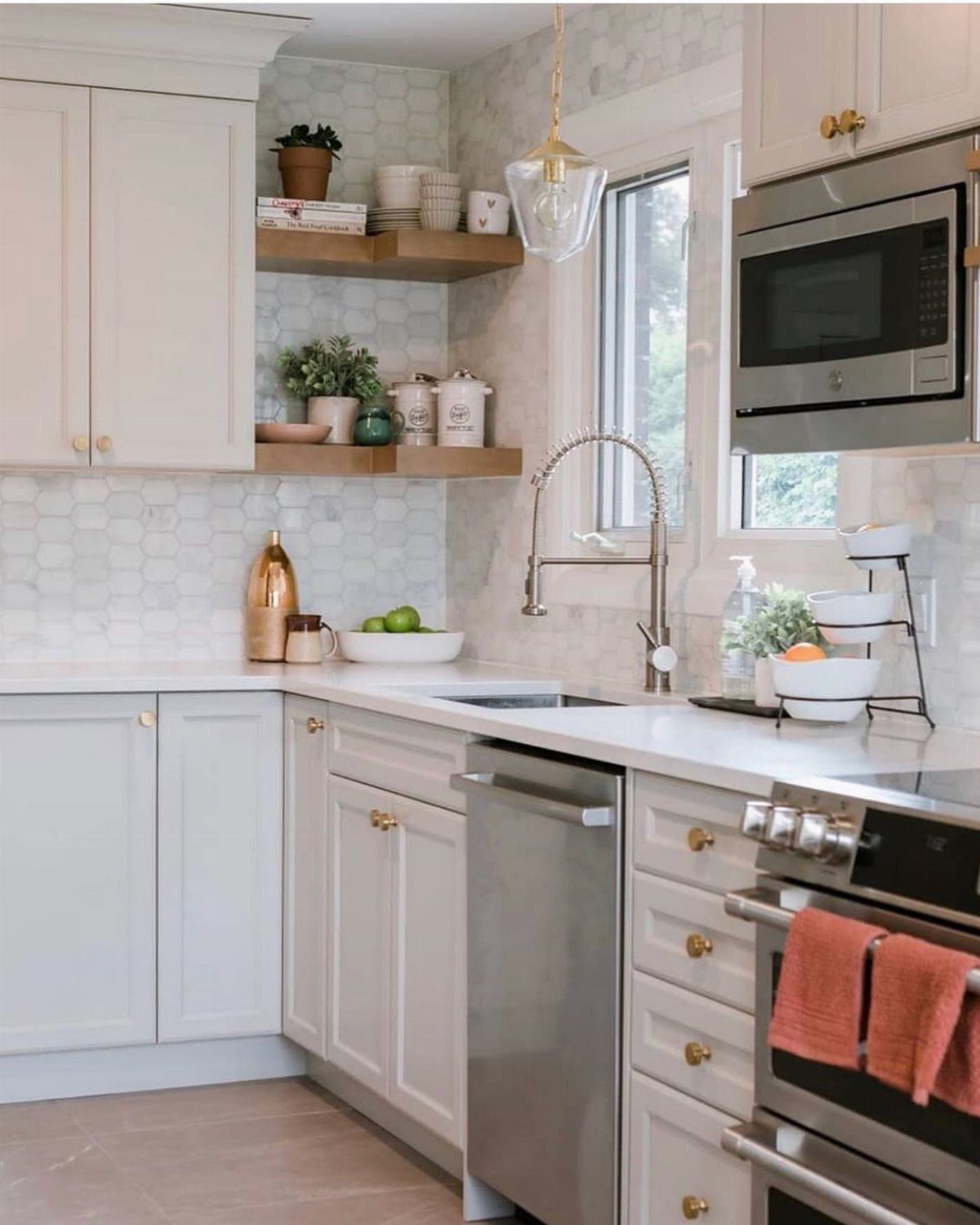
Clear glass keeps a small kitchen from feeling cluttered, and that matters when your sink sits under floating shelves that already draw the eye. The shade disappears; the bulb becomes the feature.
I like this setup for kitchens with mixed materials, wood and marble and metal all in one view, because glass does not compete. What I do not like is a bare Edison bulb glaring at eye level.
Choose a frosted or dim filament bulb, or put this on a dimmer switch if your house wiring allows it. Clear glass catches light beautifully, but it also shows every water spot and grease fleck.
A glass pendant directly above a sink will need wiping more often than one over an island; accept that or choose seeded glass that hides fingerprints better.
3. Brass Wall Sconces Over Window
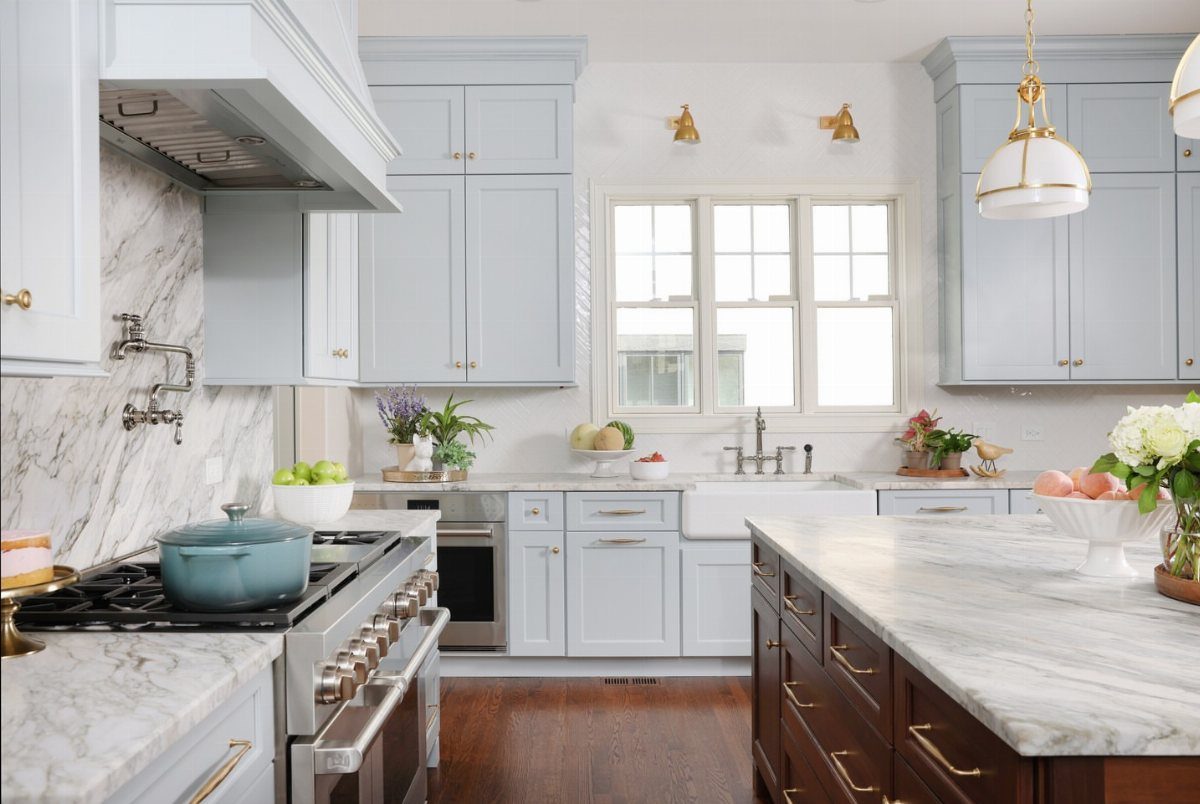
2 small brass sconces above the window frame the sink from either side instead of hanging dead center, and that changes how the whole wall reads.
I would pick this for anyone whose ceiling box is off-center or whose window molding makes a pendant look awkward.
Wiring is the hard part with sconces over a window. Most kitchen windows do not have boxes above the frame, so this usually means running cable through the wall or using a plug-in kit with cord channels.
Plug-in is faster and cheaper, but the cord is visible unless you paint it to match the wall.
For actual task lighting, aim the sconces downward or choose a design with a shade that directs light; upward wash looks pretty but leaves you squinting at dishes.
I think this works best with a single basin sink where one person stands in the middle. A double basin splits the work zone, and 2 sconces centered on the window may light neither bowl evenly.
Choosing the Right Bulb
I always start with the Kelvin number when someone asks me which bulb to buy, because the color temperature changes how the whole kitchen feels at night.
Soft white at 2700-3000K is what I would pick if the sink light is mainly for mood, maybe in a kitchen that already has strong undercabinet task lighting.
3000K is the safer default for most kitchens; it is bright enough to work by without the clinical edge of higher Kelvin ratings.
Bright white at 4000-5000K is what I would use only if the sink is where you do real prep work and the overhead lighting is your main source.
I do not like daylight bulbs above a sink unless you are using that spot for makeup or detailed craft work.
The blue tone flattens food colors and makes a warm wood cabinet look ashy. Whatever you choose, buy one bulb first and live with it for an evening before you commit to a whole pack.
Installation Tips
Ceiling height is the first thing I check before recommending any pendant. A fixture on a 59-inch adjustable cord gives you room to work with, but that only helps if you actually adjust it.
I hang sink pendants low enough to put light on the basin, never so low that the shade blocks your sight line to the window or collides with the faucet when you lean in.
A dimmer switch earns its place for the small extra cost and the minor wiring it takes, in my opinion. Full brightness for scrubbing pots, low and warm for a glass of wine at midnight.
The included hardware in most pendant kits is adequate for a standard junction box, but I replace the cheap crossbar if the fixture has real heft to it.
For a plug-in sconce, cord channels painted to match the wall are the cleanest solution I have found short of opening the plaster.
Design Considerations
Pendants over a sink compete with whatever is on that wall, so I look at the whole composition before I pick one.
A window with thick molding or a shelf with daily-use items already has enough visual weight; a clear or white fixture keeps the peace.
Brass or black metal makes more sense when the wall is plain and the light is meant to be the accent.
Flush mount fixtures are what I suggest when the ceiling is low or the window is tall enough that a drop pendant would sit awkwardly mid-pane.
Flush mounts give up some of the drama and the directed light a pendant offers, though some kitchens call for that restraint.
I think of sink lighting as part of the kitchen’s larger lighting plan, not a solo decision. If your island has bold pendants, the sink fixture should probably quiet down.
If the rest of the kitchen is understated, the sink is where you can afford one interesting shape or material. Balance matters more than matching sets.
Frequently Asked Questions
What kind of light goes over a kitchen sink?
Pendant lights, flush mounts, and recessed lighting are the standard choices. A single pendant centered over the basin gives you directed task light for washing dishes and prep work.
Recessed lighting works when you want the ceiling to stay clean and uninterrupted. Flush mounts are my pick for low ceilings where a dropped fixture would sit awkwardly.
How far should a pendant light hang over a sink?
I aim for about 30–40 inches from the countertop to the bottom of the shade, which puts the light close enough to matter but not so close that it gets in the way.
A farmhouse sink changes that math because the apron adds extra height, so measure from the basin itself, not the cabinet top.
What is the rule for pendant lighting over a kitchen island?
Task lighting comes first: if the sink sits on the island, the pendant is there to light the work, not just decorate the room.
Hang it low enough to put light on the basin, and treat it as part of the island’s larger lighting plan rather than a solo statement.
Vaulted ceilings give you more vertical room to work with, but the same height rules apply to where the light actually lands.