These modern farmhouse dining room ideas run from a neutral color palette to exposed wooden ceiling beams, and the right pick depends on whether your room needs to solve a layout problem or just needs warmth.
A banquette fixes a narrow footprint where chairs cannot pull back; faux beams add character when the budget cannot handle real structural work.
The detail that stops most people is the light temperature: 2700K bulbs, not daylight, are what make cream upholstery and wood grain look intentional after dark.
1. Neutral Color Palette
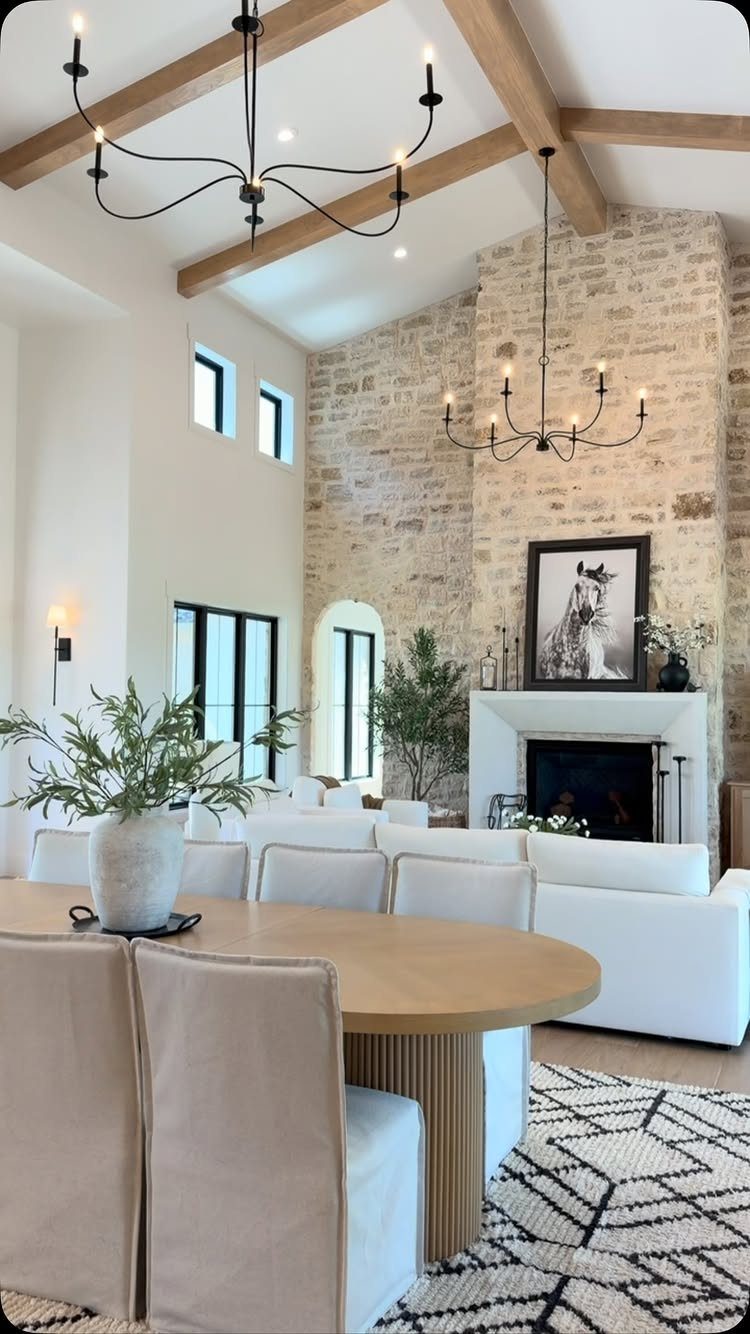
A neutral palette in a modern farmhouse dining room starts with cream, warm white, and the palest gray, not stark white against raw wood.
What I watch for is undertone: the stone fireplace in the adjoining space sets the temperature, and the dining chairs need to match it.
If the fireplace reads cool, cream upholstery turns muddy. Check the light at the hour you actually use the room; north-facing rooms need more warmth than this idea usually allows.
2. Oversized Dining Table
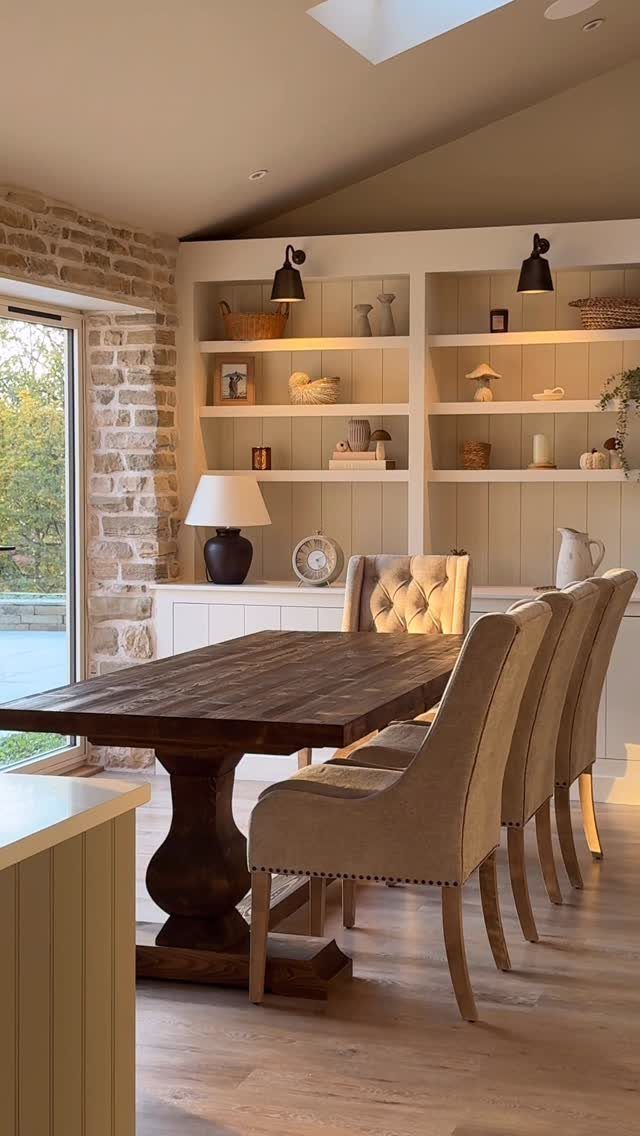
An oversized table only works when the room can absorb it without turning circulation into an obstacle course.
I leave enough space on every side where someone needs to pass behind a seated guest; more if the chair backs to a wall.
A pedestal base helps, since legs at the corners steal knee room and walking space at once. Before committing, tape out the footprint on your floor and live with it for a day.
3. Wooden Tables and Chairs
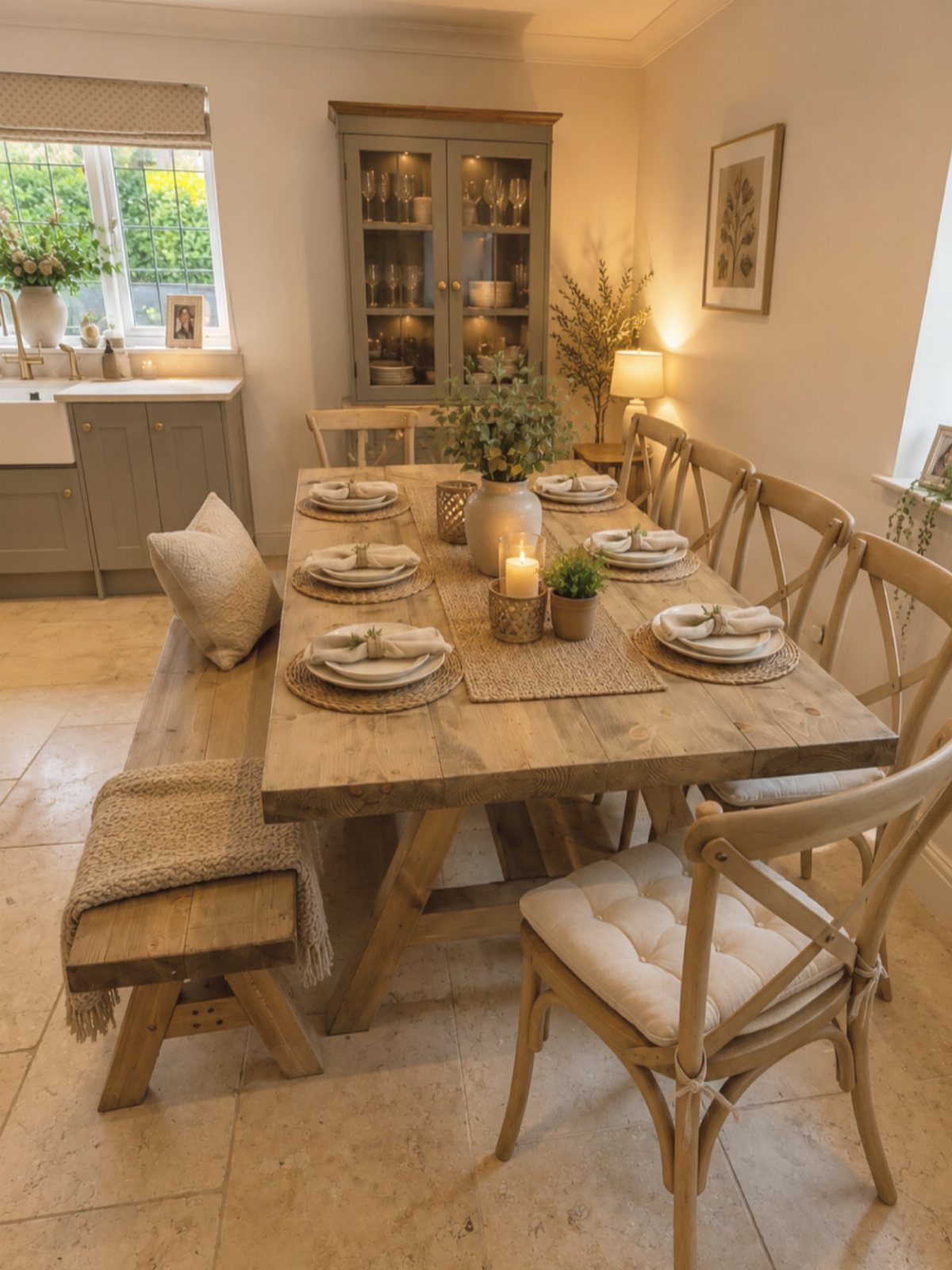
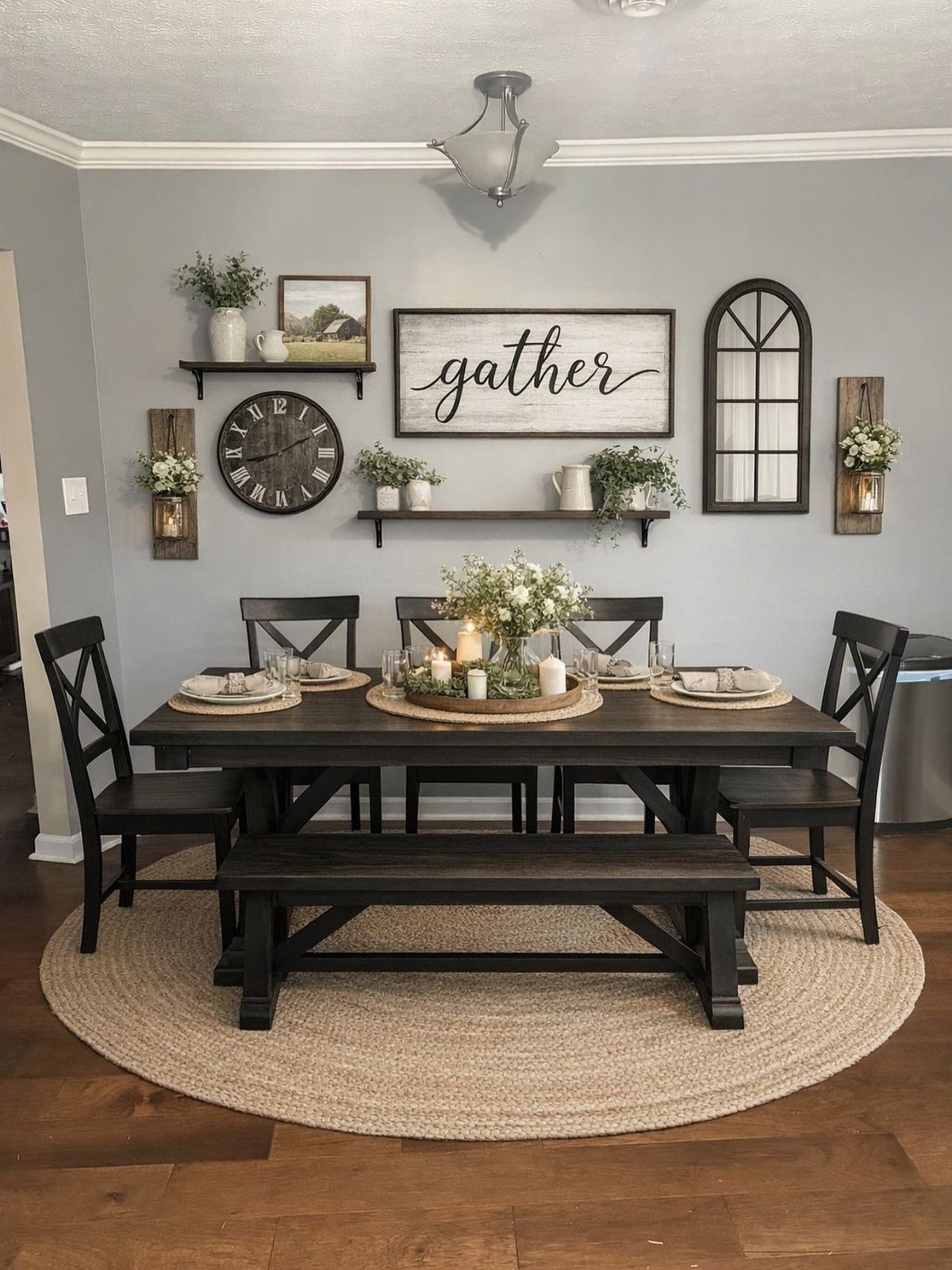
Trestle tables with matching cross-back chairs signal modern farmhouse faster than almost any other combination, but the wood finish decides whether it reads rustic or refined.
I lean toward medium tones with visible grain rather than heavy distressing, which starts looking costume after a year or two.
A bench on one side keeps the set flexible for extra guests; just know that anyone sitting in the middle has no back support and will migrate to a chair by dessert.
4. Upholstered Chairs
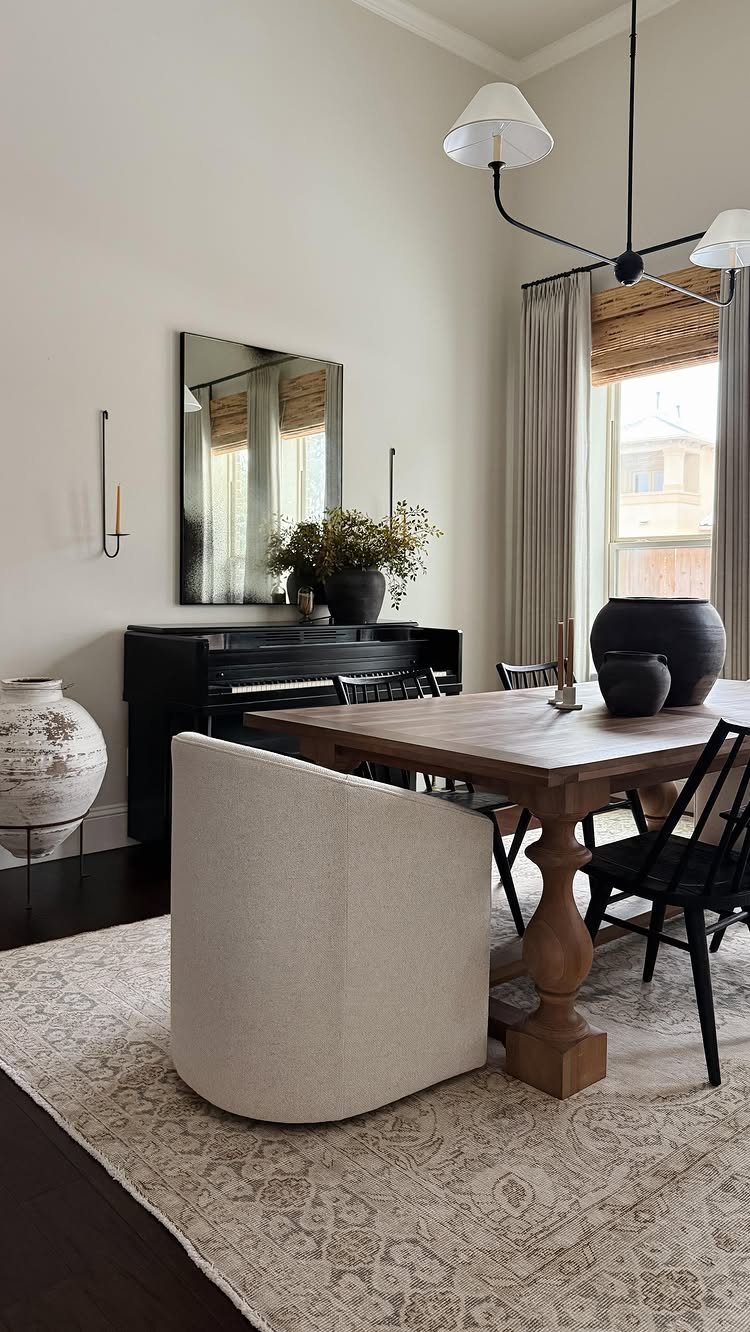
Upholstered chairs at the head of a farmhouse table soften the room’s geometry without breaking the style. Black spindle chairs on the sides keep the visual weight lighter and cost less per piece.
The fabric matters more than the frame here: a tight weave in a color slightly lighter than the wall survives actual meals better than anything labeled "linen look."
5. Round Table
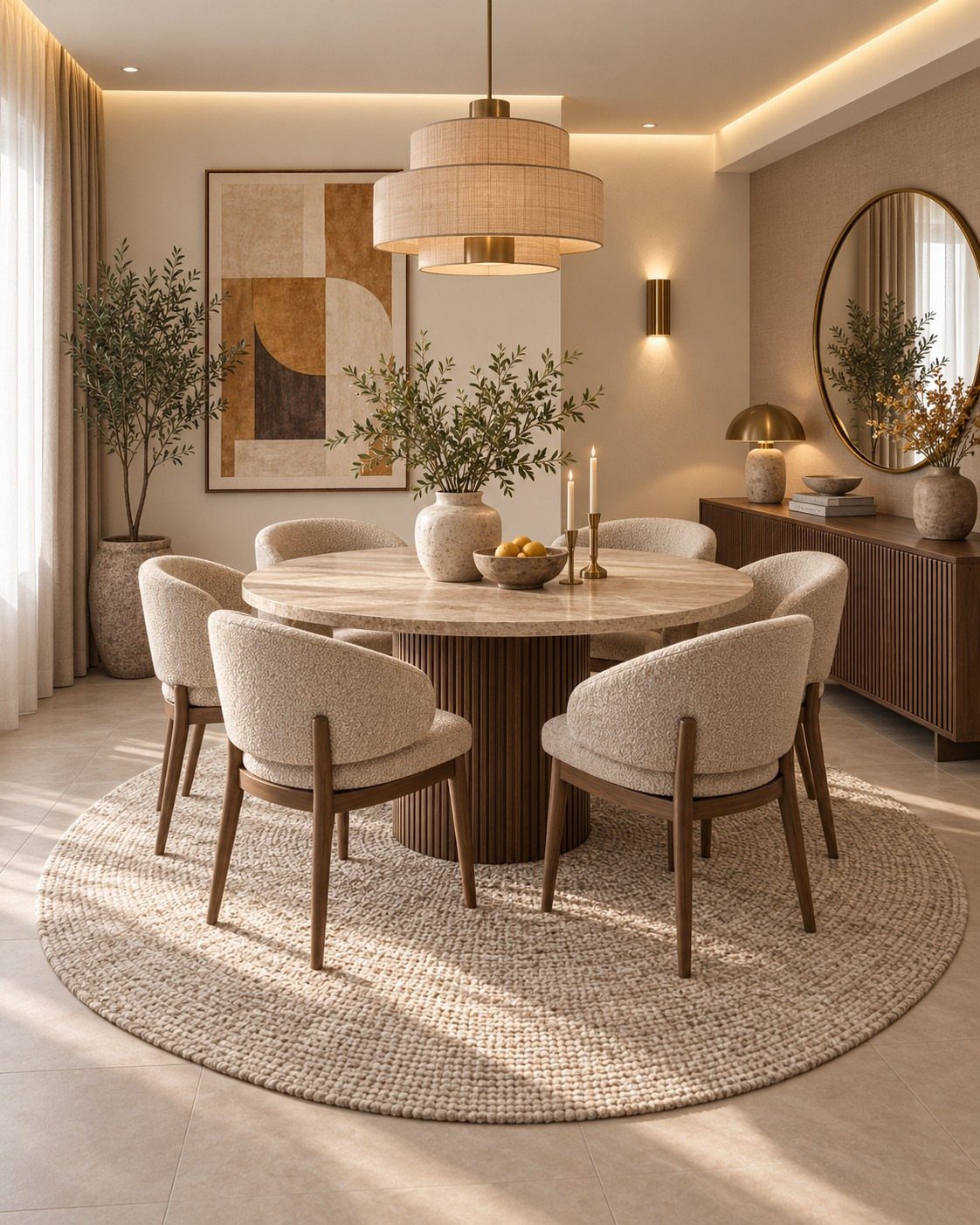
Round tables suit square rooms and tight corners where a rectangle would block flow. A fluted base adds detail without clutter, but I would check stability before buying any pedestal design; a wobbly round table is useless.
A round table seats fewer people than its diameter suggests, and the circular rug underneath needs to extend well beyond the table edge on all sides so chairs stay on it when pulled out.
Measure your room against that total diameter before falling for the shape.
6. Eye-catching Light Fixtures
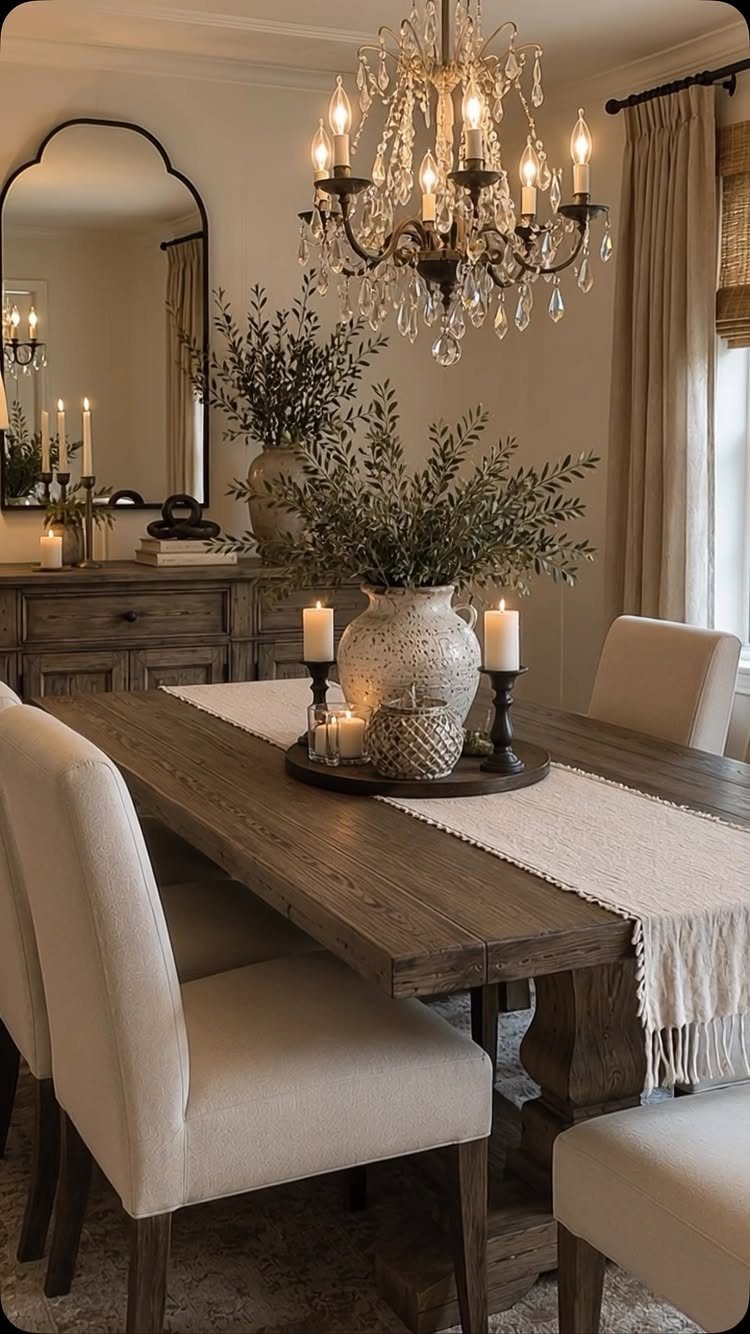
A crystal chandelier over a farmhouse table works when the fixture has enough weight to hold its own against heavy wood.
I look for scale first: the bottom of the chandelier should sit low enough above the table surface to cast useful light, and the width at least half the table’s width, never too much narrower on each side.
The maker of this piece suggests checking several room elements before buying any décor; I would add one more, which is whether your ceiling box is centered to the table or to the room.
An electrician visit beats living with a fixture that drifts off-center forever.
7. Banquette Seating
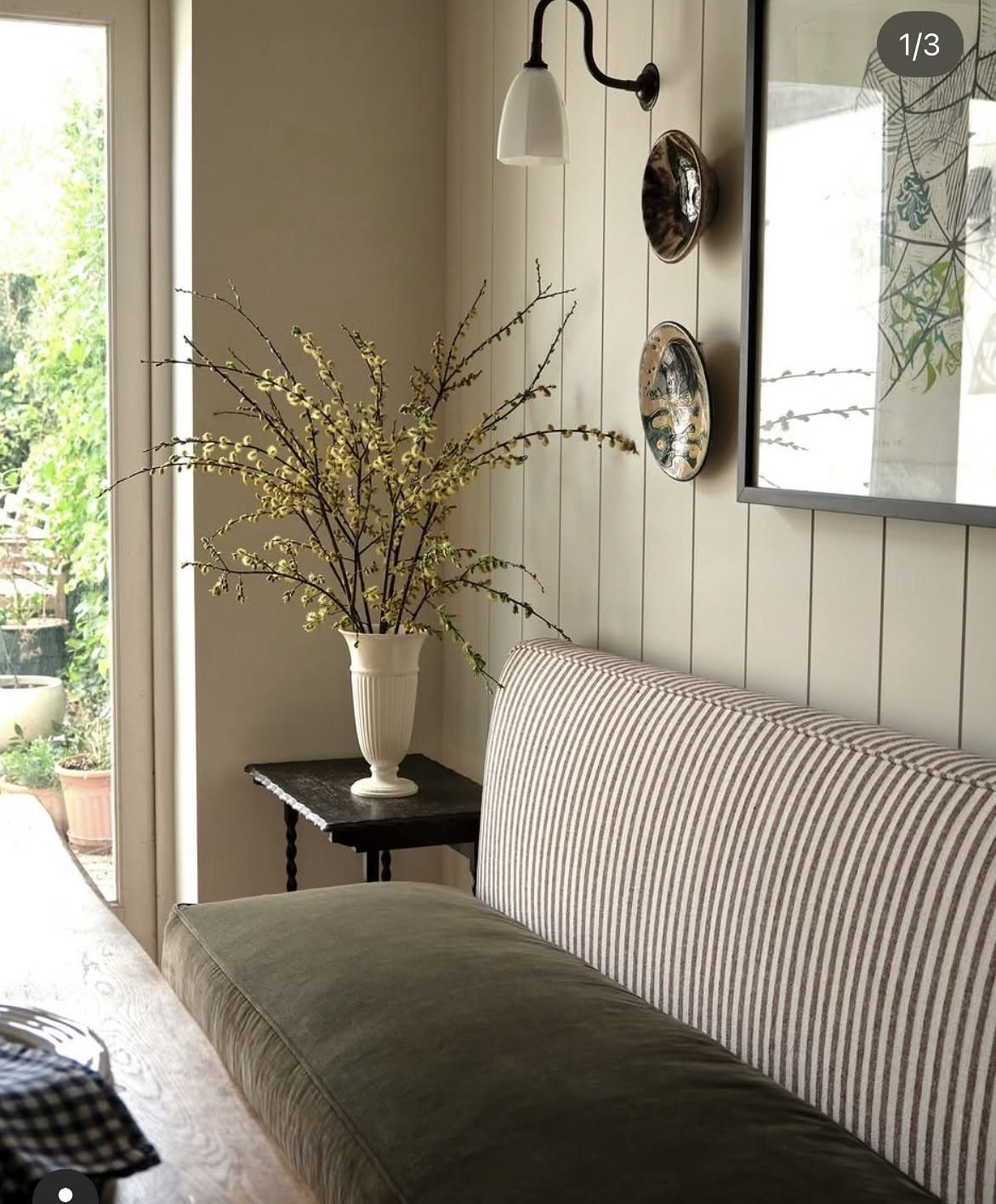
Banquette seating turns a wall into usable dining space and works especially well in rooms too narrow for chairs pulled out on every side.
I would check cushion depth before ordering: a deep cushion means your table needs to be wider than standard or knees hit the apron.
The gray upholstery reads practical for a space that sees daily use, though light stripes will show wear faster at the entry point where people slide in.
A banquette fixed to the wall saves walkway compared to a chair that needs clearance behind it.
8. Chic Wallpaper
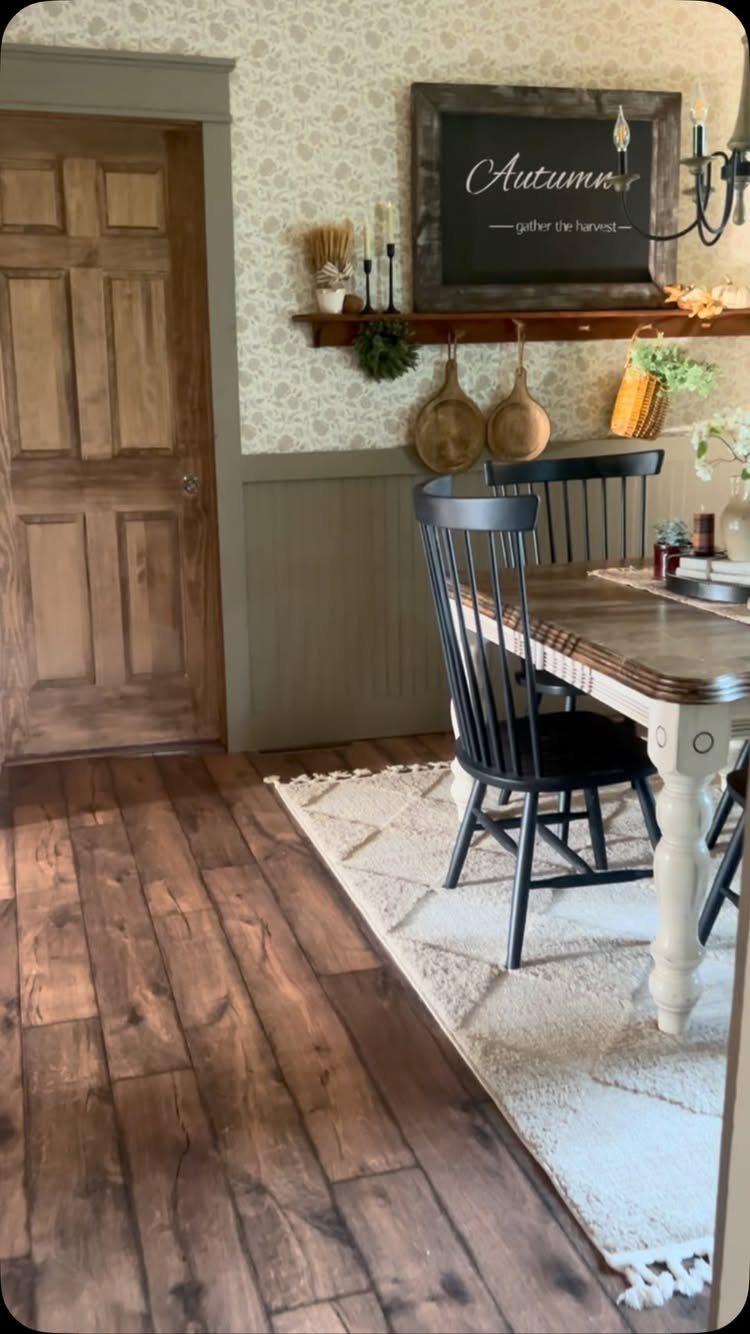
Patterned wallpaper above wainscoting gives a dining room its personality without demanding new furniture. The scale of the pattern matters more than the motif: in a room with standard ceilings, I keep the repeat small so it does not overwhelm.
Black chairs and wood flooring ground a busy pattern instead of fighting it. Wainscoting below protects the wall from chair backs and scuffs, which matters if you actually use the room.
I would test a full panel before committing; light changes how a pattern reads, and dining rooms shift from morning dim to evening lamplight.
9. Exposed Wooden Ceiling Beams
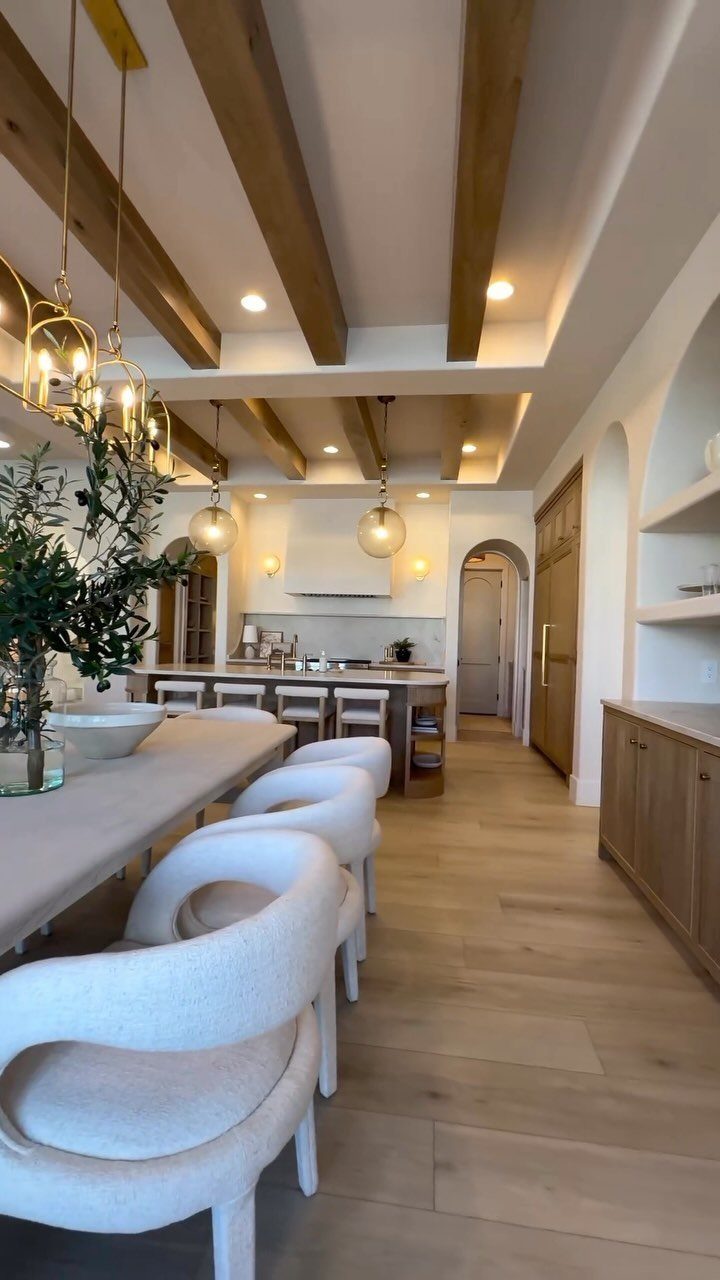
Natural wood beams overhead add warmth that balances the coolness of a light table and white upholstery.
Structural beams, not applied ones, change the budget conversation entirely. Faux beams cost less per piece installed; real structural beams need engineering if you are adding, not exposing.
I would match the wood tone to existing floors or trim, never introduce a third wood species into a room that already has flooring and furniture.
Gold pendants warm the ceiling further, though I prefer them slightly dimmed; bright light on raw wood flattens the grain that makes beams worth showing.
10. Oval Dining Table Setup
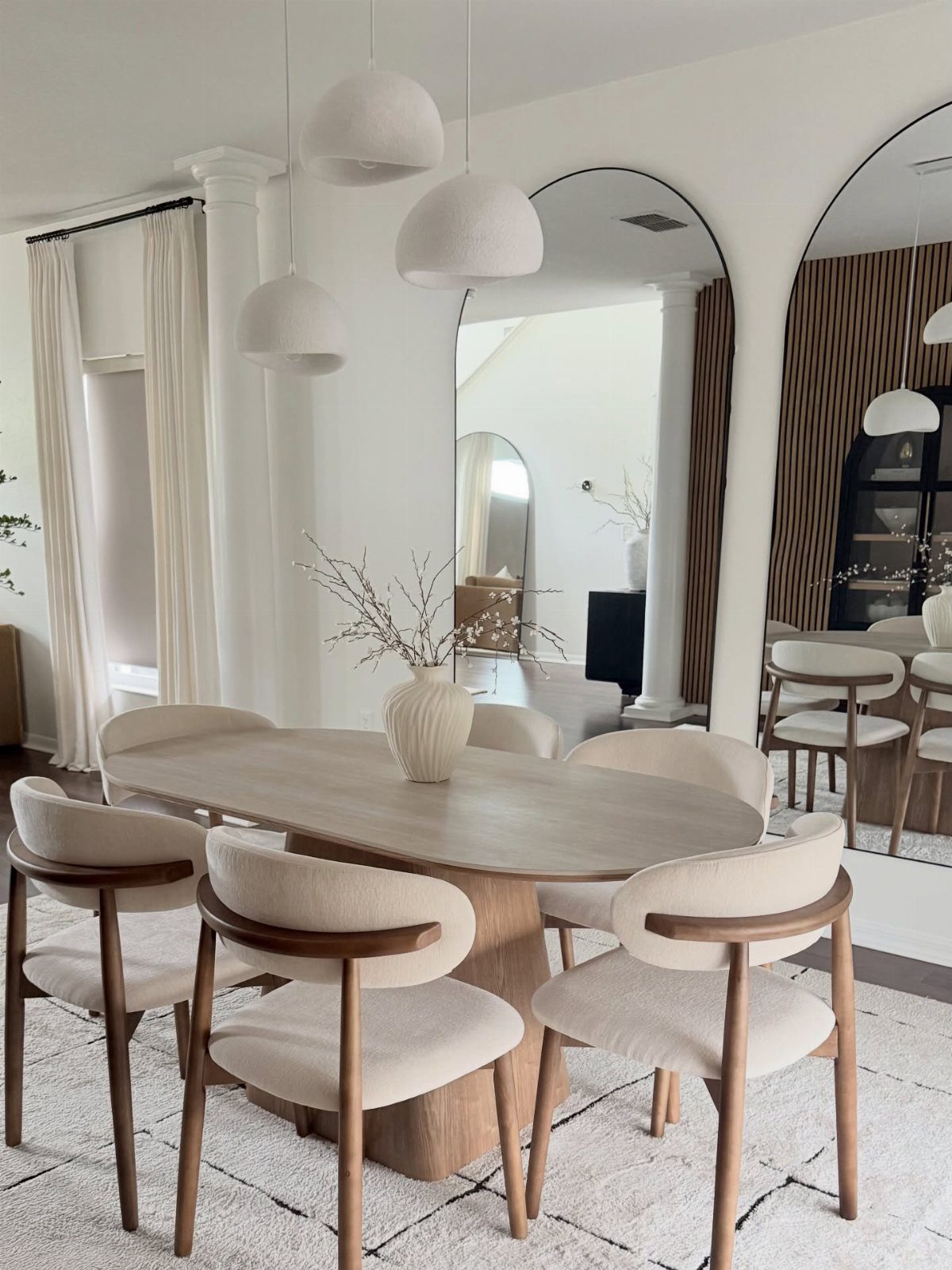
An oval table keeps the sociable shape of a round table while seating more people along its length.
Curved cream chairs echo an oval table’s lines and soften the whole room; straight-backed chairs would fight it. I would allow clearance from table edge to wall or drapery, since the oval has no corners to tuck into.
Pendants above an oval table need to follow the table’s length, not the room’s center, so mark placement before the electrician drills.
Arched mirrors behind reflect light but also every crumb; placement opposite a window helps more than opposite the kitchen pass.
Importance of Lighting
Warm light changes how every surface in a dining room reads after dark, which is when most people actually use the space.
I would skip anything labeled "daylight" or above 3000K; bulbs in the 2700K range cast the amber tone that makes wood grain and cream upholstery look intentional instead of washed out.
A brass fixture with glass bulbs adds enough polish to keep a rustic table from feeling like a set piece.
An electrician can move it, or you can choose a fixture with enough chain or rod to swag it into position.
I would test the bulb color at night before buying a dozen; what reads warm in the store aisle often turns harsher at home.
Creating a Welcoming Atmosphere
Modern farmhouse works best when the room does not fight its own purpose. I leave more space between pieces than the floor plan suggests, because farmhouse furniture tends to read heavier than sleeker styles and needs room to breathe.
Natural light helps, but the layout matters more: a path from kitchen to table to exit that does not require squeezing past a chair back.
The welcoming quality comes from use, not styling. A dining room that looks ready for a magazine shoot usually feels too precious to actually eat in.
I would rather see a table with the slight wear of regular meals and a centerpiece that moves when you need space for takeout containers.
The balance between contemporary and rustic is not a formula; it is the point where you stop adding and the room still functions.
Mixing Styles
Mixing modern and farmhouse only works when you know which element is doing which job.
In my experience, the modern pieces should handle the function and the farmhouse pieces supply the warmth. A contemporary light fixture with clean lines gives you task lighting; a distressed wood table gives you texture and history.
Reversing that, putting ornate farmhouse fixtures over a sleek table, tends to look like the styles are arguing. The blend succeeds when one reads as the update and the other as the anchor.
I would start with the largest piece, usually the table, and let it set the temperature. Then each modern addition, whether a pendant or a streamlined chair, has something specific to contrast against.
The common mistake is adding one item from each category and calling it mixed; you need enough of both that the eye recognizes a deliberate ratio, not a compromise.
Frequently Asked Questions
Is modern farmhouse still in style?
Yes, modern farmhouse is still in style, though it has shifted toward cleaner lines and moodier palettes than the earlier, more distressed version.
The warmth and inviting quality that made it popular remains, but the look has evolved to feel less like a set piece and more lived-in.
I see the best current versions mixing in updated textures and sculptural lighting rather than piling on rustic clichés.
What is cozy farmhouse style?
Cozy farmhouse style centers on warmth, comfort, and materials that feel grounded rather than polished. Natural wood, neutral palettes, and soft lighting do most of the work; the comfort comes from use, not styling.
In a dining room, that means a table that shows slight wear from regular meals and seating that invites people to stay past dessert.
What can you do instead of a dining room?
A banquette built along a wall turns a narrow space into a dining area without needing a separate room, which I suggest when the layout cannot fit chairs on every side.
A kitchenette with a small table or a compact oval setup in a corner can also serve daily meals without dedicating square footage to a full dining room.
How should I stage my dining table for an open house?
Keep the table simple enough that buyers can picture their own lives there, not so styled that it feels like a display. A centerpiece that moves easily signals the room is meant for actual meals, not just photographs.