These ideas stretch from an afternoon with a paintbrush to a full furniture swap, and the one that fits your room depends on whether you are dressing what you already own or starting from an empty floor plan.
A red marble oval table demands clearance on all sides for chairs to slide back, and that footprint alone rules it out for some dining rooms before the look ever gets discussed.
1. Bold Dining Table
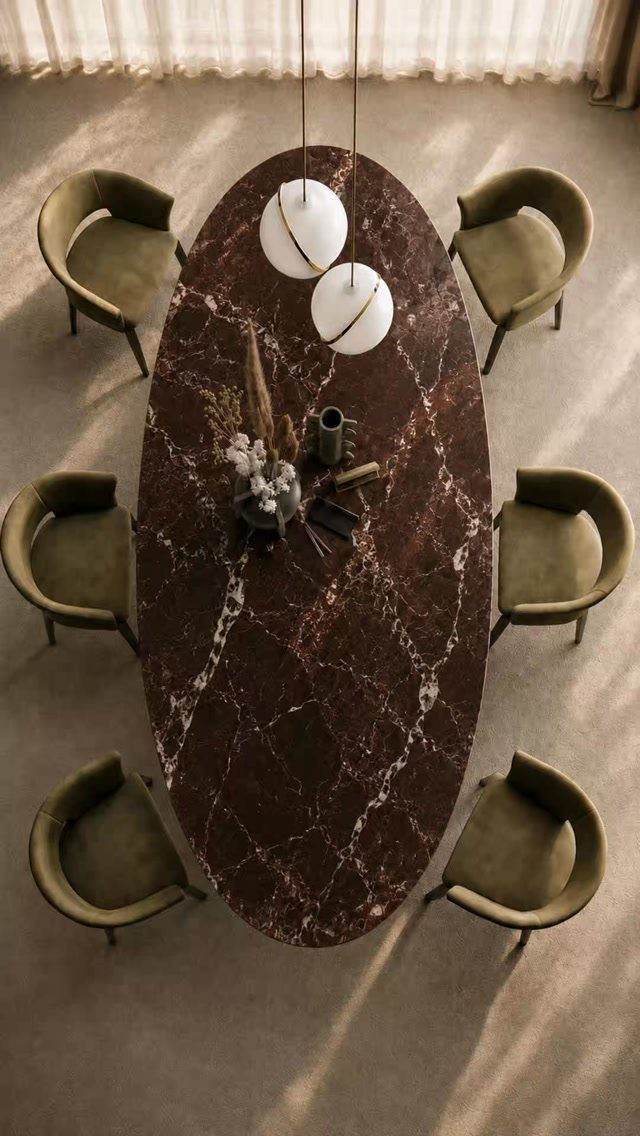
A bold dining table works when the room has enough floor area to let it breathe. A red marble oval table needs generous clearance on every side for chairs to slide back comfortably.
I would check ceiling height before ordering; a substantial surface reads heavier in a room with low ceilings. The green upholstery paired with it works because the saturation is close to equal, neither piece shouting past the other.
2. Large Lighting Fixtures
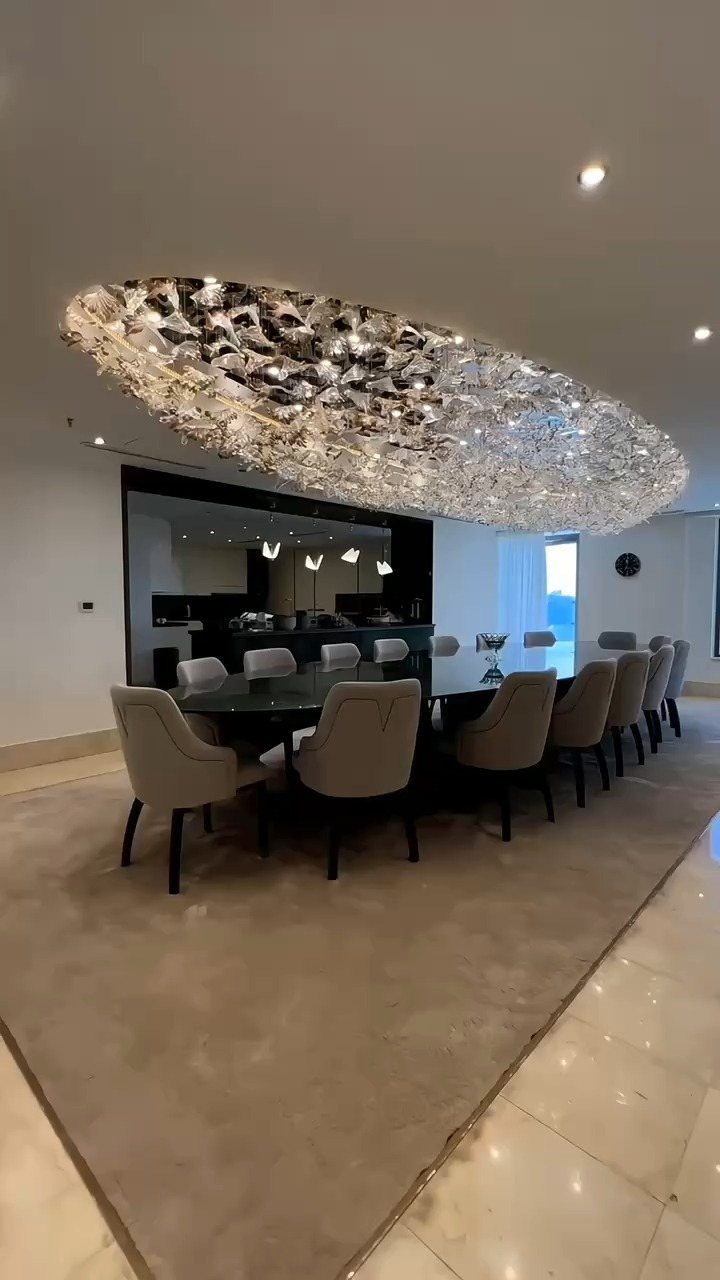
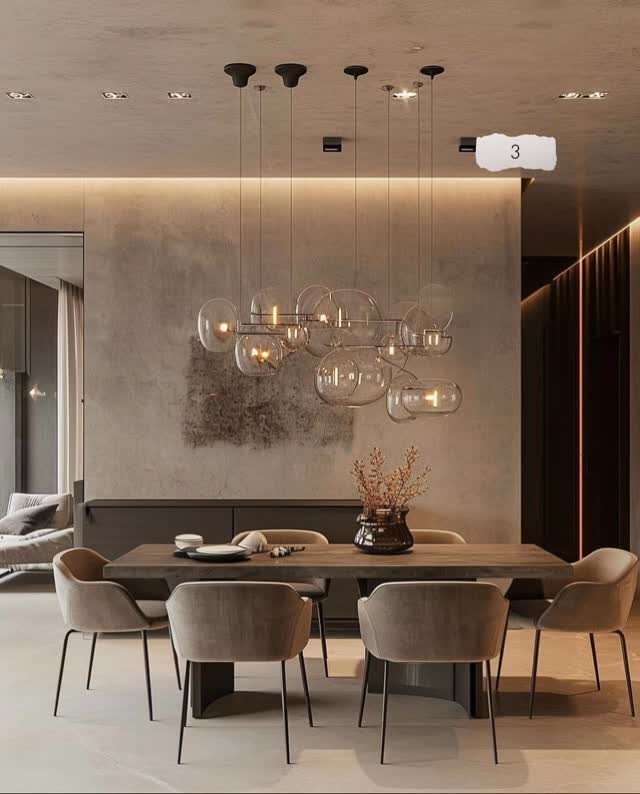
Oval glass chandeliers throw light in all directions without the visual weight of solid metal. The scale is what makes it: this one spans most of the table length, which I think is the minimum worth attempting.
Anything smaller reads like a mistake in proportion. A maker with 18 years in production notes that factory-direct pricing cuts cost by roughly 30% against retail showrooms.
I would hang it low enough to anchor the table but high enough that sight lines stay open, and put it on a dimmer. Full brightness at dinner is rarely flattering.
3. Benches for Seating
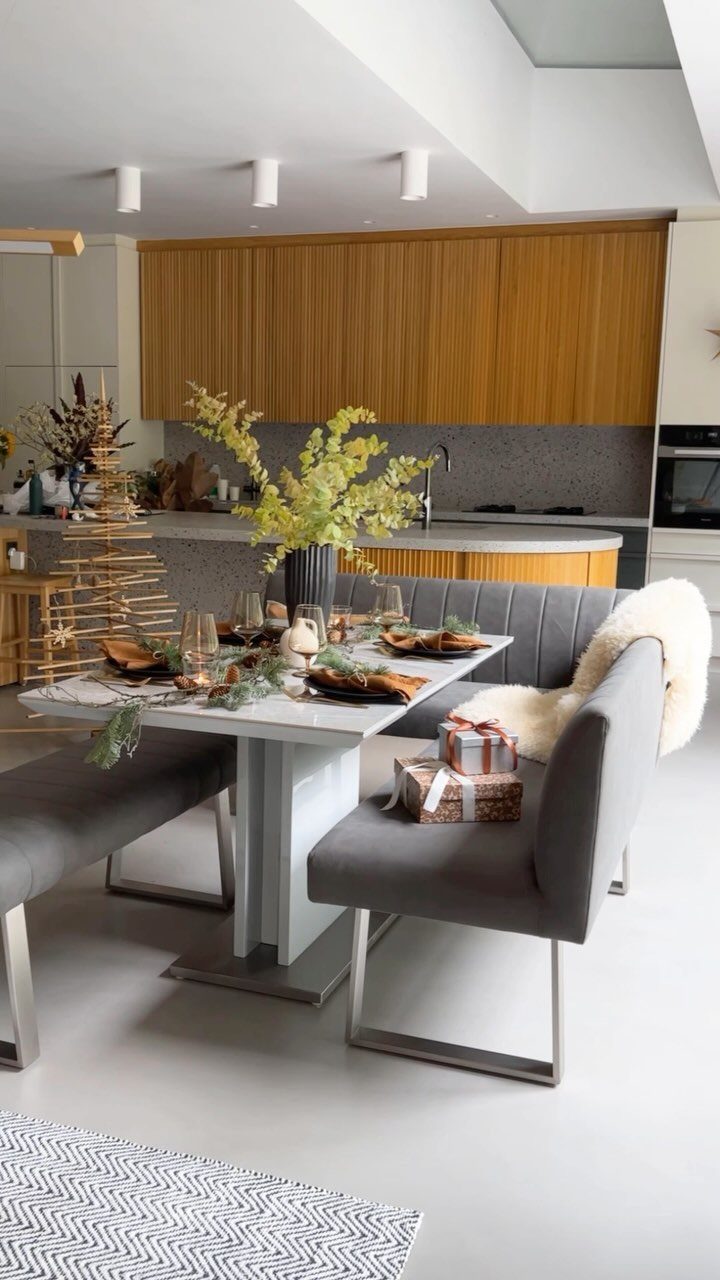
Benches suit households where the headcount shifts; squeeze in an extra body without dragging chairs from another room.
An upholstered bench that runs the table’s full length on one side reads more cohesive than mixing bench and chairs at random. Check the bench depth against your table apron; too deep and knees hit wood.
I would skip benches entirely if anyone at the table has mobility trouble. The low backless kind offers no leverage for standing.
4. Glass Doors
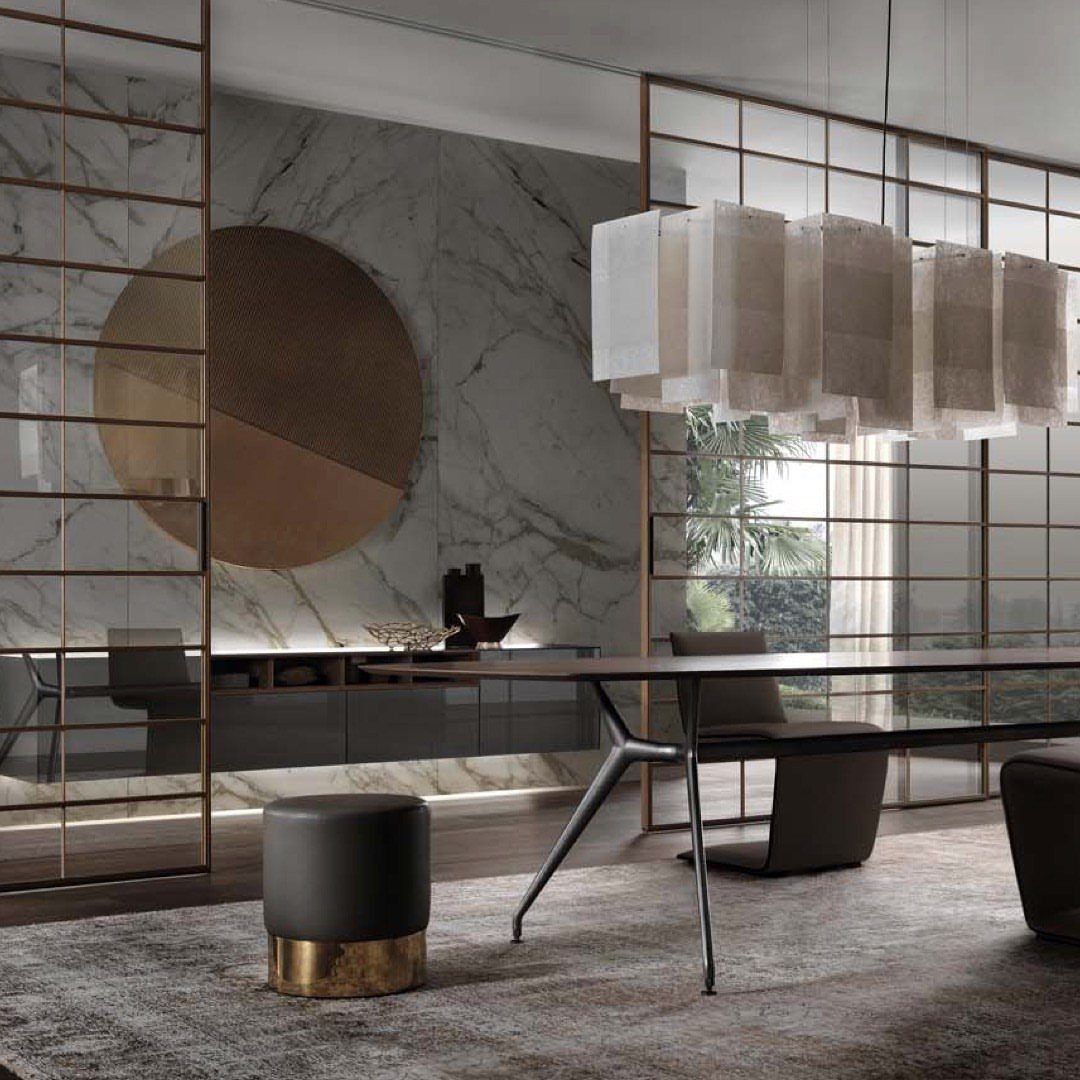
Grid-framed glass doors divide spaces without stealing light.
Bronze metal reads warmer than black and pairs naturally with marble that carries similar undertones. I would verify the track hardware is rated for the panel weight; oversized glass gets heavy fast.
Sound travels through glass, so this is not the choice for a dining room that doubles as a home office during work hours. Privacy film is an option if the grid pattern alone feels too exposed at night.
5. Best Contemporary Dining Room Furniture
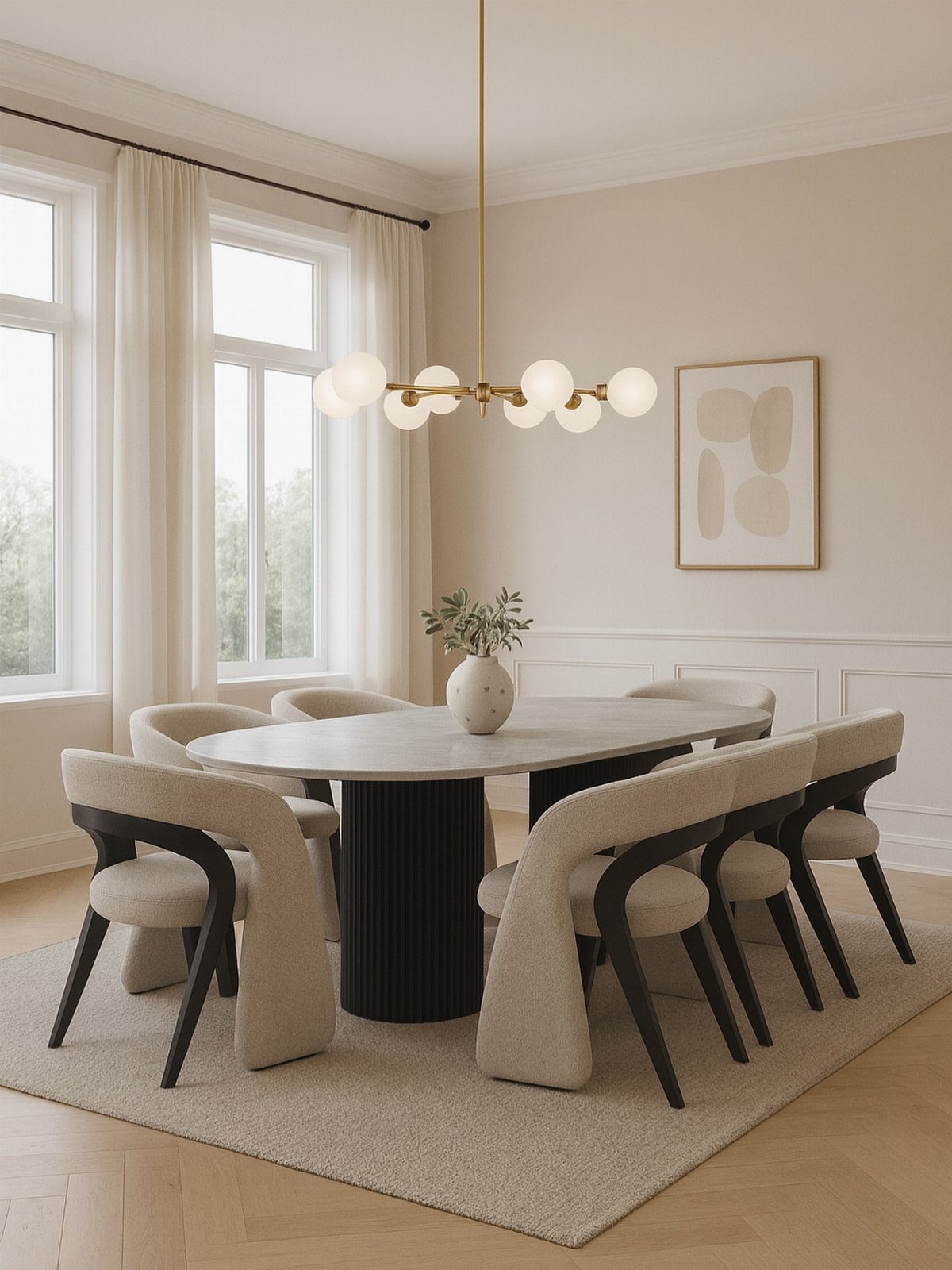
Comfortable contemporary furniture tends toward upholstered seats with some give and backs that hit between shoulder blade and mid-back. A pedestal base leaves legroom flexible; four-legged chairs need more planning around table-base placement.
I would sit in any chair before buying, even online orders, because seat depth varies more than photos suggest. The neutral palette in the room lets the shapes do the work instead of competing for attention.
6. Soothing Earth Tones
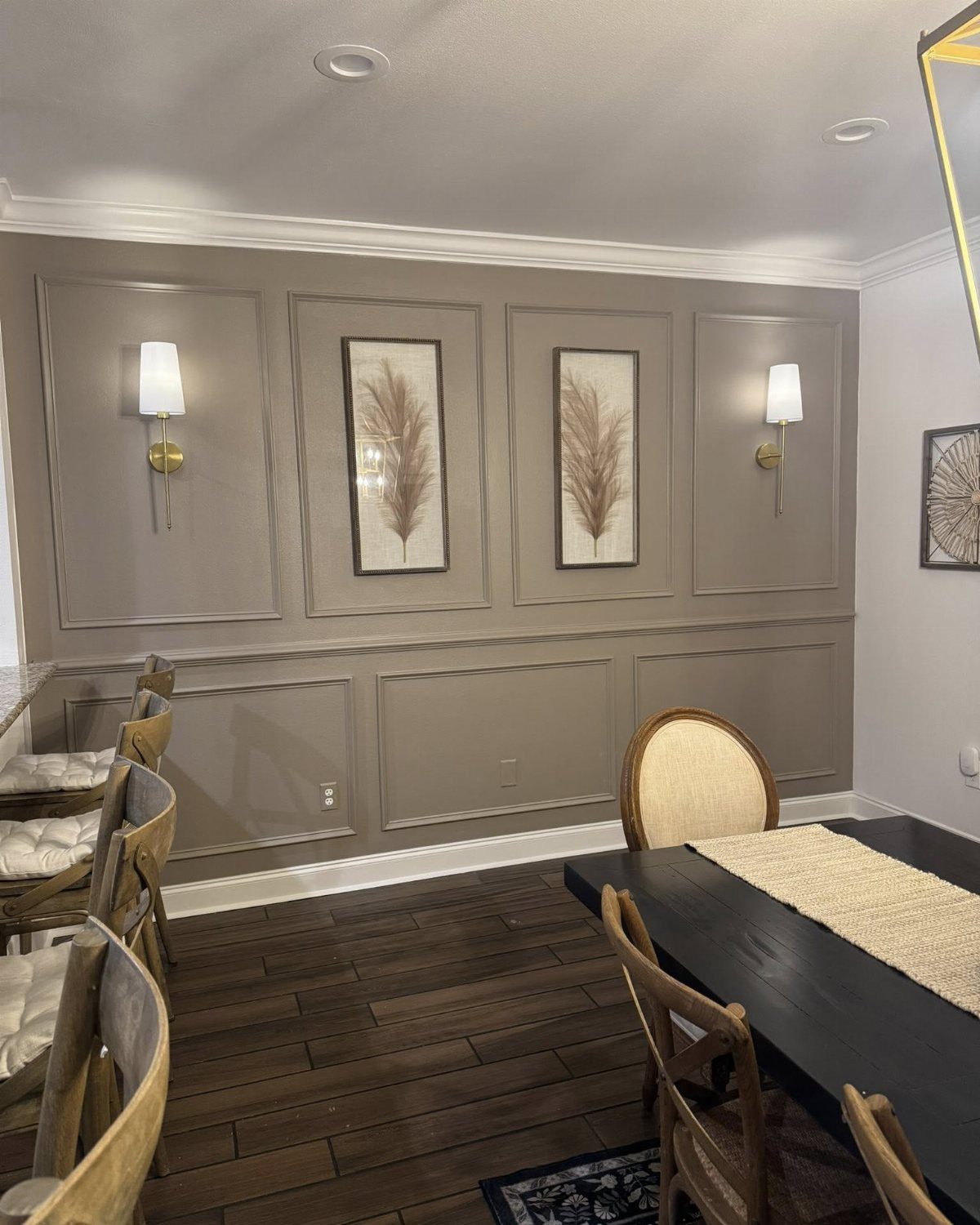
Taupe wainscoting adds texture without the commitment of a strong color.
Picture-frame molding is simple to reproduce with stock trim; I would paint the wall and molding the same tone so the shadow lines read as the detail, not the contrast.
Botanical prints in matching frames keep the rhythm going at eye level.
Wood-look flooring is practical here because earth tones forgive the slight pattern repetition that cheaper vinyl shows. I would test samples at the hour you actually eat dinner; late-afternoon light flatters everything.
7. Neutral Palette
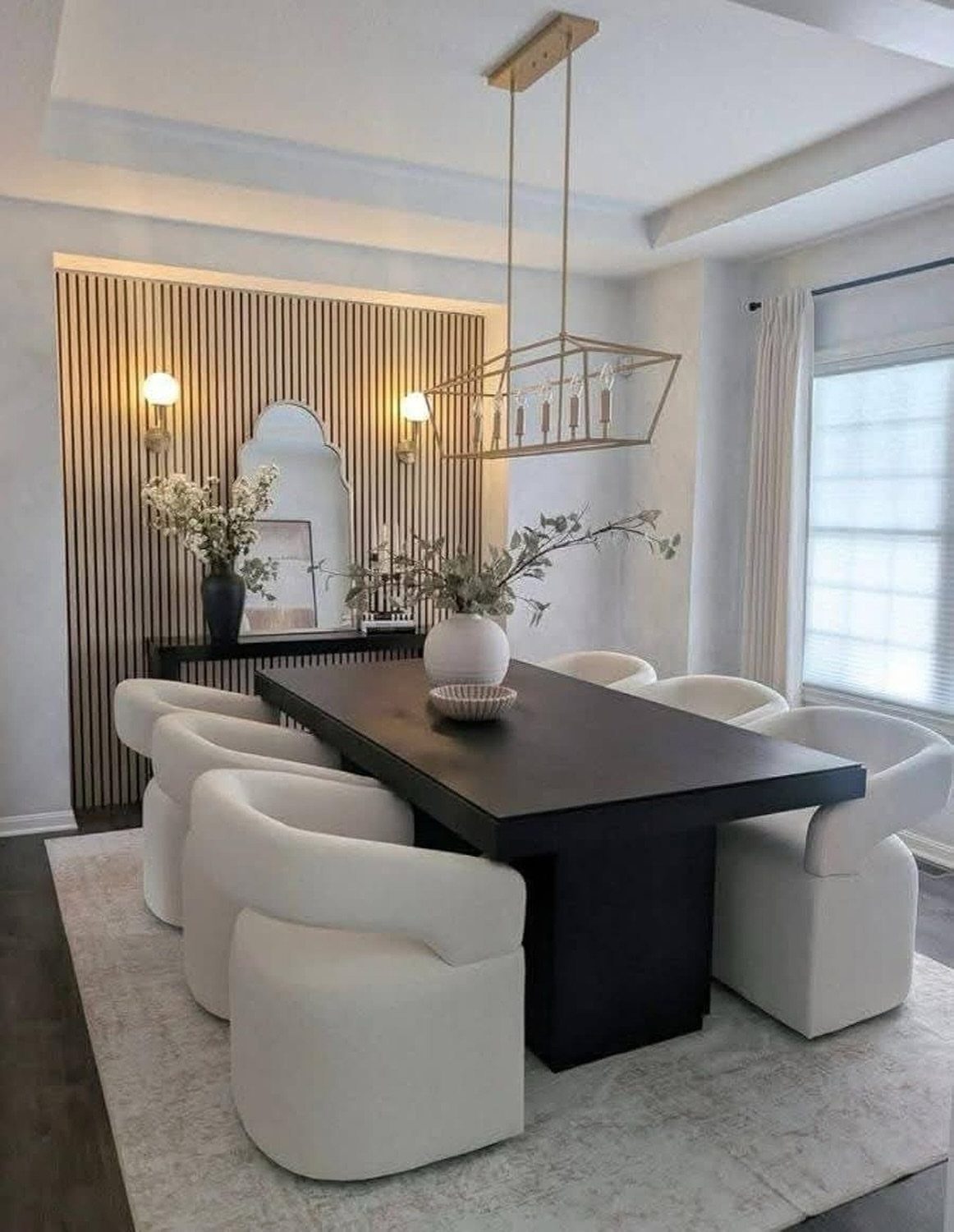
A neutral palette lets the furniture shapes carry the design instead of color doing all the work. The black table against white chairs creates enough contrast without introducing a third hue that would need managing elsewhere.
I would keep the wood tones in a narrow range; the slat wall already adds texture, so varying the oak too widely starts to look accidental rather than layered.
Check that your whites match in undertone, warm against warm or cool against cool, or the chairs and walls will fight in daylight.
8. Large Windows
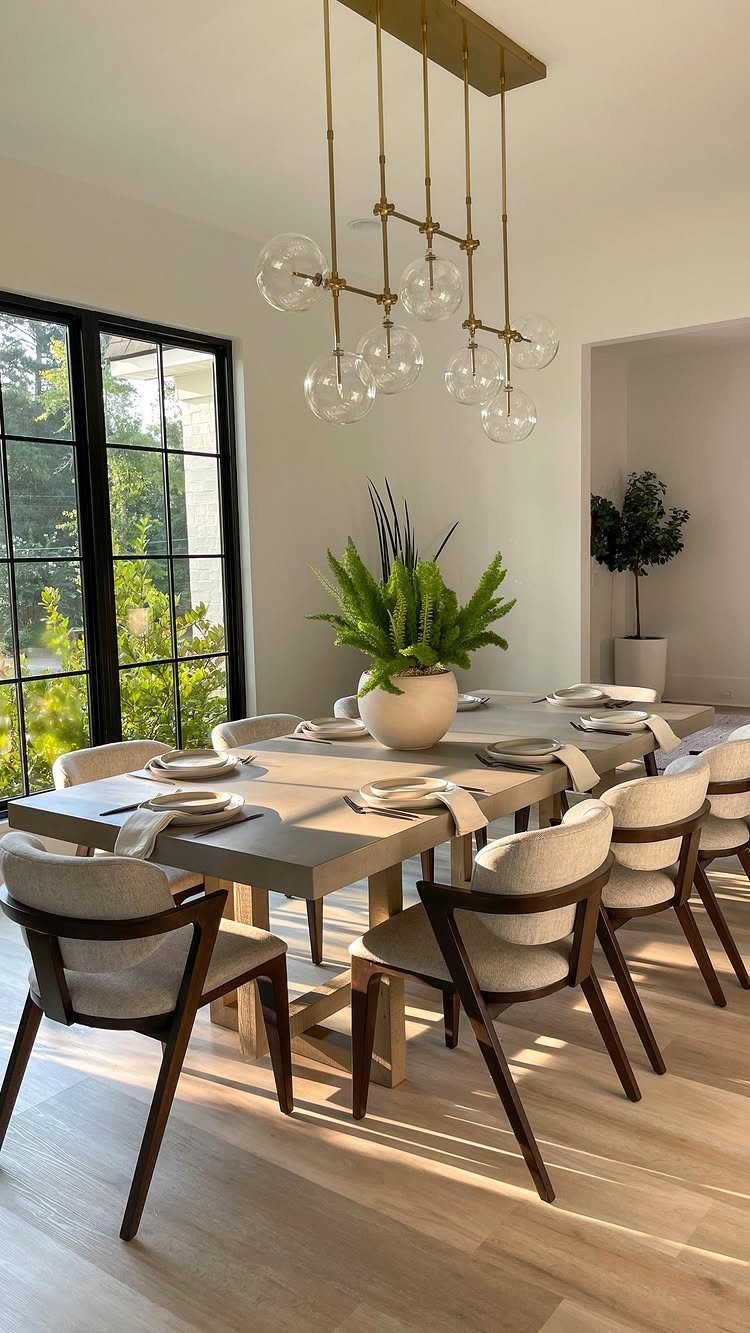
Natural light at this scale changes how paint and upholstery read across the day. Black grid framing gives the window architectural presence without adding a competing color to the room.
I would plan the table placement so the window does not sit directly behind a seated diner; backlighting turns faces into silhouettes in photographs and conversation.
Sheer panels are an option if the afternoon glare makes screens unreadable at the table, though the grid itself breaks up the expanse enough that bare windows usually suffice.
9. Statement Wall Art
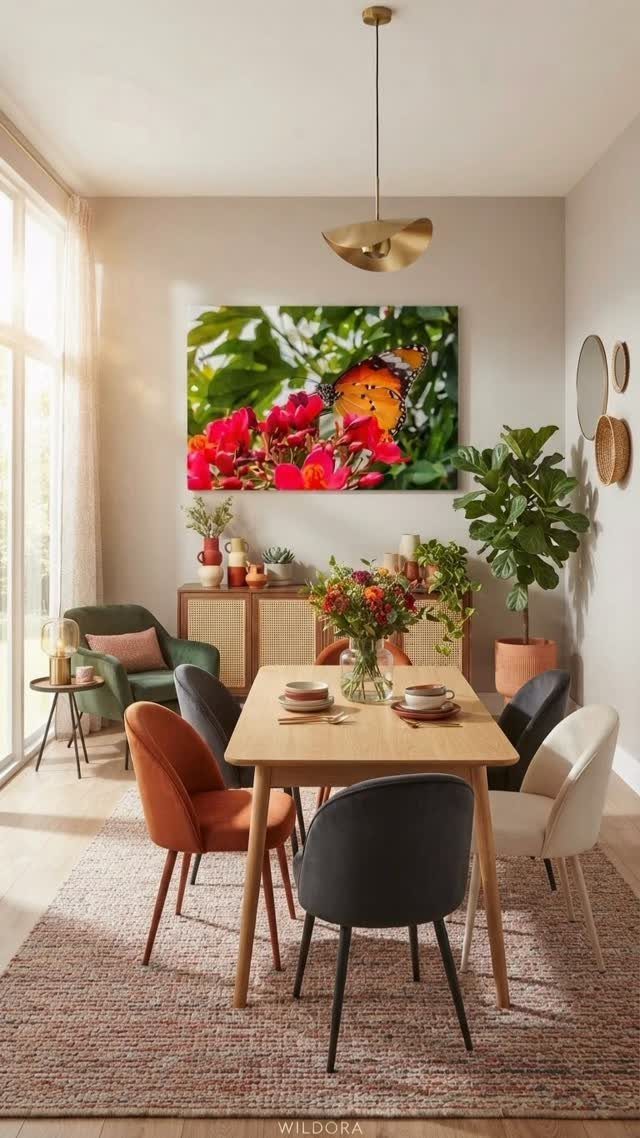
Oversized horizontal art fills the visual gap between chair backs and ceiling without the busyness of a gallery wall.
A single large piece works best when the colors relate to something already in the room; here the velvet chairs pick up tones from the print so the connection feels intentional.
I would measure the wall and aim for art wide enough to feel intentional above the sideboard, centered at a height where the middle sits at average eye level.
A piece that is too small looks like an afterthought, not a choice.
10. Complementary Decor
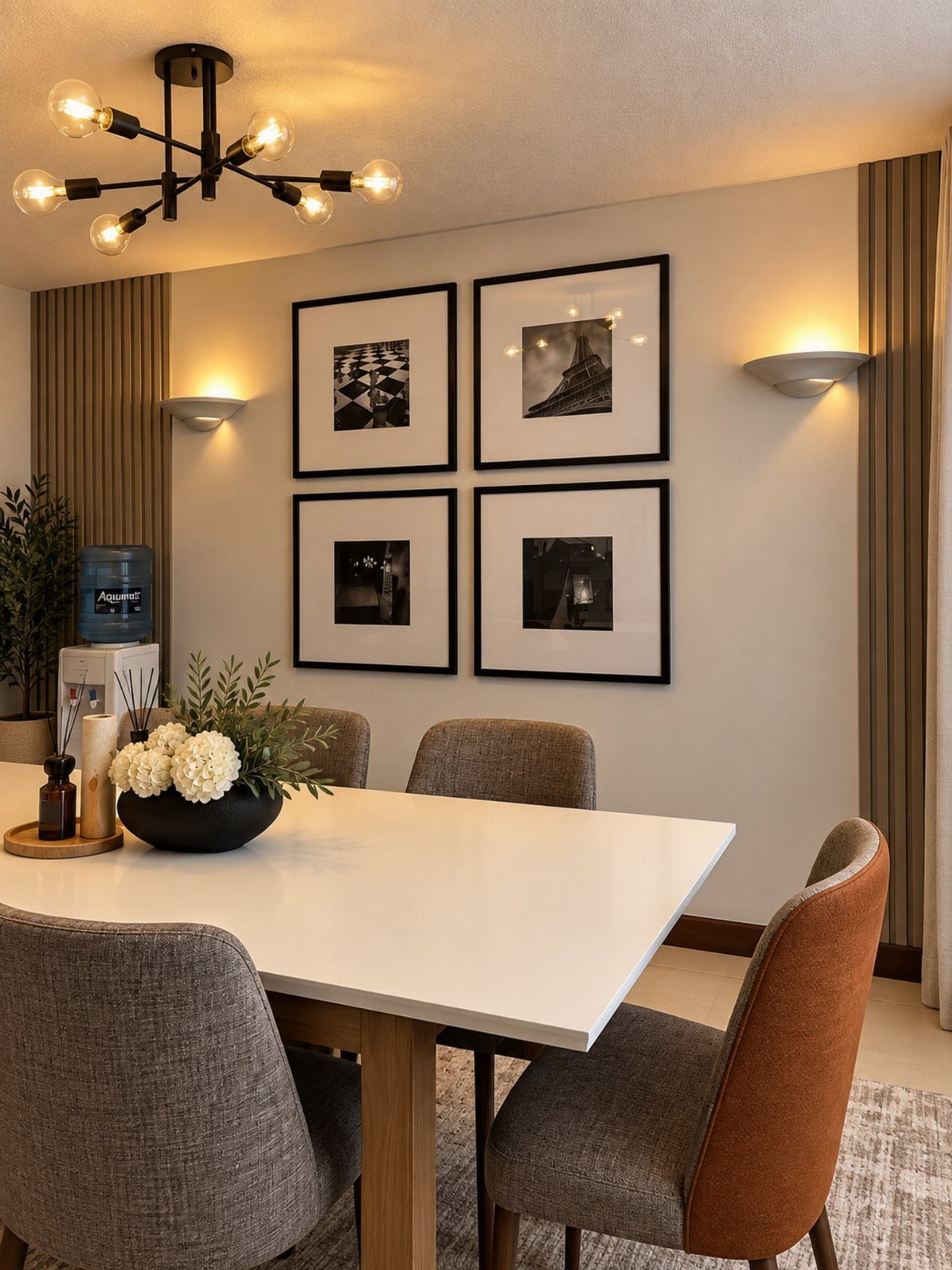
Black-and-white photography repeats the frame color in the light fixture and keeps the eye moving without introducing new hues that would need distributing. I would limit framed pieces to one wall; four is enough pattern in a room this size.
The sconces and chandelier share a finish language, which matters more than matching exactly. Skip the water cooler in the dining zone if possible; it reads utilitarian against the intentional calm of the rest.
11. Open Floor Plan
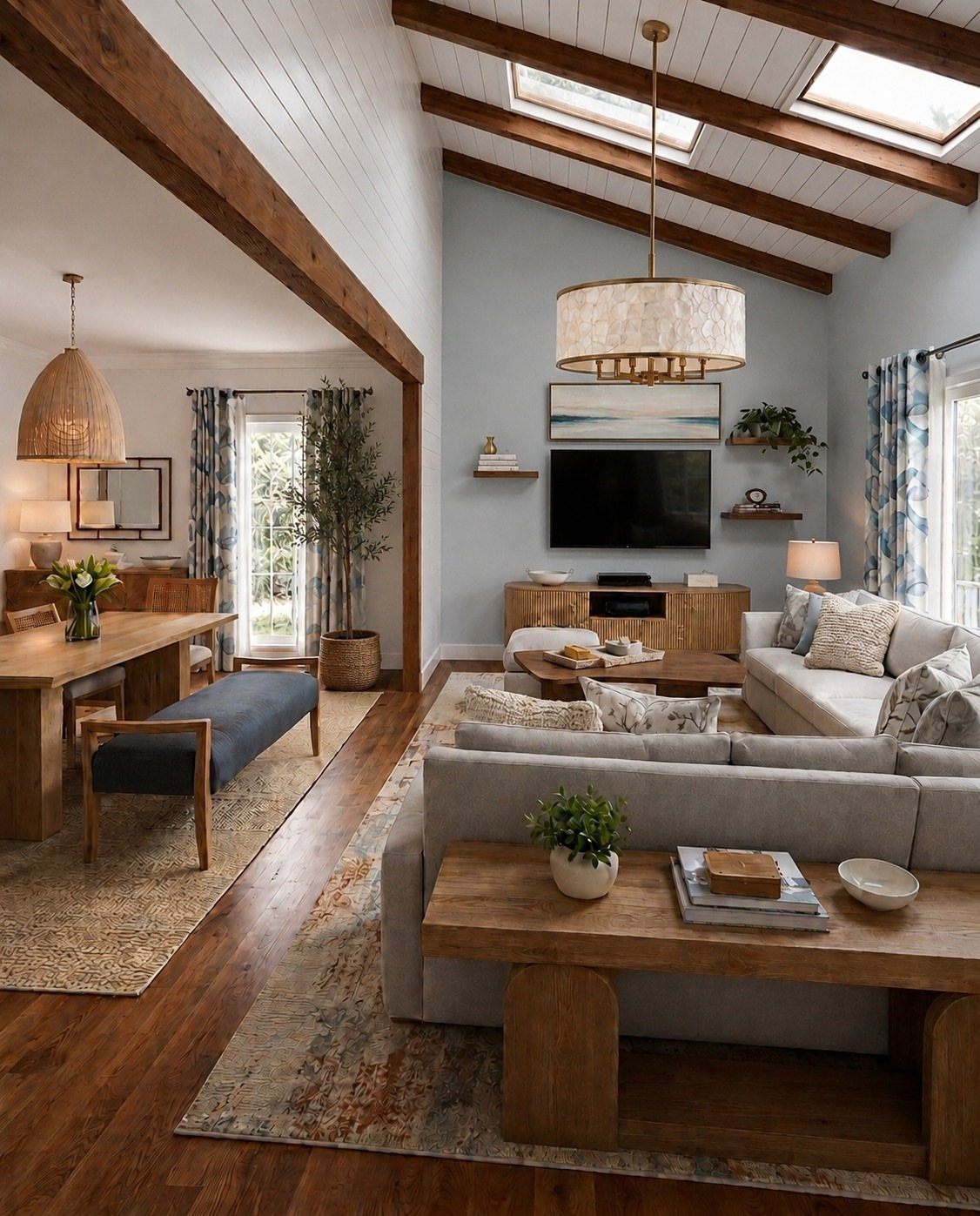
Vaulted ceilings with exposed beams give an open plan its sense of occasion; without that height, the same footprint can feel like a furniture showroom with no walls to stop the eye.
I would use the dining table as the anchor that separates living from eating, placed so backs face the sofa rather than the TV.
Sound carries in open plans, so hard surfaces stack up fast; the sectional and any drapery you add do more acoustic work than they appear to.
12. Oversized Rugs
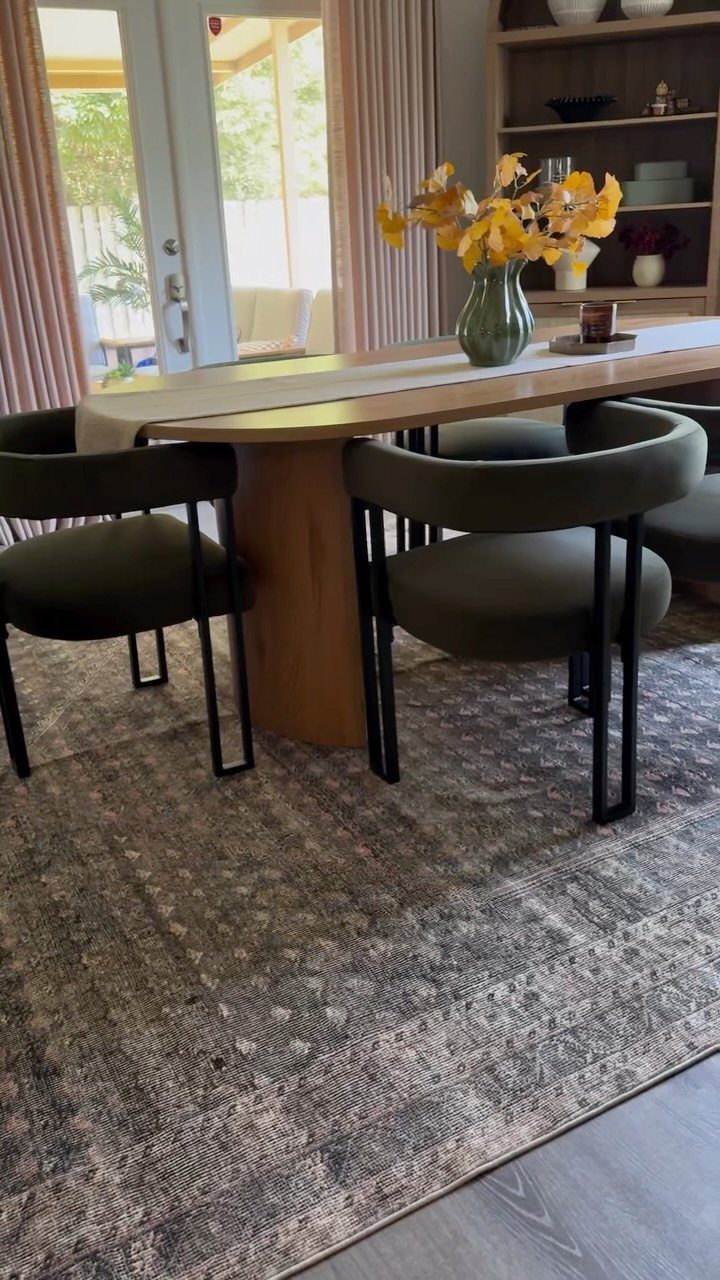
A rug that extends well past the table edges keeps chairs on solid footing even when guests push back.
I would add enough rug beyond the table on all sides that chairs stay fully on it when pushed back; less and the front legs drift off at an angle.
Pattern at this scale hides the wear that a solid color shows immediately under dining chairs. Low pile or flatweave cleans easier than shag, and in my view is the only practical choice under a table that sees regular use.
Creating a Cozy Atmosphere
Cozy in a contemporary dining room comes from controlled contrast, not softness layered everywhere.
Moody paint on the walls works when you balance it with light wood tones in the table or flooring; the darkness recedes and the room gains depth without closing in.
Low lighting matters more than fixture style. I would put every source on a dimmer and keep overhead brightness below what you need for tasks; dining is social, not surgical.
Soft seating helps, but the real hospitality trick is restraint in accessories. Blank space is what lets the eye rest, and a calm mind reads as comfort.
Combat clutter by giving each piece a reason to be there. If a sideboard collects mail and chargers, the room loses its hold on you.
“There are three factors to create a great dining room: comfortable seating, design devices to create a union or a core, and adjustable lighting,” he says.
Color Schemes
The base stays quiet so a bold table, a large light fixture, or a single art piece can work without competition.
Moody paint colors can anchor the room if you pair them with light wood; the darkness reads intentional, not heavy. Green works as an accent wall when the saturation is deliberate and the rest of the room stays restrained.
Color-changing lighting is an option in minimalist spaces, though I think it risks novelty over longevity. If you use it, plan the default setting first; that is what you will live with most days.
Choosing Dining Chairs
In contemporary rooms, solid-backed chairs or clean-lined wishbone and ladder-back styles keep the look uncluttered.
Upholstered seats work when the lines stay simple; tufting and rolled arms belong elsewhere. Two accent end chairs in a different material or color can break symmetry without breaking the room.
I would introduce an accent color here rather than on every chair; it is easier to live with and simpler to change. Comfort is not separate from style in a dining chair.
Frequently Asked Questions
How to make a dining room feel cozy?
I like a dark wall in a dining room, but only when the table or floors carry enough natural wood tone to keep the darkness from swallowing the space; the contrast is what gives the room its depth.
Plush seating is only half the story. I leave more open surface than instinct suggests, because the eye needs somewhere to land before the body can actually relax.
What are the dining chair trends for 2026?
Chairs are sitting lower in 2026, with wood and metal frames dominating and wishbone backs showing up in almost every modern dining room I see.
Upholstery works when the silhouette stays clean; I steer clients away from tufting or rolled arms that read traditional in a contemporary space.
I would swap the 2 end chairs for something in a different material or finish before I would touch the rest of the set; that is where I would place my single accent color too.
What can you do instead of a dining room?
Your dining space does not have to sit directly off the kitchen; reposition it to the most sun-filled area, like a sunroom with walls of windows that keep the room from feeling too stuffy.
Running the dining table straight into the living area keeps the conversation flowing even after people push back their chairs.
How should I stage my dining table for an open house?
When the room has a strong view or built-in detail, I pick a quieter table and chairs so the architecture gets the attention.