These clothes storage ideas run from a simple pack of drawer dividers to a full modular closet system, and the one that earns its spot in your room depends on whether you are working inside an existing closet or building storage where none exists.
A second hanging rail doubles vertical space in the same footprint only if your shirts and blouses live there already; long coats and maxi dresses still need the full height.
1. Second Hanging Rail
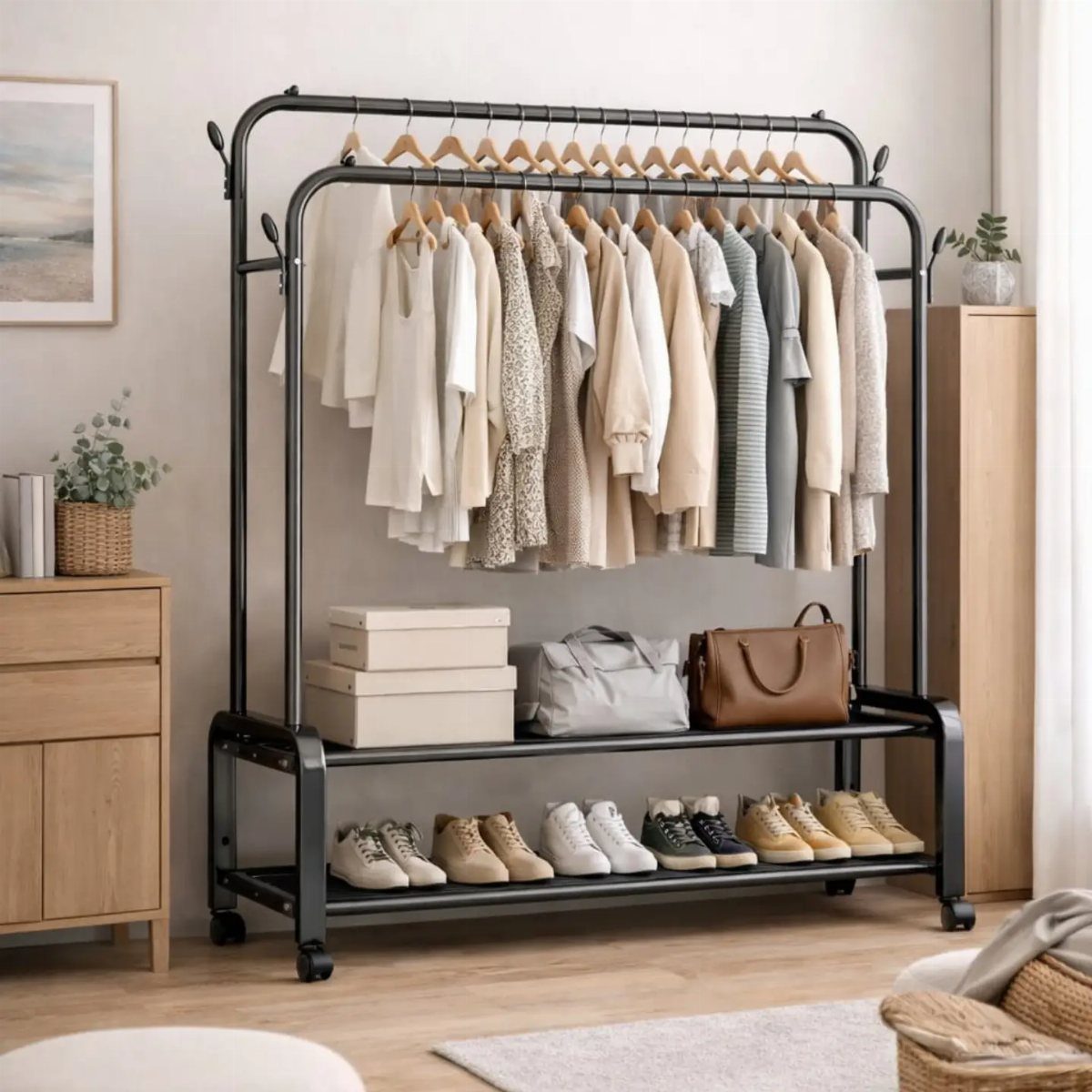
A second hanging rail doubles the vertical storage in the same footprint by splitting one tall closet bay into two shorter ones.
Before adding one, measure your longest garments; coats and dresses need the full height, so this works best in sections where shirts, pants, and skirts live.
I would check that the existing rod and brackets can handle the extra weight, or plan to reinforce them.
The lower rail sits high enough off the floor to keep long items from pooling, but low enough that the space above it still holds a full rail of shirts or jackets.
2. File-fold Clothes in Drawers
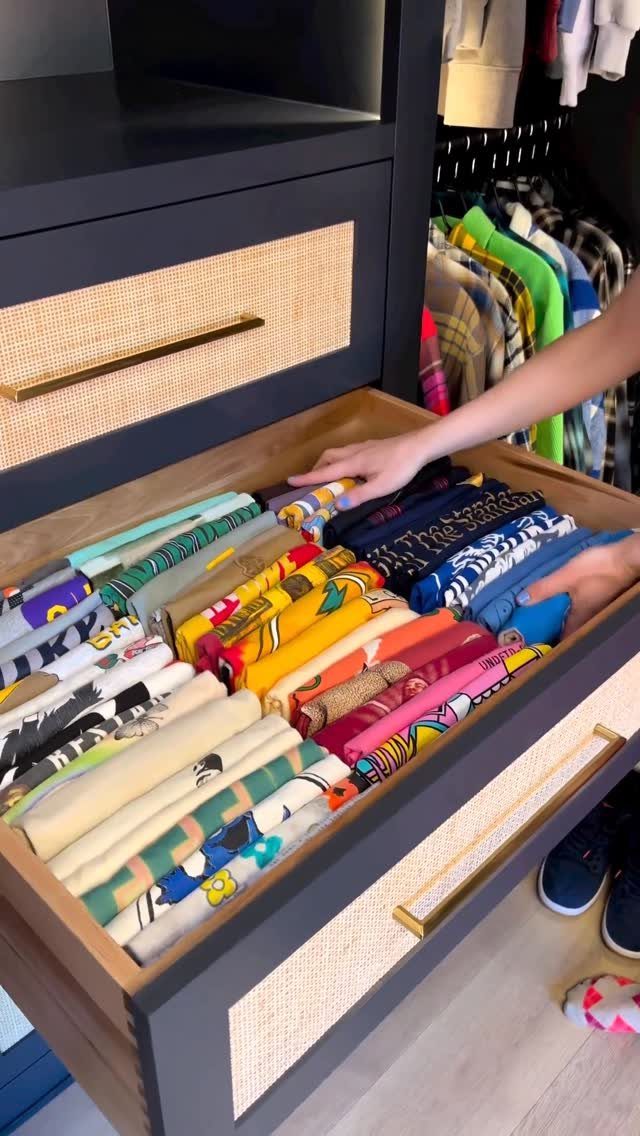
File-folding turns clothes into vertical rows that stand on edge like books, so every item is visible at a glance. The method suits t-shirts, leggings, and thin sweaters especially well; bulky items fight the fold and spring out of line.
The visible drawer shows the technique in a cane-front dresser, but the fold itself works in any shallow drawer deep enough to stand a file-folded tee upright.
I would start with one drawer of similar items rather than mixing weights, since heavy cotton and thin jersey settle differently and the neat row collapses faster.
3. Labeled Bins for Clothes Storage
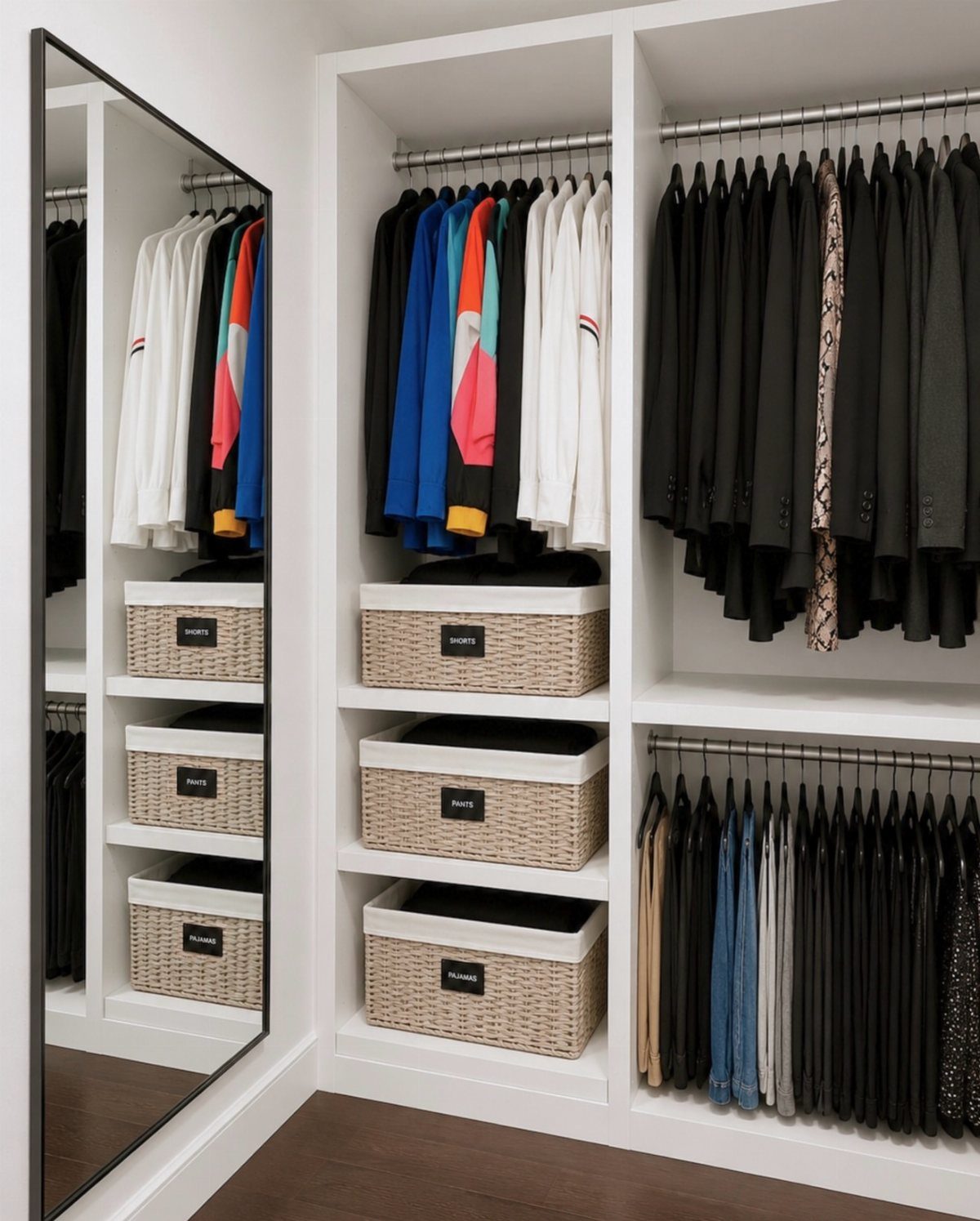
Labeled bins turn open shelving into a system where everyone in the household knows where things go back. The visible labels use simple capital letters on woven baskets, which I prefer over printed tags that peel or fade.
Before buying, decide your categories by how you actually dress, not by how you wish you did; "pajamas" and "shorts" work because they match real routines.
I would size the bin to the shelf depth so nothing gets lost behind, and leave one shelf partly open for items in rotation.
4. Shelf Above the Hanging Rail
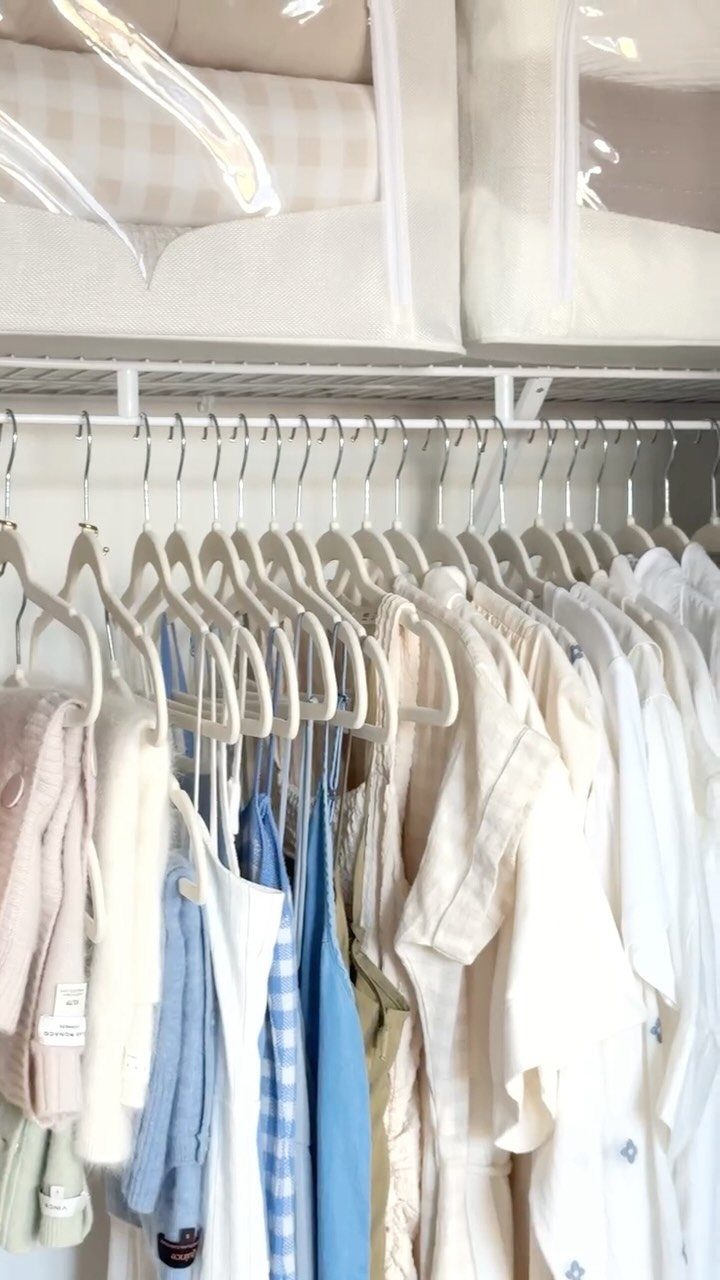
A shelf above the hanging rail claims the dead zone that most closets leave empty between the rod and the ceiling.
The visible setup uses fabric storage bags for out-of-season items, which I think is the right call; boxes you open often get heavy fast up there.
Check your reach before committing: a shelf too high means a step stool every time, so reserve it for things accessed twice a year. I would keep the shelf shallow to avoid a ledge where dust collects out of sight.
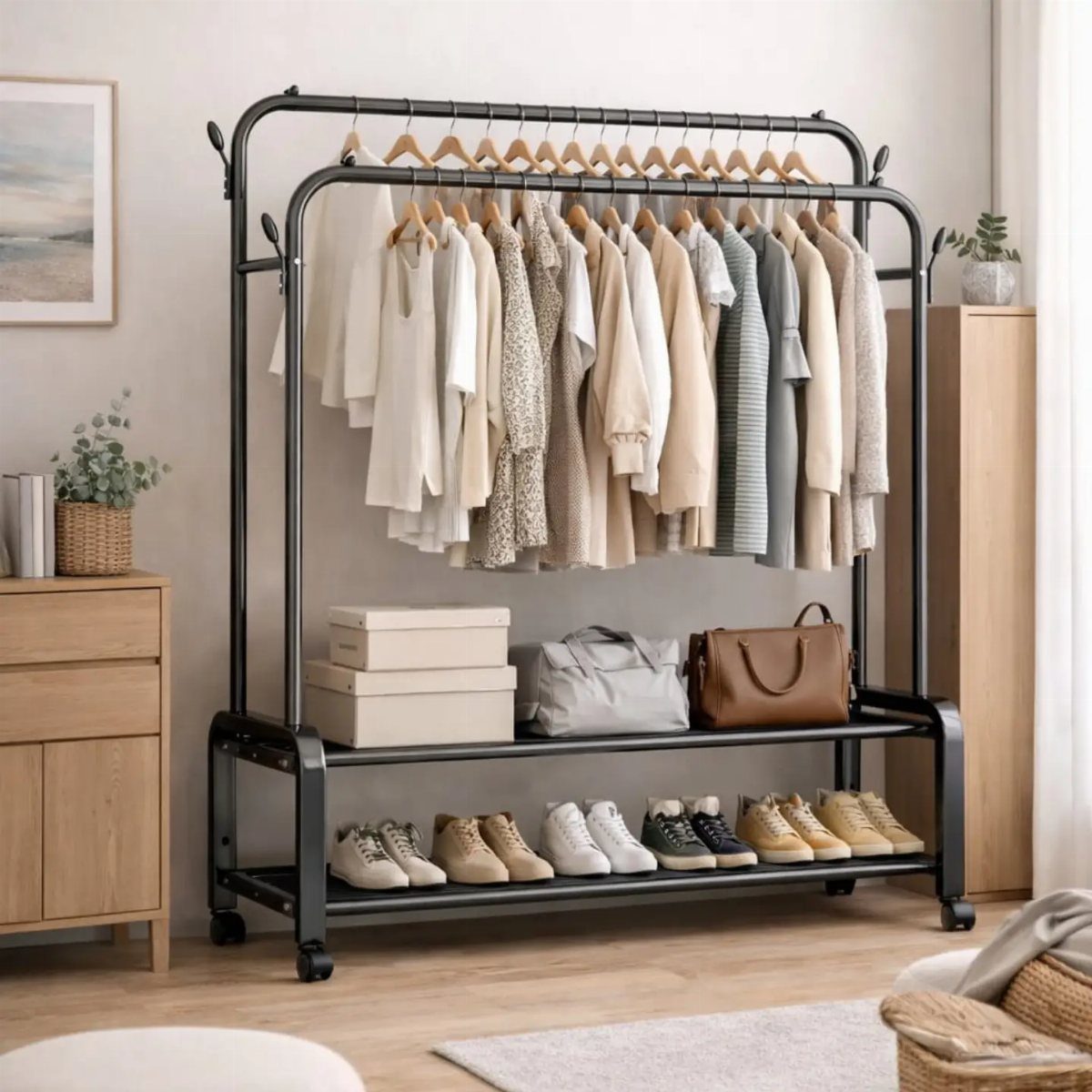
5. Freestanding Clothing Rack
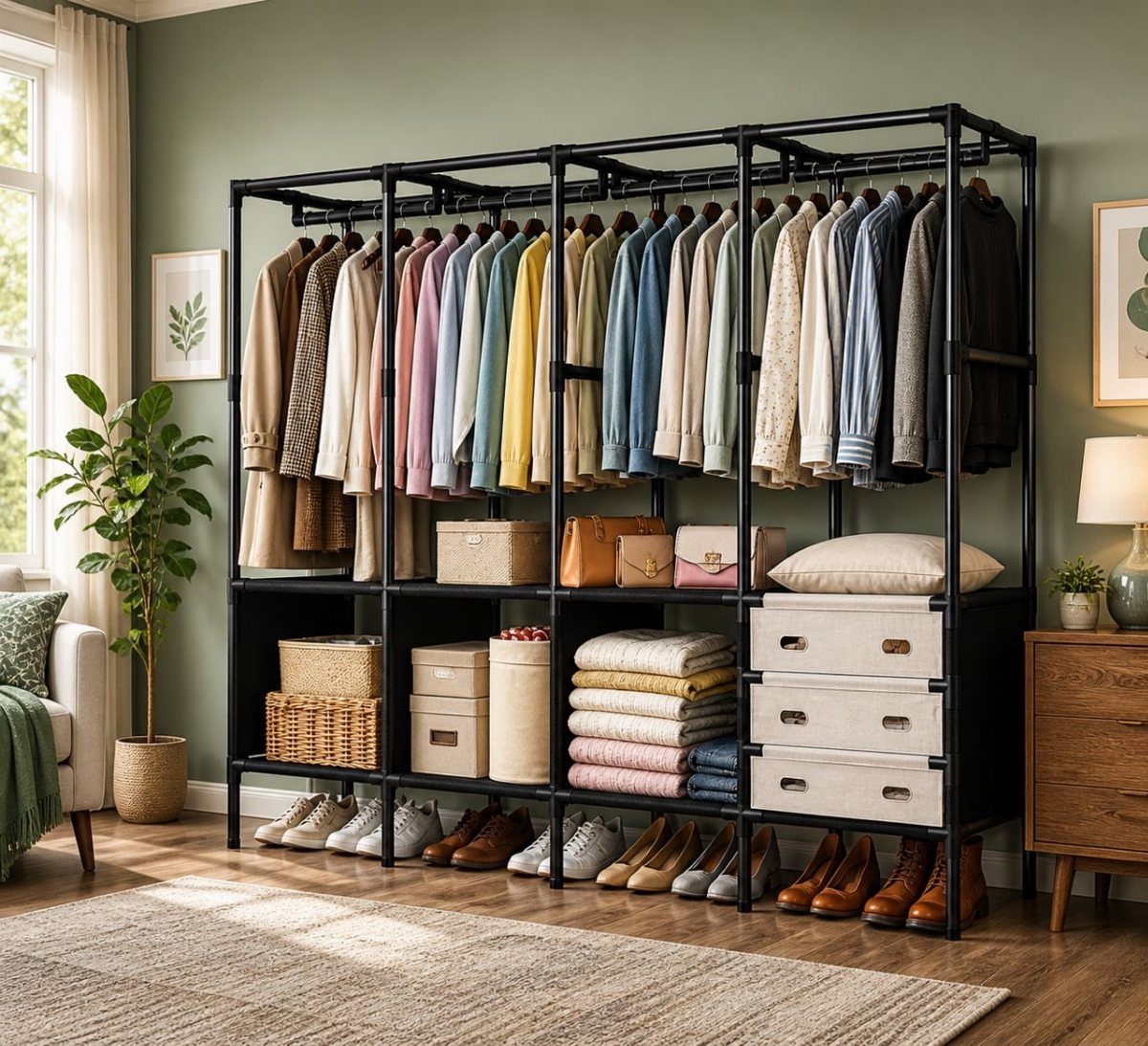
A freestanding clothing rack turns any wall or corner into wardrobe space without installing a thing.
The visible rack is modular black metal with room below for bins and shoes, which I would choose over wooden versions that wobble under weight.
Before buying, measure your longest coat plus a little clearance; a rack too short ruins the line of a good trench or dress.
I would place it where air circulates, not against an exterior wall in a damp basement, since metal rails sweat and transfer that to fabric over time.
6. Under-bed Storage Containers
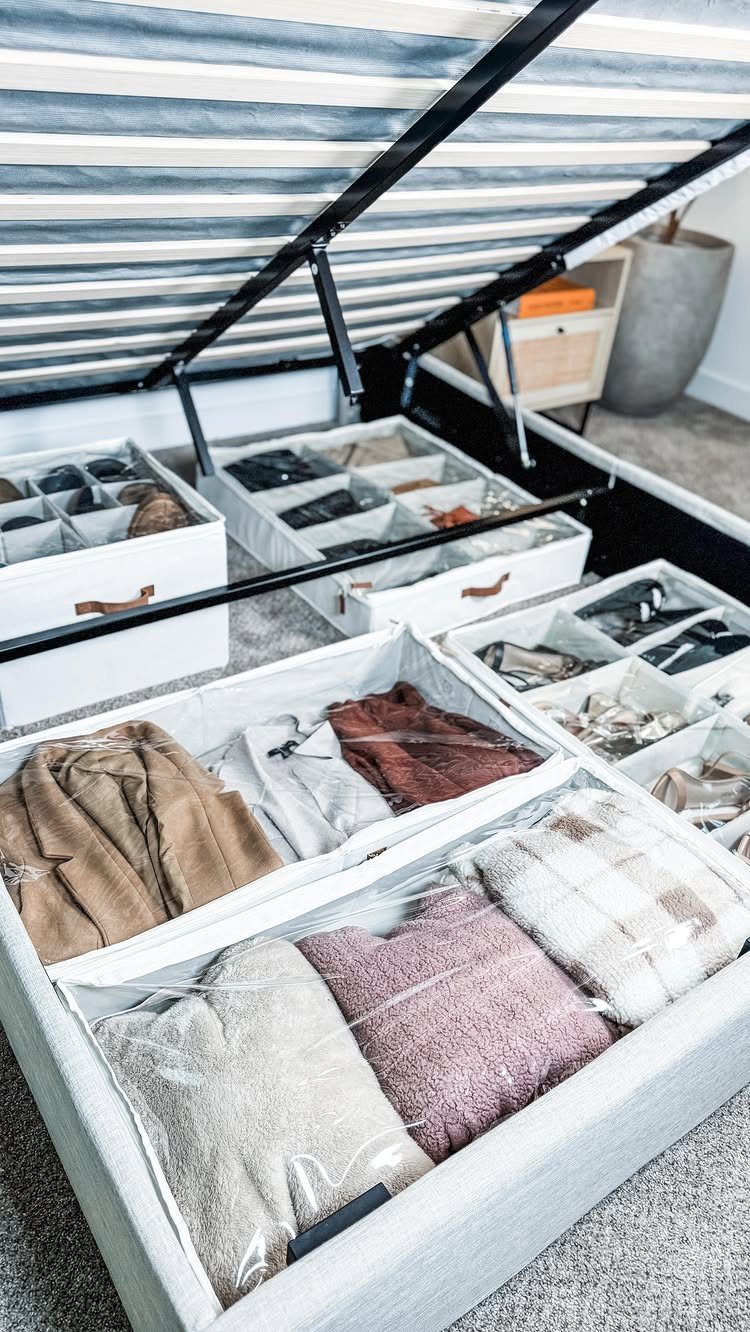
Under-bed containers store out-of-season or backup clothing in space that otherwise collects dust bunnies. The visible bins use clear zippered tops, which I prefer over solid lids since you can spot the contents without dragging everything out.
I would measure the gap with the mattress fully compressed, not the empty frame, and buy bins short enough to slide without catching.
7. Folded Heavy Knitwear on Shelves
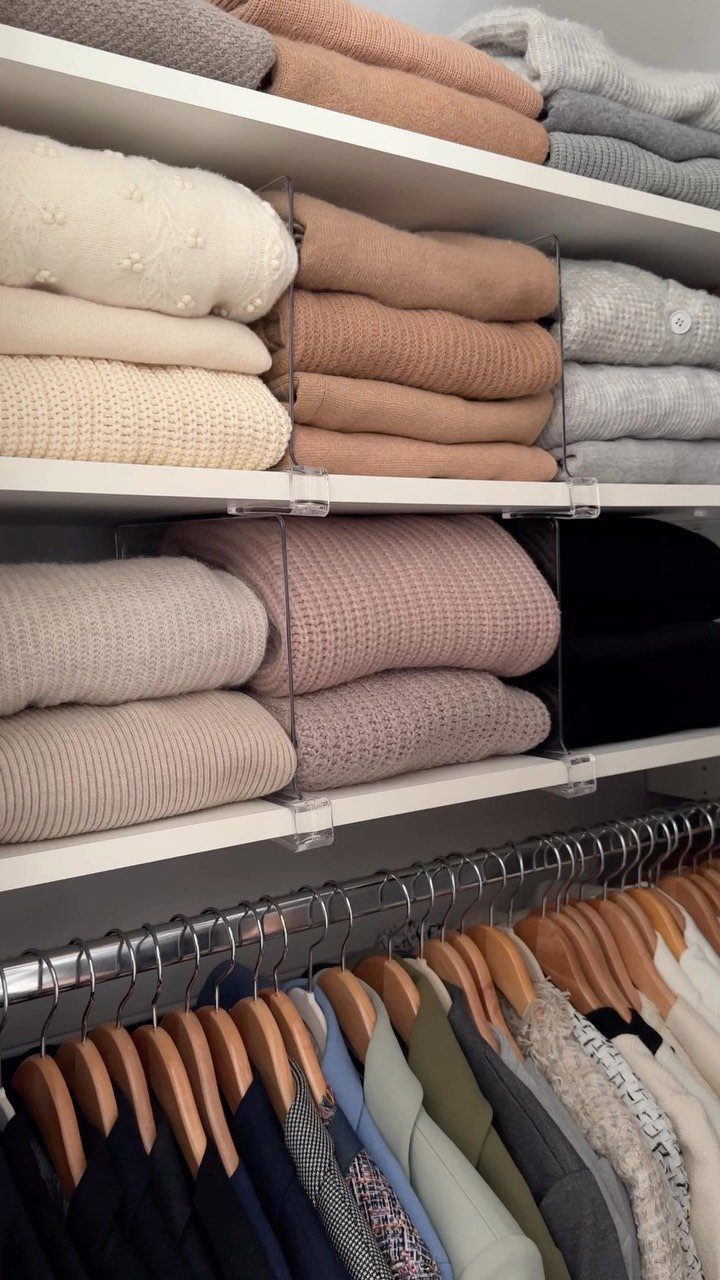
Heavy knitwear stores better folded than hung, since the weight stretches shoulders and distorts the shape over time. Clear acrylic dividers keep stacks upright and let you pull one sweater without toppling the rest.
I would check shelf depth against the folded width of my bulkiest cable-knit; a stack that overhangs creeps forward and blocks the hanging space below.
8. Vertical Shoe Storage
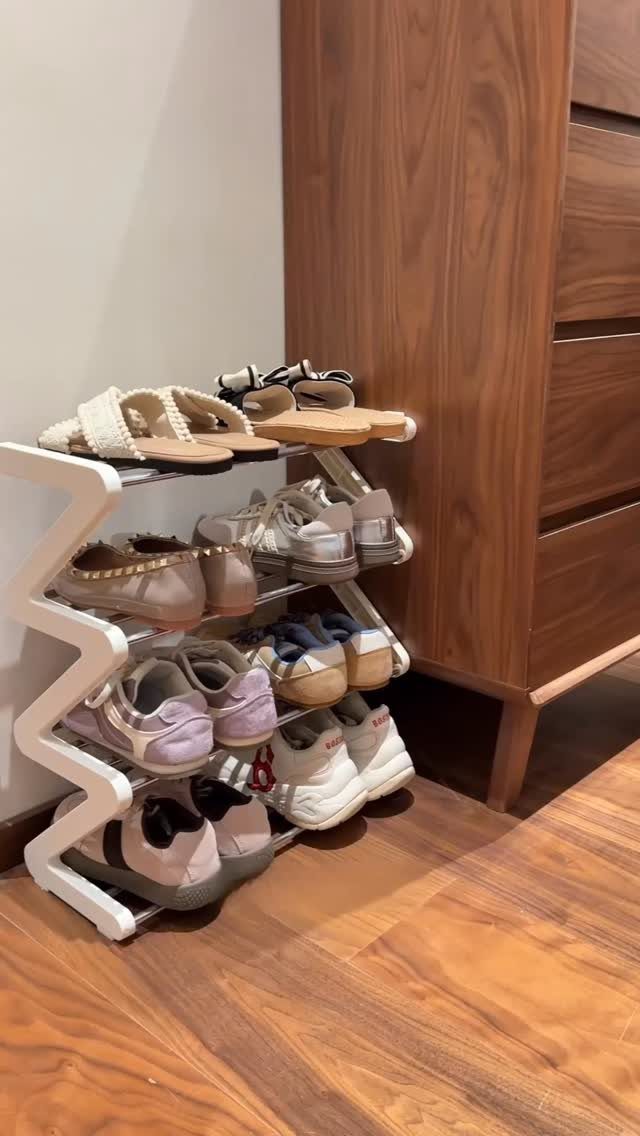
A vertical shoe rack stacks pairs heel-to-toe in a zig-zag frame that eats less floor than a flat row. The visible unit is white metal, which I would pick over coated wire that chips in humid closets.
Count your pairs before buying; a small rack holds fewer than it looks like it should, and cramming in more warps the frame or scuffs the shoes.
9. Drawer Dividers
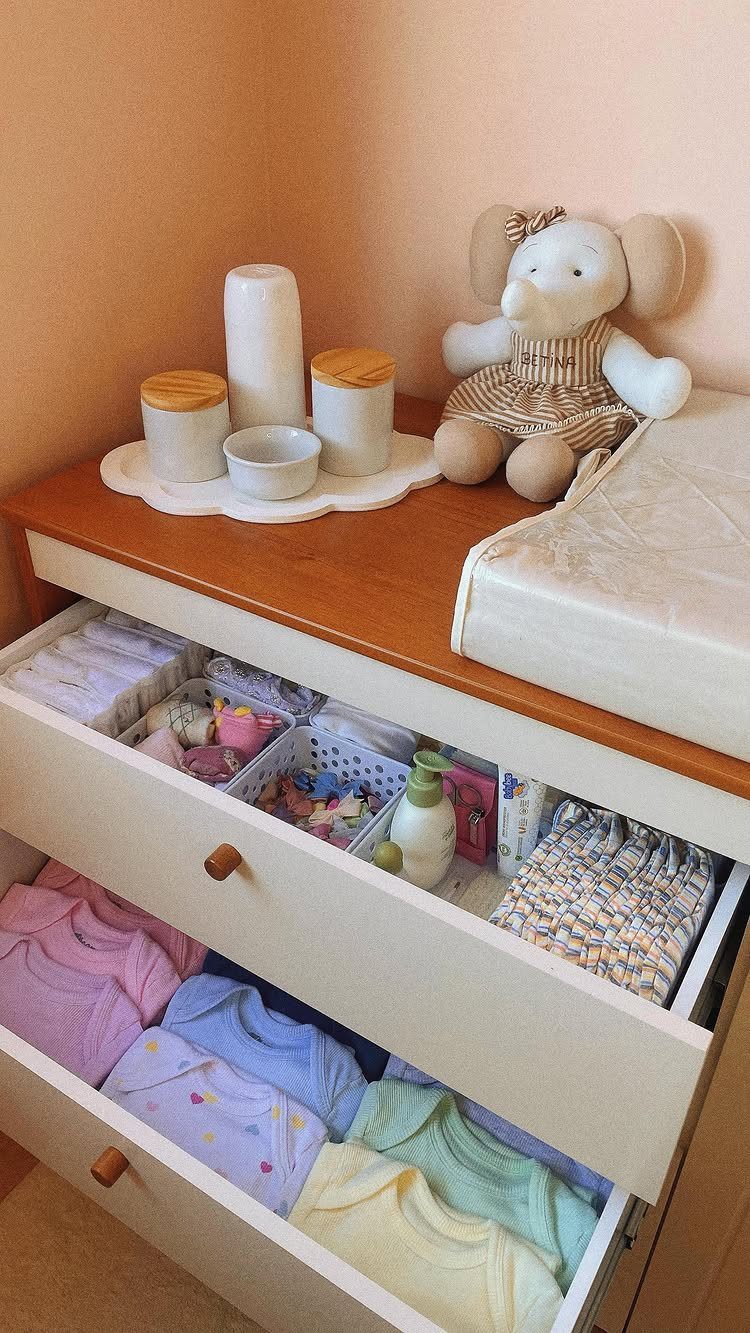
Drawer dividers corral small items into fixed zones so socks, onesies, or accessories stop mingling into a single tangled layer.
The visible nursery setup uses white plastic bins alongside rigid dividers, which I think works better than soft fabric inserts that shift every time the drawer opens.
Measure your drawer interior first; off-the-shelf dividers often run long and jam against the sides.
10. Built-in Modular Closet System
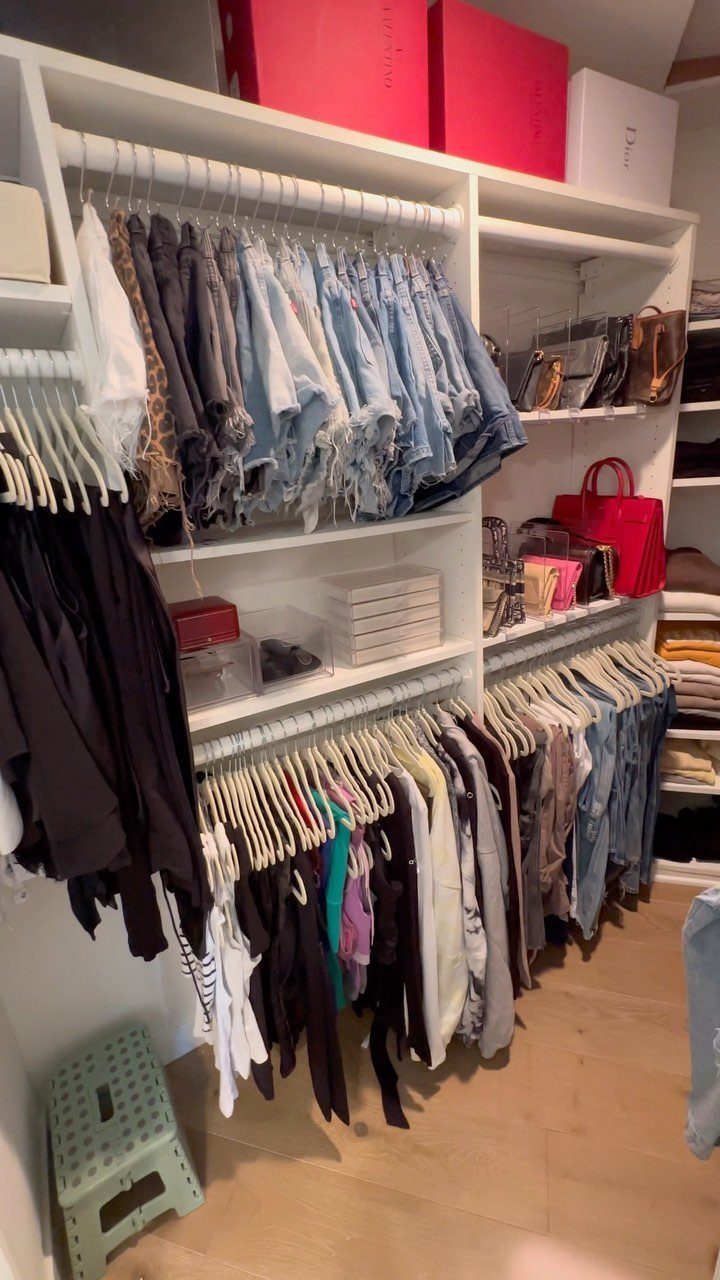
A built-in modular system lets you set hanging heights, shelf spacing, and accessory storage to the actual contents of your wardrobe rather than a standard rod-and-shelf layout.
The visible closet mixes open shelving with double hanging and boxed storage above, which suits someone with varied pieces and the floor space to walk in.
I would start with one manufacturer’s system and stay in it; mixing brands leaves gaps where brackets and finishes clash.
11. Tiered Shelf Dividers for Jeans
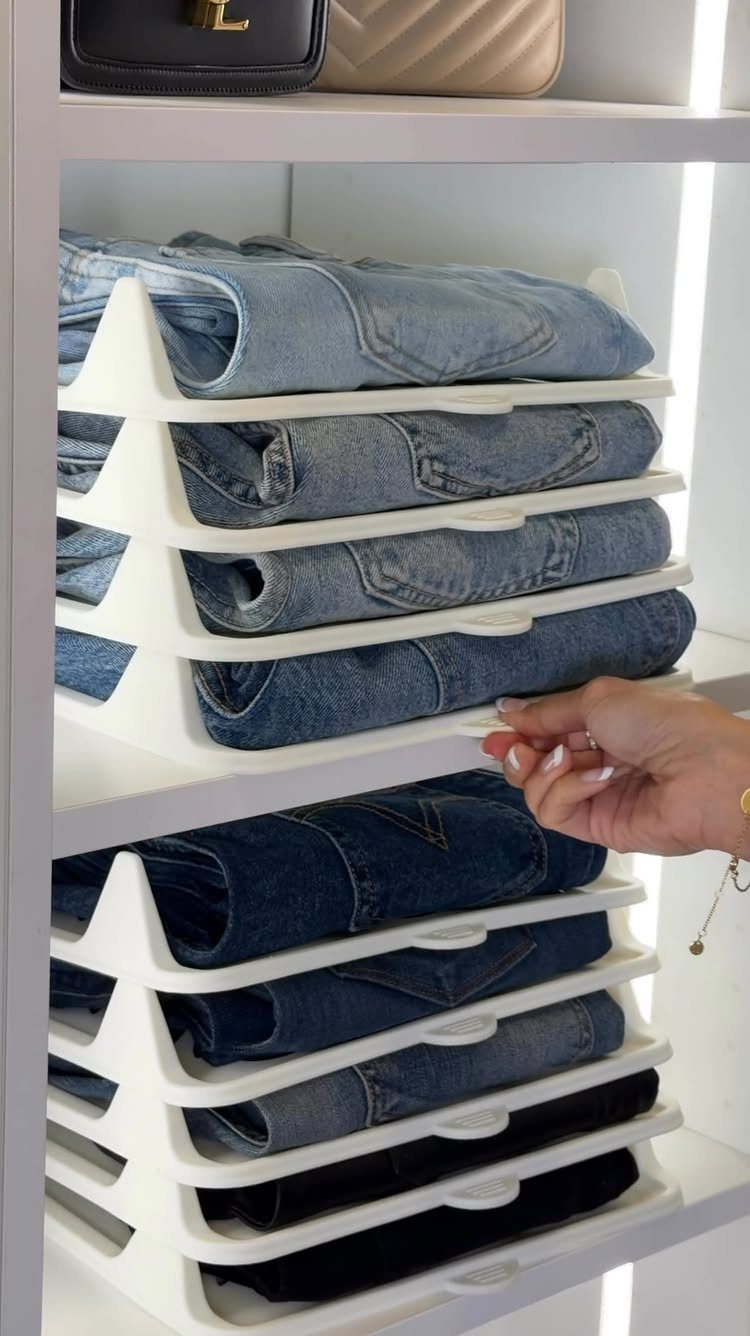
Tiered shelf dividers stack folded jeans in stepped levels so each pair sits visible and reachable without unstacking the whole pile. The visible organizer is white plastic with a handle cutout for pulling the unit forward.
12. Multi-tier Space-saving Hangers

Multi-tier hangers suspend several pairs of pants from a single hook, trading horizontal rod space for vertical drop. The visible hanger pairs a white plastic frame with metal bars, which feels sturdier than all-plastic versions that flex under weight.
I would reserve these for lighter fabrics; heavy denim on a full hanger stresses the hook and can bow the rod over time.
13. Dedicated Scarf Display Stand
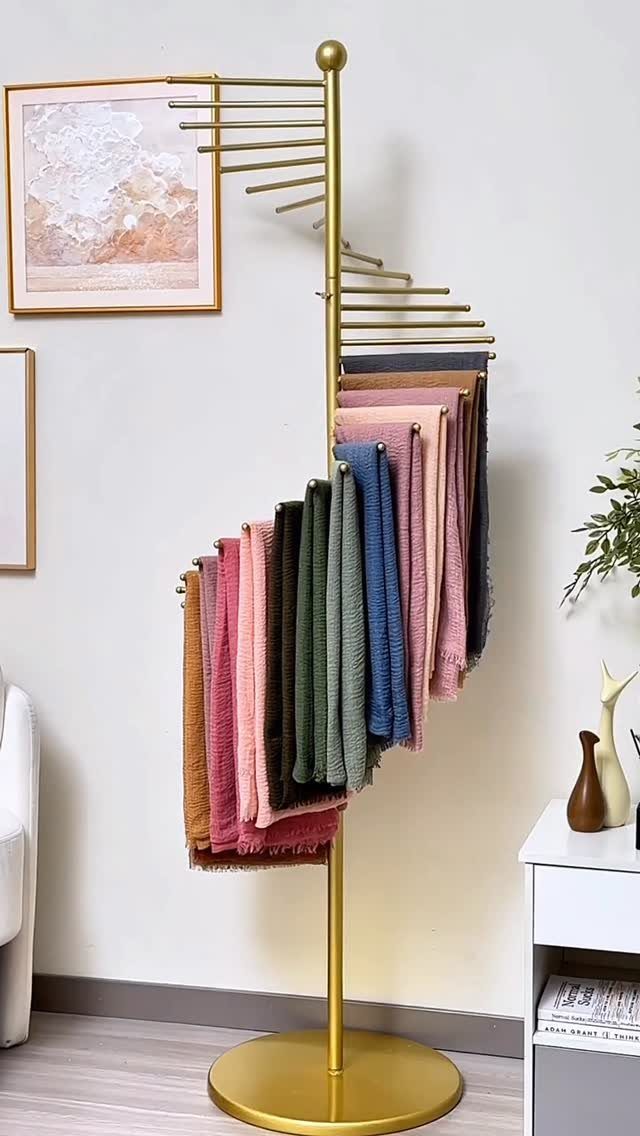
A dedicated scarf stand keeps accessories visible and crease-free instead of tangled in a drawer or piled on a shelf.
The visible stand is gold metal in a spiral of horizontal rungs, which I would choose over wall-mounted hooks since it moves where you need it and needs no drilling.
Before buying, count your collection and check the rung spacing; a thick wool wrap needs more height than a silk square, and overloading one level distorts the shape below it.
I would place it where it catches light but not direct sun, since prolonged exposure fades color even through windows.
Importance of Closet Organization
A closet that matches how you actually live saves more than minutes in the morning.
When daily shirts, work pants, and the one jacket you reach for weekly sit in the same zone as winter coats and formal dresses, every choice takes longer than it should.
That friction adds up to decision fatigue before the day starts.
The bigger cost is what poor storage does to the clothes themselves. Delicates crammed into crowded rods snag or wrinkle.
Items you spent money on age faster than they should because the system fights the fabric. Clean, fully dry clothing stored in breathable containers lasts seasons longer than pieces sealed in plastic or pushed damp into corners.
I would rather rotate seasonal pieces out of prime space than force a full wardrobe into a closet built for half of it.
I am not after minimalism for its own sake. I want to stop every item from fighting for the same easy reach.
Assessing Available Space
Start with a tape measure, not a shopping cart. Width, depth, and ceiling height set hard limits on what can fit, and guessing leads to bins that jam against doors or rods that block the light switch.
Note the door type while you measure. Sliding doors steal inches of front access that swing doors do not.
Bi-folds fold into the opening and cut into usable depth at the sides. A freestanding rack or narrow shelving unit that works behind a swing door may not clear a slider’s frame.
I would map zones before buying anything: pants in the easy-reach center, accessories in shallow drawers, seasonal items high or low.
Pain points matter here. If shoes pile on the floor, vertical storage solves a footprint problem, but only if the ceiling allows it.
Seasonal Clothing Management
Off-season clothing does not need daily access, so it should not live in daily space.
The winter parka you put away last season and the shorts you will not touch until summer are both taking up real estate that belongs to what you put on tomorrow.
I would store rotated items in clear containers with windows, placed on the shelf above the hanging rail or in under-bed bins. Keep the containers clean and fully dry inside, since trapped moisture breeds mildew on stored wool or down.
The swap itself is the habit that matters. I would calendar it twice a year, not wait for a closet crisis.
Frequently Asked Questions
How to get more storage space for clothes?
Double hanging rods split tall closet bays into 2 shorter ones, and under-bed containers or the shelf above your rail claim space you already have but do not use.
I would add a freestanding rack only after measuring your longest coat plus clearance, since a short rack ruins the line of anything long.
Vertical shoe racks and multi-tier hangers trade height for floor space, though I reserve those hangers for lighter fabrics; heavy denim bows the rod over time.
What is the best box to store clothes in?
Clear containers with zippered tops or viewing windows work best, because you spot contents without dragging everything out.
Fabric bags up high beat boxes for anything you won’t touch for months; I learned that after hauling a loaded bin down from a closet shelf one too many times.
For folded knitwear, drop-front boxes with windows keep dust out and let you grab from the bottom of a stack without toppling it.
A quick wipe with a dry cloth before you load anything in beats finding a musty smell on your winter coat 6 months later.
What are some effective ways to organize my wardrobe?
Labeled bins turn open shelving into a system where everyone knows where things go back, and drawer dividers corral socks or accessories into fixed zones. File-folding t-shirts and leggings into vertical rows lets you see every item at once.
I would start by mapping zones to how you actually dress, not how you wish you did: daily shirts in the easy-reach center, seasonal pieces high or low, accessories in shallow drawers.