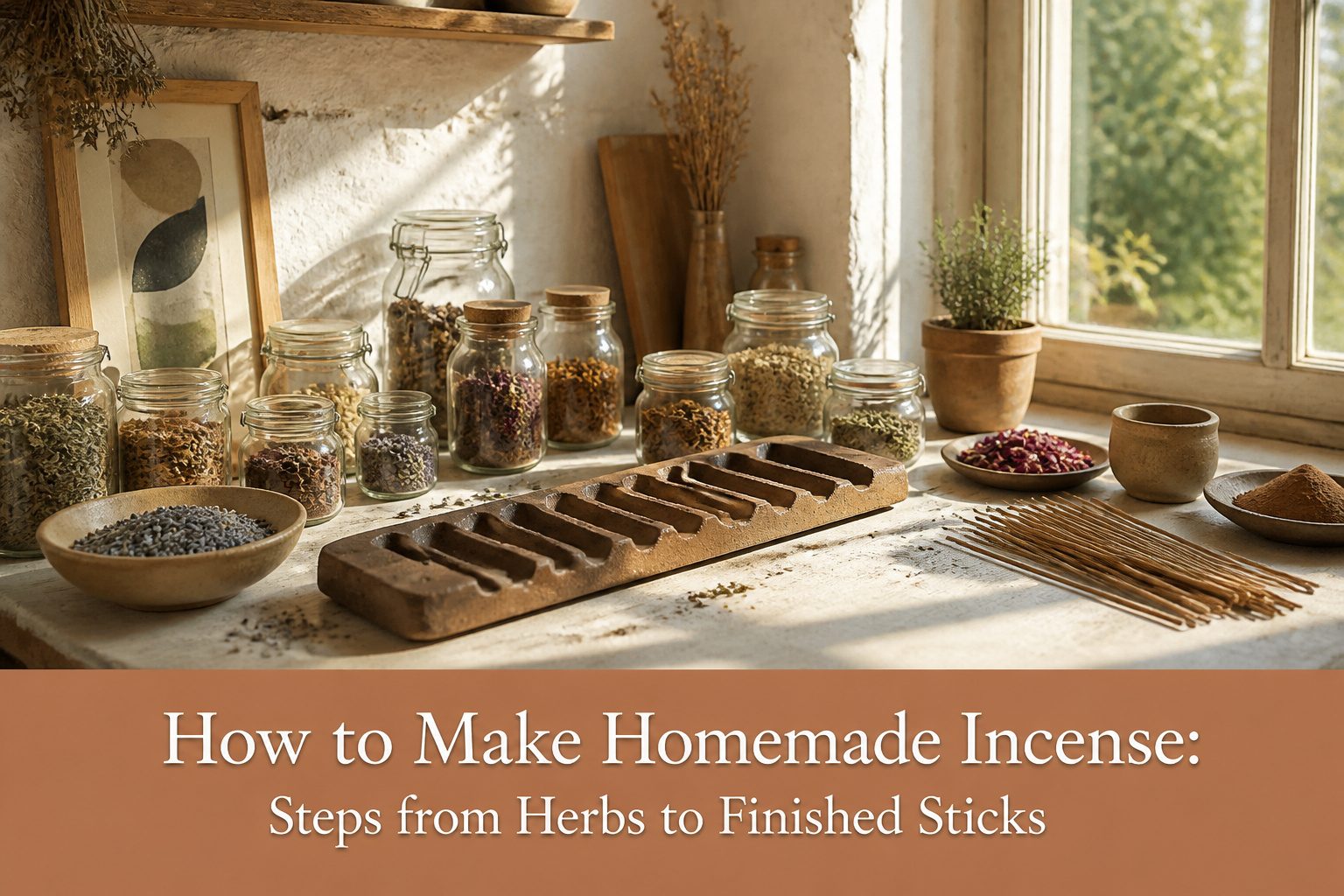
You end up with incense sticks that burn 45–60 minutes or cones that run 15–20, after roughly two to three weeks of drying herbs and several more days curing the finished shapes.
The skill level is modest, but the patience is not, and most beginners rush the drying stages.
The point where batches fail is binder ratio: makko powder must stay between 10–30% of the dry mix, with heavy resin loads pushing toward that upper limit. Too little and the stick crumbles; too much and the ember smothers.
1. Gather Ingredients
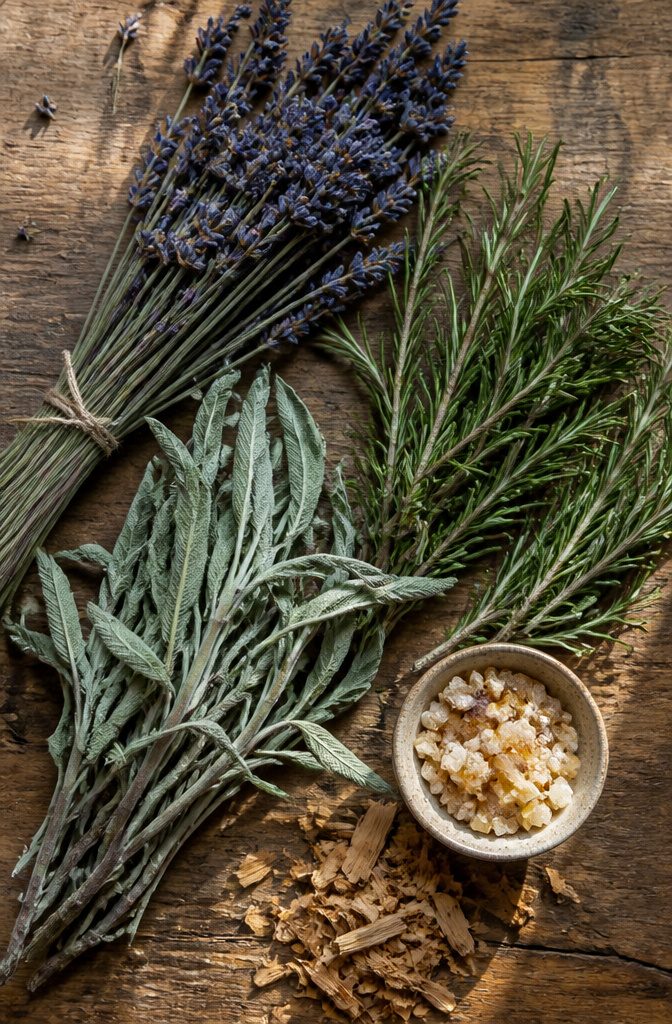
Dried lavender, sage, and rosemary form the backbone of most herbal incense I would bother making at home.
Flowers picked before they fully open hold their oils better through drying and are far less likely to mold or drop petals in the process.
Fresh herbs from a farmer’s market or nursery beat refrigerated ones for this; the leaves shrivel considerably, so gather more than you think you need.
For resins, frankincense and myrrh are the standards, and for woods, sandalwood and cedar carry the right balance of scent and burn.
Wood-based ingredients matter more than most beginners realize: they supply the oil content that releases fragrance and the flammability that keeps a stick lit without needing charcoal in the mix.
I skip anything grown with chemicals or pesticides, since those compounds concentrate in the smoke. Ethical sourcing takes more effort, but the quality difference shows in how cleanly the finished incense burns.
2. Dry Your Herbs
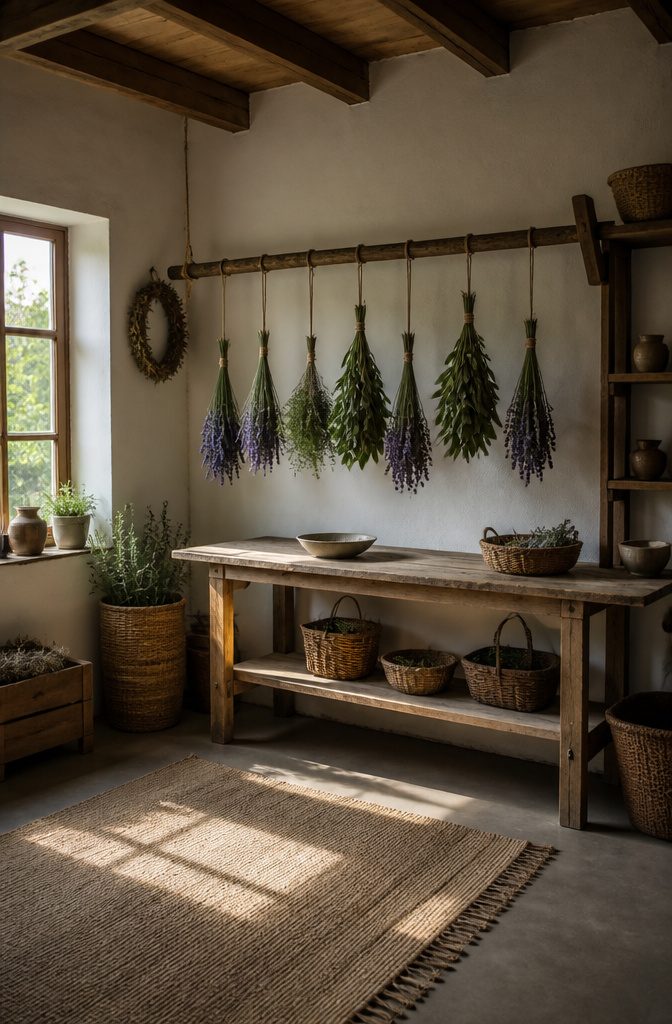
Fresh herbs and flowers hold too much moisture to burn cleanly, so drying comes before any grinding or mixing. I hang bundles upside down with twine, which lets gravity keep the stems straight and pulls residual moisture down and out.
Two to three weeks in a cool, dry spot with good air circulation is the window I plan for; damp corners or humid rooms will stretch that timeline and risk mold.
The bundle needs to be completely dry before it moves to the next step, or the finished incense will smolder instead of burning and the scent turns musty.
I check by bending a stem; if it snaps, the herbs are ready. If it flexes, they need more time.
3. Prepare Your Workspace
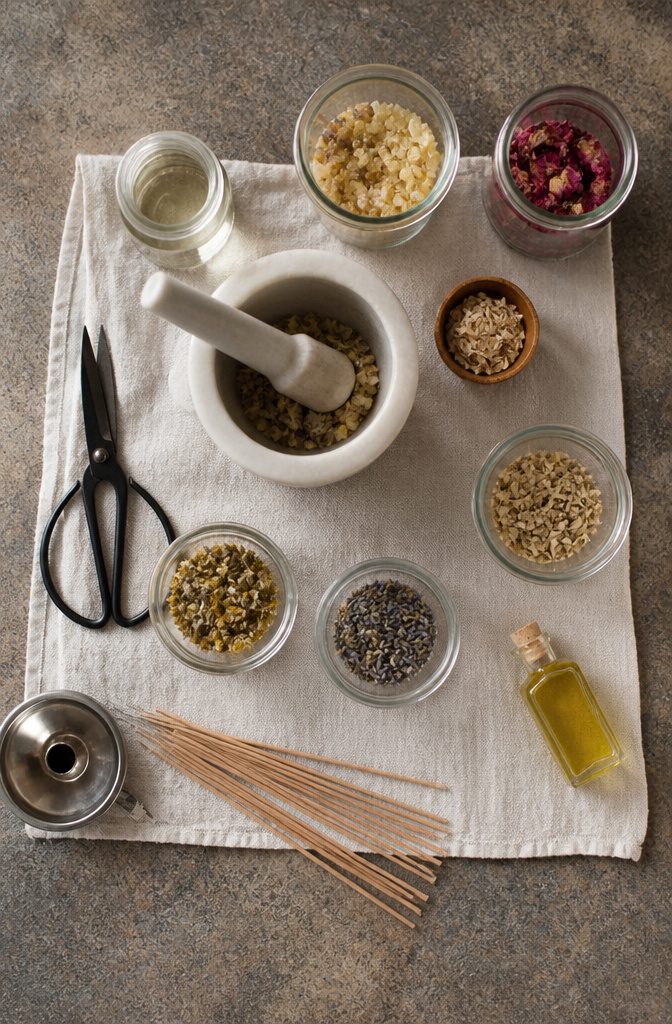
A mortar and pestle, sharp scissors, and a few small glass containers or beakers are the core tools for this project.
I would skip the specialty equipment until I know I will keep making incense. A wooden spoon or glass rod works for stirring, and a measuring spoon or simple pipette handles the ratios.
A towel or newspaper over the work surface saves cleanup time, which matters more than it sounds when you are working with oils and ground herbs on a weekend.
For storage, I prefer small jars with tight lids.
They keep finished blends from drying out or picking up kitchen smells. A heat-proof plate sits nearby for testing small burns later, though any ceramic dish you already own handles that job.
The whole setup fits on a card table or a cleared counter corner, and I would rather work small and organized than spread everything across a large surface where ingredients get lost.
4. Grind Ingredients
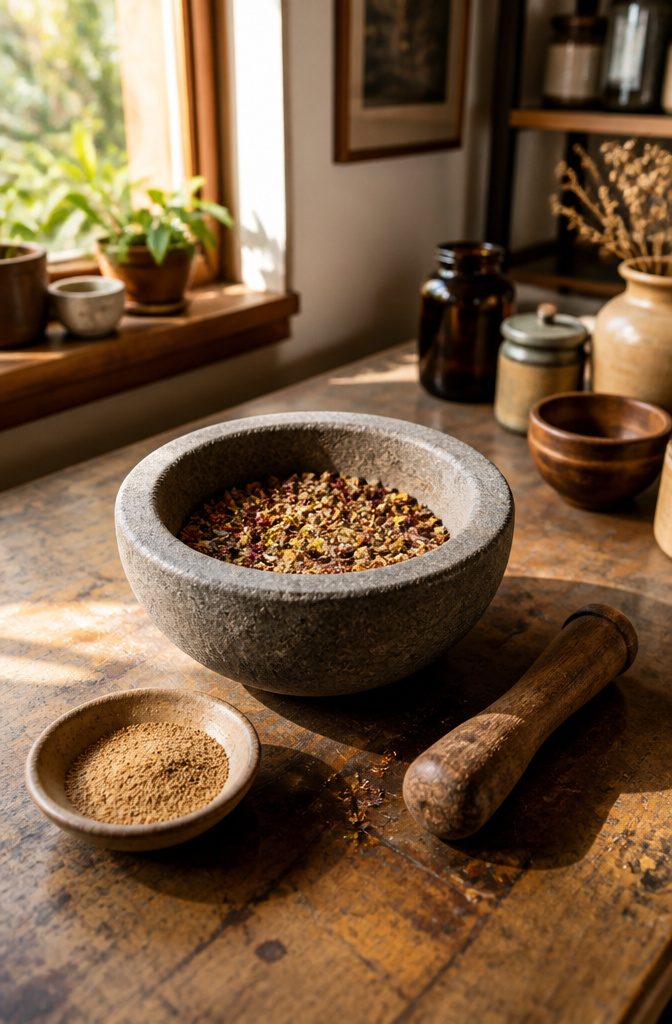
A mortar and pestle gives you the control that electric grinders sacrifice for speed.
With resins especially, I want to feel the moment the chunk breaks down into powder, because pushing past that point turns frankincense into gummy paste instead of fine dust.
Woods like sandalwood or cedar need more muscle than herbs, so I grind those separately and let them rest before I judge the texture.
Herbs dry unevenly in a home oven, and any residual moisture clumps in a spice grinder. I check by pinching the powder: if it cakes, it goes back to the drying rack, not into the blend.
Grind each ingredient separately if you want any hope of adjusting the recipe later.
Once everything is mixed, you cannot dial back the myrrh or boost the lavender; you have made your choice permanently. I keep three small bowls on the counter and label them with masking tape.
A coffee grinder works for woods if you pulse in short bursts, but clean it thoroughly between materials. Resin residue in your herb grinder will throw off the next batch for weeks.
5. Mix Ingredients
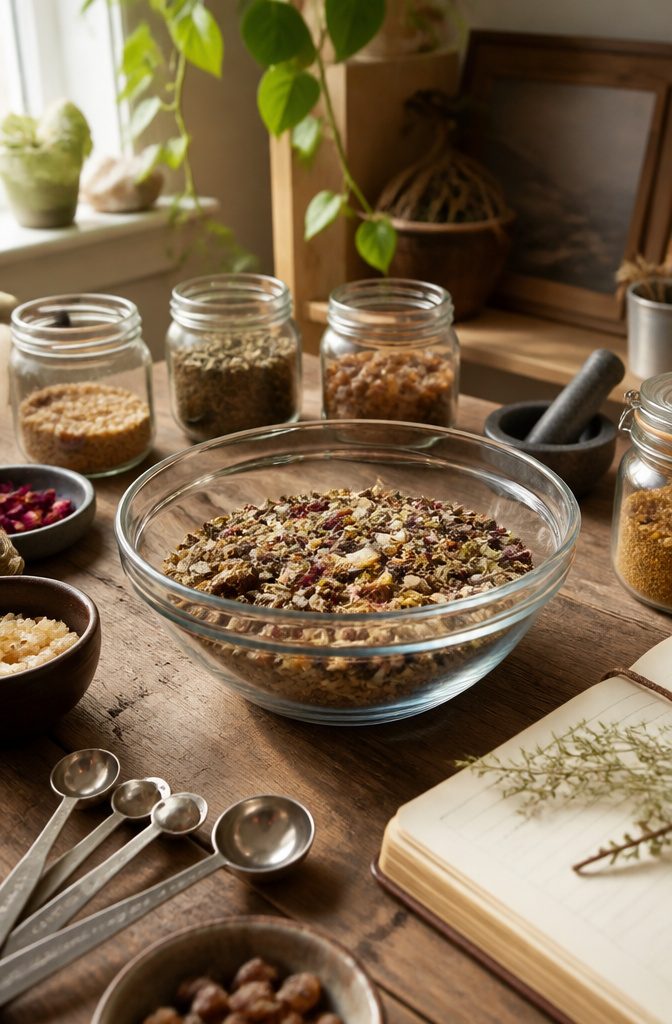
Ratios matter more than exact grams when you are working with resins and woods that vary in density from one batch to the next.
I start with a simple 2:1 frankincense to myrrh base when I want something warm and church-like, then adjust from there.
No two recipes agree on exact measurements, which works in your favor: you learn to think in parts and trust your nose.
A 1:1:1 ratio of herbs, resins, and woods is a reliable starting point for loose incense, and small batches let you test without waste.
I keep a notebook and record what I used, because a blend that smells perfect as a loose powder can change character once you add binder and form sticks.
The same materials in the same ratios will behave differently depending on grind fineness and moisture content, so your notes are what you build from, not the starting recipe itself.
6. Add Binder
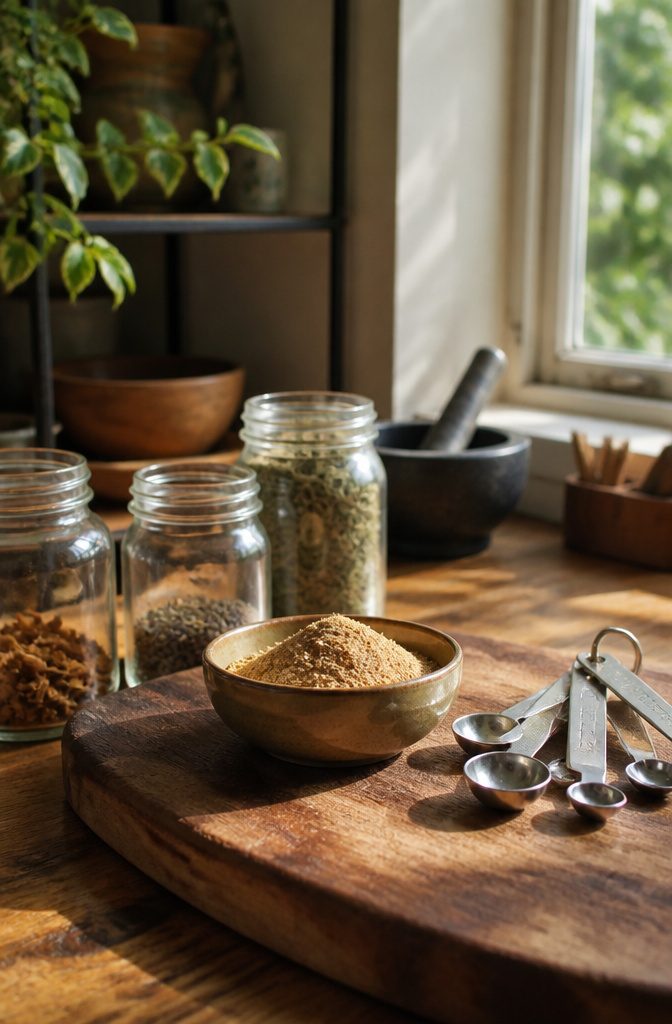
Makko powder is the binder that turns your ground herbs and resins into something you can actually shape and burn.
It’s a wood-based powder from the Machilus thunbergii tree, sometimes called Japanese Bay, and when it gets wet it becomes slippery and adhesive, almost like a natural glue.
I prefer it over gum alternatives like xanthan or arabic because wood-based binders help the burn rather than fight it; gums can smother the ember at higher percentages.
The makko should make up 10–30% of your total dry mixture, though the exact share depends on what else is in the blend.
Heavy resin loads need more, sometimes pushing toward that upper end, while simple herb-and-spice recipes can stay leaner at 10–25%.
If you cannot source makko, honey works as a substitute. It binds well enough for hand-rolled sticks, though the burn character changes and the sweetness can linger in the finished incense longer than I’d like.
7. Shape the Incense
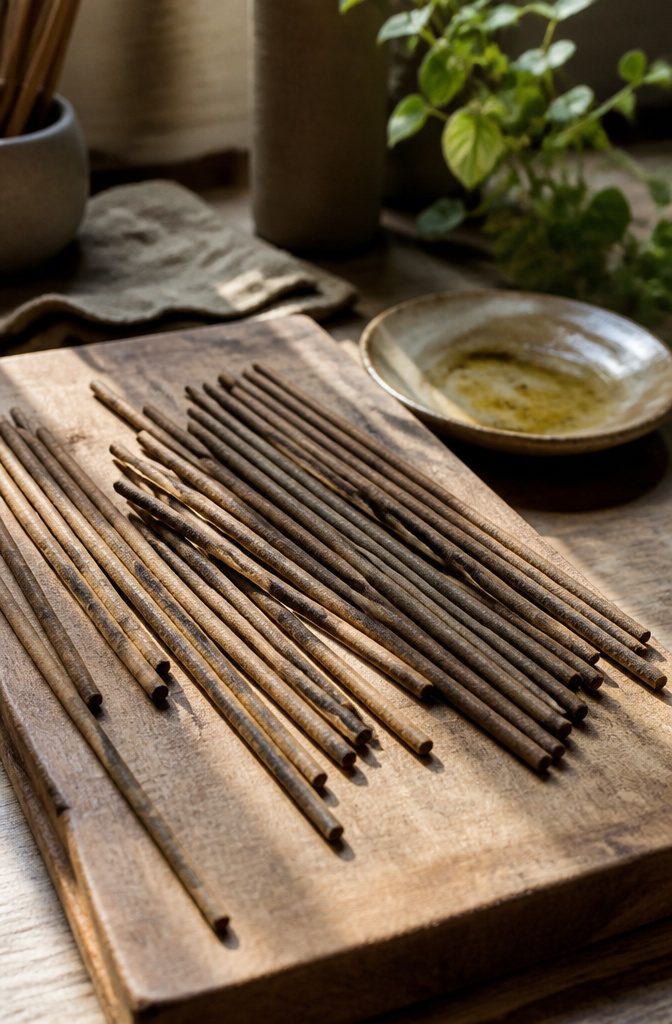
Blank incense sticks come with a thick, gummy coating that absorbs scent, which is the only kind worth buying.
Regular bamboo won’t hold the oil. For the dipped method, 20 drops of essential oil per stick is the standard ratio, mixed in a shallow dish you can turn the sticks through until the oil disappears.
Work in small batches of four or five sticks so the coating stays even and nothing pools at the bottom.
Hand-rolled cones are the other path. The same herb and binder mixture gets shaped by hand into small, tight cones with a broad base so they stand on their own and burn down without tipping.
I prefer cones when I’m using ground material rather than oils, since the shape holds the bulk and the burn rate is easier to control.
Sticks win for consistency and speed; cones win when you want the full plant material in the mix, not just the extracted scent.
Either way, the forming stage is where you commit to the shape and the burn character that comes with it.
8. Dry the Incense
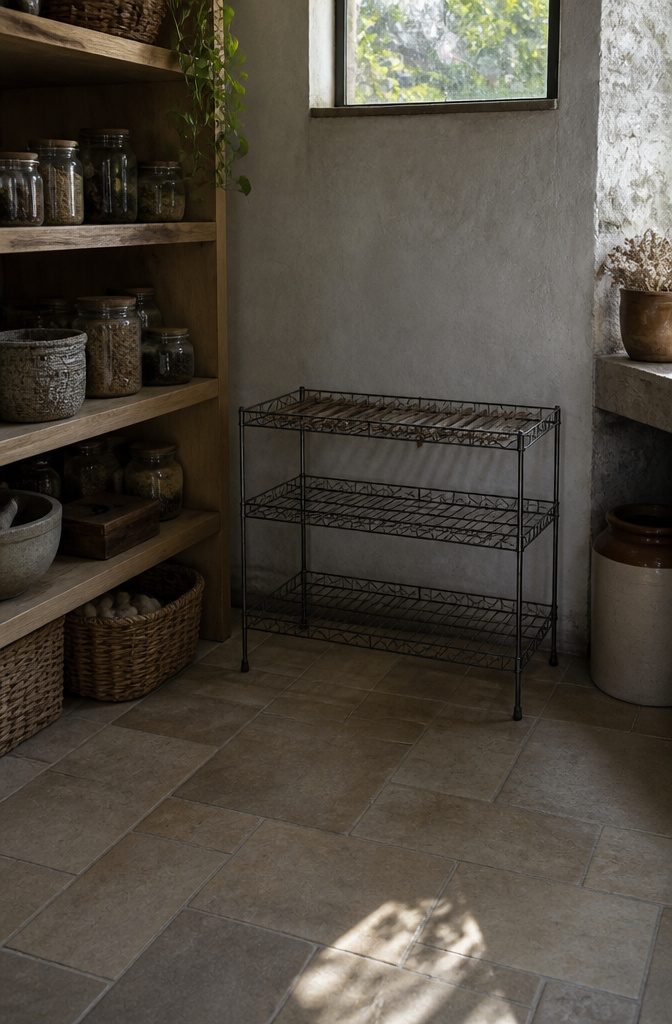
Drying shaped incense takes longer than most beginners expect, and rushing it ruins the burn.
I lay sticks or cones on a wire rack in a closet or pantry, somewhere cool and dry with no direct sun, then leave them alone for several days.
The exact timing depends on humidity and thickness, but the incense needs to be hard and brittle throughout before it will burn properly. A stick that still feels flexible in the center will smolder unevenly or go out.
Once fully dried, homemade sticks burn for 45–60 minutes, while cones typically run 15–20 minutes.
Those numbers assume the incense was shaped with consistent density and given enough time to cure. If you try to light one early, the extra moisture forces the burn toward the surface and wastes the center material.
For storage, a sealed jar in that same cool, dry spot keeps the finished incense ready without picking up ambient moisture that would soften it again.
9. Burn and Store
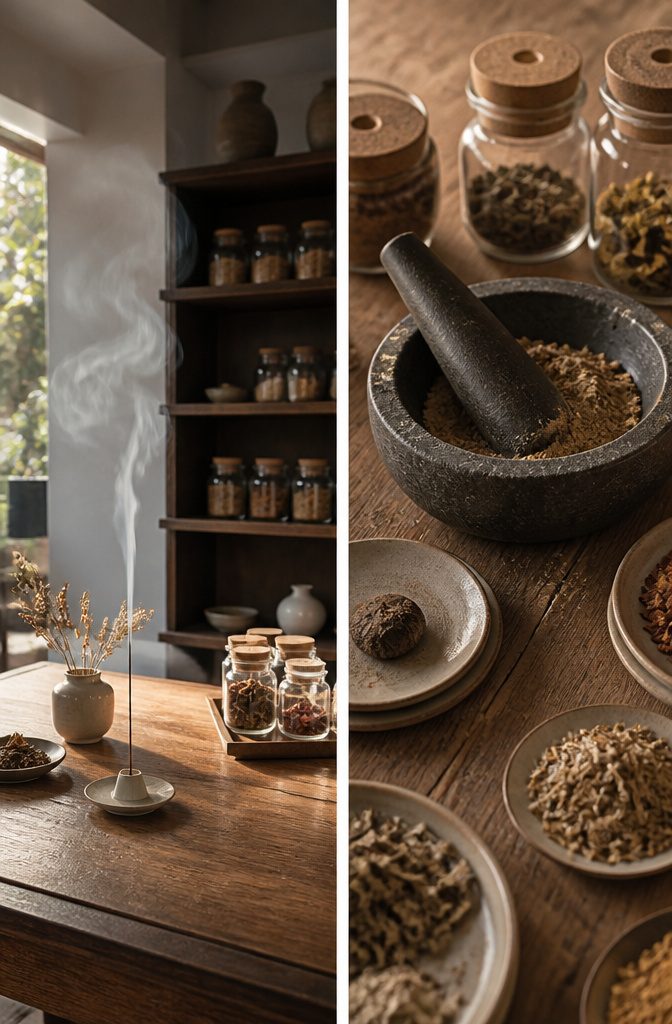
A heat-proof plate or censer belongs underneath the incense before you strike the match, not after.
Once the herbs catch, blow out the flame and let them smolder. The smoke should rise thin and steady; if it flames up again, the bundle is too dry or the binders are uneven.
Storage decides whether your work lasts two weeks or six months. An airtight container keeps the oils from fading and protects against the humidity that turns dried herbs musty.
A cool, dry spot matters just as much as the seal. Heat makes brittle sticks snap; moisture invites mold.
I skip decorative tins unless the lid actually clamps down. A jar with a gasketed top or a snapped-shut kitchen canister does the job for less and fails less often.
Ingredient Types and What Each Contributes
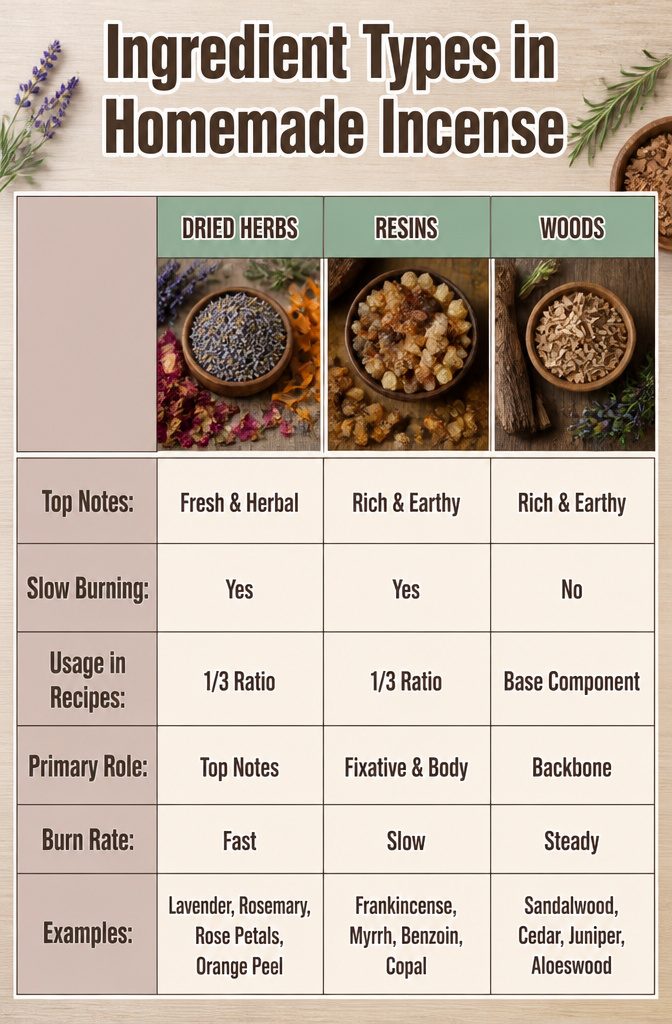
Most incense recipes draw on three ingredient families, and each one plays a different role in how the finished stick smells and burns.
- Dried herbs carry the top notes, the scent you notice first. Lavender, rosemary, rose petals, or orange peel each bring their own character, but herbs burn fast and can turn bitter if they dominate the mix. I keep them to roughly a third of the blend so they support rather than fight the burn.
- Resins act as the fixative and the body. Frankincense, myrrh, benzoin, and copal release slowly and help lighter scents linger. They also gum up the works if you overdo them: too much resin and your incense smolders instead of burning clean. Powdered resin mixes easier than chunks.
- Woods form the backbone and control the burn rate. Sandalwood, cedar, and juniper have enough oil to smell rich but enough fiber to stay lit. Traditional recipes lean wood-heavy because the balance of oil and flammability is already right there. Aloeswood is the exception; high-grade pieces carry so much resin that they behave like a resin themselves and need special handling.
A workable starting ratio is equal parts herb, resin, and wood. From there, I adjust based on what I want more of: brighter scent, longer linger, or a steadier burn.
Safety and Sourcing
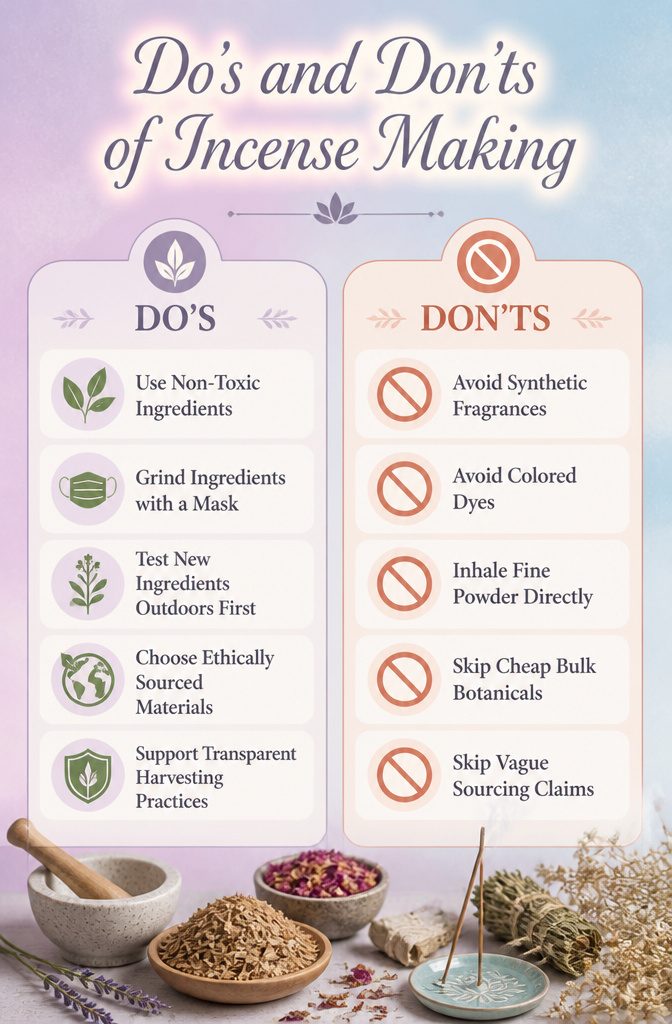
Non-toxic ingredients are the baseline for incense you actually want to breathe.
I skip anything with synthetic fragrance oils or colored dyes, since those release compounds when burned that have no business in your lungs. Powdered woods and dried herbs you could steep as tea are the standard I hold myself to.
- Inhaling any fine powder directly is harmful, so I grind ingredients with a mask on and keep the workspace ventilated even before anything is lit.
- Some traditional resins and herbs produce smoke that irritates sensitive airways; I test a small amount outdoors first if I am trying something new.
- Ethical sourcing matters because cheap bulk botanicals often carry pesticide residue or come from overharvested wild populations. I look for suppliers who state their harvesting practices plainly, even if that means paying a little more.
- The same transparency gap exists for "sustainably harvested" claims without specifics; I treat vague language as a reason to keep looking rather than a guarantee.
Why Incense Matters
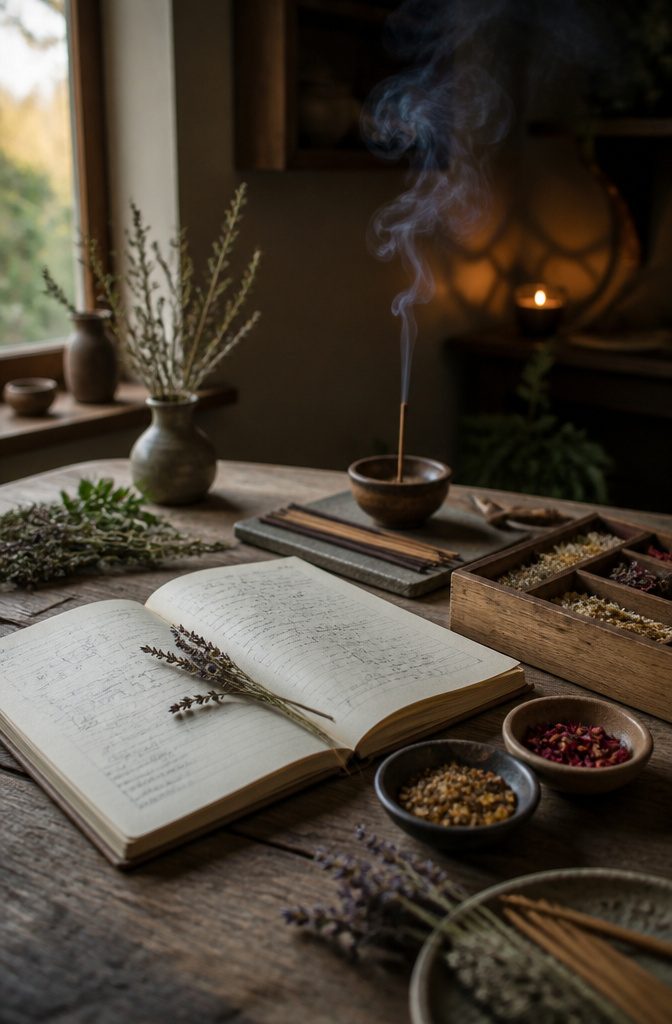
Incense has been burned across every culture for millennia to cleanse air, mark sacred space, and carry memory through scent.
The practice still shapes meditation and relaxation routines today because smoke creates a boundary between ordinary time and whatever comes next: a breath held, a room stilled, a mind trying to settle.
The cultural weight runs deep. In Exodus, the recipe is exact: gum resin, onycha, galbanum, and pure frankincense in equal measure.
Chinese tradition produced its own exhaustive canon around 400 years ago in the Ming dynasty, when Zhou Wei-Zhou spent over 20 years compiling the History of Incense (Xiang Sheng), a text later folded into the Imperial encyclopedia and still treated as definitive by incense makers today.
Buddhist temples, palace kitchens, and medicine practitioners all kept their own blends.
I burn it for the same reason most people do now: to signal that the next twenty minutes are not for scrolling or sorting mail.
The spiritual lineage matters less to me than the function, but the function only works because centuries of use have trained my nose to read certain smoke as permission to slow down.
That is what you are building when you make your own: not just a smell, but a cue your body already knows how to answer.
Frequently Asked Questions
What are the best herbs and flowers for homemade incense?
Lavender, sage, and rosemary form the backbone of most herbal incense, with frankincense and myrrh as standard resins and sandalwood or cedar for the wood base.
Pick flowers before they fully open, since buds hold oils better through drying and resist mold. Skip anything grown with chemicals or pesticides; those compounds concentrate in the smoke.
How do you dry herbs for incense?
Hang bundles upside down with twine in a cool, dry spot with good air circulation for two to three weeks.
The stems stay straight and gravity pulls moisture out. A stem that snaps when bent means the herbs are ready; if it flexes, they need more time.
What is makko powder and why is it used?
Makko powder is a wood-based powder from the Machilus thunbergii tree that turns slippery and adhesive when wet, binding ground ingredients into sticks or cones.
It makes up 10–30% of the dry mixture and helps the burn rather than hindering it like gum alternatives can.
What are the benefits of burning incense?
Smoke creates a boundary between ordinary time and focused or restful states, which is why incense still shapes meditation and relaxation routines.
The scent trains your body to read certain smoke as permission to slow down, making it a cue for intentional pause rather than distraction.
Can incense trigger migraines?
Some traditional resins and herbs produce smoke that irritates sensitive airways, so anyone prone to headaches or migraines should test a small amount outdoors first when trying something new.
Skip synthetic fragrance oils and colored dyes entirely; they release compounds that have no business in your lungs.
What are the ingredients of incense?
Incense draws on three families: dried herbs for top notes, resins like frankincense and myrrh for body and fixative, and woods like sandalwood and cedar for backbone and burn rate.
A binder such as makko powder holds everything together, and a 1:1:1 ratio of herb, resin, and wood is a reliable starting point.
What is the healthiest incense to burn?
Powdered woods and dried herbs you could steep as tea are the standard to hold yourself to.
Skip synthetic fragrance oils, colored dyes, and anything grown with chemicals or pesticides. Wear a mask while grinding ingredients and keep the workspace ventilated even before lighting.